Full Article
about Sot de Chera
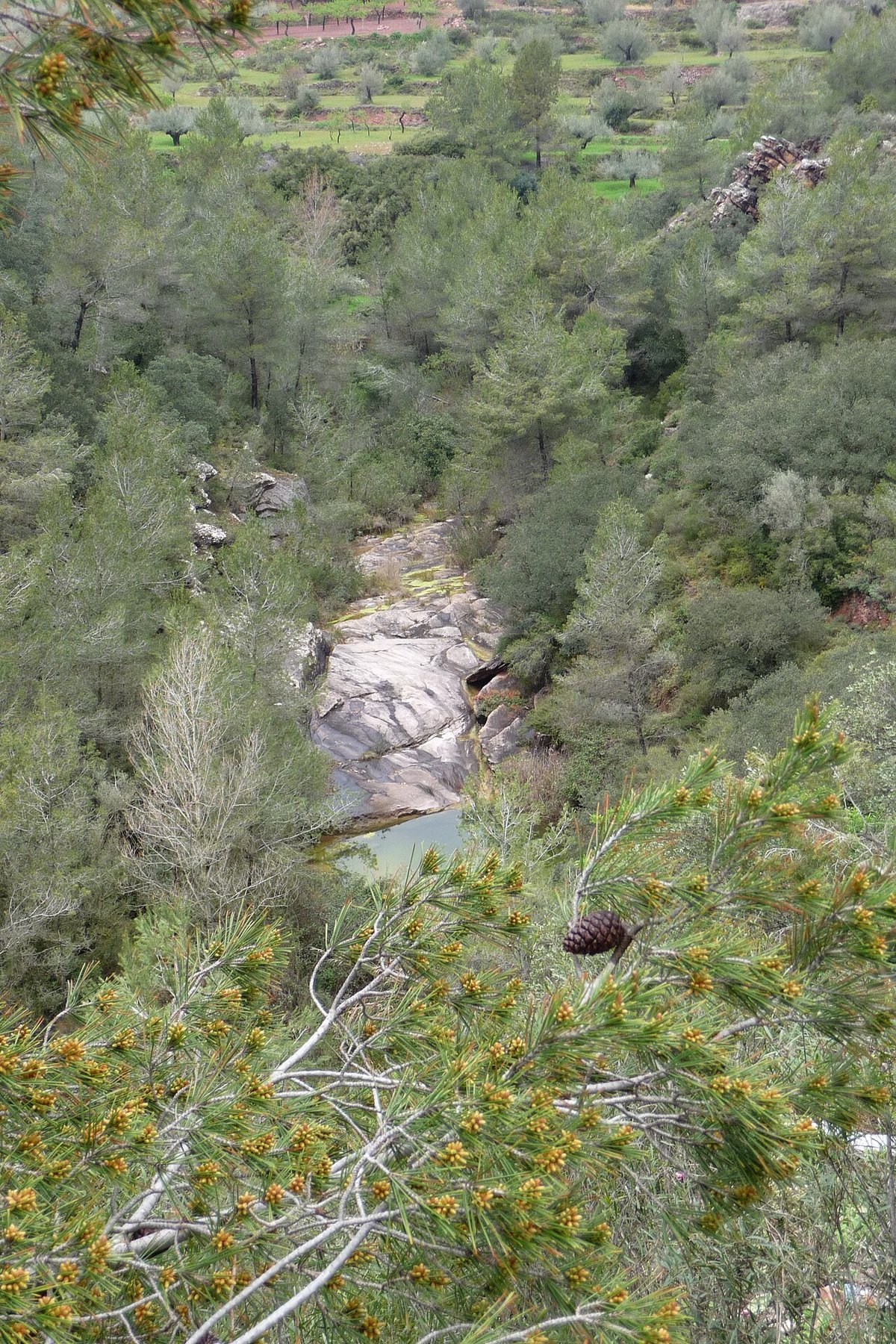
In a deep valley with a river and natural pools in a geological park
Hide article Read full article
Sot de Chera en Los Serranos
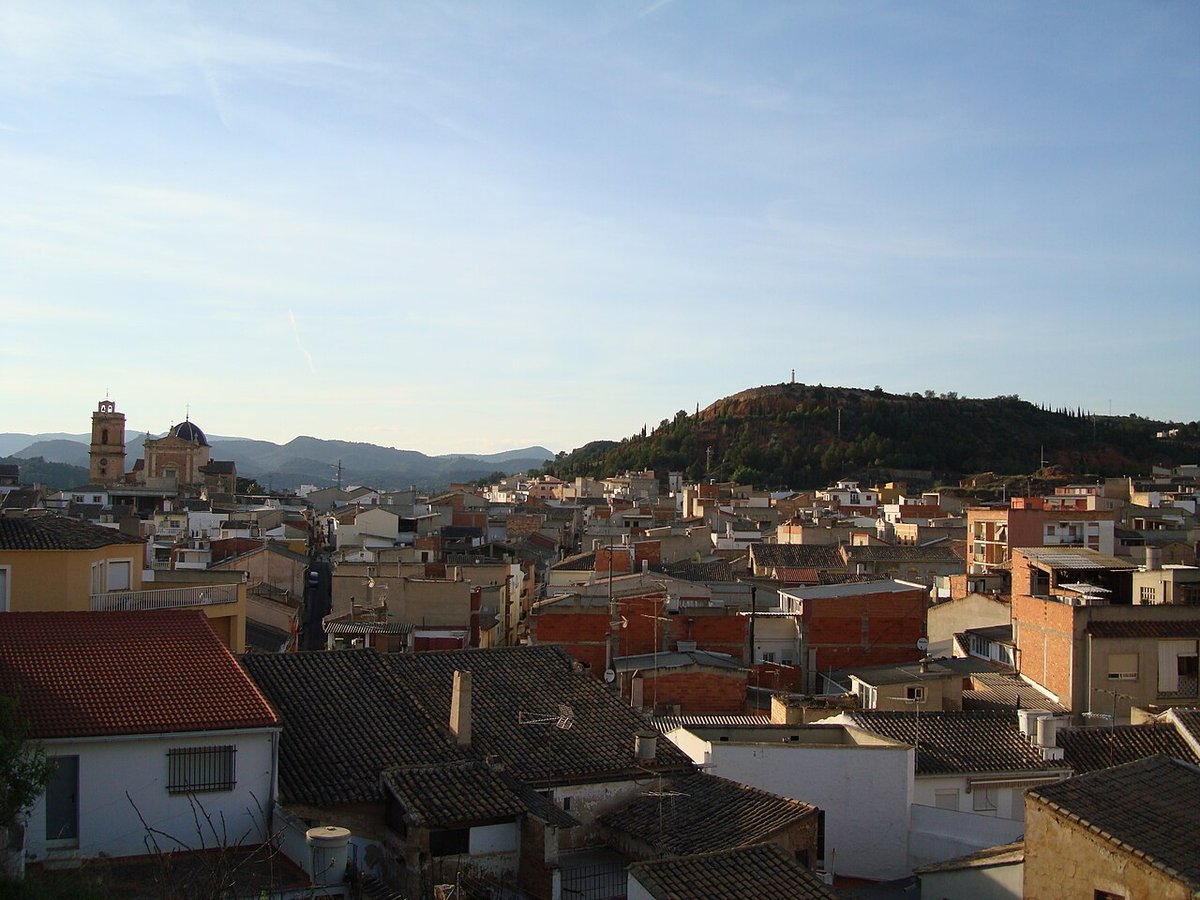
Sot de Chera ocupa un valle estrecho, labrado por el río del mismo nombre en la comarca valenciana de Los Serranos. La geología lo explica: la erosión sobre la roca caliza creó este enclave, donde el pueblo y sus campos se acomodan en el espacio que el relieve les concedió. Con poco más de cuatrocientos habitantes, su escala es la de los pueblos que durante siglos dependieron del secano, de las huertas de ribera y del monte.
El agua es un elemento constante. Más allá del río, el casco urbano está atravesado por acequias y salpicado de fuentes y lavaderos antiguos. No son elementos decorativos; son la huella de una organización doméstica y agrícola que dependía del caudal disponible.
Un trazado condicionado por la pendiente
La iglesia parroquial de San Pedro Apostol se levanta en el punto más alto del casco antiguo. Es un templo del siglo XVIII, de volúmenes compactos y una torre campanario que sobresale entre los tejados. Su arquitectura es funcional, sin grandes ornamentos, común a otras poblaciones de la serranía.
Desde allí, las calles descienden con pendiente pronunciada, adaptándose a la curva de nivel. No hay un plano preconcebido, sino un crecimiento orgánico que buscaba el espacio útil entre bancales y corrales. El paseo no tiene un itinerario marcado; consiste en observar esa adaptación: muros de mampostería, portales bajos y la presencia persistente de las acequias junto al pavimento.
Los lavaderos públicos, algunos aún con sus pilas de piedra, se encuentran en distintos barrios. Su ubicación no era casual: distribuían los puntos de agua para el uso comunitario.
Dentro del Parque Natural de Chera-Sot de Chera
La mayor parte del término municipal pertenece al Parque Natural de Chera-Sot de Chera. Su principal valor es geológico: pliegues, fallas y formaciones rocosas ofrecen una lectura clara de los procesos que modelaron este terreno.
Para el caminante, el paisaje alterna bosques de pino, ramblas y bancales abandonados. En muchas laderas perduran las paredes de piedra seca que delimitaban cultivos de almendros o cereal, ahora invadidos por el matorral.
Existe una red de senderos señalizados, de distintos recorridos y duraciones. Algunos siguen el cauce del río Chera, entre vegetación de ribera; otros se adentran en zonas más áridas de carrasca y roquedo, donde es frecuente ver rapaces.
Quedan también restos de la arquitectura rural dispersa: corrales y masías, la mayoría en ruinas, que hablan de un patrón de poblamiento antiguo y extenso por estos montes.
El ritmo local
El calendario festivo sigue el patrón agrario de la comarca. Las fiestas patronales se concentran en agosto, cuando regresa parte de la población emigrada. En enero se celebra San Antón, con la bendición de animales y productos de la tierra, un rato directamente vinculado al mundo rural.
Fuera de estas fechas, la vida cotidiana mantiene una relación visible con el territorio: se nota en las huertas familiares, en el pequeño cultivo que perdura y en la actividad social que se concentra en la plaza.
Cómo llegar y cuándo
Desde Valencia, se toma la A-3 hacia el interior para después enlazar con las carreteras comarcales que serpentean por la sierra. El trayecto suele ocupar algo más de una hora.
Las estaciones idóneas para recorrer el parque natural son la primavera y el otoño. En verano, las temperaturas diurnas son altas, aunque al atardecer se nota cierto frescor por la altitud y la influencia del valle.
Sot de Chera no se define por monumentos aislados. Su carácter está en la relación entre el agua, el relieve y la arquitectura popular, y en cómo esa relación sigue marcando el día a día.