Full Article
about Villar del Arzobispo
Mining town in the Serranía, famous carnival and wines.
Hide article Read full article
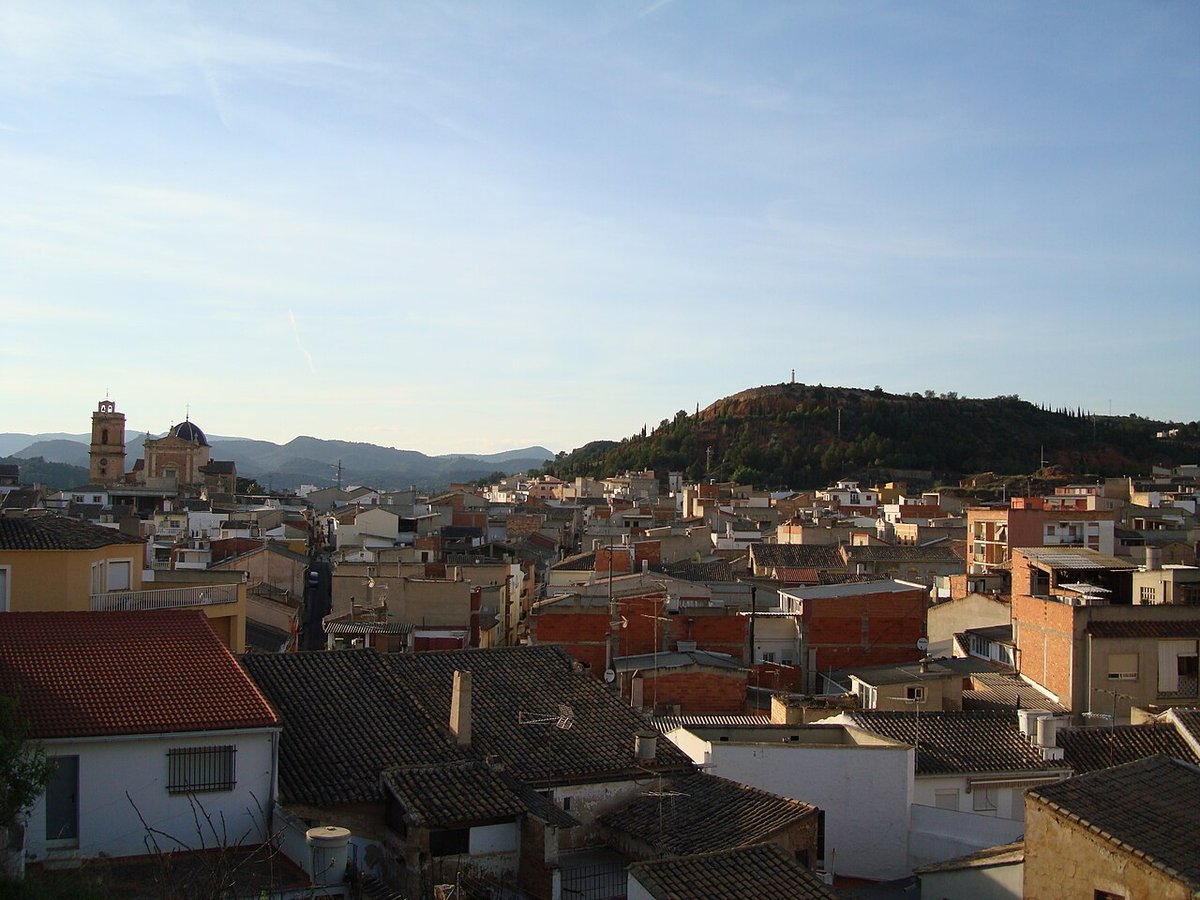
Church bells ring out at eight in the morning and the sweet smell of a freshly baked bun drifts through a half-open door onto the square. At that hour only a few shutters are raised. A car moves slowly past, its driver scanning for a space near the tobacconist. Tourism in Villar del Arzobispo often begins like this: the village still half asleep, the quiet shuffle of neighbours buying bread before the heat settles in.
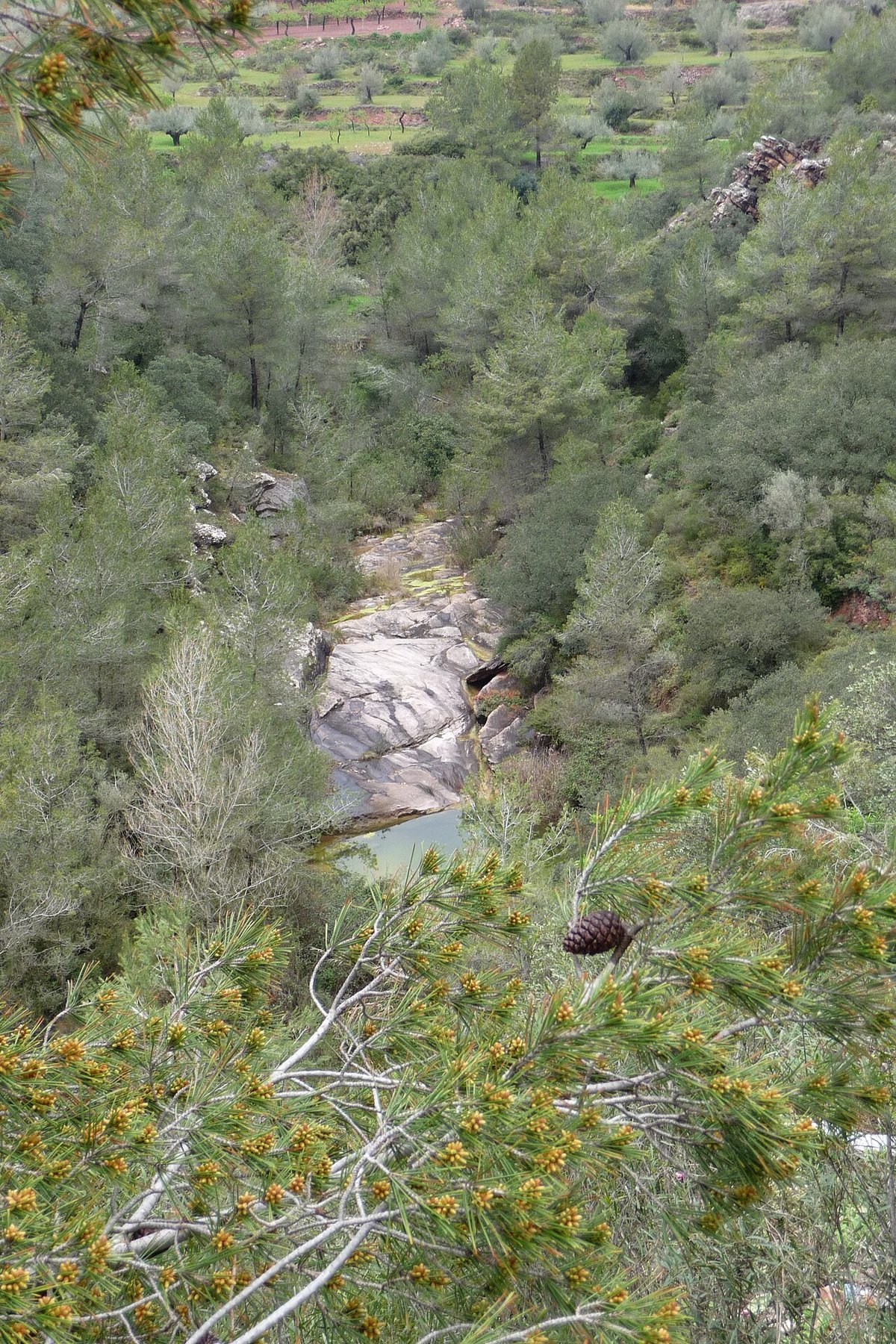
Villar sits in Los Serranos, in the interior of the Comunidad Valenciana. For much of the year this is dry country, and the farmland begins almost as soon as the last houses end. Step beyond the edge of the town and you are among terraced plots, almond trees and olive groves, their grey-green tones shifting with the light.
The flavour of dry land
The Hoya del Turia spreads out around the village in gentle hills and cultivated fields. Towards the end of winter, the almond trees usually blossom and the landscape turns pale, almost white in places. It does not last long. By late March or April the petals have fallen and the familiar earthy colours return.
These fields have been worked for centuries. On the outskirts, excavations have uncovered structures linked to a Roman villa, including floors, water channels and other remains that suggest oil or wine was produced here many centuries ago. Not everything is visible today, yet the site makes it clear that this valley has a long agricultural history.
Local cooking reflects that background. The gazpacho villarense bears no resemblance to the chilled tomato soup associated with Andalusia. Here it is a thick, hot stew made with wheat, pulses and meat. There is also a traditional olla, prepared with seasonal vegetables such as cardoons in winter, along with locally made cured sausages. These are substantial dishes, designed to sustain long days working the land.
Wine has long been part of daily life. The local cooperative has operated for decades, and it is still common for residents to buy wine in bulk. Among the grape varieties grown in the area is forcallat, a dark red grape that produces intense wines.
Stones that recall bishops and saints
Much of Villar’s history gathers around the Plaza de la Iglesia. Here stand the former Episcopal Palace and the parish church, built over earlier structures and remodelled several times. Spend a few moments studying the façade and the differences become clear: some stones are more worn than others, marked by time and later restoration.
There is a local tradition that notable figures stopped here while travelling between Aragón and Valencia. The passage of Charles V through the palace in the 16th century is sometimes mentioned, although references tend to appear more in local chronicles than in detailed documentation.
Heading down towards the Arrabal district, the layout changes. Streets narrow, houses draw closer together and shaded corners appear even in the height of summer. In this part of town stands the ermita of San Vicente Ferrer, a small chapel dedicated to the Valencian saint. Beside it flows a spring that residents associate with his visit to the village. The water remains cool even in August, and some people still come with bottles when the heat becomes intense.
When the village lets loose
February disrupts the usual rhythm. The carnival of Villar del Arzobispo is well known across the comarca, and during those days visitors arrive from neighbouring towns. There are costumes of every kind, comparsas or organised carnival groups, music in the streets and a sense of humour that can be distinctly irreverent.
One of the most talked-about moments is the burial of a giant black pudding, known as the morca. It takes the form of a mock funeral, mixing street theatre, drumbeats and plenty of playful mischief. Solemnity is not the point.
In August, summer festivities linked to San Roque take over. At night the main square and surrounding streets fill with peñas, informal groups of friends who organise events and gatherings, along with music and temporary stalls. The main day draws large crowds. Anyone keen to see the village at its most animated will find it then. Those in search of quiet would do better to avoid those dates or start the day early.
Dawn among ruins and scrubland
The surrounding countryside offers several places for a short walk without straying far. Close to the village lies the site of La Aceña, associated with an Iberian settlement from before Roman times. It is not monumental in scale, yet at dawn or dusk it has a certain atmosphere. Low stone walls catch the golden light and the valley opens out towards the Turia river.
More recent history has also left traces. In nearby hills there are remains of positions and shelters from the Spanish Civil War, now half covered by rosemary and thyme. They are easy to miss without looking carefully.
Within the town itself, the municipal museum known as the Casa de los Cinteros brings together pieces of local history. Documents and objects from former trades are displayed alongside fragments of a Gothic carving of the Virgin that was lost in a fire at the beginning of the last century. The current image is later, but the surviving fragments help to explain what once stood here.
Villar del Arzobispo does not present itself with grand gestures. Its appeal lies in everyday details: bells at daybreak, the scent of baking, the rhythm of agricultural seasons and festivals that briefly overturn the calm. Between dry fields, old stones and moments of unruly celebration, the village reveals a way of life shaped by land and memory.