Full Article
about Beniarbeig
Town near Dénia surrounded by orange groves; blends rural quiet with easy reach of the coast.
Ocultar artículo Leer artículo completo
The church bell in Beniarbeig strikes midday, and every bar stool from Bar Coratge to the bakery suddenly empties. Locals scatter—not for siesta, but for home-cooked lunch eaten at pace, because the kitchen at Basilico won’t reopen until eight and no one plans to queue hungry at nine. This is village time: practical, unshowy, and utterly unlike the Costa Blanca resorts glittering fifteen kilometres away.
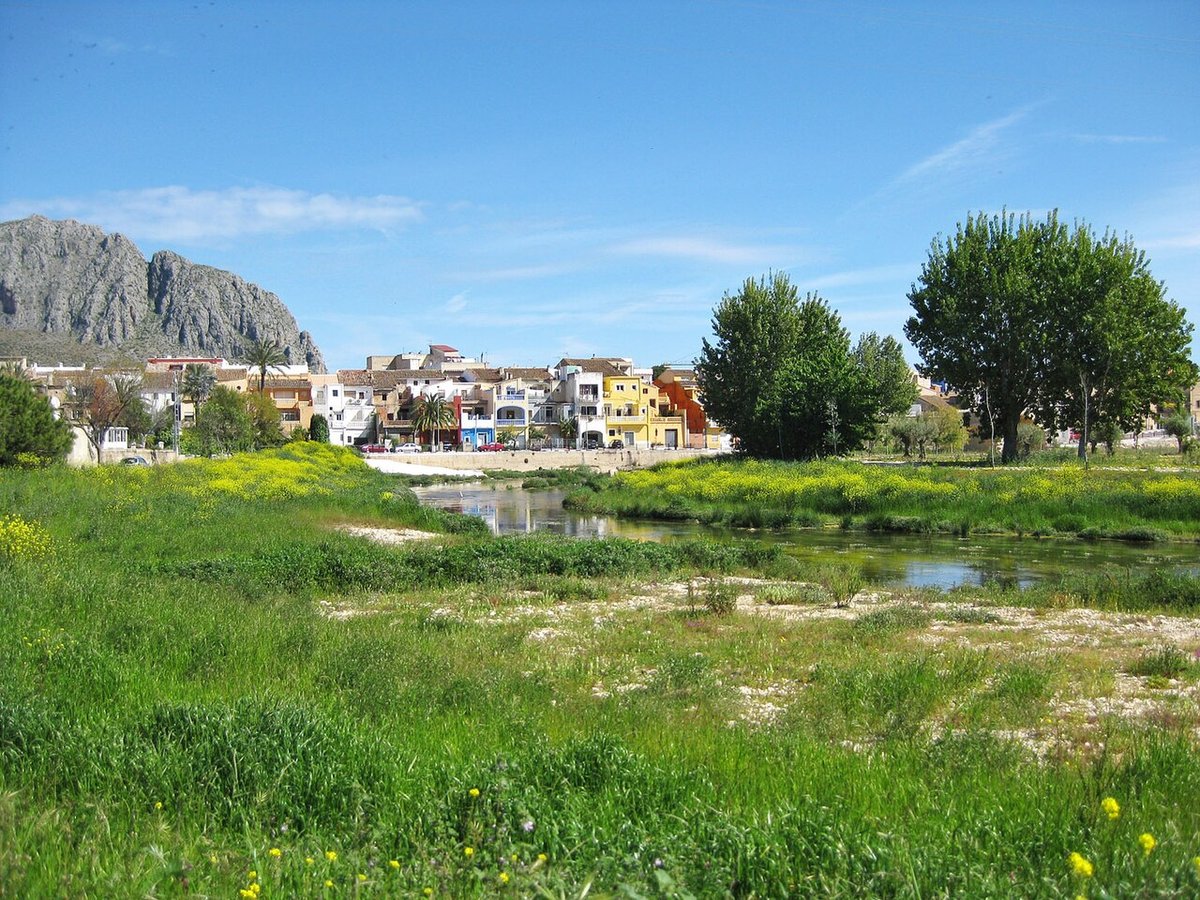
Beniarbeig sits 42 metres above the Mediterranean, far enough inland to escape the seafront price tags yet close enough that salt air drifts across 2,000 hectares of citrus. Navel and Valencia late oranges dominate the flat grid of lanes between the CV-715 and the river Girona; in April their blossom produces a perfume so heavy it sticks to car windscreens. Come October the same trees flame with ripe fruit, and the cooperative on Calle Els Pedregals runs a conveyor belt that rattles from seven in the morning, grading fruit bound for Derbyshire supermarkets as well as Valencia markets.
A grid of citrus and stone
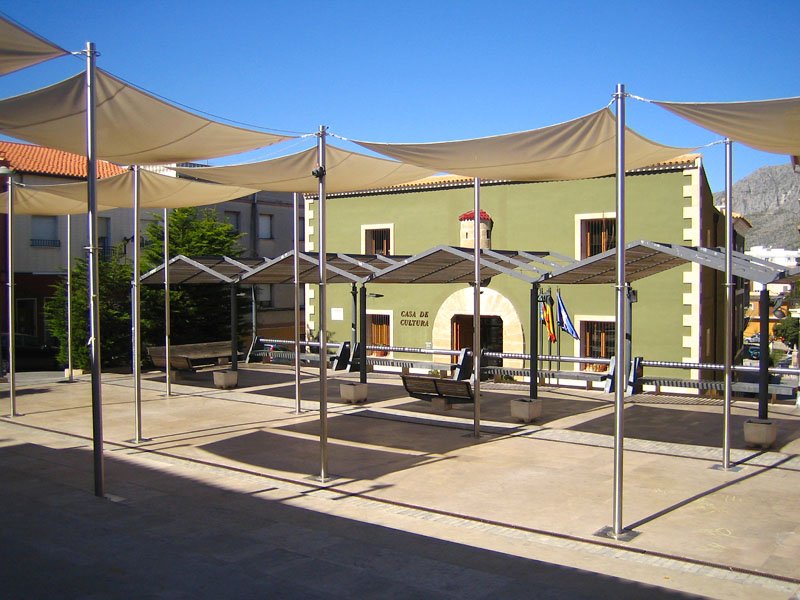
The town plan is straightforward: three long parallel streets stitched together by narrower cross lanes, all leading eventually to the parish church of Santa María Magdalena. Its bell tower, rebuilt after the 1936 fire, is the tallest thing for miles and the easiest meeting point if you’ve arranged to swap hire-car keys with an owner. Climb the external staircase on Saturday morning and you’ll see the weekly market advancing along Avenida de Alicante: ninety-odd stalls that reduce the main road to a single lane and fill the air with shouted valenciano. Plastic tables groan under pyramids of granadillas, while butchers offload entire pork loins at prices that make British shoppers blink—€4.50 a kilo, sliced free on a bandsaw that looks older than Franco.
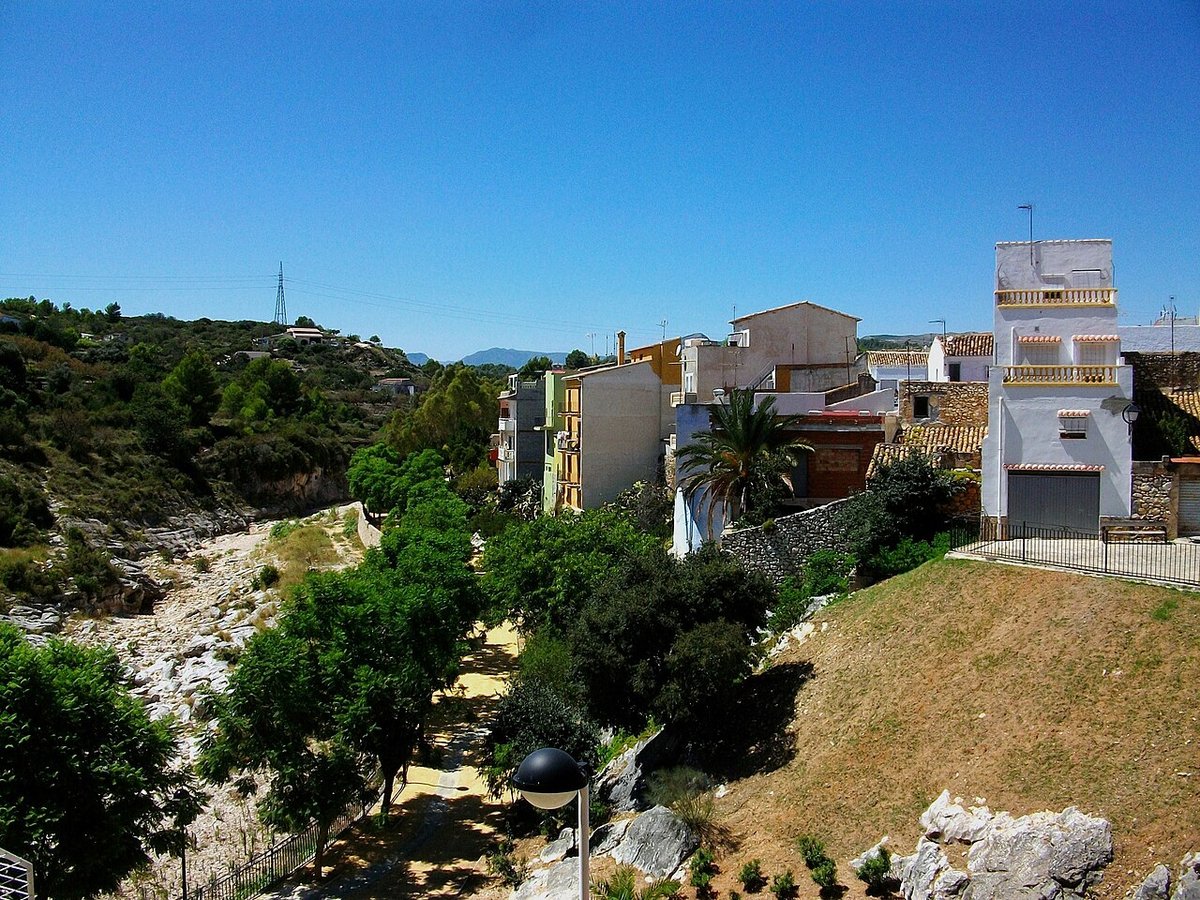
Away from the market thoroughfare the pace drops. Stone houses, their lower walls painted ochre against damp, have wooden doors opening straight onto the street. Many still contain the original horse-sized troughs; look closely and you’ll see iron rings where mules were tethered before tractors arrived in the Seventies. Number 18 on Calle Mayor hides a particularly fine art-nouveau ceiling, but the owner won’t show it unless you ask in Spanish and buy a bag of his home-grown persimmons first.
Eating on village hours
British visitors tend to arrive expecting tapas at any hour; Beniarbeig teaches the old timetable fast. Bar Coratge starts pouring cañas at seven, but the sartén de mariscos—prawns, squid and a handful of mussels sizzling in garlic—appears only after 12.30. Portions are built for sharing; order one between two and you’ll still leave half the rice. Gluten-free eaters head straight for Basilico where the owner, an expat from Milan, makes fresh cannelloni daily. His blue-cheese version tastes mild enough for Cheddar-trained palates, and the almond-orange tart uses fruit from the tree outside the door.
Monday is the dead day. Both restaurants close, the bakery shutters at two, and the supermarket reduces staff to a single checkout. Plan ahead: stock up on crusty barra bread on Sunday evening, or be prepared to drive to the Carrefour in Ondara, six kilometres up the AP-7 slip road.
Walking without drama
The surrounding plain is laced with agricultural tracks wide enough for a Citroën C3 but better tackled on foot. A gentle circuit starts at the river bridge on the northern edge of town: follow the signed PR-V 147 for three kilometres through lemon terraces to the ruined caseta de pedra, a stone hut once used by irrigation guards. The path is flat, shade intermittent, and the only soundtrack comes from drip-feed hoses hissing over loam. Serious hikers looking for altitude should drive 25 minutes to the Pego-Oliva marsh and then the Muntanyeta Verda—Beniarbeig’s own horizon barely reaches 150 m.
Cyclists appreciate the same lanes. Road bikes roll effortlessly towards El Verger and the sea; mountain bikers cut south on the gravel service road that shadows the autopista, emerging at the dunes of Els Poblets. Either way, carry two tubes—thorny citrus prunings litter the verges.
Fiestas that still belong to residents
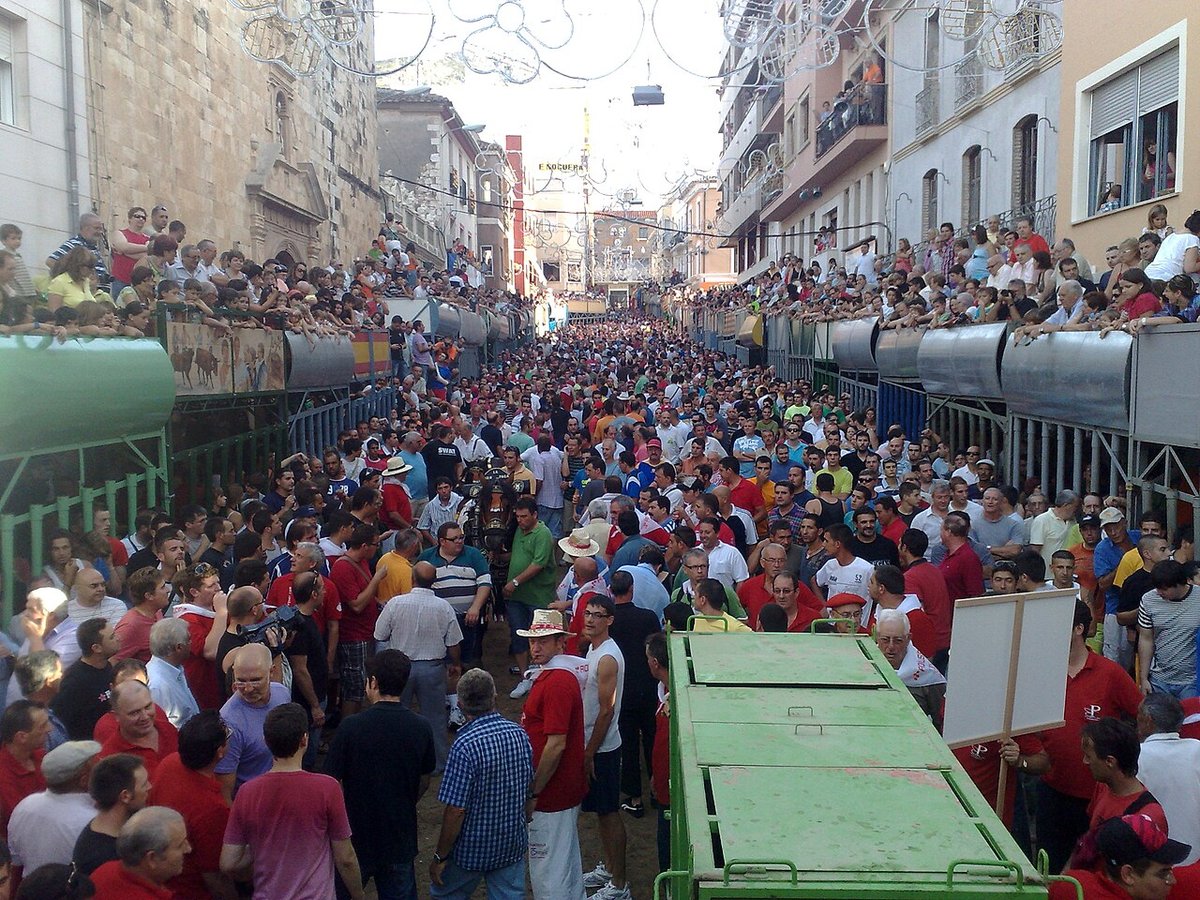
July’s Santa María Magdalena week turns the grid into an outdoor living room. Temporary bar booths line the sports ground, selling €1.50 bottles of Estrella and plates of paella cooked in pans three metres wide. A British traveller stumbling in on procession night might mistake the event for a modest county show: brass bands, children chasing balloon swords, and locals arguing over the best spot to watch the midnight fireworks. The difference is the communal effort—every family contributes either rice, wood or muscle to stir 400 portions.
January brings San Antonio Abad, when tractors replace donkeys but the priest still sprinkles holy water over engines and drivers alike. Bonfires of vine prunings light the citrus lanes after dark; the smell of burning orange wood drifts through open windows, a reminder that pagan and Catholic calendars remain firmly stitched together.
Getting here, staying here, paying for it
Alicante airport is 75 minutes south on the AP-7; Valencia is roughly the same distance north. Car hire is almost obligatory—taxis from the terminal run €70–80 and the local bus reaches Beniarbeig only on weekdays, never after 20:00. Pre-book a small automatic; the tight parking slots on Calle Sant Roc were designed long before the SUV era.
Accommodation is limited to a dozen holiday lets and the three-star Casa de los Naranjos. Expect €85 a night for a two-bedroom townhouse with roof terrace overlooking the groves; that price halves between November and March when evenings drop to 8 °C and Spanish visitors vanish. British winter residents swear by the low season—log-burning stoves, empty restaurants happy to improvise dinner, and almond blossom whitening the fields by late January.
Cash remains king. Half the bars lack card readers, the nearest 24-hour ATM sits outside a petrol station in Ondara, and the market stallholders exact a €5 minimum. Bring euros or face a 4% forex surcharge at the solitary bank machine beside the church, which likes to swallow cards on Fridays.
The honest verdict
Beniarbeig will never compete with postcard Spain. There is no beach, no castle, no Michelin star—only the daily rhythm of a working citrus town that happens to rent out a few rooms. If you want flamenco and all-night cocktails, stick to Denia. But for travellers happy to exchange sea views for orchard scent, to eat when the locals eat and to explore on flat, quiet lanes, this small grid of stone and oranges offers a cheaper, calmer base than any coastal neighbour. Turn up with a car, a phrasebook and an appetite for mandarins still warm from the tree, and the village will clock you in on its own uncomplicated terms.