Full Article
about Benidoleig
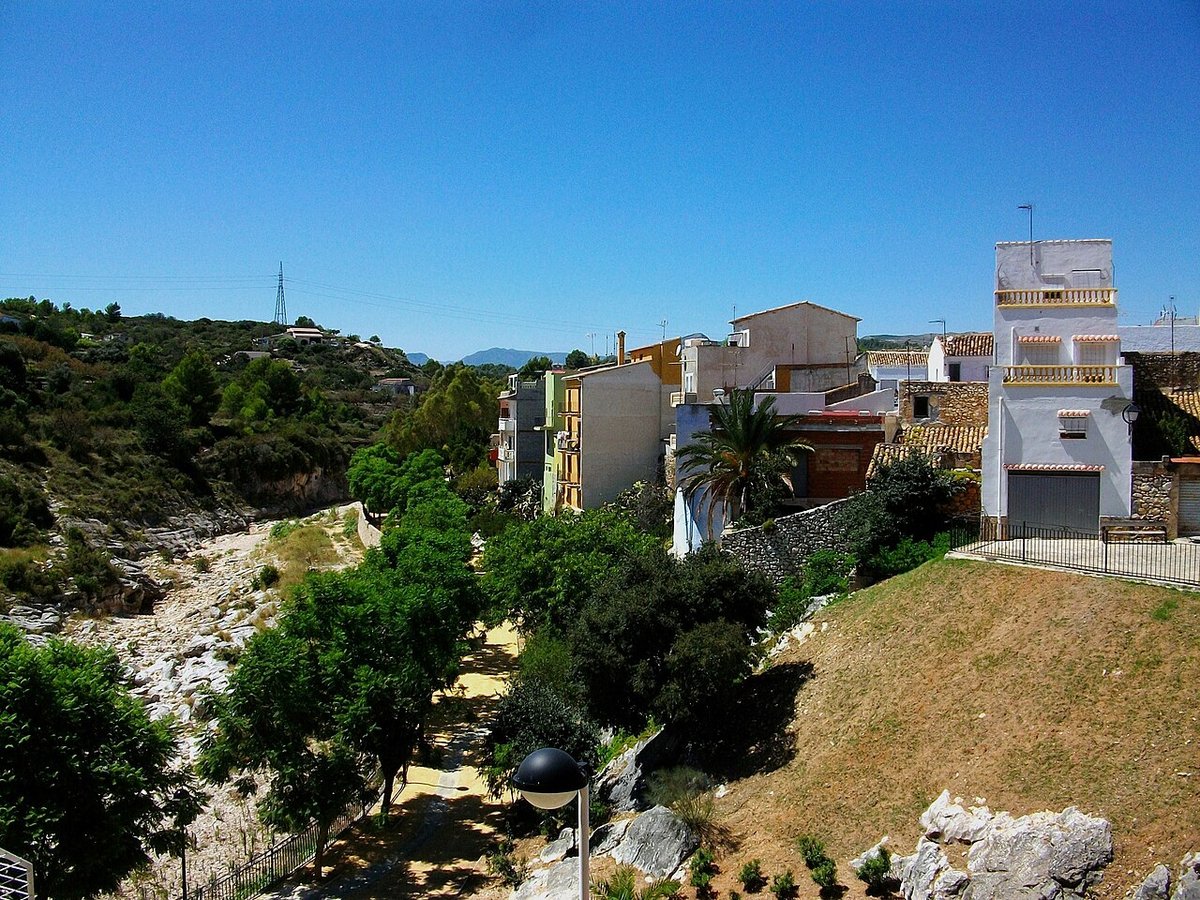
Quiet village known for the Cueva de las Calaveras; balcony over the Girona river valley
Hide article Read full article
A valley shaped by light and routine
By mid-morning, when the sun already presses down on the valley, the air in Benidoleig carries the smell of turned soil and orange blossom in spring. From the upper part of the village, citrus plots stretch across the Marina Alta, laid out in neat lines that catch the sharp Mediterranean light. Just over 1,200 people live here, and daily life still follows the pace of farming and the heat that encourages shutters to close after lunch.
The village sits slightly above the valley floor. Its streets do not follow a clear plan: they rise, bend and narrow between pale façades, with iron balconies and pots where geraniums or mint often grow. Many houses still have wide wooden doors, once used to store tools or carts when agriculture filled most of the day.
Although Benidoleig lies only a few kilometres in a straight line from the coast, the atmosphere feels different. The soundscape is sparse: the engine of a tractor, a dog barking somewhere down in a ravine, and little else.
Streets, stone and everyday life
At the centre stands the church of San Pedro Apóstol, its bell tower visible from several points across the valley. The building is simple in design. The square in front works as a place people pass through rather than linger: neighbours crossing with shopping bags, someone sitting on a bench as evening approaches.
The old quarter can be explored quickly, though it rewards a slower pace. Some streets still have worn stone paving, and there are inner courtyards where laundry hangs between aromatic plants. In the early afternoon, when most people are indoors, the quiet becomes so complete that in summer the hum of insects is easy to hear.
Around the village, agriculture dominates the landscape. Citrus trees cover much of the valley. Oranges are usually harvested in the colder months, and when the trees blossom in spring their scent reaches the first houses. In late winter, almond trees in bloom add white and pink tones to parts of the surrounding slopes.
On the outskirts, the Font de la Mata is a place where locals often stop for shade. It is not a grand site, more a calm corner with water and trees where the temperature drops slightly, even on dry days.
Paths across the valley and a cave beneath it
One of the best-known spots in the area is the Cueva de las Calaveras, located a short distance from the village. It can be reached easily by road or on foot for those who want to extend a walk. Inside, the change is immediate: cooler air, humidity, dark rock and a dense silence that contrasts with the heat outside.
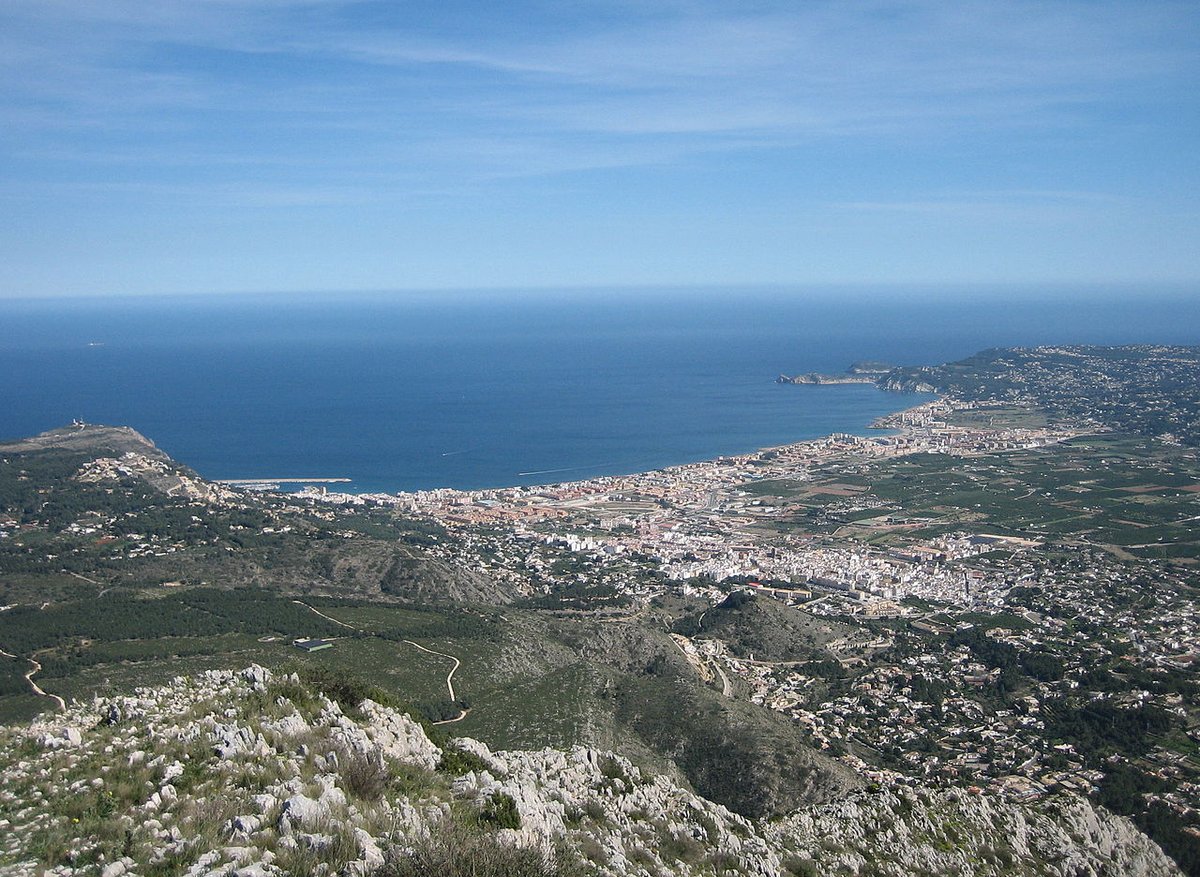
Beyond the cave, a network of rural paths crosses the valley between cultivated terraces and small ravines. These are not demanding mountain routes but agricultural tracks and footpaths that link plots and old farmhouses. On clear days, from some higher points, the line of the sea can be made out to the east.
Anyone heading out on foot should carry water, even for short walks. In summer, the sun falls directly on many stretches with little shade.
Festivities and the rhythm of the year
The patron saint festivities dedicated to San Pedro are usually held at the end of June. During those days, the village sounds different: music at night, long tables set out in the street, and neighbours returning to spend time with family.
August also brings festive days that fill the squares with activity. This is when Benidoleig is at its liveliest, with second homes open and people coming back for a few days.
Semana Santa (Holy Week, the week leading up to Easter) is marked by processions that move slowly through the main streets, accompanied by drums and traditional songs.
When to go
Spring is one of the most pleasant times to walk the valley paths, with mild temperatures and the scent of orange blossom when the citrus trees flower. Towards the end of winter, if the season has been wet, the almond trees are already in bloom.
Summer can be very hot from midday onwards. Visiting during these months is best done early in the morning or later in the day, when the sun begins to drop. At that point, façades take on a golden tone and the air starts to move again between the orchards.
Benidoleig is not a place of large monuments. It is better understood by looking out over the valley, listening to the sounds of the countryside and letting time pass quietly as the afternoon settles over the Marina Alta hills.