Full Article
about Benissa
A municipality that pairs a beautifully preserved medieval old town with dreamy coves.
Hide article Read full article
Parking first, questions later
The AP‑7 motorway exit for Benissa gets you close. The town itself is a grid of narrow streets that slope and turn. In summer, don’t even try to drive into the historic centre. Park on one of the wider avenues around it and walk in.
The coast is a separate matter. It’s four kilometres of small coves, not a continuous beach. Each has limited parking that fills by mid-morning in July and August. Cala Fustera gets full early. Cala Advocat requires a descent down steps.
A town with its back to the sea
Benissa feels inland, despite the short drive to the water. Monday is market day in the square; other days are quieter. The historic centre operates on its own rhythm.
The Iglesia de la Purísima Xiqueta dominates the main square. It’s large for the town, built in grey stone during the early 20th century. Inside, it’s cool and bare. You walk in, look up at the vaulted ceiling, and leave. There’s no ticket office or guided tour.
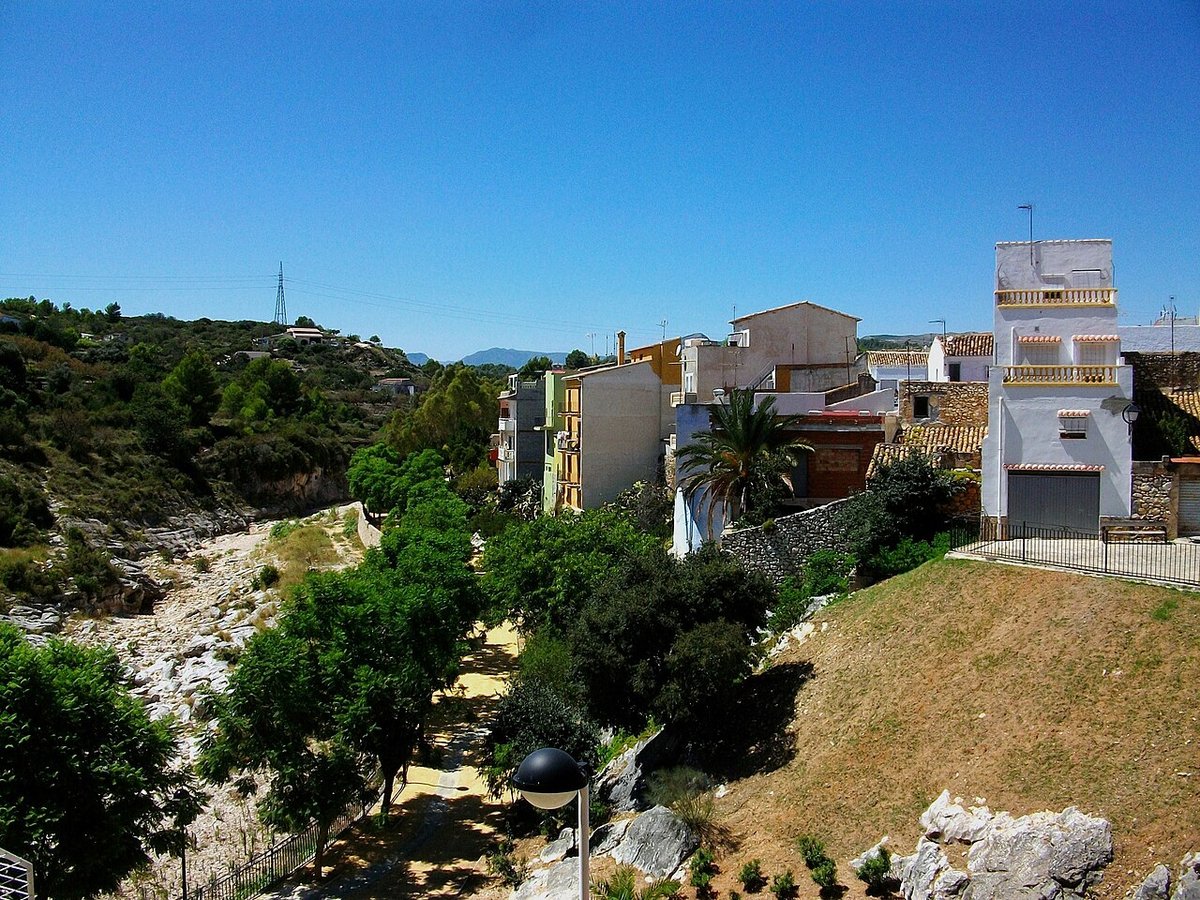
From there, you wander. The old quarter is made of stone houses with heavy wooden doors and original cobbled streets. No single building demands attention. The point is the walk itself, which takes about forty minutes if you amble.
Hiking beats sightseeing here
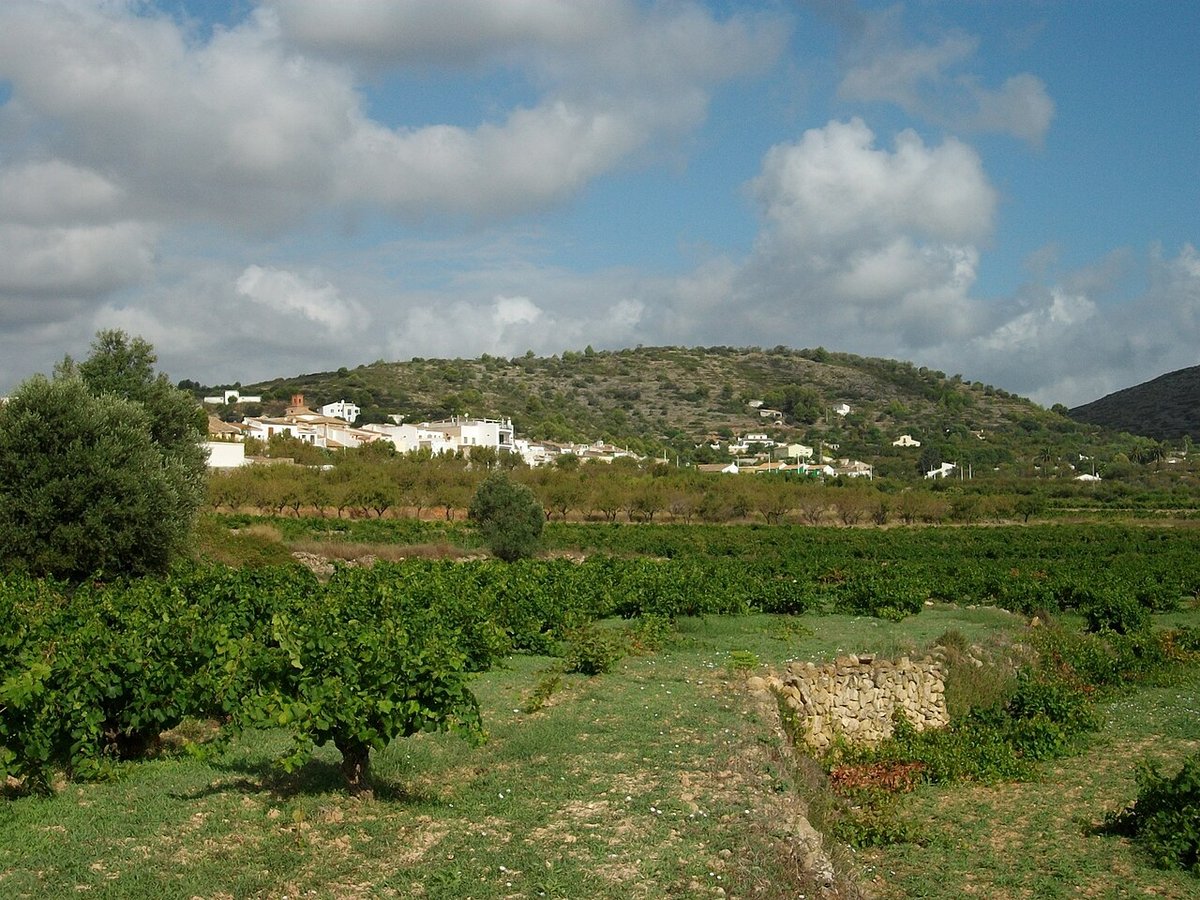
The real reason to come inland is the Sierra de Bèrnia. Several walking routes start nearby. One follows an old path that loops part of the range and passes through a natural tunnel called the Forat de Bèrnia. It takes hours. Bring more water than you think you need; shade is scarce and summer heat is intense.
There are also sites with Levantine rock art in the area—small, faded prehistoric figures painted on rock shelters. They are not spectacular to look at. The value is in their location: quiet, remote spots reached by walking trails that are often better than the paintings.
What people actually eat
Local food sticks to tradition rather than trends. In colder months, some places serve putxero de polp, an octopus and potato stew. More common year-round is arroz amb naps i costelles, a soft rice dish with turnip and pork ribs. For fiestas like San Jaume, they make coca a la llumà, a sweet anise-flavoured flatbread made with lard. To finish, many still drink mistela from local Muscat grapes. You can buy it plainly from the agricultural cooperative; it’s sweet and strong.
Festivals mark local time
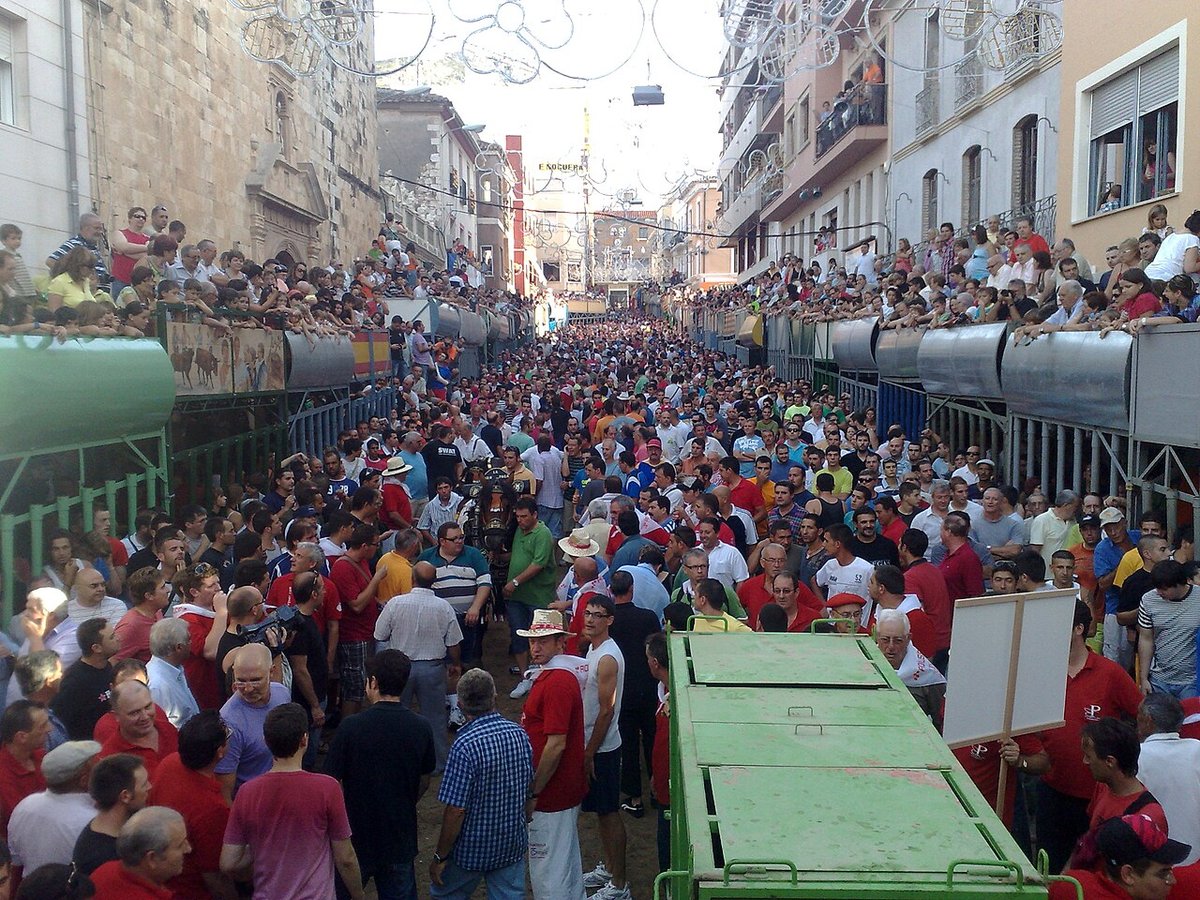
Fiestas for the Purísima Xiqueta happen at April’s end. There are concerts and bull-related events. A simple flower offering moves from church to square. In October, a medieval fair fills the old streets with stalls and costumes—standard for many towns but fitting here. In January for San Antón, people bring their animals to be blessed in front of the church: dogs, horses sometimes.
Go for an afternoon or a hike
Benissa isn't somewhere you plan a week around. It works as part of a day: see the church, walk the old streets, then either drive down to a cove or head into the sierra for proper walking. Spring or autumn are easier; summer means crowded coves and parking stress everywhere else