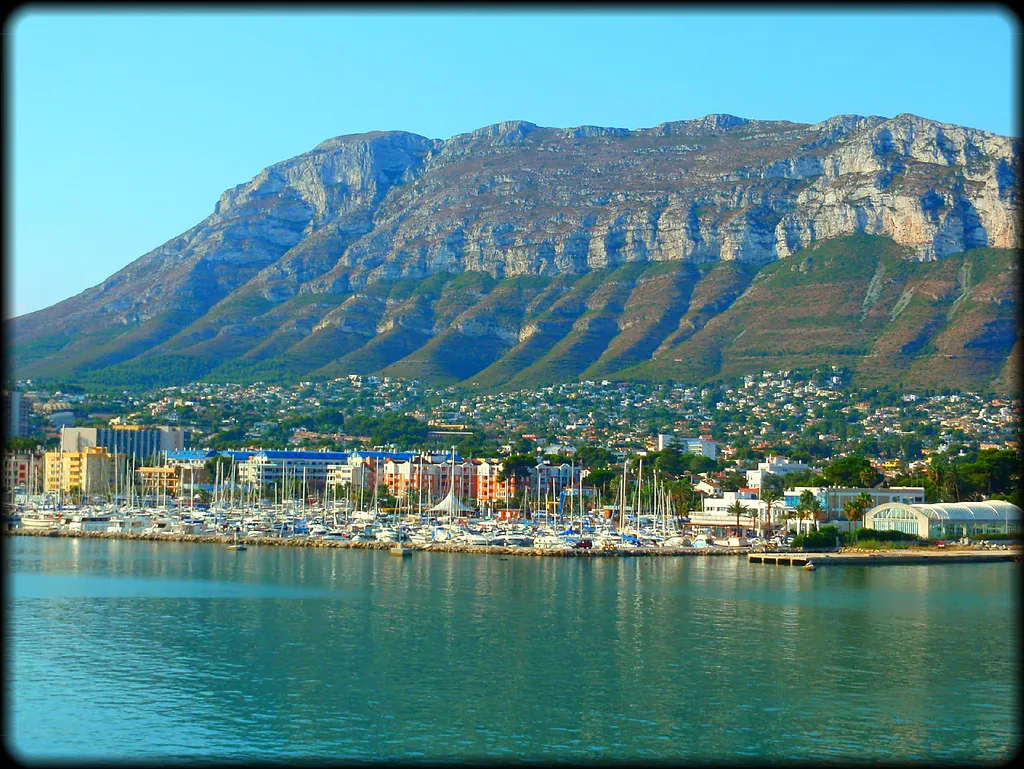
Castell de dénia de lluny.jpg
Comunidad Valenciana · Mediterranean Light

Castell de Castells

From the terrace of the old schoolhouse you can see two seas. One is the real Mediterranean, a steel-blue stripe thirty kilometres south. The other...

443 inhabitants · INE 2025
551m Altitude

Why Visit

Mountain Sanctuary of Pla de Petracos (rock art) Rock-art trail

Best Time to Visit

spring

Assumption Festival (August) agosto

Things to See & Do
in Castell de Castells

Heritage

  • Sanctuary of Pla de Petracos (rock art)
  • Els Arcs
  • Church of Santa Ana

Activities

  • Rock-art trail
  • Hike to Els Arcs
  • Nature tourism

Festivals
& & Traditions

Fecha agosto

Fiestas de la Asunción (agosto)

Las fiestas locales son el momento perfecto para vivir la autenticidad de Castell de Castells.

Full Article
about Castell de Castells

Mountain village known for its rock art and the Els Arcs ravine.

Ocultar artículo Leer artículo completo

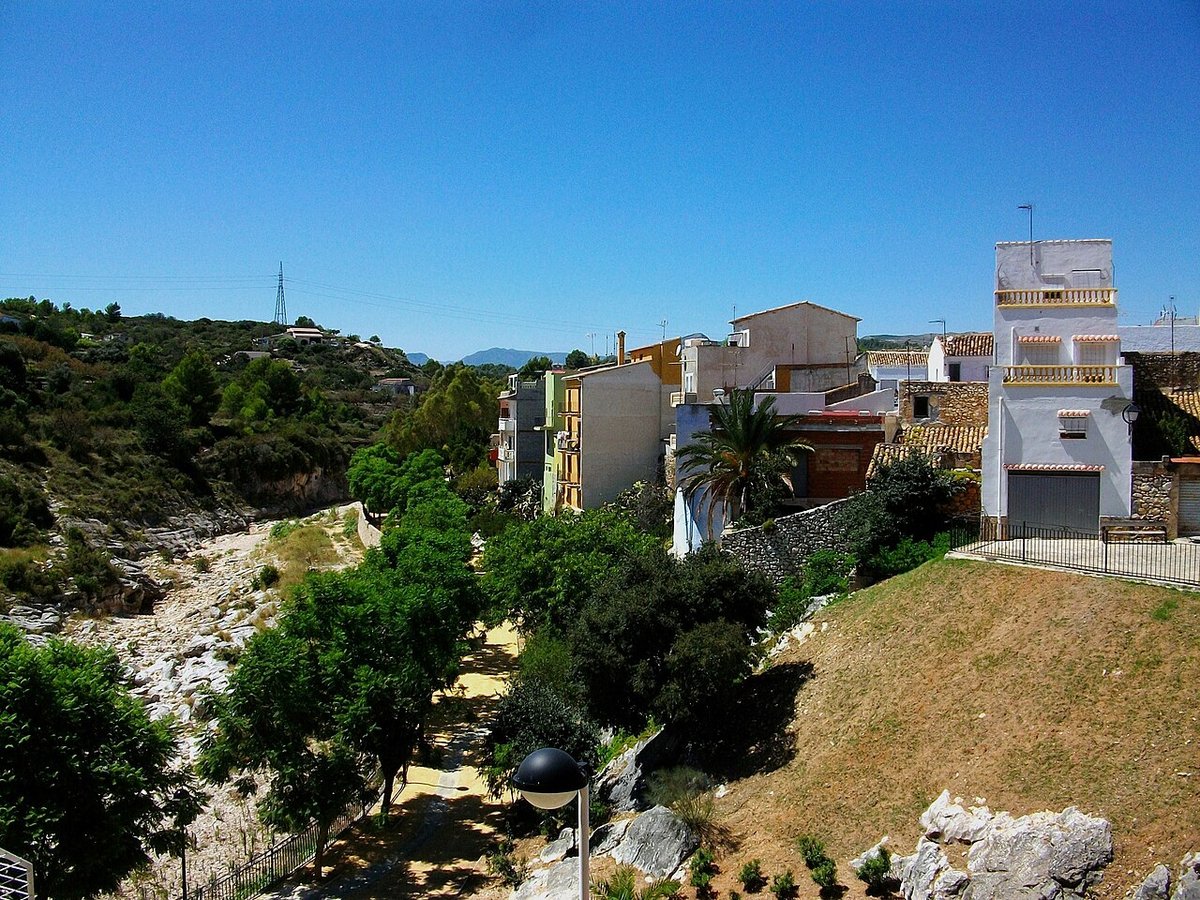
From the terrace of the old schoolhouse you can see two seas. One is the real Mediterranean, a steel-blue stripe thirty kilometres south. The other is a rolling ocean of limestone that breaks against the 1,200 m wall of the Serrella range – white crests of rock, olive-green swells of carrasca oak. Castell de Castells sits on the cliff between them, 551 m above the Jalon valley, and the first thing you learn is that everything here is measured in vertical metres.

The village numbers 445 permanent residents, a figure that shrinks when the almond blossom ends and swells again when British walkers arrive with the cooler months. They come for silence, not souvenirs. There is no tat shop, no ice-cream parlour playing 90s anthems, just stone lanes that tilt at 20 degrees and a church bell that still marks the hours Spaniards actually observe.

The climb and the carrot

Reaching the place is half the experience. From the AP-7 you turn inland at Benissa, leave the coastal citrus behind and corkscrew up the CV-720 for 25 km. Sat-nav signal falters in the ravines; download the route while you still have 4G. The final approach threads through a cutting so narrow that stone walls graze both wing mirrors. Low-slung hire cars should stop in the ring-road car park at the top – the public ramp into the old quarter is a 30 % concrete chute that has detached bumpers from Fiestas and pride from many a Golf driver.

The reward for surviving the ascent is lunch. Castell d’Ines occupies a former barn on Calle la Creu. It has five tables, one sitting, no menu. WhatsApp (+34 627 972 726) at least 24 hours ahead, state dietary dreads, and the couple who own it shop per head. What arrives is a very un-mountain-like six-course tasting (€35): salmon with local honey, slow pork that collapses at the sight of a fork, a chocolate mousse that makes the hairpin bends worthwhile. Brits who review it use words normally reserved for Michelin basements in London; Valencians simply call it “la casa de Jane y Kike”.

Stone, snow and ibex prints

Castell de Castells has no castle left – only a grassy knoll where Moorish lookouts once counted Berber supply trains. The real fortification is the landscape itself. Way-marked paths leave from the upper fountain, painted splashes of yellow and white that soon dissolve into rock labyrinths. The shortest loop, Pla de Petracos (4 km, 90 min), climbs to a rock overhang sheltering prehistoric schematic paintings – stick figures hunting goats, ochre after 6,000 years. Entry is free; bring a torch to see the detail.

Keener boots can continue along the Serrella ridge. In April the slope is polka-dotted with dwarf narcissus and the air smells of thyme and wet limestone. By late June the same path is an oven; start before 08:00 and carry 1.5 litres per person – there are no kiosks, only the occasional spring trickling out of a plastic pipe. Tracks of wild boar appear in the mud, griffon vultures circle overhead, and every crest reveals that distant Mediterranean flash, a reminder that Benidorm’s beaches are 40 minutes away in altitude as well as years.

Winter is a different contract. Night temperatures brush freezing, the upper trail can hold snow for days, and the village briefly feels Alpine. The bar with the open hearth on Plaza Mayor sells thick hot chocolate for €2 and lets you dry soaked gloves on the back grate. Roads are gritted but not guaranteed; if the Serra de Bernia turns white, carry chains or book a room. The one inexpensive hostal (three doubles, €55 with breakfast) is inside the old wash-house – stone walls, radiators that work, and a view straight over the abyss.

Sundays, sausages and silence

Friday night is market eve: a single van in the square sells lemons, knickers and tinned tuna, all at Costa-prices-plus-mountain-tax. Saturday the bakery opens at 07:00 and sells out of coques (oval pizzas topped with onion or sobresada) by 09:30. Sunday everything closes except the church and the bar that doubles as the butcher. The rhythm is contagious; visitors find themselves speaking more softly, walking more slowly, noticing how stone changes colour from honey at dawn to pewter after dusk.

Local food is mountain-plain but good. Longaniza sausages hang in the rafters of the grocery; they fry sweet and smoky, brilliant with eggs. Pa amb tomaca – toast rubbed with tomato, garlic and a slash of olive oil – appears automatically when you order beer. Game stews turn up after October shoots: wild-boar civet scented with rosemary, rabbit with bay leaves. Vegetarians get tortilla, salad, and the excellent regional cheeses made from Murciano-granadina goats. Wine is either bulk red from Jalón cooperatives or a chilled bottle of Alicante Moscatel that tastes of orange blossom and costs €12.

When to come, when to leave

April–May and late September–October are the sweet spots: 20 °C at midday, cool enough to walk, warm enough to sit outside. Easter is solemn, with hooded processions that squeeze through streets barely two metres wide. The August fiesta brings fireworks echoing off the cliffs and a foam party in the polideportivo – yes, even here – but accommodation is non-existent unless a villager offers you a spare room. November is mushroom month; locals guard their níscalo spots like state secrets, but you can tag along on the guided mycological walk run by the tourist office (€10, Saturdays, book at the town hall).

Rain is rare but spectacular: dry riverbeds become brown torrents within minutes, and the smell of wet earth rises like coffee. If clouds park on the ridge, the village loses its sea view and feels like the Highlands; mist drifts between houses, church bells become disembodied. It passes quickly, usually by lunchtime, leaving the cobbles polished and the air scrubbed.

Leave before you need to. The single ATM (Banc Sabadell) swallows cards on Fridays and is empty by Sunday evening. The pharmacy opens three mornings a week; anything more serious means a 45-minute drive to Denia. Mobile signal dies two kilometres beyond the last house – download offline maps, tell someone your route, and remember that “quiet” can tip into “isolated” if you twist an ankle on a deserted trail.

Still, that is exactly why you came. Somewhere between the last lemon grove and the first limestone bluff, Castell de Castells offers a straightforward deal: height in exchange for hush, effort for space, a bit of clutch-burn for a porch where the Mediterranean glints like a coin tossed into the far blue. Accept the terms and the village keeps its side of the bargain. Just don’t expect a souvenir shop on the way out – the only thing for sale is the view, and it’s already in your mirror.

Key Facts

Region
Comunidad Valenciana
District
Marina Alta
INE Code
03054
Coast
No
Mountain
Yes
Season
spring

Livability & Services

Key data for living or remote work

2024
Connectivity5G available
HealthcareHospital 11 km away
EducationElementary school
Housing~5€/m² rent · Affordable
CoastBeach 19 km away
Sources: INE, CNMC, Ministry of Health, AEMET

Official Data

Institutional records and open data (when available).

  • Castillo de Serrella
    bic Monumento ~2.3 km

Planning Your Visit?

Discover more villages in the Marina Alta.

View full region →

More villages in Marina Alta

Traveler Reviews