Full Article
about Els Poblets
Flat, quiet coastal municipality; former Roman area with a pebble beach
Hide article Read full article
Here is something many visitors do not realise about Els Poblets: until relatively recently, it did not exist as a single municipality. For centuries this stretch of the Marina Alta was divided into three separate settlements, Setla, Mirarrosa and Miraflor. It was only in the early 1970s that they began operating under one town hall.
Even now, daily language has not entirely caught up with the administrative change. There are still locals who talk about “going to Setla” or “heading down to Mirarrosa”, as if they were distinct villages rather than parts of the same place. In practical terms they function as one, but the older identities have not disappeared. That layered sense of place is part of what defines Els Poblets today.
The River on Its Way to the Sea
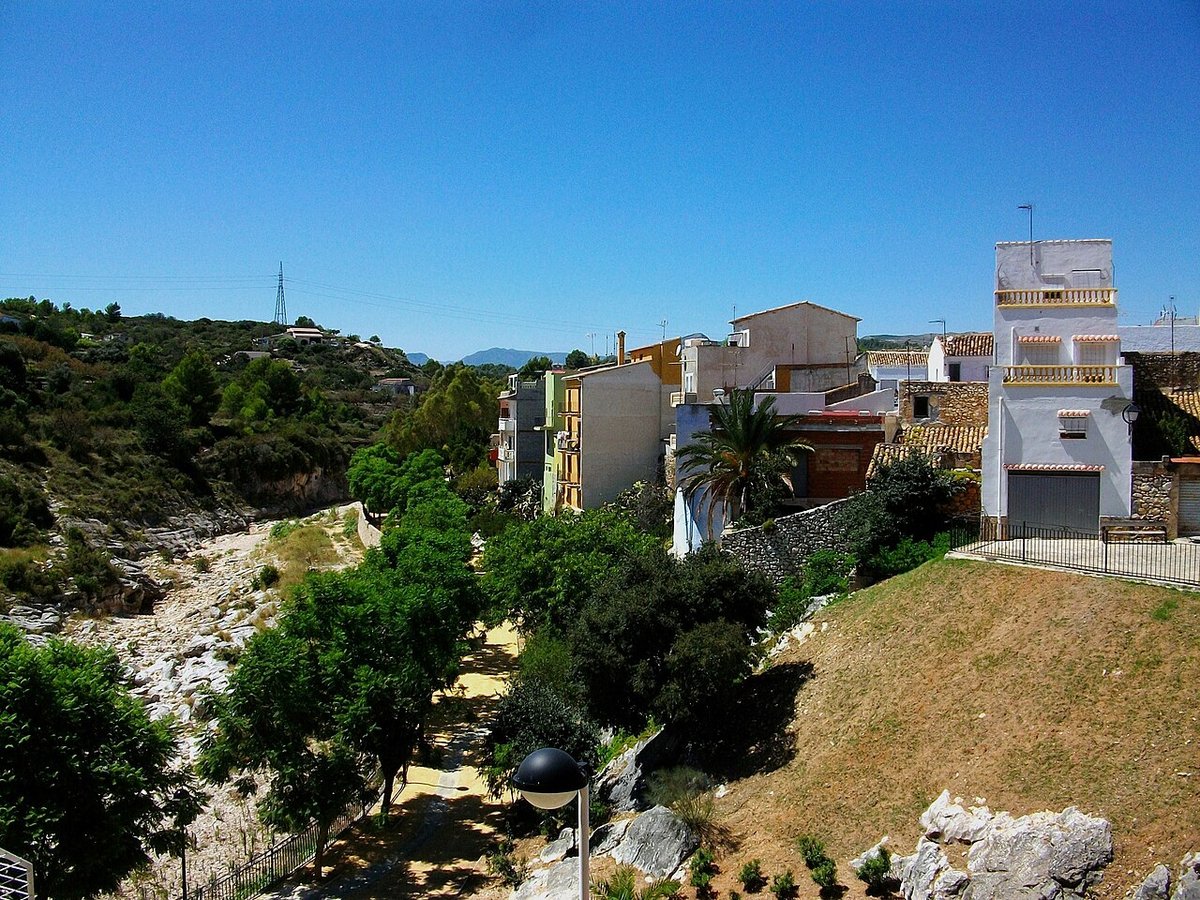
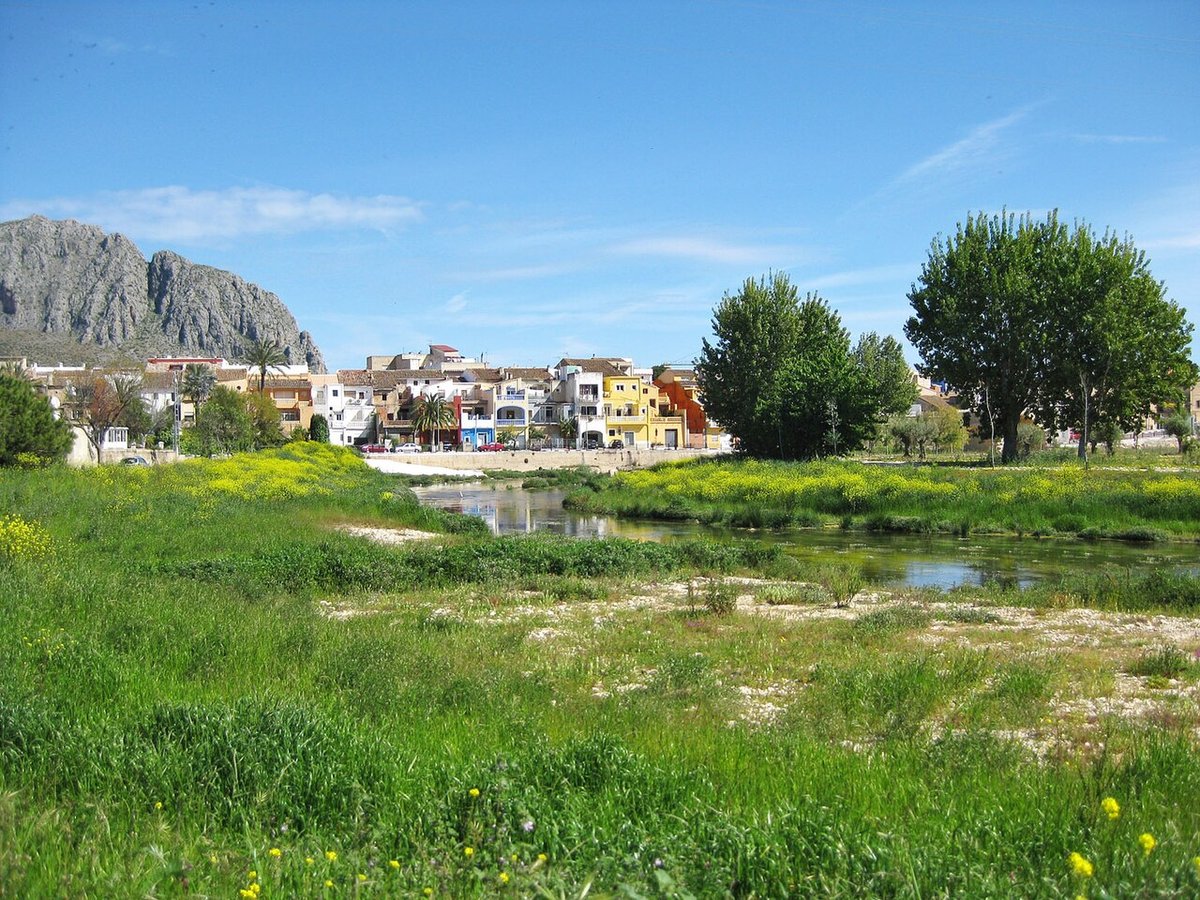
The River Girona passes through Els Poblets briefly, almost as if it is stopping by on its way elsewhere. This is one of the last municipalities it crosses before reaching the Mediterranean, and around its banks you can see how life here has unfolded for generations.
The surrounding huerta, the irrigated farmland typical of this part of eastern Spain, still shapes the landscape. Orange groves and persimmon trees stretch across flat fields, criss-crossed by acequias, the traditional irrigation channels that carry water through the crops. It is level, open country where cars tend to slow down because there is always a tractor turning into a track or edging back on to the road.
Then there is Playa de la Almadrava. It helps to arrive knowing what to expect. This is not a sweep of fine sand. The shore is made up of pebbles and rocky patches, the sort of beach where you quickly learn to bring swimming shoes or sturdy sandals for the water. In exchange, the sea is usually clear and the atmosphere calm. Many of the foreign residents who live in this part of the Marina Alta are perfectly content with the formula: a towel, a long swim and very little else.
Three Villages, One Calendar
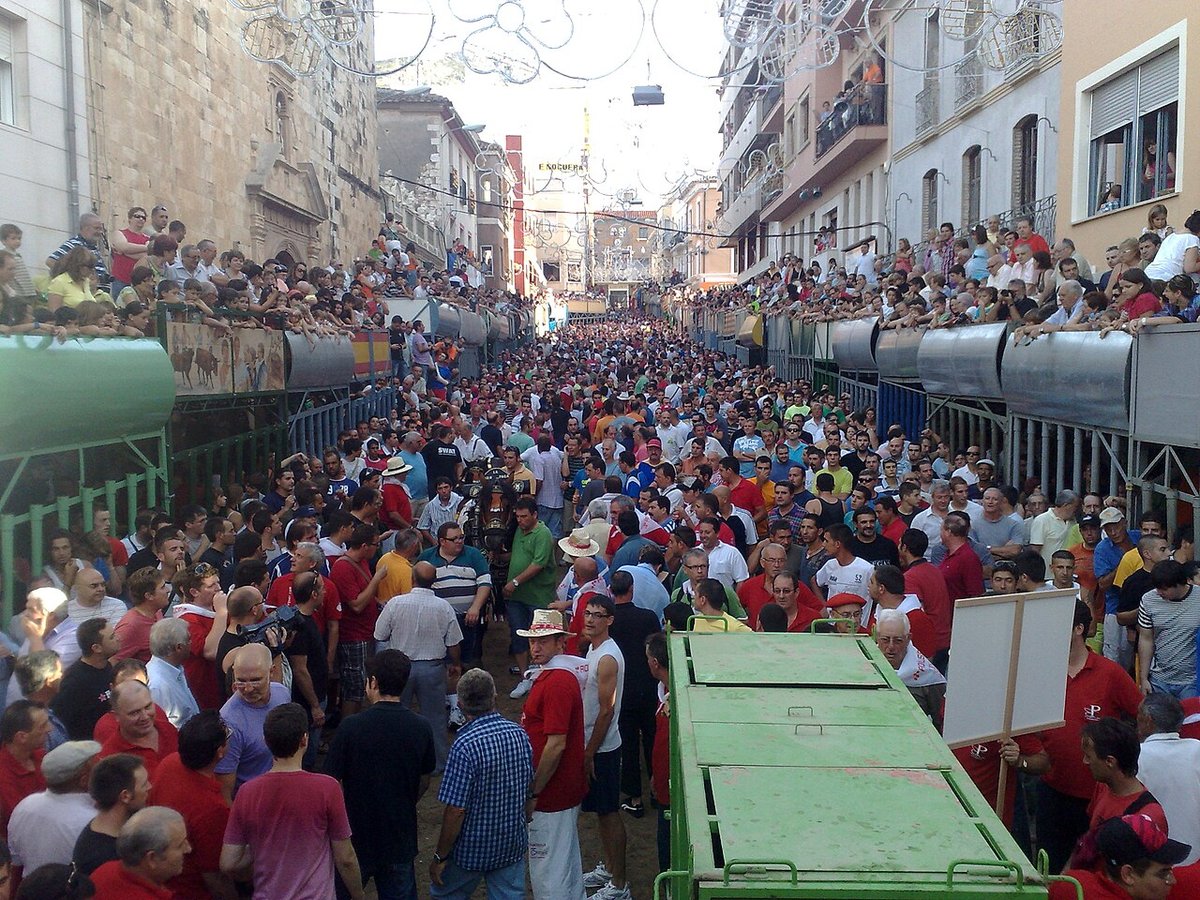
When summer arrives, the social calendar gathers pace with the fiestas of the Divino Salvador. They typically run over several days and combine music, events in the streets and communal meals, the kind of programme you would expect in a Spanish town that takes its festivities seriously.
In some years, Moros y Cristianos also feature. These celebrations, common across much of the Comunidad Valenciana, recreate the historical clashes between Moors and Christians through troupes, costumes and parades. In Els Poblets, the comparsas and processions are similar to those seen in other towns in the Marina Alta, bringing colour and spectacle to the streets.
January brings another local fixture: Sant Antoni. This festival is celebrated across the region and centres on bonfires and the blessing of animals. Neighbours gather around the fire from the morning onwards, chatting while the smell of firewood and grilled sausages hangs in the air. If you happen to pass through that day, the scent tends to linger on your clothes long after you leave.
Market Day and Everyday Life
The weekly street market is one of the moments when Els Poblets feels most like a meeting point. It is not elaborate. Expect fruit and vegetables, clothing, a stall or two with tools, everyday household items. The usual mix.
What stands out is the atmosphere rather than the shopping. Grandmothers pushing wheeled trolleys, neighbours stopping for a conversation halfway along the row of stalls, and a steady blend of languages. This part of the Marina Alta has attracted many residents from other European countries, and in Els Poblets that diversity is noticeable. Spanish mingles with other accents as easily as the goods change hands.
For the rest of the week, the pace is unhurried. The huerta continues its routine, cars cross the central streets slowly, and there is a clear sense of neighbourhood life. For public transport, however, it is usually necessary to look towards the larger nearby municipalities.
The Beach That Is Not a Beach
Playa de la Almadrava deserves a second mention because it says a great deal about the character of Els Poblets.
This is not a postcard beach and it rarely appears in glossy brochures. It suits those who already know what they are coming for. Swimming shoes in the bag, a parasol if the sun is strong, something cold in a small cool box. A dip in the sea, a float for a while, and that is enough.
Near the point where the River Girona approaches the sea, there are spots where people gather towards sunset simply to sit and talk. Retirees discussing the day, children racing past on bikes, families lingering until the heat begins to fade. It is an everyday scene that might not feature in guidebooks, yet it explains more about how a place works than any landmark could.
A Quiet Stop in the Marina Alta
Els Poblets is not somewhere that demands many days to understand. It works best as a calm stop within a wider route through the Marina Alta. A walk through the streets, a relaxed meal, some time by the sea, and that is often enough to grasp its rhythm.
If more activity is required, Dénia is close by. El Verger and Pedreguer are also nearby for shopping and errands. Els Poblets remains quieter in comparison, rooted in its agricultural surroundings and its low-key coastline.
Timing makes a difference. In August the area fills up and finding parking near the beach can become something of a local sport. At the beginning of summer or once September arrives, the atmosphere eases again and the tempo slows.
In the end, Els Poblets functions much as it always has: three former settlements that became one municipality, farmland stretching around them, a river heading steadily towards the Mediterranean, and a pebble beach where many locals still take their first swim of the day without fuss. It is straightforward and lived-in, with a character shaped less by grand sights and more by daily habits.