Full Article
about Gata de Gorgos
Crafts village known for basketry and wickerwork, set beside the Río Gorgos.
Hide article Read full article
Early in the morning, when many shutters are still half closed, the centre of Gata de Gorgos moves to a soft rhythm of church bells and keys turning in workshop doors. On Calle Mayor, someone lifts the metal shutter of a carpentry shop. Inside, the air carries the scent of sawdust and fresh varnish. In winter the sun takes its time to reach the narrow streets, and for a while the town seems to speak in a low voice.
Gata de Gorgos sits in the Marina Alta, in the north of the province of Alicante. Life here is closely tied to craft traditions that have shaped both its economy and its identity. A walk through the centre links one trade to another, with each doorway offering a clue to what has long defined the town.
The scent of esparto and the sound of strings
A stroll through Gata is a sequence of smells and textures. First comes the warm scent of bread from a nearby bakery, then leather, and often the dry, earthy aroma of esparto. Basketry remains an important part of local culture. In a small museum dedicated to esparto, housed in a former home, visitors learn how this tough Mediterranean fibre supported the town’s economy for decades.
The displays explain that esparto grass was soaked for days to soften it. After that, it was beaten against stone before any braiding began. When there is a demonstration, the most striking detail is the rhythm of the hands. The craftsperson works almost automatically, fingers moving with practised precision while continuing a conversation without looking away from the weave.
A few steps away, the scent changes. Cedar wood, warm glue and varnish drift out from guitar workshops. Gata is also known for the artisanal manufacture of guitars. In some workshops the pace remains unhurried, with each instrument shaped piece by piece. When an artisan presents a newly sanded neck, the invitation is simple: place your palm against the wood. The response of the material, it is said, can be felt through touch.
These trades are not presented as performances for visitors. They form part of daily life. Doors open, tools are set out, and work begins much as it has for years.
When the Three Kings knock at the door
On the afternoon of 5 January, the atmosphere in Gata changes. Across Spain, Epiphany is marked by parades celebrating the arrival of the Three Kings, known as the Reyes Magos. In Gata, the focus is different. The local tradition is called the Misteri de Reis.
Instead of watching a procession pass by, residents take on the roles of the Three Kings and walk through the streets, visiting homes one by one. They knock on doors, step inside to greet children and leave small gifts. The scene is simple. Tunics shift in the January breeze. Children peer from behind doors. Families wait their turn in anticipation.
The experience feels less like a staged event and more like a shared ritual that the town repeats each year. Streets become part of the celebration, and private homes open briefly to the figures who, in Christian tradition, brought gifts to the infant Jesus. The scale remains intimate, rooted in neighbourhood ties rather than spectacle.
The climb to the Calvario
From several points in the town centre, the white outline of the ermita del Calvario stands out against the sky. It appears close, yet the path upwards has a steady incline. The route winds between the Stations of the Cross, each marked by tiled panels. At midday the sun falls directly onto the path, and the ascent slows.
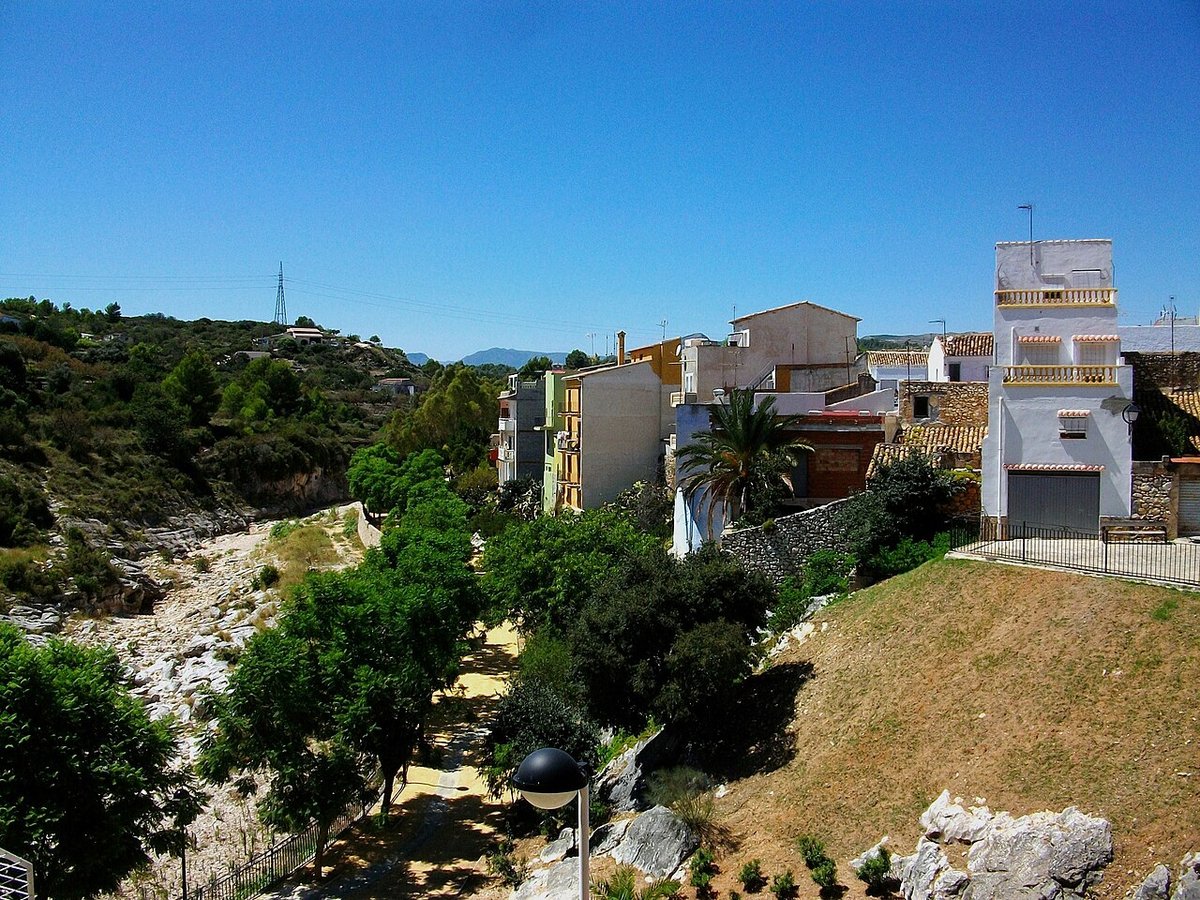
At the top, there is wind and a sense of quiet. The open space in front of the hermitage offers a clear view of the town’s layout. The bell tower of the iglesia de San Miguel rises above the tightly packed rooftops of the old quarter. Beyond the houses, plots of orange trees stretch towards the plain. On particularly clear days, a faint shimmer of sea can be glimpsed in the distance, even though the coast lies several kilometres away.
Inside the hermitage, the air smells of wax and old wood. The whitewashed walls keep a coolness that persists even when the heat outside intensifies. The atmosphere is usually calm, with little to disturb the stillness.
The climb is not long, but it creates a shift in perspective. From above, the pattern of streets and fields becomes easier to read, and the relationship between town and countryside comes into focus.
Font de la Mata and the old trees
On the outskirts of Gata, a rural track runs between terraced fields towards the Font de la Mata. There are no large signs announcing it. The place simply appears: a spring, an old washhouse and a small clearing framed by vegetation.
Some of the lentisk trees growing there have thick, twisted trunks that reveal their age. In winter, when they lose part of their foliage, the branches form shapes that seem almost sculptural. Water continues to flow from the fountain, and the stones of the washhouse are smoothed by decades of use.
Today, people are more likely to stop here for a short rest than to carry out daily chores. Even so, its former role is easy to understand. It served as a water source, a meeting point and a pause along the paths leading from the town towards the interior.
The setting remains modest. There is no sense of monumentality, only the quiet persistence of water and the shade of old trees.
When to take it slowly
Spring is often a good time to explore Gata de Gorgos and its surroundings. The fields turn green, and the light of the Marina Alta has not yet acquired the sharpness of summer. Walks through the centre or up to the Calvario feel more comfortable in these months.
In August, the atmosphere shifts. The town becomes busier, and the fiestas dedicated to the Cristo del Calvario take place. These celebrations are experienced with intensity by residents. Streets fill, routines change and the pace becomes more animated.
Those who prefer quieter streets may wish to avoid peak summer weekends and the central hours of the day, when heat and local habits encourage a pause. At other times, Gata de Gorgos reveals itself gradually, through the sound of workshop doors opening, the scent of esparto and wood, and the steady rhythm of traditions that continue to shape daily life.