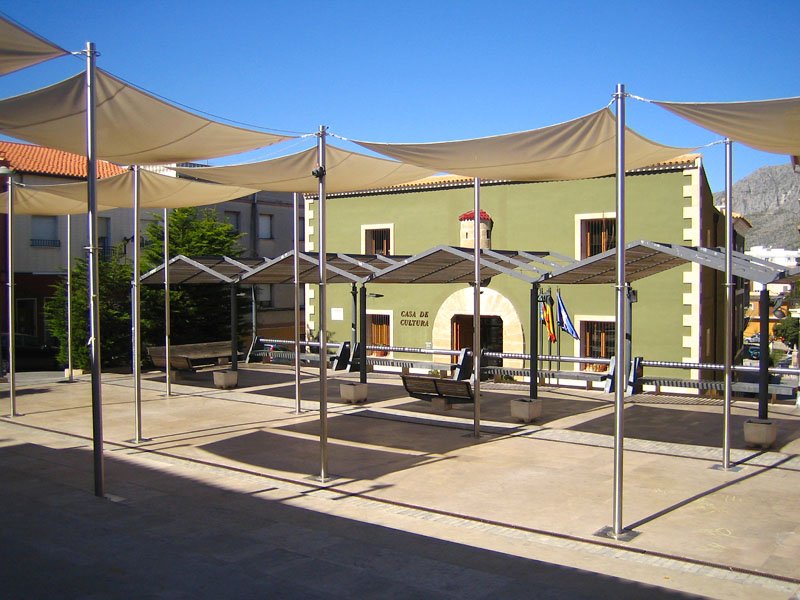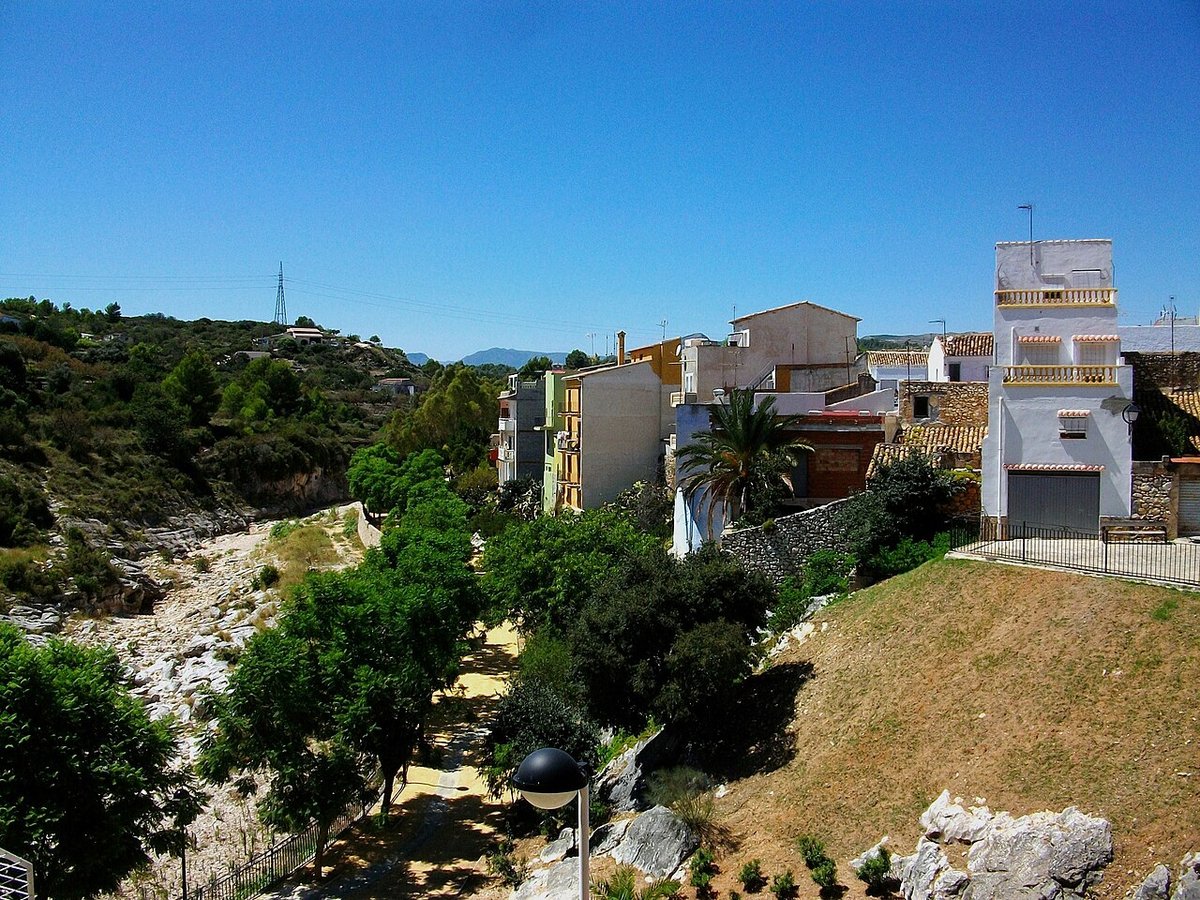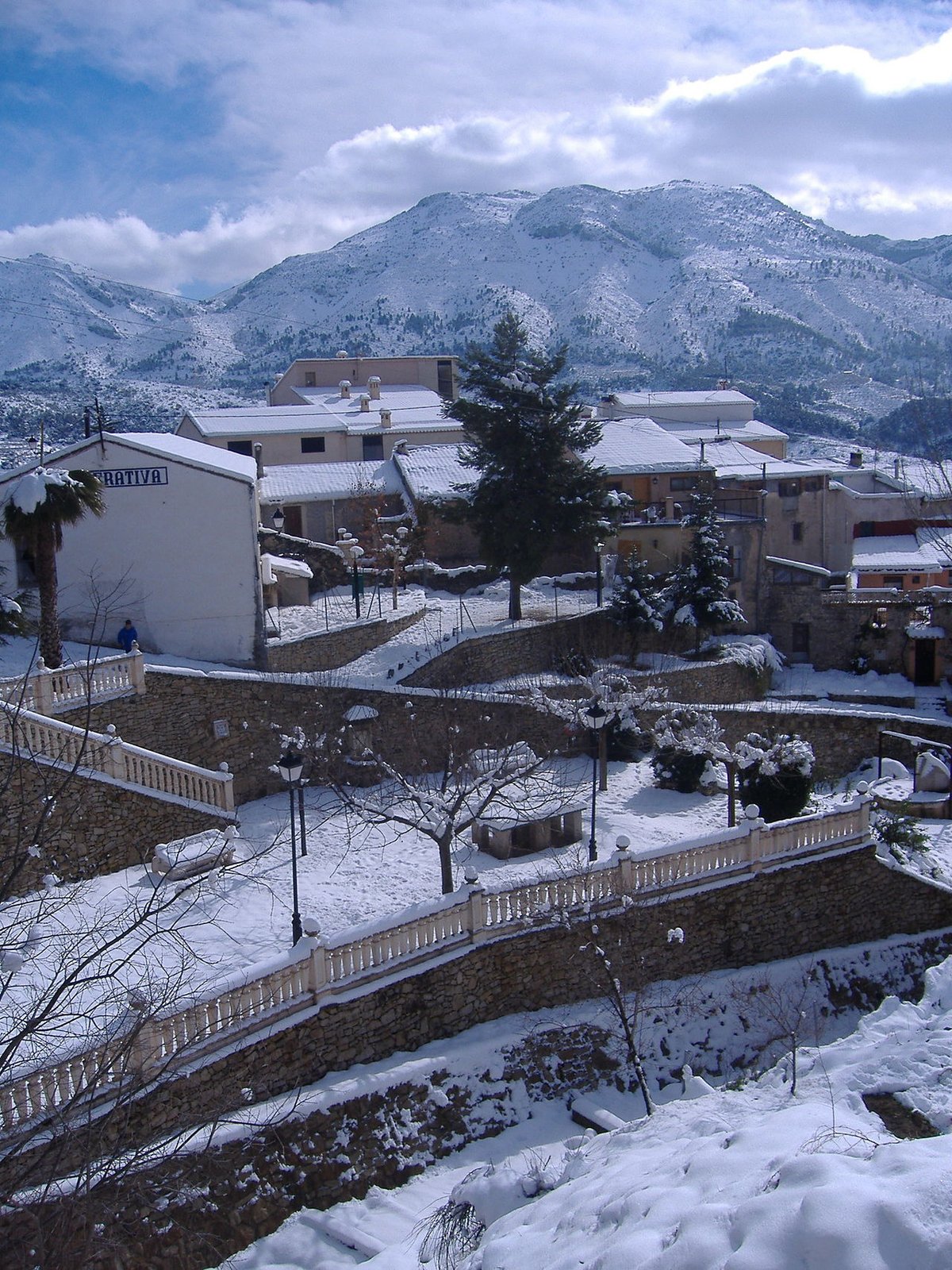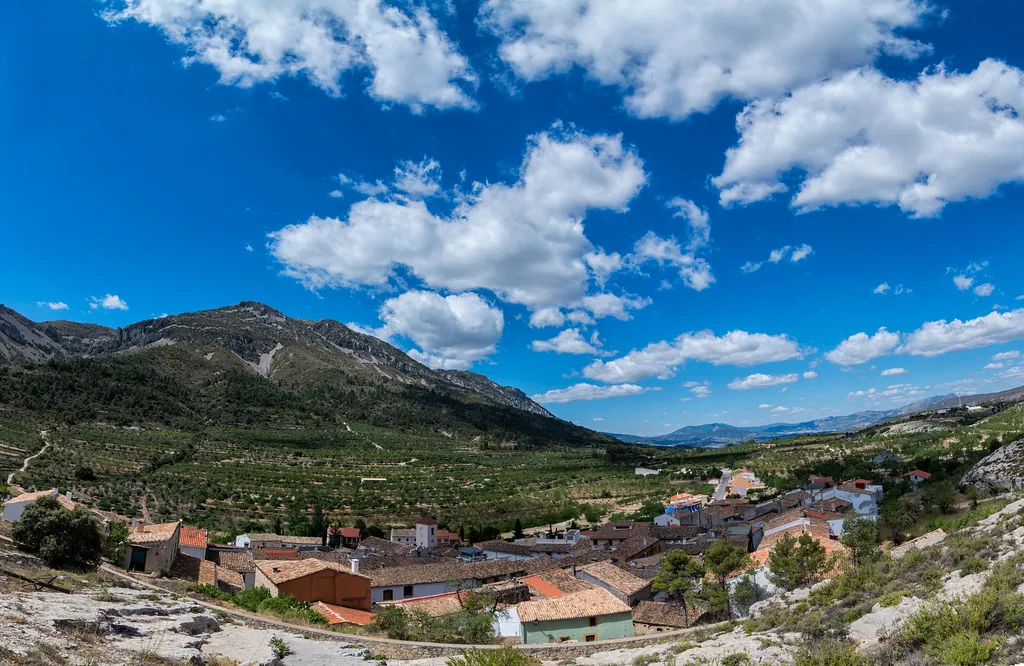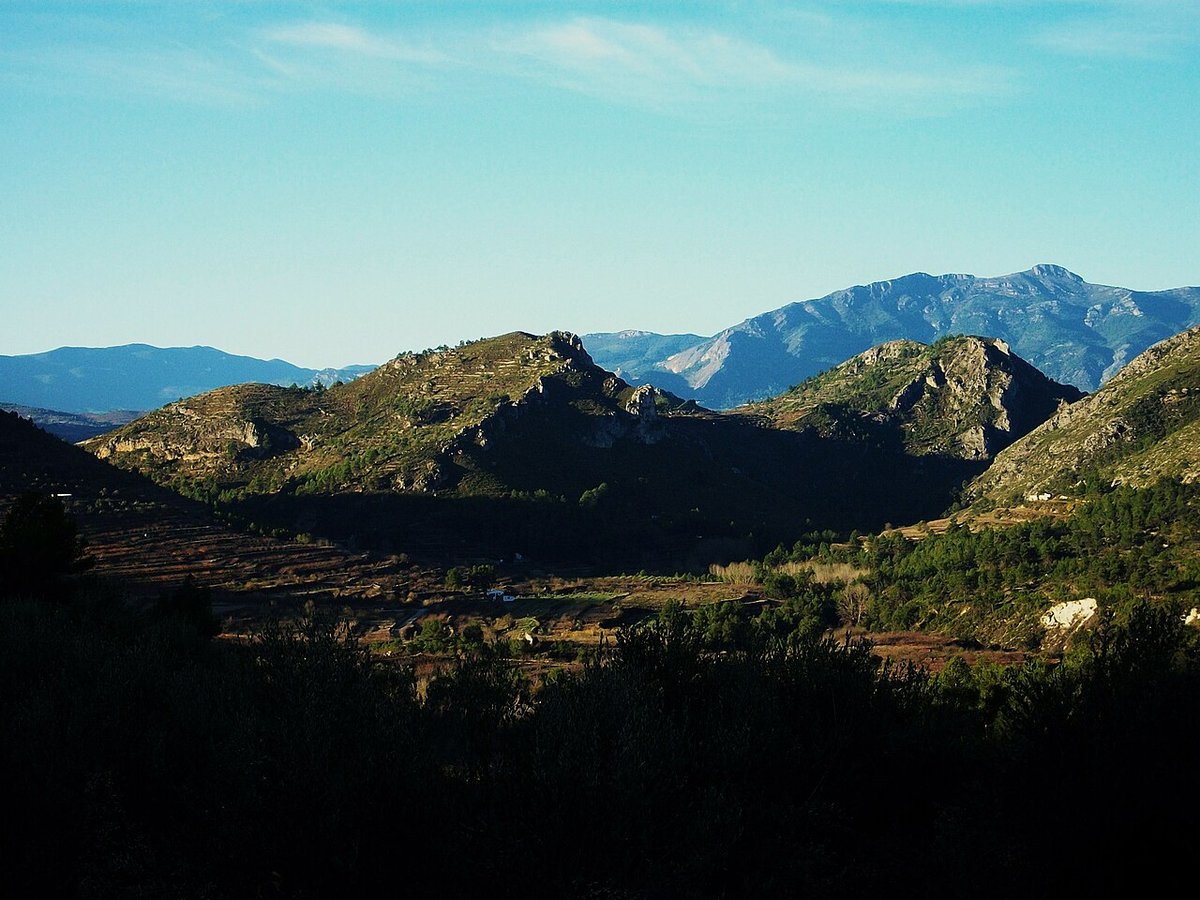
De la Vall de Gallinera a la Vall d'Alcalà, el castell de Cocentaina al fons.JPG
Comunidad Valenciana · Mediterranean Light

La Vall d'Alcalà

The morning sun hits the stone terraces at an angle that makes every almond tree cast two shadows. From the village's highest point you can see the...

159 inhabitants · INE 2025
637m Altitude

Why Visit

Mountain Abandoned Moorish village of l'Atzuvieta Abandoned Moorish hamlets trail

Best Time to Visit

spring

San Antonio Festival (August) agosto

Things to See & Do
in La Vall d'Alcalà

Heritage

  • Abandoned Moorish village of l'Atzuvieta
  • Nevera de Baix
  • Church

Activities

  • Abandoned Moorish hamlets trail
  • historic hiking
  • photography

Festivals
& & Traditions

Fecha agosto

Fiestas de San Antonio (agosto)

Las fiestas locales son el momento perfecto para vivir la autenticidad de La Vall d'Alcalà.

Full Article
about La Vall d'Alcalà

Historic Moorish valley; abandoned hamlets and wild nature

Ocultar artículo Leer artículo completo

The morning sun hits the stone terraces at an angle that makes every almond tree cast two shadows. From the village's highest point you can see the Mediterranean—a thin silver line 25 kilometres away—while behind you the limestone wall of the valley catches thermals that lift eagles higher than the road you've just climbed. This is La Vall d'Alcalà, population 174, where the Costa Blanca's clamour fades to wind and the occasional tractor.

Valley of Dry-Stone and Silence

What strikes first-time visitors isn't postcard beauty but absence: no souvenir shops, no tapas bars with English menus, no coach parks. Instead, a scatter of hamlets—Alcalà de la Jovada, Benialí, Benichembla—connected by footpaths older than the road network. Houses cling to slopes at angles that make you question the builders' sobriety. Some are shuttered, their owners gone to Alicante or London for work; others have fresh paint and British-registered cars outside, signs of the slow return of retirees seeking space over sea views.

The valley floor sits at 637 metres, high enough that nights stay cool even in August when Benidorm swelters. Dry-stone walls divide ancient terraces—bancals—built to wring every olive and almond from thin soil. Walking between them feels like trespassing on a medieval map: each terrace named, each olive tree numbered. Locals still harvest by hand; you'll see nets spread beneath trees from late September, and if you offer to help you'll be fed migas—fried breadcrumbs with garlic and grapes—at midday.

Walking Without Waymarks

Maps underestimate distances here. What looks like a gentle 5-kilometre circuit to the next village becomes a thigh-burning climb when every terrace demands its own ascent. The GR-330 long-distance path passes through, but most routes follow old mule tracks—cami vell—that linked farmsteads before asphalt. From the church square, a stone staircase drops to the Barranc de la Fosca, where vultures nest in cliffs above a stream that dries to stagnant pools by July. Carry more water than you think; the next fountain might be dry.

Spring brings the best walking: wild rosemary scents the air, and almond blossom carpets the terraces white. By May the valley glows green against red soil—photographers arrive at dawn, tripods set up beside the Benialí road where the curve frames the Montgó massif. Autumn shifts the palette to ochre and rust; mushroom hunters disappear into pine woods with wicker baskets, guarding spots like state secrets. Winter can touch 3°C at night—pack that fleece even for April visits.

Food That Doesn't Wave at the Sea

Forget seafood paella. Here rice comes with rabbit, beans and mountain herbs—arroz de montaña—cooked outdoors in pans wide enough to seat a toddler. The valley's two restaurants both serve it, but only at weekends when they know walkers will come. Hotel La Font d'Alcalà does a lighter version for lunch, theirs flecked with rosemary and washed down with local Moscatel. The hotel's dining room fills with German hikers discussing gradient percentages while British couples compare car-hire horror stories from Alicante airport.

Goat cheese arrives drizzled with honey from hives tucked into valley crevices. It's mild, almost British in its restraint—nothing like the pungent stuff that clears Spanish train carriages. Almond cake follows: not the sticky macaroon affair you fear but a dense slab that tastes of burnt butter and orange zest. Order coffee—proper coffee, not the watery stuff the coast serves tourists—and you'll get a glass of tap water automatically, something that still surprises regulars from Brighton.

When the Valley Parties

October's fiesta honours the Virgen del Rosario with a procession that starts at the church and ends, inevitably, at the bar. Locals who've spent summer avoiding visitors suddenly become hospitable, pressing plastic cups of mistela into your hand while explaining—slowly, because they know you're foreign—that their grandfather built the house you're renting. A brass band plays pasodobles slightly off-key; children chase dogs through firecracker smoke. It's the only weekend when finding accommodation requires forward planning—book Hotel La Font two months ahead or you'll be driving back to the coast at midnight.

Easter processions feel more intense. Hooded penitents carry statues through streets barely three metres wide; the crowd parts for women wearing black lace veils that make British observers reach for historical parallels. No photographs during Mass—the priest watches like a hawk—but afterwards the bar serves free wine and olives to anyone who helped carry the platform. It's community bribery, and it works.

Getting Lost Properly

You'll need a car. The CV-715 from Callosa switchbacks for 15 kilometres, guardrails optional, with drops that make passengers grab imaginary brakes. Sat-navs lose signal in the final gorge—download offline maps before you leave the AP-7. Fuel up in Benidorm; the last petrol station sits 20 kilometres away in Callosa, and it closes for siesta. Bring cash—lots of it. The village shop, open 9-11am except Thursdays, doesn't do cards, and neither does the bar when their machine breaks (it always breaks).

Mobile reception improves if you climb 50 metres above the village. You'll see walkers standing on walls waving phones like they're signalling aircraft. The British couple who bought the old schoolhouse installed Wi-Fi strong enough to reach the square—they charge €5 for the password, money that goes toward restoring the olive press they've turned into a library. It's the Valley's only co-working space, though the Wi-Fi drops every time someone microwaves coffee.

Leaving Without Really Leaving

The drive down feels shorter—gravity assists, and the sea grows from pencil line to postcard blue. You'll pass olive trucks labouring upward, drivers raising fingers from steering wheels in mountain greeting. Back on the AP-7, Benidorm's towers appear like a mirage of concrete and karaoke bars. Some visitors never return; others come back the next year with better boots and lower gears. The valley doesn't care either way—it has cliffs to crumble and terraces to rebuild, work that predates tourism and will outlast it. But if you do return, bring that fleece. And cash. And maybe a spare corkscrew—Hotel La Font's broke last Tuesday, and the shops are shut until Monday.

Key Facts

Region
Comunidad Valenciana
District
Marina Alta
INE Code
03134
Coast
No
Mountain
Yes
Season
spring

Livability & Services

Key data for living or remote work

2024
Connectivity5G available
HealthcareHospital 15 km away
EducationElementary school
Housing~5€/m² rent · Affordable
Sources: INE, CNMC, Ministry of Health, AEMET

Official Data

Institutional records and open data (when available).

  • Poblado Morisco de La Roca
    bic Zona arqueológica ~1.6 km
  • Poblado Morisco de La Cairola
    bic Zona arqueológica ~2.6 km
  • Poblado Morisco de El Benialí
    bic Zona arqueológica ~1.5 km
  • Castillo de la Vall d'Alcalà
    bic Monumento ~0.5 km
  • Poblado Morisco de L'Atzuvieta
    bic Zona arqueológica ~1.1 km
  • Castillo de Alcalá o de Benisili
    bic Monumento ~2.6 km

Planning Your Visit?

Discover more villages in the Marina Alta.

View full region →

More villages in Marina Alta

Traveler Reviews