Full Article
about La Vall de Laguar
The Marina’s balcony; known for the Barranc de l'Infern and its Moorish steps
Hide article Read full article
La Vall de Laguar: un valle en pendiente
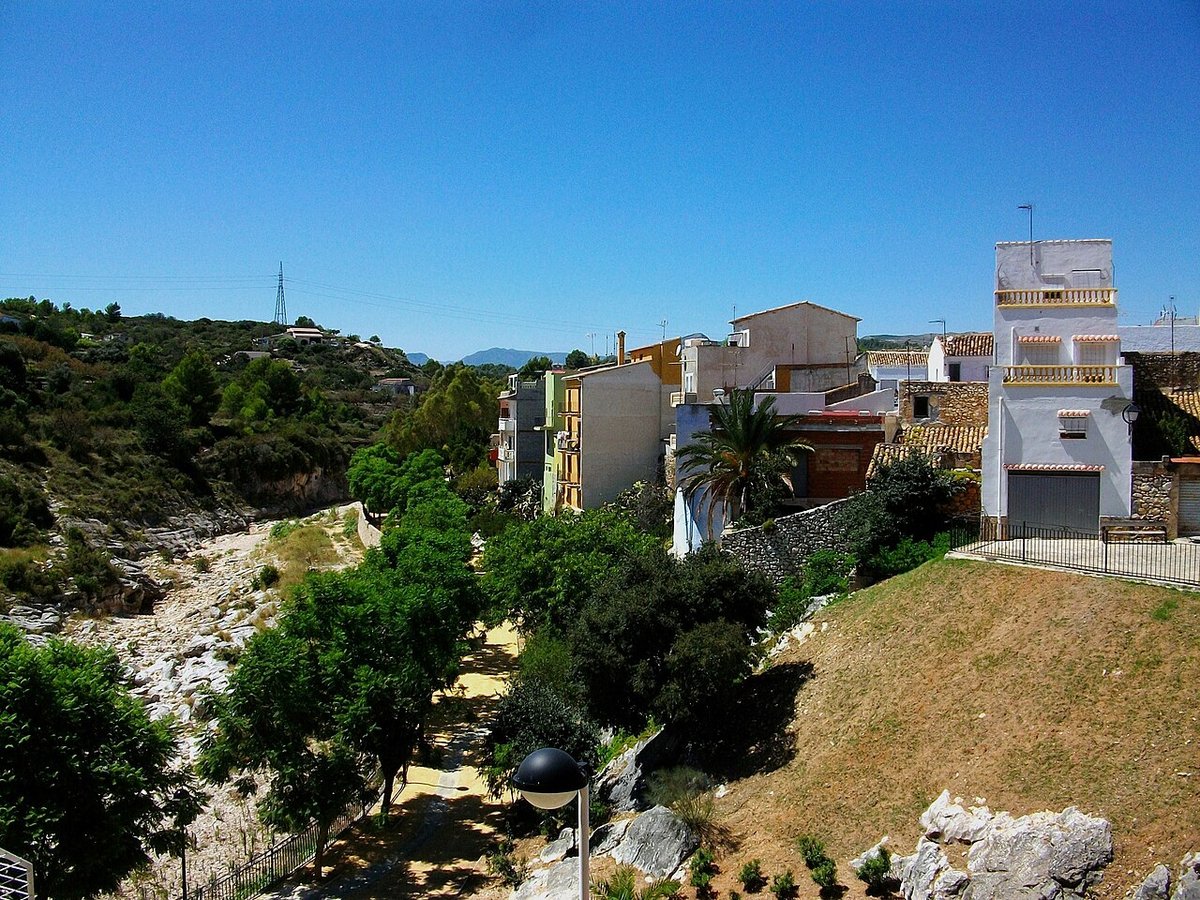
La Vall de Laguar se extiende como una cuña entre sierras en el interior de la Marina Alta. Su forma alargada y empinada no es casual. Las terrazas de piedra seca, los caminos y los núcleos de población dispersos responden a una necesidad histórica: cultivar donde apenas había suelo plano.
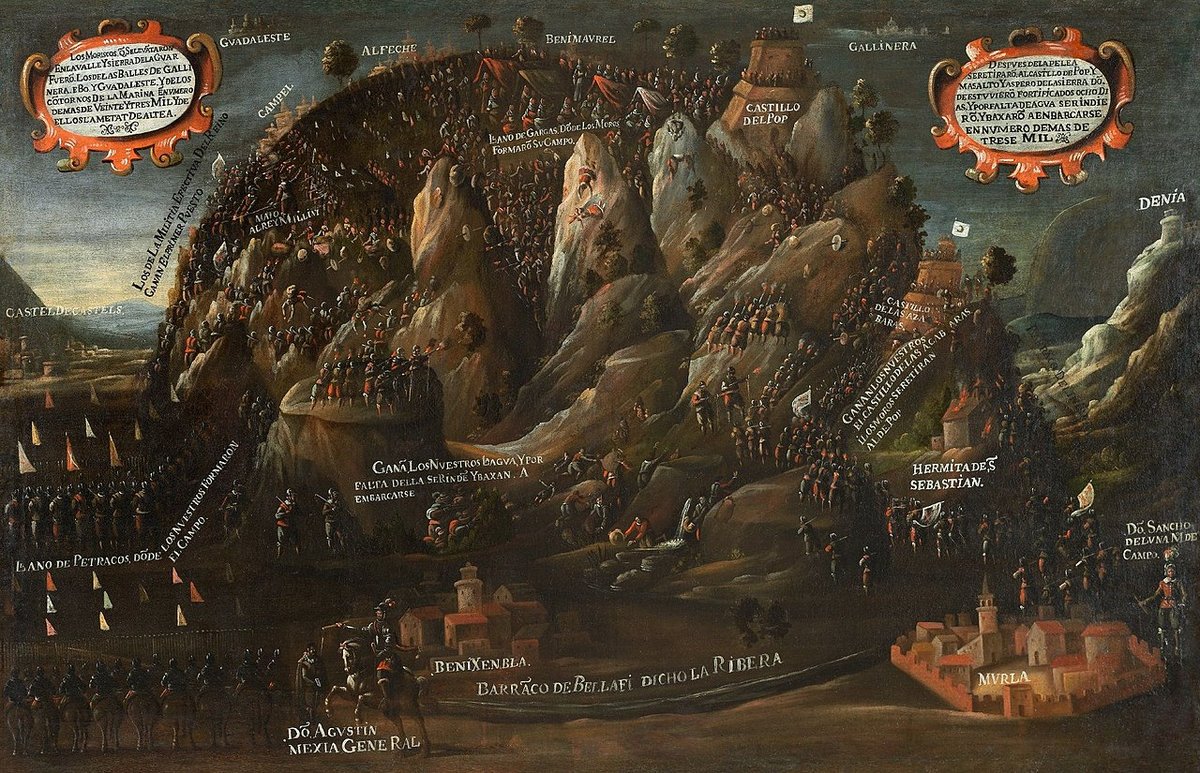
Tras la expulsión de la población morisca a principios del siglo XVII, el valle quedó casi despoblado. La repoblación posterior, con familias llegadas principalmente de Mallorca, dejó una huella que perdura en algunos apellidos y en prácticas agrícolas. El municipio actual agrupa los núcleos de Benimaurell, Fleix, Campell y Fontilles, cada uno asentado en una ladera o plataforma donde el terreno lo permitía.
Paisaje construido con piedra
Lo primero que se ve al llegar son las bancales. Son el elemento que define el paisaje, una red de muros de piedra seca que sostienen la tierra en pendientes pronunciadas. Sin este sistema, el cultivo de almendros y olivos no habría sido posible aquí. Es un trabajo acumulado durante generaciones.
La iglesia de San Miguel Arcángel, en Benimaurell, es un edificio sobrio del siglo XVIII. Su ubicación en el punto más visible del pueblo no era solo simbólica. Desde allí se dominaba visualmente buena parte del territorio cultivado.
Fontilles introduce una nota distinta en la historia del valle. A comienzos del siglo XX se fundó allí un sanatorio para el tratamiento de la lepra, que funcionó durante décadas como uno de los centros de referencia en España. Su presencia explica la arquitectura aislada de algunos edificios anexos.
El agua siempre ha sido un asunto crítico. A lo largo de los senderos se encuentran aljibes y pequeñas acequias tradicionales, infraestructuras esenciales para captar y almacenar lluvia en un clima donde puede no caer una gota durante meses.
El Salt de la Novia es una cascada que cae en una profunda garganta. Su caudal depende por completo de las lluvias recientes. En verano suele estar seca, pero el barranco que forma da una idea precisa de la orografía abrupta que rodea al valle.
Caminar sobre las terrazas
La forma más coherente de entender este territorio es recorrerlo a pie. Muchas rutas siguen los antiguos caminos de herradura que conectaban las aldeas y las parcelas. El terreno no es suave. Caminar aquí implica subir y bajar constantemente, atravesando bancales activos o abandonados.
Desde algunos puntos altos, en días claros, se vislumbra el Mediterráneo al fondo. La costa está lo suficientemente lejos como para notar el cambio de atmósfera.
Las carreteras que atraviesan el valle son estrechas y con curvas cerradas. Atraen a ciclistas en busca de puertos de montaña con poco tráfico. La conducción exige atención por las pendientes continuas.
La cocina local refleja los productos de la tierra: aceite de oliva, almendras y hortalizas de temporada. Son preparaciones sencillas, heredadas de la vida en las masías.
Ritmos del año
Las fiestas principales están dedicadas a San Miguel y se celebran a finales de septiembre. Como ocurre en muchos pueblos del interior, son días en los que regresa parte de la población que vive fuera.
En Fontilles se celebra San Blas en invierno, con un carácter más local y familiar.
Si el invierno ha sido húmedo, entre febrero y marzo los almendros florecen en las laderas. No es un evento organizado, pero durante unas semanas cambia por completo el color del valle.
Cómo llegar y cuándo ir
Se accede desde Ondara, tomando la carretera que se adentra hacia las sierras. El último tramo es sinuoso y marca claramente el paso de la llanura costera al relieve interior.
Conviene evitar el verano para hacer senderismo, ya que el calor puede ser intenso. El otoño, el invierno y el inicio de la primavera son épocas más adecuadas para caminar, con un paisaje que varía según hayan sido las lluvias.