Full Article
about Llíber
Small rural village in the Pop Valley, surrounded by vineyards and riuraus.
Hide article Read full article
A Quiet Rhythm in the Pop Valley
By mid-morning, when the sun begins to fall sideways across the valley, the streets of Llíber almost empty out. A half-open shutter here, the echo of footsteps on the paving stones there, and if there is a breeze, the dry scent of the terraced fields that ring the village. Tourism in Llíber has more to do with that unhurried rhythm than with ticking off sights. This is a place for walking slowly and looking around.
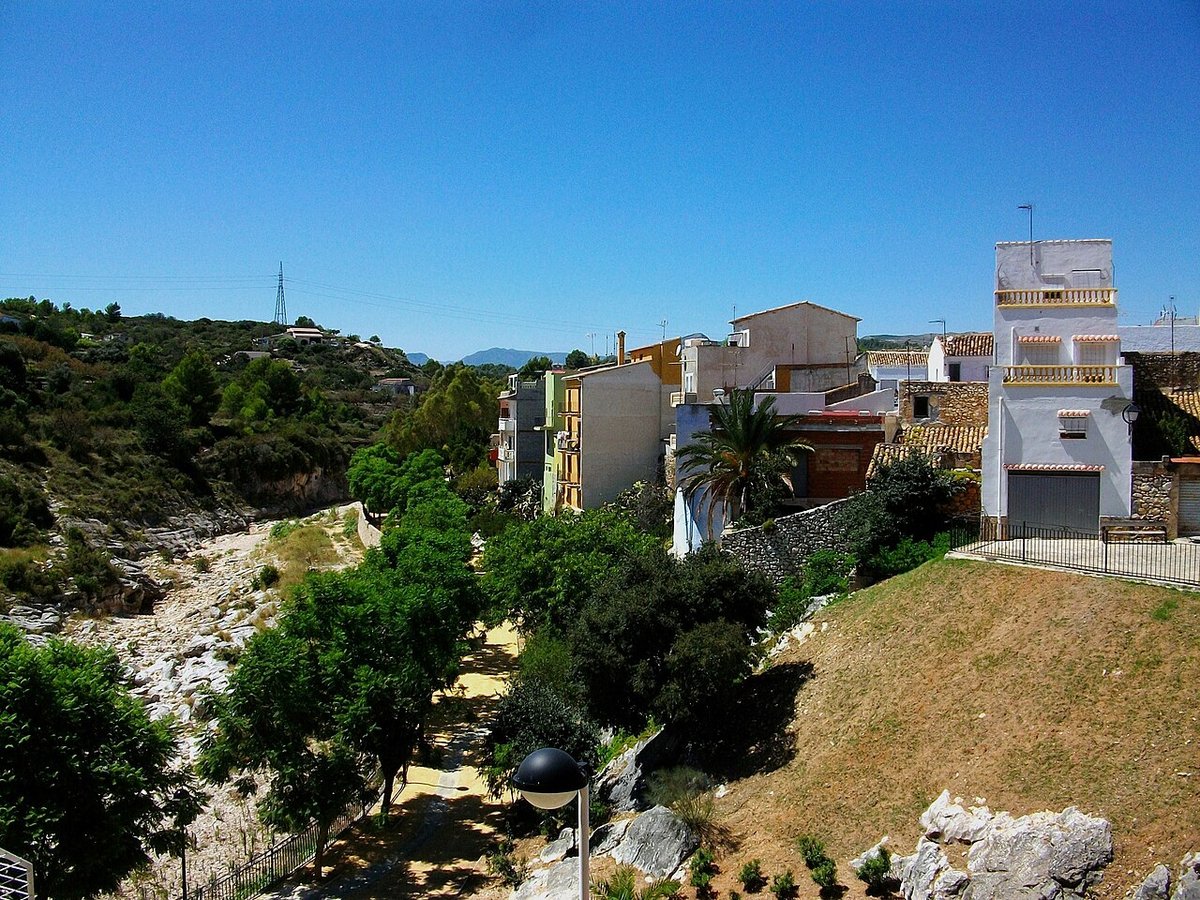
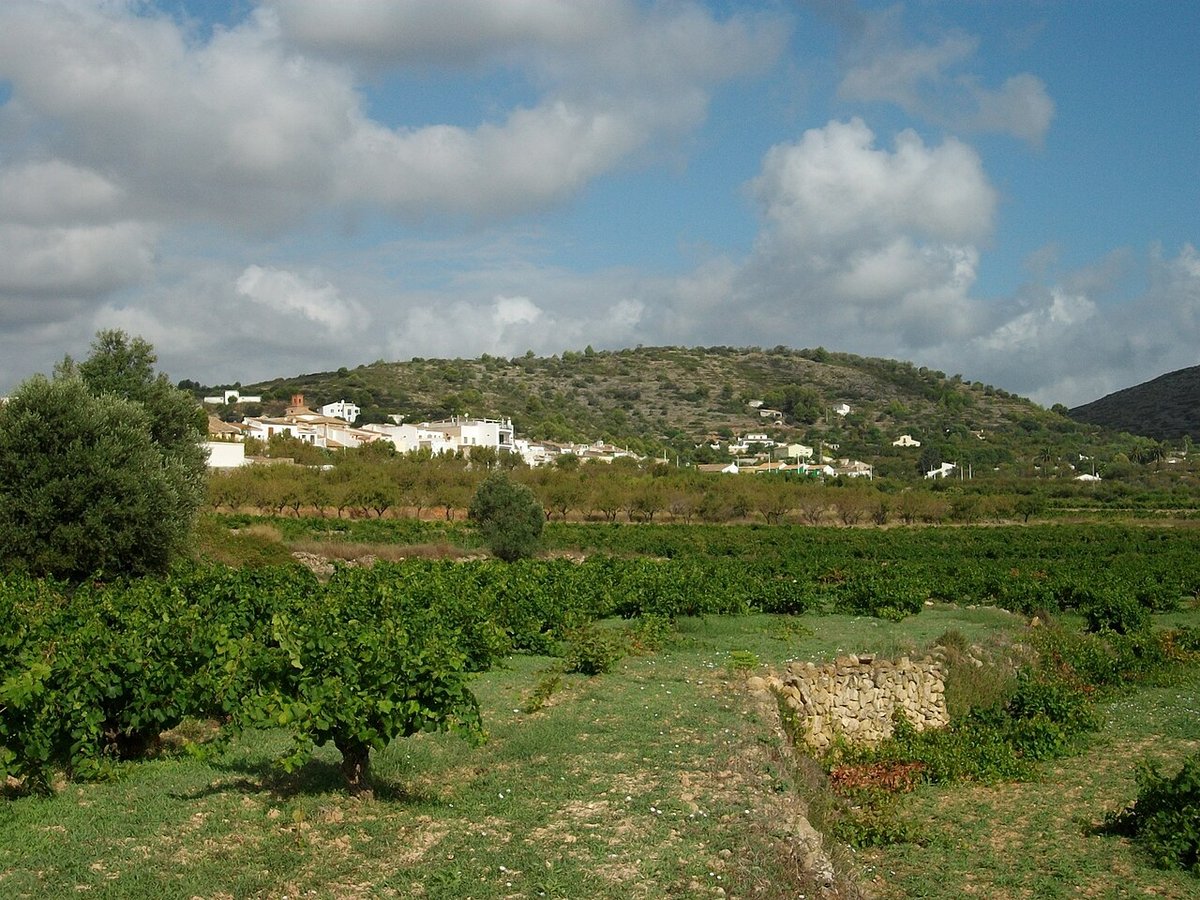
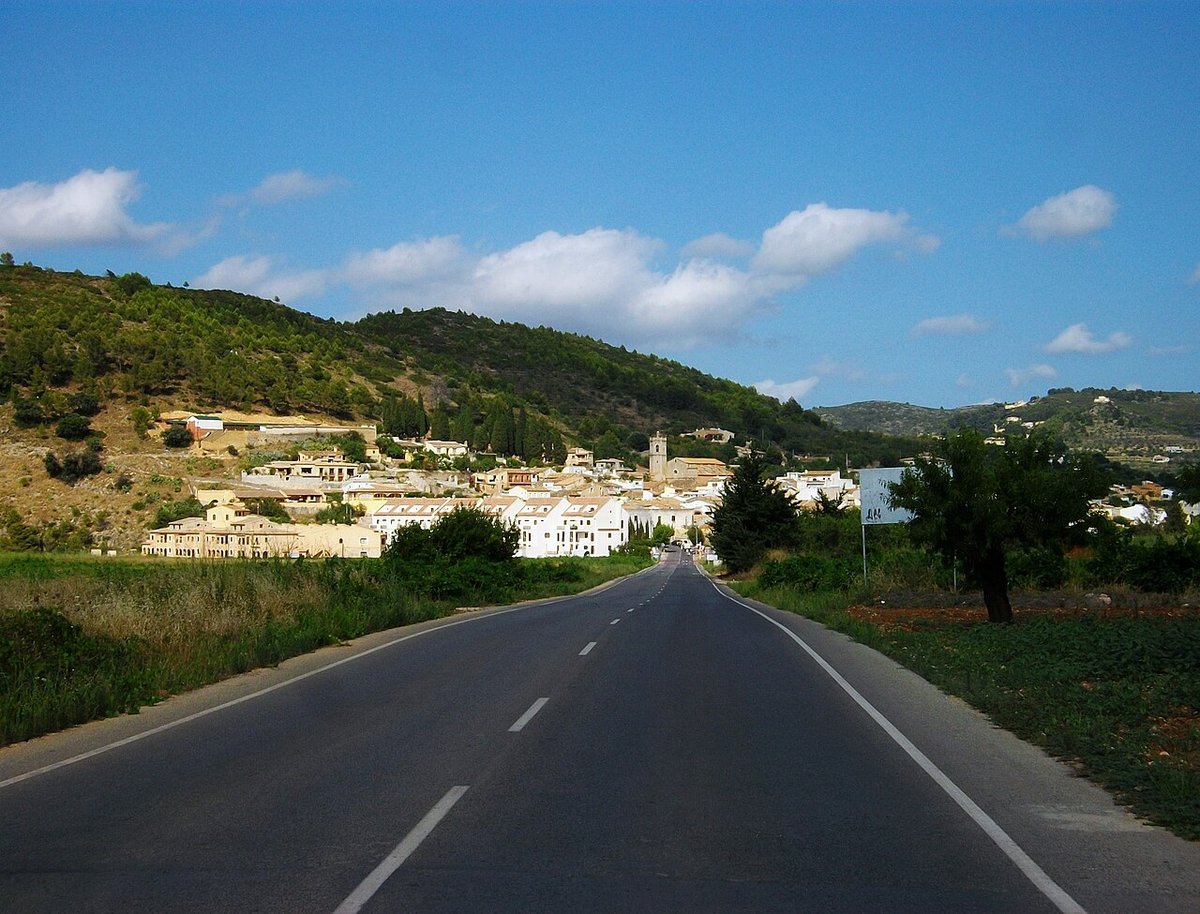
Llíber rests on a slope in the Pop Valley, in the inland part of the Marina Alta in the province of Alicante. Around it stretch vineyards, almond trees and stone walls that carve uneven terraces into the mountainside. There are no grand buildings or monumental squares. Instead, there is a compact network of narrow streets, whitewashed houses and corners where the shade lingers longer than elsewhere in the valley.
It is a small place, and that scale shapes the experience. Nothing feels designed for crowds. The appeal lies in paying attention to details and in the way the agricultural landscape presses up against the last houses.
A Short Walk Through the Old Quarter
The main square is modest in size, with a stone fountain that usually gathers what little movement there is in the centre. From here, the old quarter can be covered in a matter of minutes. Even so, it is worth taking your time. The details reveal themselves on the walls: slightly bent iron window grilles, wooden doors darkened by years of sun, old ceramic tiles along the lower façades.
The church of San Cosme y San Damián occupies one side of the square. The current building dates from the 18th century and keeps a fairly sober appearance, with pale walls and a façade that shifts noticeably with the light. Under a clear summer sky the contrast is sharp. On overcast days everything appears softer and more muted. If it happens to be open, it is worth stepping inside for a brief look.
The surrounding streets repeat an architecture typical of inland villages in the Marina Alta. Houses are narrow, with small windows designed to keep out the heat, and balconies protected by iron railings. In some doorways the stone thresholds are visibly worn down after decades of use. There is little ornamentation. The interest comes from proportion, texture and the way light moves through tight spaces.
Fields at the Edge of the Village
Step beyond the last houses and the landscape changes almost immediately. Fields begin just beyond the edge of the built-up area and spread across the valley in stepped terraces. Almond trees, olive trees and vines have shaped the character of this area for generations.
In late winter and early spring, the almond trees come into bloom and the valley fills with white and pale pink patches. It does not happen in exactly the same way every year, as it depends heavily on how cold the winter has been. When conditions align, the contrast between blossom, dark earth and the mountains in the background is striking.
For the rest of the year, the countryside has a harsher appearance. Dry soil, stone walls and gravel tracks run between plots. Even so, walking here makes it easier to understand how this land has been worked over centuries. The terraces are not decorative. They are practical solutions to farming on slopes, built stone by stone to hold back the earth and make cultivation possible.
The agricultural setting is not a backdrop but a constant presence. From many points in the village you can see the neat lines of vines or the silvery tone of olive trees, depending on the season.
Paths Between Terraces and Valley Views
Agricultural tracks and footpaths leave directly from Llíber and head out between the fields or towards the lower slopes of the Sierra de Bernia. These are not especially demanding routes, although some stretches can be strewn with loose stones.
Closed footwear is advisable, and it is best to avoid these paths just after heavy rain. Mud can cling to soles and certain inclines become slippery. In return, from higher points there are broad views across the Pop Valley, with scattered villages and mountains closing in the horizon.
The most pleasant times for walking are the early hours of the morning and the end of the afternoon. Light enters at a low angle between the rows of vines, and there is usually a little more air movement than at midday. In summer especially, the heat tends to linger in the valley during the central hours of the day.
There is no single marked viewpoint that concentrates attention. The interest lies in gradual changes: how the perspective opens up as you gain a little height, how the village appears compact against the slope, how the terraces trace irregular lines across the land.
Products of the Valley
In Llíber and its surroundings it is common to find small shops selling produce linked to the valley’s fields. Local wine, olive oil, almonds and sweets made with dried fruit are part of the offer.
Traditional cooking in this part of the Marina Alta revolves around straightforward ingredients. Rice dishes prepared with seasonal vegetables are typical, as are hearty stews when temperatures drop. Almonds feature prominently in baking, reflecting their importance in the local agriculture.
These products are not presented as luxury items but as everyday expressions of the land. They connect directly with the terraces and groves visible from the edge of the village.
When to Visit Llíber
The patron saint festivities in honour of San Cosme y San Damián usually take place towards the end of September, once the most intense heat has eased. At that time the village regains some movement in its streets. Exact dates can vary from year to year.
Between February and March, in some years, activities are organised in connection with the almond blossom in the valley. It is a period when many visitors come to walk the paths between the fields and see the bloom at its peak.
If visiting in summer, it is far more comfortable to head out early in the morning or wait until evening. At midday the heat tends to become trapped in the valley and the air can feel still.
A Brief Pause in the Pop Valley
Llíber is small, and exploring the centre does not take long. A short stop can be enough: a walk across the square, a quiet wander through the nearby streets, then out towards the tracks that circle the village.
For those arriving by car, it is generally most practical to leave it at the entrance to the built-up area and continue on foot. The central streets are narrow and it makes sense to drive carefully.
More than a destination for several days, Llíber suits a measured pause in the Pop Valley. Its appeal is not in a long list of attractions, but in the way village and farmland meet, and in the calm that settles over its streets once the sun begins to tilt across the hillside.