Full Article
about Orba
Capital of the rectoría; a pottery village surrounded by orange groves
Ocultar artículo Leer artículo completo
The church bells strike midday as a tractor laden with oranges rumbles through Orba's main square. Nobody looks up. Pensioners continue their dominoes game beneath the plane trees, and the bar owner simply shifts the tables a fraction to let the vehicle pass. This is daily life in a village that tourism hasn't hijacked—yet it's only twenty minutes' drive from the yacht-filled marinas of Denia.
Orba sits at 154 metres above sea level in the Girona valley, ring-fenced by low, fragrant mountains. The altitude knocks the edge off summer heat; mornings arrive cooler than the coast and evenings need a cardigan even in July. It's a working place first, holiday base second. Citrus terraces stitch the surrounding slopes, and the hum of irrigation pumps is the soundtrack from March to October. Roughly half the 5,000 residents are foreign—mostly British, Dutch and German—though you'd hardly call it expat territory. They've assimilated, learned Spanish, joined the local walking group.
The Valley Floor and the Viewpoints
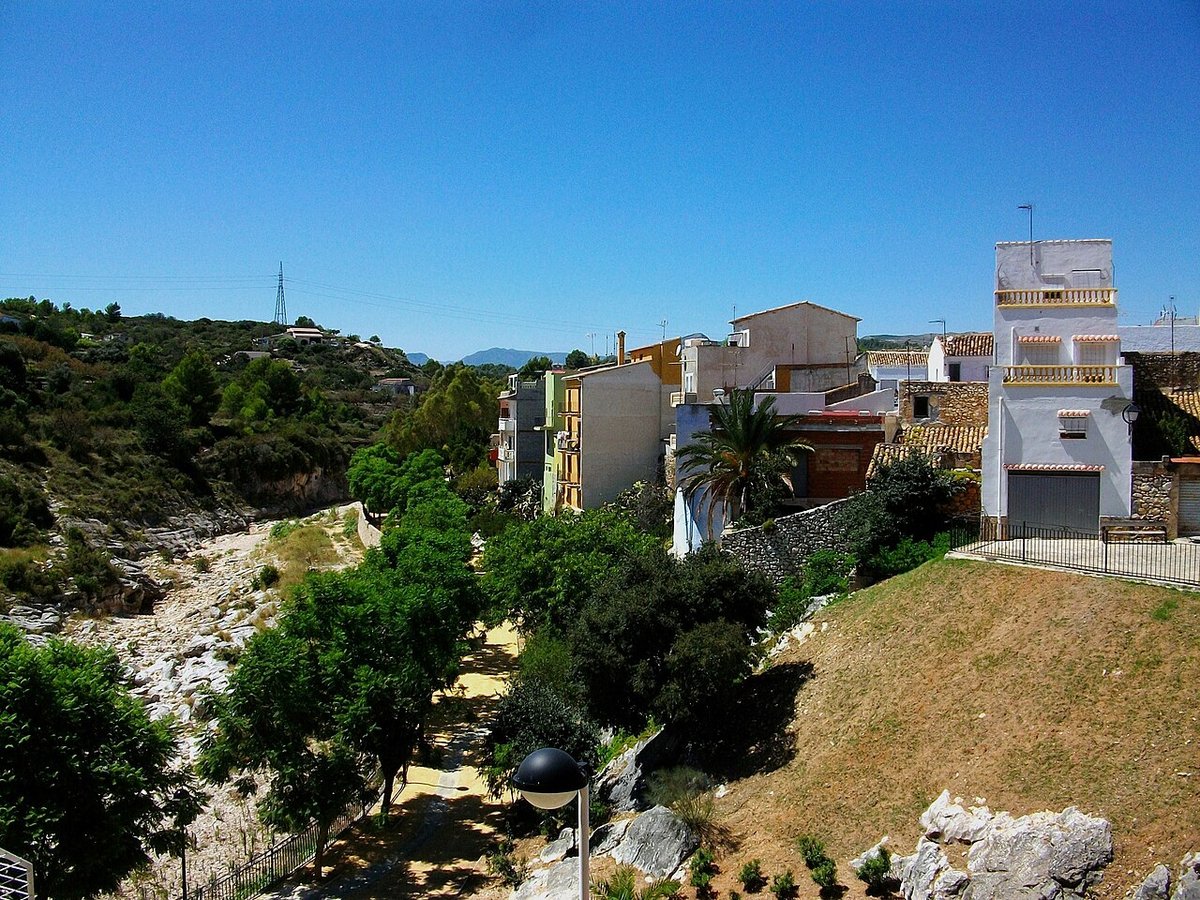
The village fans out from the riverbed, now a dry ravine for most of the year. Streets rise in terraces, so every wander ends with a calf-stretching slope. Start at the eighteenth-century parish church, its honey-coloured stone bell-tower visible from almost anywhere. Inside, baroque altarpieces gleam with the sort of gold leaf that photographs badly but rewards a pause. From the church door, three minutes uphill reaches the mirador: a simple iron railing and a bench, but the view unrolls across orange groves to the glittering Mediterranean eighteen kilometres away. On clear winter days you can pick out Ibiza's silhouette.
Walk the other direction and you hit the public wash-houses, still fed by a stone channel. Until the 1970s women scrubbed sheets here; today it's where teenagers fill water pistots during fiestas. The surrounding lanes are barely two metres wide—shade-dim even at noon—lined with studded timber doors and the odd Modernista balcony. There isn't a souvenir shop in sight. For coffee you have three proper choices: Bar Berna for thick espresso and yesterday's gossip, Cafetería Girona for toast slathered with fresh tomato and olive oil, or Argiles La Caleta if you need someone to explain, in English, why the ceramic bowl you're eyeing costs €45.
Oranges, Olives and the Saturday Shuffle
Come Saturday the village car park morphs into a market. Stallholders shout prices in Spanish, then switch to perfect English the moment they spot a confused face. Seasonal fruit costs pennies compared with UK supermarkets: five kilos of navel oranges for €4, a wicker basket of lemons for €2. Locals bring their own bags; visitors queue for plastic. Walk back through the agricultural lanes and you'll see why. Ancient dry-stone terraces support neat grids of citrus, the trunks painted white against ants. Irrigation channels—some Moorish—still work on gravity alone. Picking starts in November and finishes late May; during those months the air smells like a freshly-peeled satsuma.
Beyond the groves, footpaths head into the Sierra de Segaria. The tourist office (open Tuesday and Thursday mornings, naturally) hands out free route cards. The most popular is the five-kilometre Mills Walk, passing three ruined watermills and finishing at a spring where you can refill bottles. Gradient is moderate; trainers suffice. Cyclists favour the circular route to Benidoleig cave, 12 km on quiet tarmac with 250 m of climbing—nothing hair-raising, yet enough for panoramic selfies at the top.
What You'll Eat and What You'll Pay
Spanish villages judge themselves by their menu del día, and Orba keeps the bar high. At Restaurante Cal Morell three courses, bread and half a bottle of house wine costs €11.50. Expect properly made paella or arroz al horno (baked rice with chickpeas and black pudding), followed by crema catalana still warm from the blow-torch. Children aren't fobbed off with chicken nuggets; the kitchen will do a half-portion of meatballs or a simple pasta with tomato. If that sounds too foreign, Pizzeria Piscina beside the municipal pool does thin-crust pizzas from €7, eaten while watching local kids bomb into the water.
Evening dining is more eclectic. La Mesa de Orba dresses traditional tapas in modern clothes—think grilled prawns with citrus aioli—yet willingly tones down the chilli if you ask. Homesick Brits head to India Gate on the main road for lamb bhuna and Kingfisher lager, takeaway included. Pudding can be an English-style wedge of cake at Argiles café, handmade by the owner who moved from Kent fifteen years ago. Expect to pay Valencia prices, not Costa Blanca premiums; a round of drinks rarely tops €10 and house wine is cheaper than bottled water.
Fiestas, Fireworks and the Week You Won't Sleep
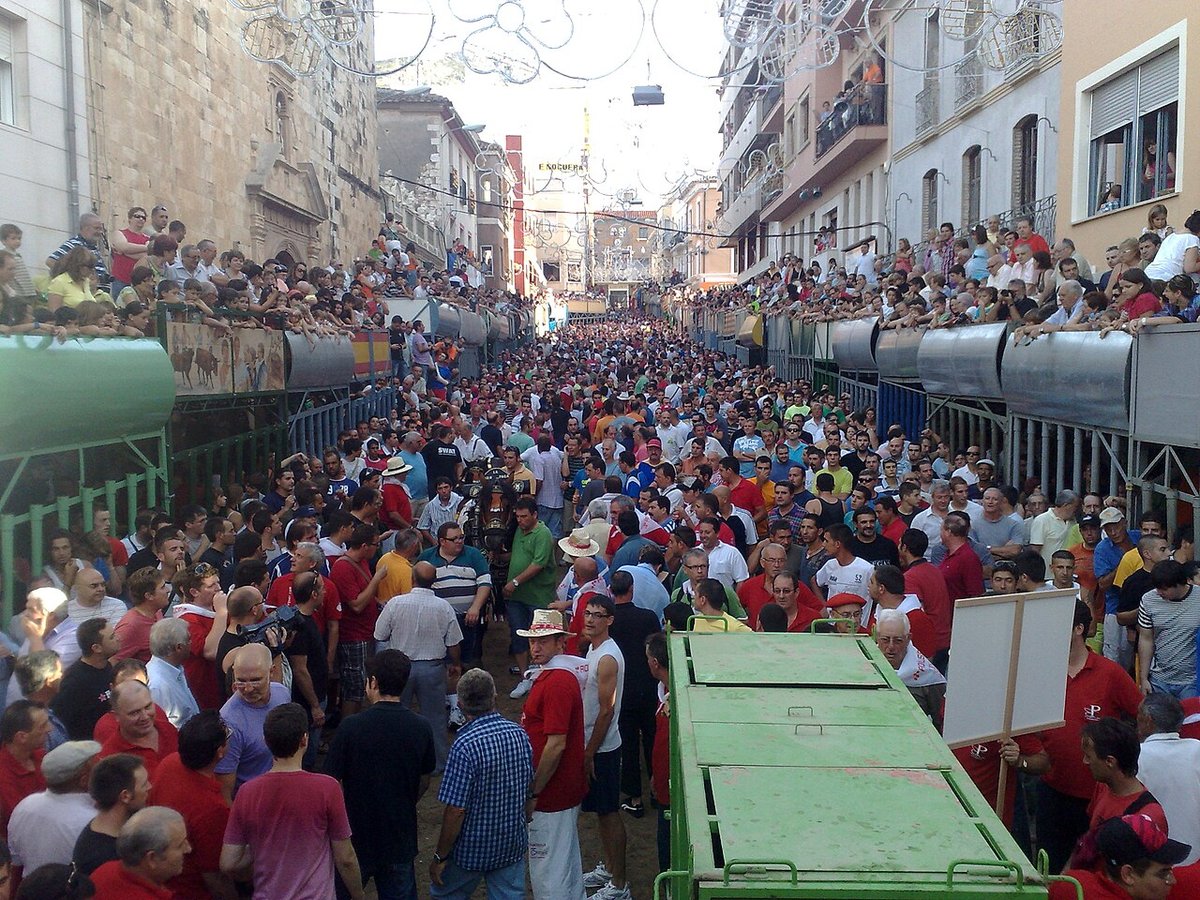
Mid-July ushers in Orba's main fiesta: five days of processions, foam parties and, controversially, bull-running through the sealed-off streets. The event is small-scale compared with Pamplona but still divisive. Villas within the ring cost half their normal rate—yet light sleepers should book elsewhere. For something gentler, visit in late April for the Orange Blossom Fiesta: free marmalade tastings, classical concerts in the church, and locals handing out sprigs of waxy white blossom that scent every car journey.
January brings San Antonio, when horses, dogs and even pet terrapins receive a priest's blessing outside the church. It's short, photogenic and over by lunchtime, leaving the afternoon free for a mountain walk under almond blossom.
Getting Here, Getting Around, Getting By
Alicante and Valencia airports both sit 80 minutes away on the AP-7. Car hire is essential; village buses exist but follow a timetable only a local could love. The municipal pool opens June to September (€2 day ticket, sun-loungers €1 extra) and has a shaded toddlers' area—handy when villas without pools can be rented for under £700 a week in May or October.
Shops close between 2 pm and 5 pm; plan accordingly. The medical centre has an English-speaking GP two mornings a week; for anything urgent Denia hospital is 20 minutes down the road. Cash still rules at the smaller bars—many display "mínimo €10 tarjeta" signs—and the nearest free cashpoint is inside the Consum supermarket, itself closed on Sunday afternoons.
The Honest Verdict
Orba won't dazzle with monuments or Michelin stars. The beach is a drive away, nights are quiet, and if you want flamenco you'll need to head to the coast. What it offers instead is rhythm: coffee at 10, market on Saturday, church bells marking the hours, orange trees perfuming February mornings. For families after an affordable pool villa, walkers who fancy mountain views without thigh-burning climbs, or anyone curious how modern Spain meshes with agricultural tradition, it works. Arrive with a car, a phrasebook and realistic expectations—then join the dominoes players and watch the tractors roll by.