Full Article
about Parcent
Literary village (Gabriel Miró) in the Pop Valley; ringed by mountains and almond trees.
Ocultar artículo Leer artículo completo
The morning sun catches the stone terraces above Parcent and turns them rose-gold, a sight that makes even the most jaded driver pull onto the verge. At 295 metres above sea level, this small Marina Alta village gives you the Costa Blanca without the coast: almond and orange terraces instead of beach bars, silence instead of foam parties, and a church bell that still tells the time rather than the DJ.
A Village That Never Learned to Shout
Parcent sits forty-five minutes' drive north-east of Alicante airport, far enough inland that the sea is a pale stripe on the horizon. The road winds up from the N-332, past Jalón's Saturday flea market and through a landscape of dry-stone walls that pre-date most guidebooks. What you notice first is what's missing: no souvenir shops, no estate agents' boards in English, no British-style pub serving Sunday roasts. The village has 1,043 permanent residents, a number that swells only slightly when the almond trees bloom in late January and photographers descend with long lenses and thermos flasks.
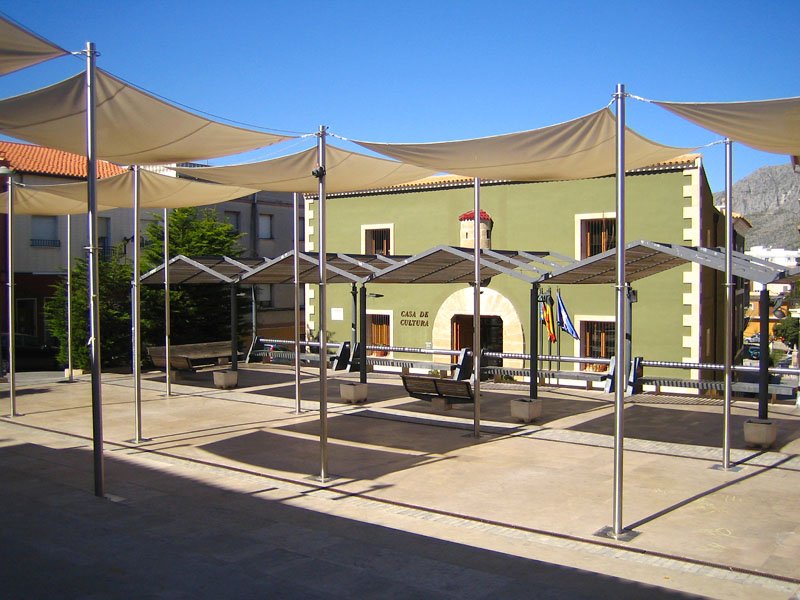
The streets keep their Moorish layout, narrow and irregular, opening onto small squares where elderly men still play dominoes under mulberry trees. Houses are a mix: some freshly whitewashed with green shutters, others showing their age in cracked render and sagging balconies. It's honest, lived-in, the architectural equivalent of a face that hasn't had work done. At the centre stands the Iglesia de San Pedro Apóstol, its plain stone campanario visible from every approach road. Inside, the air smells of wax and centuries; outside, the plaza's café serves coffee for €1.20 and doesn't charge extra for the view.
Walking Through the Banked Past
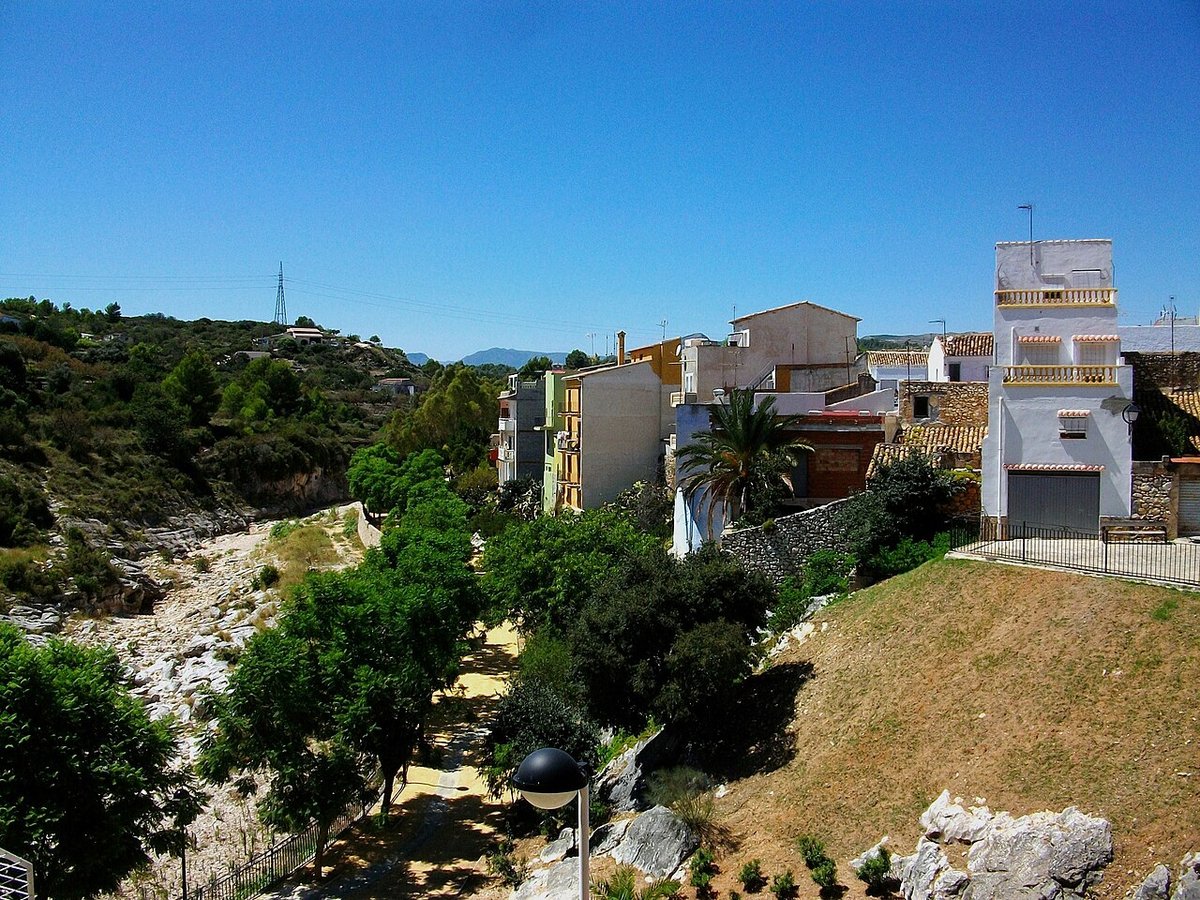
The real wonder lies beyond the last houses. Generations of farmers built stone terraces—bancales—into the slopes, creating a UNESCO-listed mosaic that curves around the valley like contour lines made solid. Paths follow these ancient walls, linking abandoned masías (farmsteads) and natural springs where you can still fill a bottle. The GR-331 long-distance footpath passes through, heading north towards the Montnegre or south to the coast at Calpe, but most visitors content themselves with the two-hour circuit that climbs to Coll de Rates.
This col, six kilometres above the village, has become something of a pilgrimage site for a different congregation. Professional cycling teams use the switchback road as winter training; arrive between nine and eleven on any clear morning and you'll share the tarmac with Team UAE or Ineos in matching Lycra. The reward is a 270-degree panorama: the Montgó massif to the east, the Bernia ridge to the south, and on very clear days the Balearic Islands floating like cut-outs on the horizon. There's a basic restaurant at the top serving German-style schnitzel—an unexpected fallback for fussy teenagers—and tables where you can eat your sandwich while watching paragliders launch into the thermals.
What You’ll Eat, and When You’ll Eat It
Parcent's food is inland Valencian: rice dishes without seafood, mountain herbs, pork that tastes of acorns. Restaurant L'Era, on the road towards Alcalalí, will serve paella only at lunch and only if you remembered to book yesterday. They won't do single portions; arrive solo and you'll be invited to join another table or politely turned away. The set menu offers vegetable or chicken versions deliberately light on fish—recognition that not every northern European relishes octopus for breakfast. Expect to pay €14 for three courses including wine, coffee and the sort of portion sizes that make an afternoon siesta compulsory.
For lighter fare, the bakery opposite the church sells ensaïmadas—spiral pastries that originated in Mallorca—and decent coffee that costs half the marina price. Monday brings the weekly market: six stalls of local almonds, oranges the size of cricket balls, and honey so fresh it still contains flecks of wax. By twelve-thirty the traders are packing up; arrive late and you'll be choosing from bruised leftovers.
Wine drinkers should pre-book a tasting at Bodegas Gutiérrez de la Vega, ten minutes' drive towards the coast. Their sweet moscatel 'Casta Diva' tastes like liquid Christmas pudding and has become a favourite with British visitors who normally stop at Sauternes. The bodega keeps Spanish hours: morning visits only, closed for lunch, and absolutely no drop-ins.
The Sound of Silence, and Other Caveats
Evenings in Parcent are quiet—sometimes too quiet for those accustomed to coastal promenades. There is no taxi rank, no late-night bar scene, no cash machine. The nearest ATM stands outside Jalón'sConsum supermarket, five minutes by car or forty-five minutes on foot if you mis-time the infrequent local bus. Medical cover is limited to a Friday specialist clinic; for anything more urgent you drive to Orba's 24-hour centre, itself only the size of a large village surgery.
What the village does offer is seasonal rhythm. January brings almond blossom weekends when every rental cottage is booked by photographers chasing the perfect dawn shot. June's fiestas honour San Pedro with processions, brass bands and communal paellas cooked in pans two metres wide. August sees the return of emigrants—children of locals who left for Brussels or Birmingham—so the plaza fills with accents that switch mid-sentence between Valencian and English Midlands. For a fortnight the village remembers what bustle felt like, then quiet returns like a tide going out.
Winter can feel isolated. When the tramontana wind blows down from the Pyrenees, temperatures drop to single figures and the stone houses, built for summer heat, grow damp. Roads to the coast ice over; even the cycling teams retreat to lower ground. But spring arrives early—by March the orange blossom scents the whole valley—and with it comes the realisation that Parcent works best as a counterpoint. Stay here, then drive twenty-five minutes to Moraira for the beach and a proper marina lunch. Return at dusk, park on the quiet calle, and let the church bell mark the hours while swifts wheel overhead.
Book a cottage with a roof terrace, stock up on firewood for cool evenings, and bring good walking boots. Leave the resort expectations at the airport. Parcent doesn't do entertainment; it does space, silence and the sort of views that make you remember why you crossed the Channel in the first place.