Full Article
about Pedreguer
Town with distinctive architecture (porxes) and a tradition of hats and bags.
Hide article Read full article
Pedreguer sits a few kilometres inland from Dénia, where the coastal plain begins to fold into the hills of the Marina Alta. The road in passes through a grid of citrus groves, the air sometimes carrying the scent of orange blossom or, later in the year, the earthy smell of turned soil.
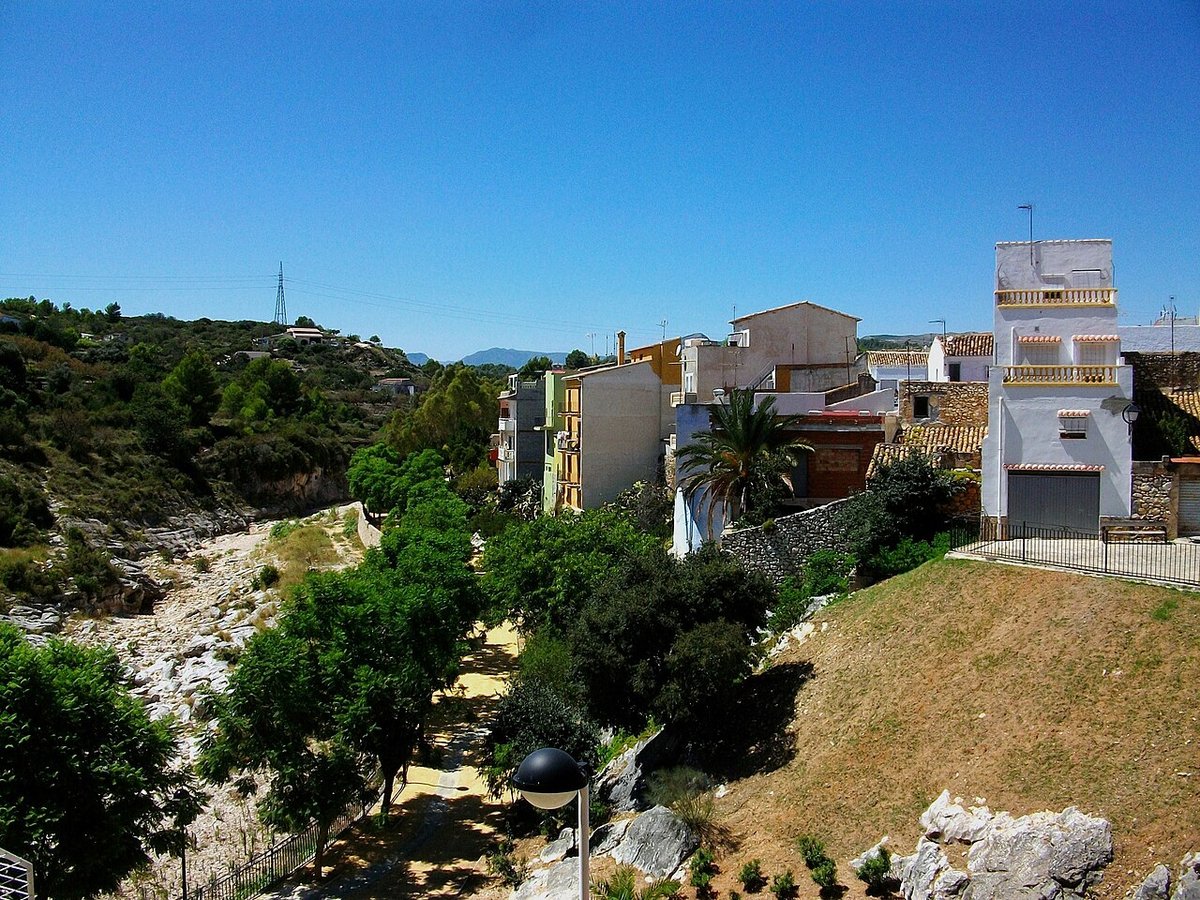
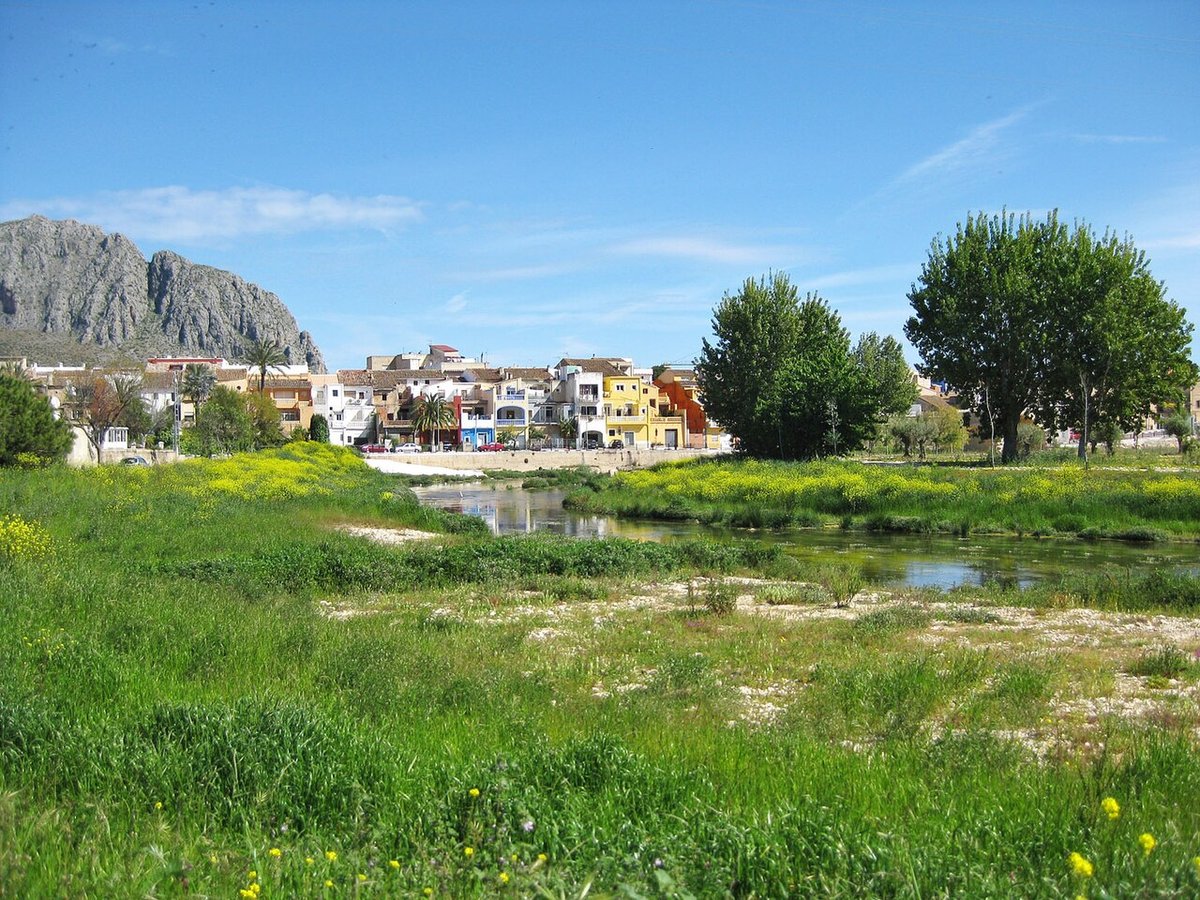
The town centres on a promontory overlooking the mouth of the Gorgos river. Its older streets slope downward from this high point towards the church square, following a layout that predates the cars now parked along them.
The strategic height of l’Ocaive
The promontory held an Andalusí fortress known as l’Ocaive, built to control the route from the coast toward the interior. Sections of stone wall are still visible. From here, the view explains the site’s former importance: you see the river valley and the patchwork of fields, a clear line of sight for surveillance.
After the expulsion of the Moriscos in 1609, a charter of repopulation was issued in 1611. These documents reorganized depopulated areas, redistributing land and houses. In Pedreguer, it formalized a new agricultural order that would define the town for centuries.
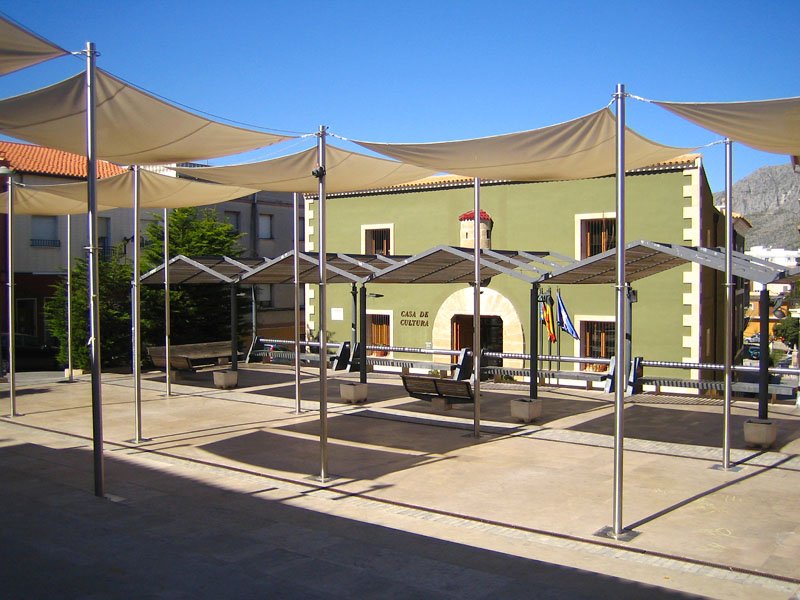
The church of Santa Cruz now stands where the mosque once was. Its Baroque bell tower, added later, is the visual anchor of the town. A walk up from the square passes remnants of those old defensive walls before circling back down to els Porxes, a former grain store marked by sturdy stone arches. It’s a functional building, speaking to the town’s long reliance on harvests.
Water underground and beans in the damp soil
The terrain here is limestone, a porous rock full of cavities. This geology dictates where water flows—and where it vanishes. The Gorgos river disappears into the rock at the Clot del Lirio, resurfacing downstream depending on the season and rainfall.
This interaction of water and stone creates areas of naturally damp soil. They are used to sow early broad beans, which mature into the fava pelà. The name comes from how they are peeled; these young beans are prepared simply, their texture being the point.
In the same limestone hills is Cueva del Comte, known for its prehistoric paintings. They are attributed to the Upper Palaeolithic period, though specific dating is a matter for specialists. The cave is a reminder that this landscape has been inhabited and interpreted for millennia.
A calendar set by the land
Local festivals follow the farming year, not the tourist season. In January, Sant Antoni brings bonfires and livestock into the streets, a nod to the saint’s protection of animals. Shortly after, the porrat de Sant Blai coincides with the winter citrus harvest.
The main town festivities honour Sant Bonaventura in July, when the summer heat is firmly settled. It’s common then to find frito de pescado, a platter of mixed fried fish that acknowledges the nearby coast, even if Pedreguer itself looks inland.
Cooking from a dry huerta
The local kitchen reflects a huerta with limited water. Dishes are often slow-cooked—simmered or baked for hours—making thorough use of available ingredients.
Malcriat is perhaps the signature dish: rice cooked with beans and vegetables in a wood-fired oven, resulting in a dense, deeply flavoured casserole. Snails, gathered after rains, are stewed with mint and dried tomato. Aubergine might be added to a pot of rice with chickpeas. These are recipes of adaptation, relying on pulses and what the season provides.
Practical notes
The town is navigated on foot. The central area around the church square and Calle Mayor holds most of daily life. If you visit on a Sunday morning, you’ll find the market in full swing on Calle Mayor. It operates for locals; stalls sell citrus, vegetables, and household goods. It starts early and winds down by midday.
Pedreguer has no train station. Reaching it requires a car or bus service from Dénia. Once there, parking is usually found without much difficulty in the streets leading into the centre.
What you see is a place shaped by its elevated position, its porous stone, and the requirements of agriculture. The fortress ruins, the Baroque tower, the prehistoric art, and the beans grown in the damp lowlands are not separate stories. They are different chapters of the same book, all written onto this particular piece of land.