Full Article
about Sagra
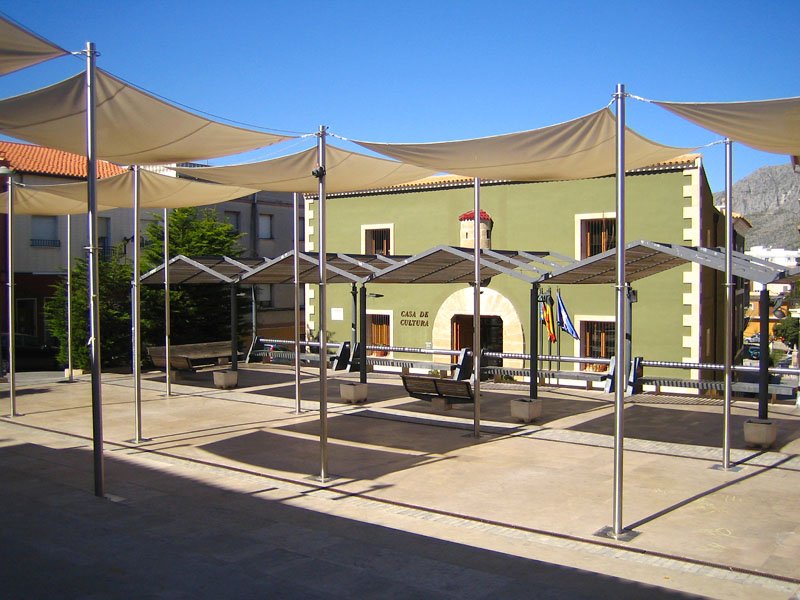
A quiet, traditional village with a pleasant square.
Ocultar artículo Leer artículo completo
The Wednesday morning market fills Sagra's single square with the scent of citrus and freshly ground coffee. By noon, the handful of stalls will pack up, the two bars will pull down their shutters, and this miniature Valencian village will return to its default setting: quiet enough to hear the church bells count the hour from three streets away.
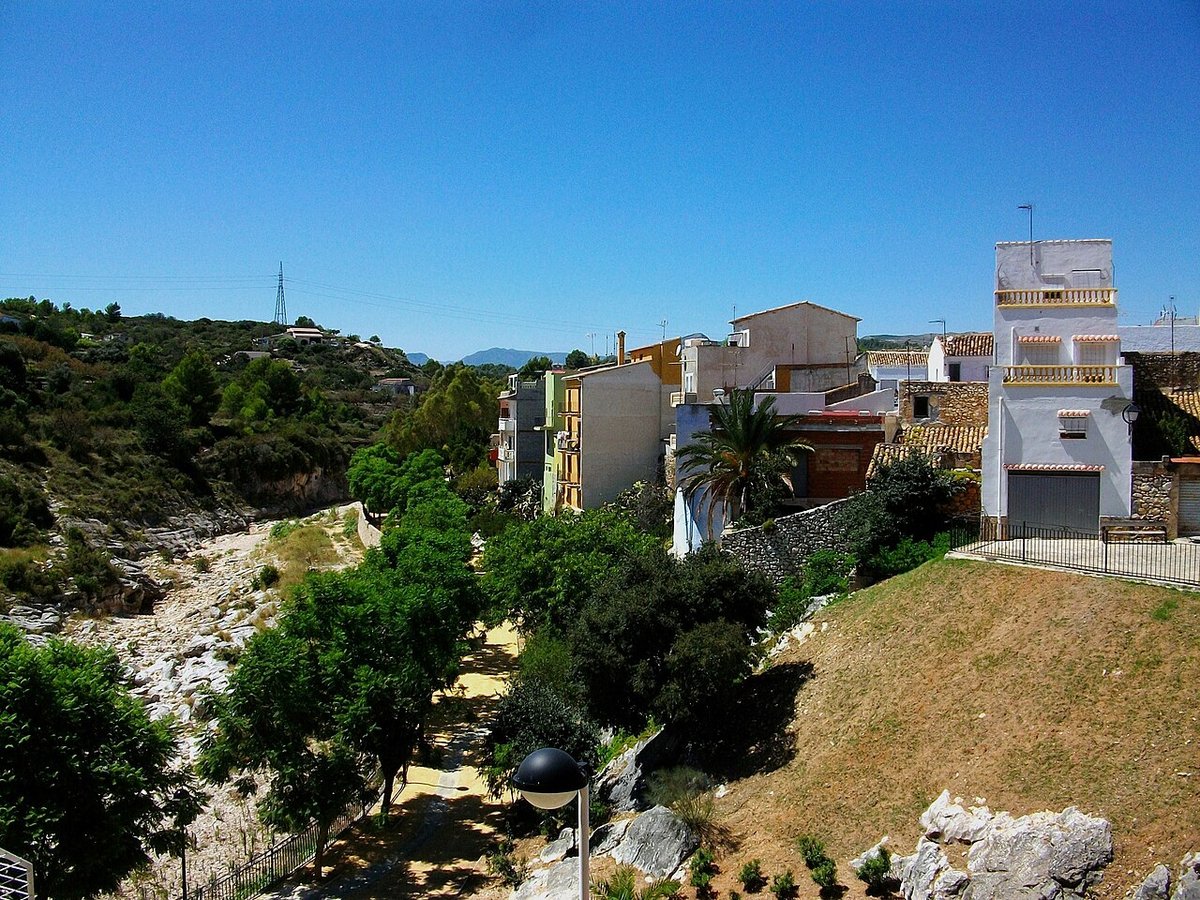
Sagra sits 104 metres above the orange-carpeted plains of La Marina Alta, twenty-five minutes' drive inland from the coastal bustle of Denia. Motorists thunder past on the CV-720, bound for beach resorts, never realising that a left-hand turn brings them to a settlement that measures barely eight hundred metres from end to end. Those who do swing off the carriageway discover a place where agriculture remains a living concern rather than a scenic backdrop. Tractors chug along the main street at dawn, heading for the olive terraces that stitch the lower slopes of the adjacent sierra. Wood smoke rises from chimneys on winter mornings; in high summer, neighbours drag kitchen chairs onto the pavement to catch whatever breeze drifts up from the coast.
The village's architectural credentials are modest but coherent. The sixteenth-century Iglesia de la Asunción squats at the top of a shallow flight of stone steps, its rough-hewn bell-tower visible from every approach. Inside, the air carries a faint trace of incense and floor wax; outside, the small plaza offers an uninterrupted sight-line across serried ranks of orange and almond groves to the white-flecked peaks beyond. A five-minute stroll downhill weaves through lanes barely wide enough for a donkey, let alone a Ford Focus. House fronts the colour of buttermilk and terracotta fade to ochre where the afternoon sun strikes them; wooden doors, studded and black with age, give onto shadowy vestibules smelling of polished tile and dried herbs. Half an hour suffices to see it all, yet the detail rewards slower inspection: iron balconies no longer than a cricket bat, stone drainage spouts carved into miniature gargoyles, a blue-and-yellow tiled plaque marking the house where the village teacher once lived.
Beyond the last streetlamp, the tarmac dissolves into caminos rurals that fan out towards neighbouring hamlets. These unsurfaced tracks, flanked by dry-stone walls and century-old olive trees, form a ready-made network of gentle hikes. The most straightforward route follows the sign-posted PR-V 147 for three kilometres to the ridge known as Creu de Montalbà, where a simple stone cross marks a natural balcony over the valley. On clear days the Mediterranean glints silver on the horizon; closer at hand, the patchwork of orchards shifts from sage green to almost charcoal as cloud shadow moves across it. Stout footwear is advisable: the paths are stony, and the local farmer's idea of a right-of-way sometimes includes a gate that has to be unchained and re-fastened behind you.
Evenings bring the village's limited but serviceable catering offer into play. Bar Central, on the corner opposite the chemist, keeps irregular hours dictated by the proprietor's family commitments, yet the toasted baguette topped with local embutido (milder than chorizo and mercifully free of mystery bits) costs €3.50 and arrives with a thimble of house red that punches above its weight. Casa Paco, a kilometre south on the main road, opens for dinner only and specialises in mixed grills big enough for two: expect a platter of pork fillet, chicken wings, chips and the inevitable padrón peppers, all delivered without ceremony and at inland prices that make coastal eyes water. Vegetarians should ask for the escalivada, a room-temperature tangle of roasted aubergine and peppers dressed in peppery local oil. August visitors should note that kitchens shut promptly at four and do not reopen until eight; between times, the village runs on coffee and ice cream alone.
Practicalities reveal both charm and limitation. There is no cash machine; the nearest ATM lurks eight kilometres away in Tormos, so fill your wallet before arrival. Parking beside the polideportivo avoids the narrow throat of the old quarter, where a right-hand bend narrows to exactly the width of a UK-spec hatchback plus one wing mirror. The Wednesday produce market is worth timing a visit around: local women sell orange-and-almond cake wrapped in grease-proof paper, a sweet, crumbly wedge that travels well and tastes comfortingly familiar to British palates. The small motorhome aire on the northern edge provides free overnight parking, fresh water and a disposal point; British vans often outnumber Spanish ones in February, their occupants lured inland by the promise of frost-free nights and walking trails that start directly from the gate.
Festivals punctuate an otherwise unhurried calendar. The fiesta mayor, honouring the Assumption around 15 August, transforms the grave little plaza into an open-air ballroom. Brass bands strike up at dawn, processions weave between rows of plastic chairs, and fireworks detonate at three in the morning with a vigour that makes ear-plugs essential. January brings the blessing of the animals on San Antonio's day: dogs, donkeys and the occasional bemused goat are led to the church door for a sprinkling of holy water, while their owners share bottles of mistela in the sunshine. May's Romería de San Isidro sees the entire village decamp to a hillside picnic site for paella cooked over vine-prunings; outsiders are welcome provided they bring their own plate and a willingness to join in the communal singing.
Weather divides the year into two distinct experiences. Spring arrives early: by late March the almond blossom has drifted like confetti across the lanes, and daytime temperatures hover in the low twenties—perfect walking weather. Summer, by contrast, turns fierce; the mercury can top 35 °C in July, sending sensible residents indoors from noon until four. Autumn brings the olive harvest, the whirr of small mechanical shakers drifting across the terraces, while winter days are short but often diamond-bright, with sharp frosts overnight and T-shirt sunshine by eleven. Snow settles on the higher sierra perhaps once each winter, rarely reaching the village itself, though the wind that funnels down the valley can slice straight through a lightweight fleece.
Come prepared and Sagra delivers an authentic slice of interior Valencia without the twee packaging that blights better-known pueblos. Arrive expecting souvenir shops or all-day dining and you will be disappointed; accept the village on its own unshowy terms and you will leave with the memory of orange-scented air, star-strewn night skies and the gentle thud of olives dropping onto corrugated-iron roofs.