Full Article
about Senija
Small village at the entrance to the Pop Valley; open-air food and art
Hide article Read full article
A Small Detour Worth Making
Tourism in Senija feels a bit like stopping in a village almost by chance, stretching your legs for ten minutes, then realising you have stayed rather longer than planned. There are no grand monuments and nothing that dominates major guidebooks. What you find instead is a calm rhythm that encourages you to slow down.
Senija sits in the Marina Alta, in the province of Alicante, and has around 700 residents. That already gives a sense of scale. This is not a place for packed itineraries or long checklists. It works best as a pause between other destinations in the area. You wander through the old quarter, head briefly out towards the surrounding fields, then drift back to the main square.
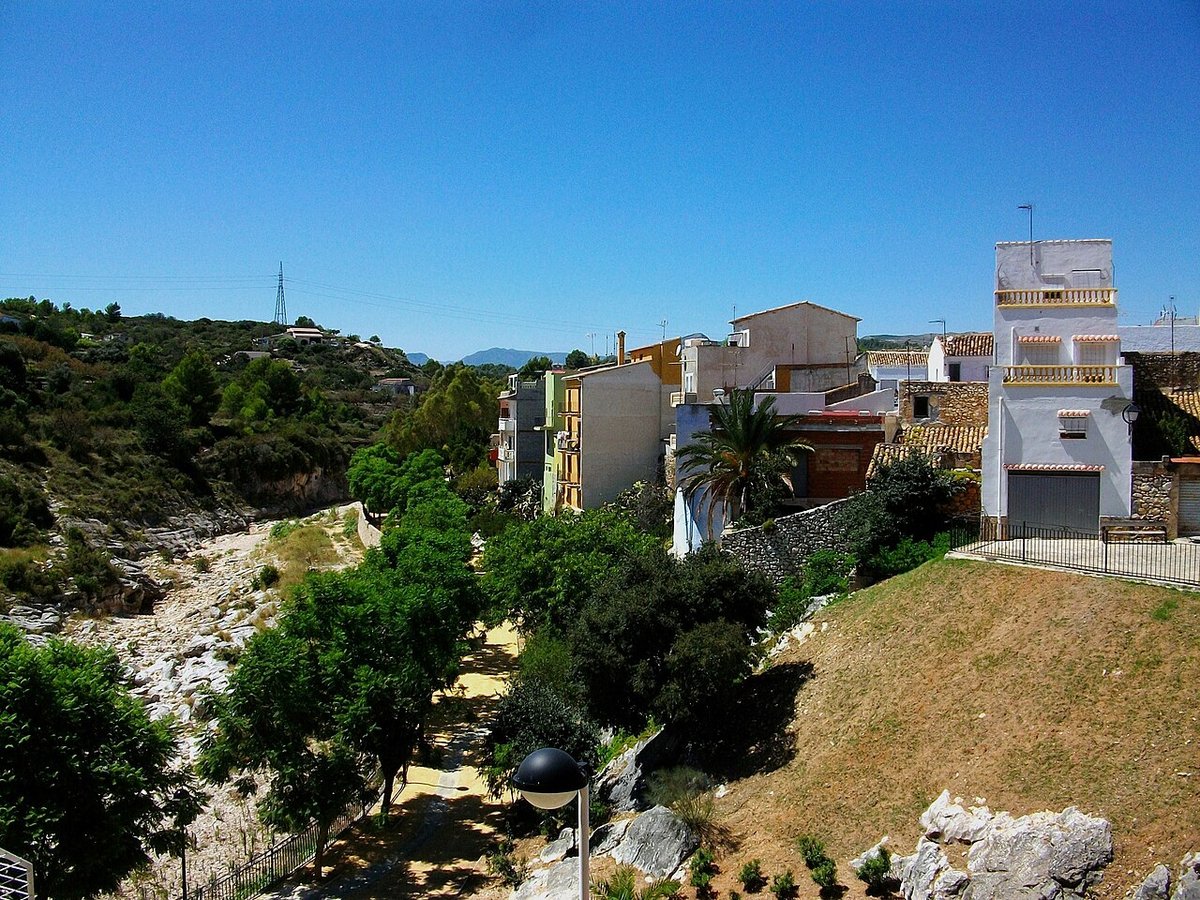
There are no museums and no spectacular buildings competing for attention. What defines Senija is everyday village life: narrow streets, neighbours who know each other, and stone terraces that have been in place longer than anyone can remember.
A Historic Centre Without Fuss
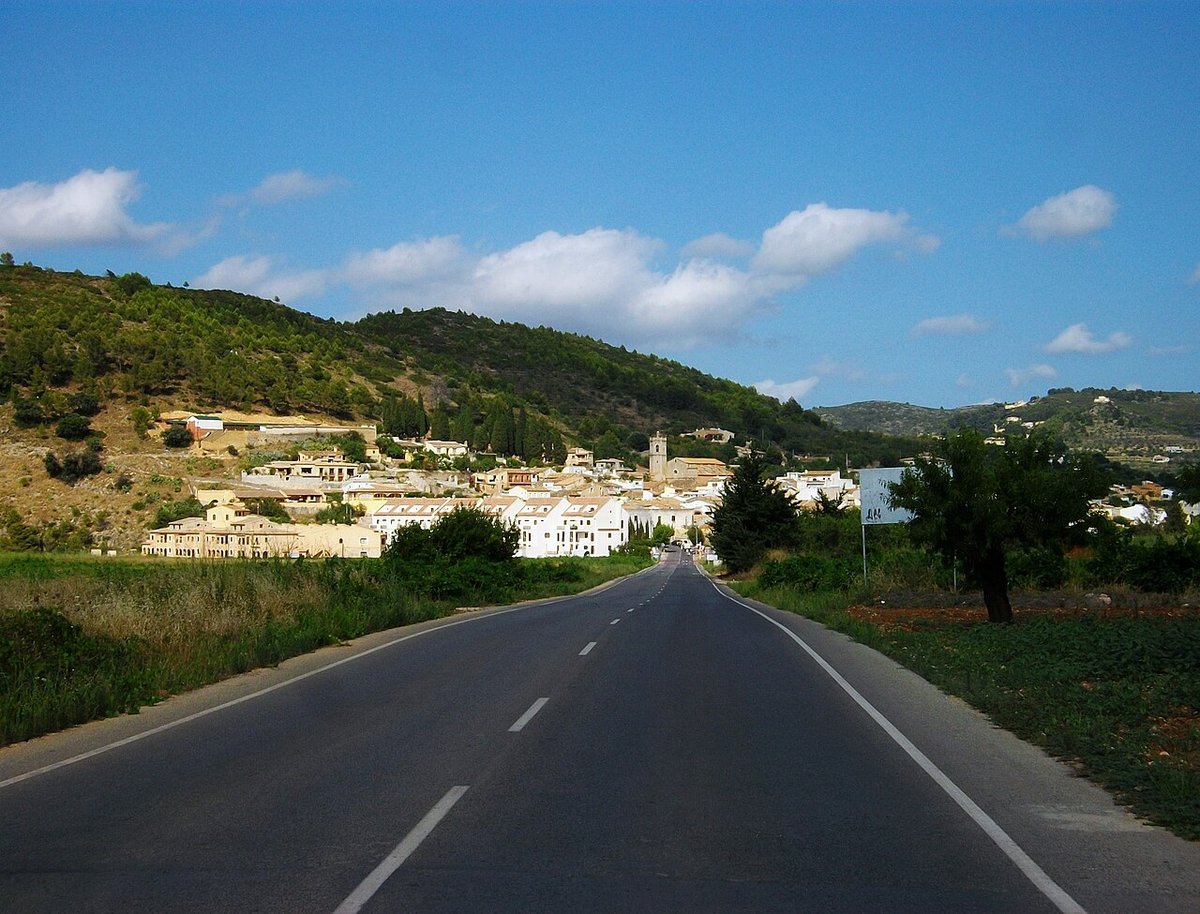
The Iglesia Parroquial de San Pedro marks the centre of the village. Built in the 18th century, it has the restrained look common in this part of Alicante: a simple façade and a bell tower that serves more as a point of reference than a showpiece. As you move through the nearby streets, the tower helps you keep your bearings. Inside, it usually preserves religious images and elements that have formed part of local life for generations.
The old quarter is compact and easy to explore, yet it rewards an unhurried pace. Houses with stone doorways sit alongside whitewashed walls. Some windows are protected by old iron grilles. There are also the former communal washhouses, reminders of a time when much of daily life unfolded in shared public spaces. They speak quietly of routines that shaped the village for decades.
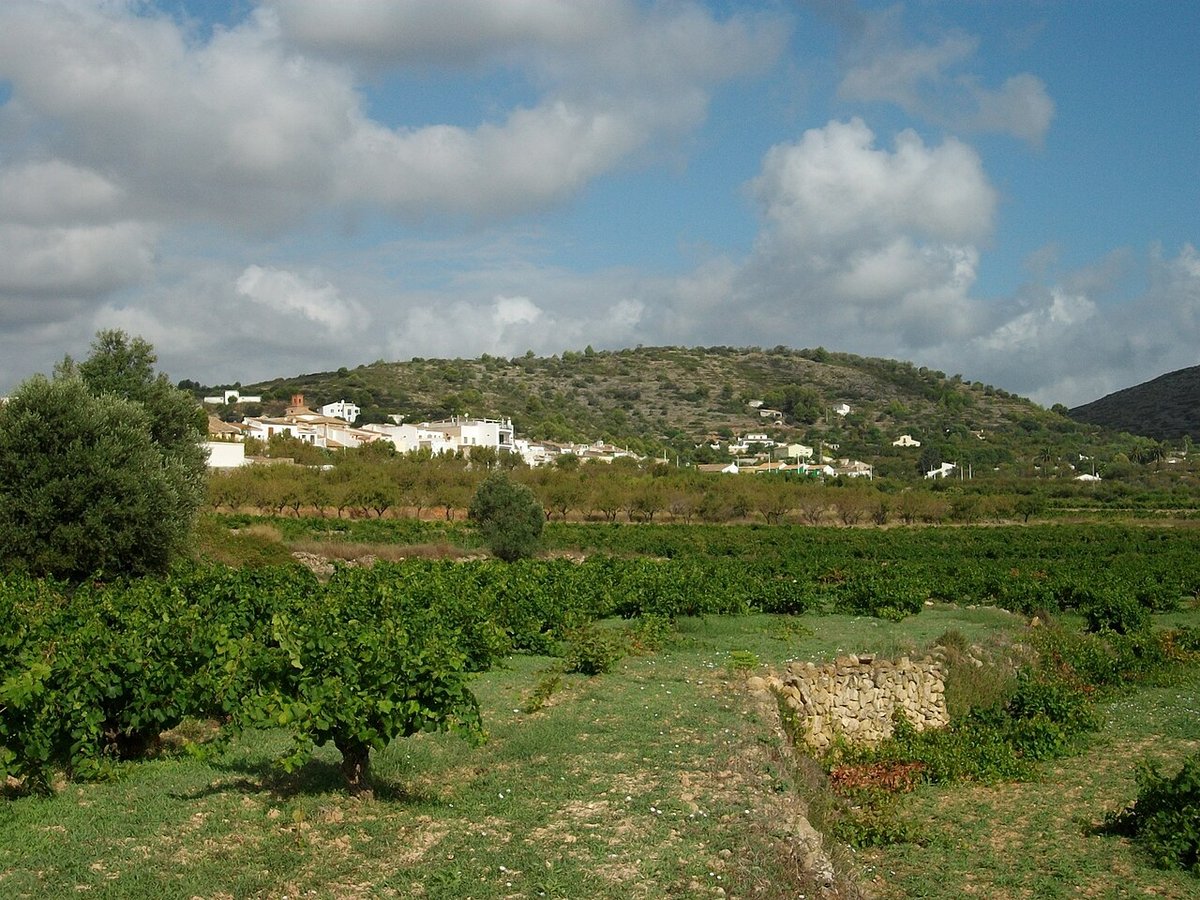
Beyond the last houses, the surrounding fields explain far more about Senija than any single building. Dry stone terraces contour the land. Almond and olive trees dominate the plots. In spring, the almond blossom alters the look of the landscape. It is not a vast spectacle, yet if you happen to visit during those days of flowering, a simple walk becomes far more memorable.
Walks, Food and Everyday Details
For those who enjoy walking without too much effort, paths and tracks leave directly from the village and cross gentle hills. These are not demanding mountain routes. They are calm circuits through pine woods, cultivated fields and stretches of rural track, the sort of routes where conversation flows as easily as the steps.
Local cooking draws heavily on ingredients that have long been grown in the area: olive oil, cured meats, and substantial dishes when colder weather arrives. Preparations such as gazpacho manchego, a hearty meat and flatbread stew typical of inland eastern Spain, still appear at family gatherings or during village festivities. Traditional sweet recipes also remain part of these occasions. They are not everyday fare for visitors, yet they form part of the cultural backdrop of Senija.
There is also the simple pleasure of wandering without a fixed goal. Anyone who enjoys photographing small details will find plenty to focus on: old doors, textured stone walls, forgotten agricultural tools left in a courtyard. Early morning and late afternoon light tend to suit the pale façades and the fields that edge the village. The effect is subtle rather than dramatic, in keeping with the place itself.
Traditions That Shape the Year
Festivities continue to play a significant role in local life. The patron saint celebrations dedicated to San Pedro usually take place towards the end of June. Religious acts share the programme with open-air evening parties, known in Spain as verbenas, where much of the village gathers in the streets. For a few days, the pace changes and the population seems to multiply as families and friends join in.
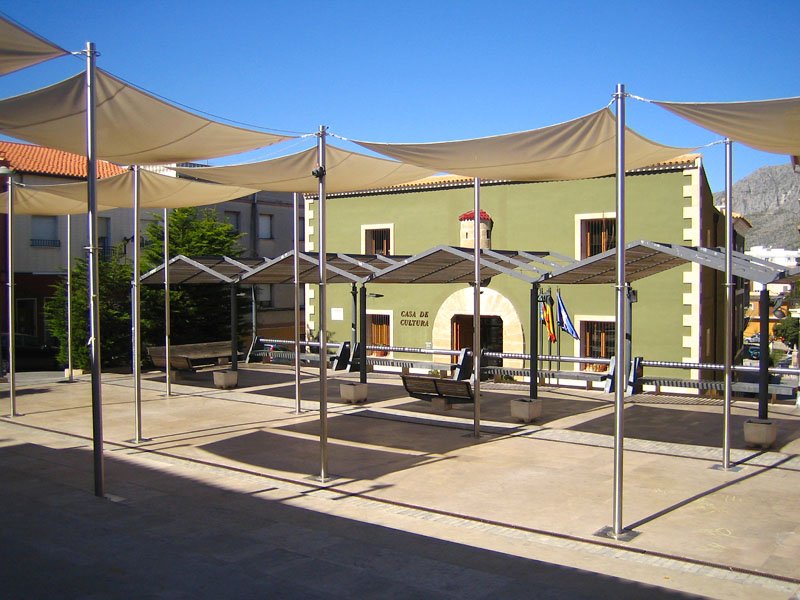
During summer, activities also appear in the square, organised by residents themselves. There may be competitions, music or communal meals. These are not large-scale events designed for visitors, but occasions rooted in community participation.
Holy Week, or Semana Santa, is observed too. Compared with larger cities it is discreet, yet the processions still move through the old quarter and local brotherhoods maintain these traditions year after year. The narrow streets provide an intimate setting for these moments in the religious calendar.
Getting There and Getting Around
Senija lies close to Benissa and other towns in the Marina Alta. Many people arrive by making a short detour inland from the coast. The final approach follows quiet regional roads bordered by fields.
Once in the village, the most practical option is usually to leave the car near the entrance or in an open area and continue on foot. Streets in the centre are narrow and include the sort of slopes designed in the days of carts rather than modern traffic. Exploring on foot also makes it easier to notice the small architectural details that define the place.
If you plan to walk beyond the village, bring water and wear comfortable shoes suitable for cobbled surfaces. Senija is small, yet the uneven ground and gentle inclines are easier to manage with the right footwear.
Short on time, with just an hour or so available? Keep it simple. Head into the old quarter, stroll around the Iglesia Parroquial de San Pedro, then follow one of the paths that circle the village before returning to the square. In that brief circuit, you gain a clear sense of how Senija feels, without the need for elaborate plans.