Full Article
about Vall de Gallinera
Cherry valley made up of 8 villages; known for the solar alignment at la Foradada
Hide article Read full article
A valley, not a single place
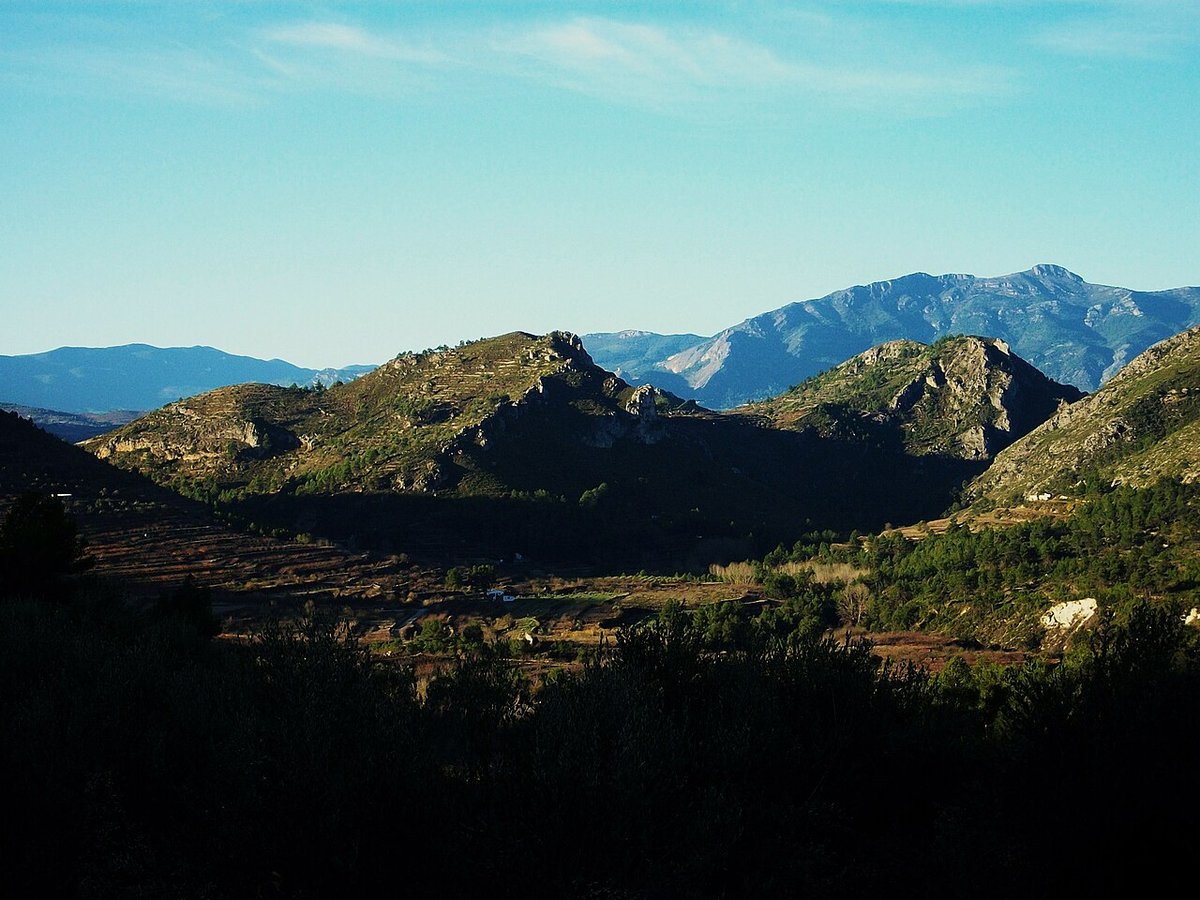
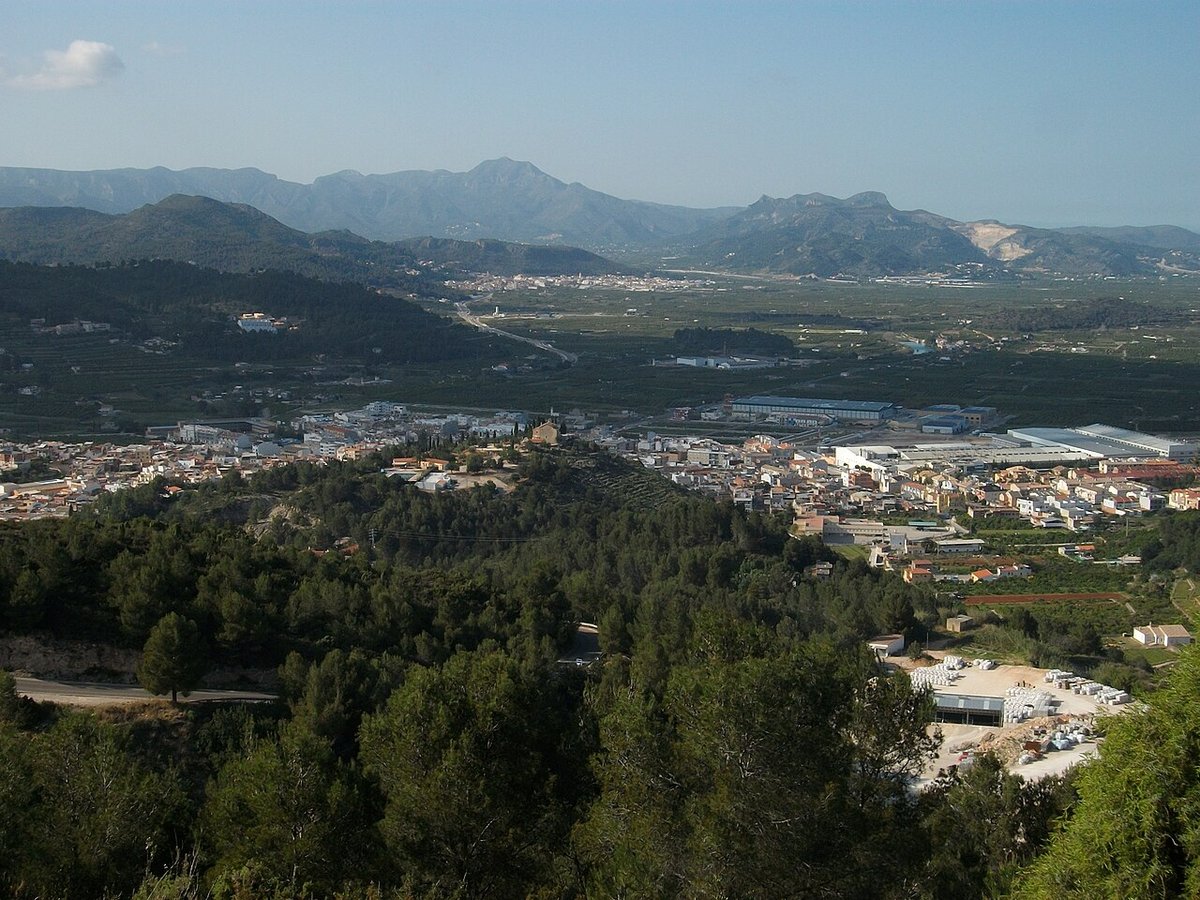
To understand Vall de Gallinera, you must first look at a map. This is not a single destination but a geological formation: a long, narrow valley in the interior of the Marina Alta, carved between the Sierra de la Foradada and the Sierra de l’Almirall. A single road, the CV-700, threads through it, connecting eight small settlements—Benirrama, Benialí, Benitaia, Benissivà, Benissili, La Carroja, Alpatró and Llombai—whose combined population rarely surpasses six hundred.
The pattern is medieval, established during the Andalusí period. The valley was left nearly empty after the expulsion of the Moriscos in 1609. Its repopulation was carried out later in that century by families from Mallorca, which explains certain cadences in the local Valencian and the persistence of Mallorcan surnames. The landscape itself is the main archive: terraced slopes held by dry stone walls, a system of irrigation channels known as sequies, and the careful alternation of cherry, almond and olive trees speak of a geography where every usable plot has been accounted for over centuries.
Eight parishes and a watchtower
Each of the eight pobles has its parish church. They are modest, built after the Christian repopulation in the 17th and 18th centuries. Their scale matches that of the communities they serve. The bell tower of Benirrama’s church, for example, functions as a visual anchor from various points along the valley road.
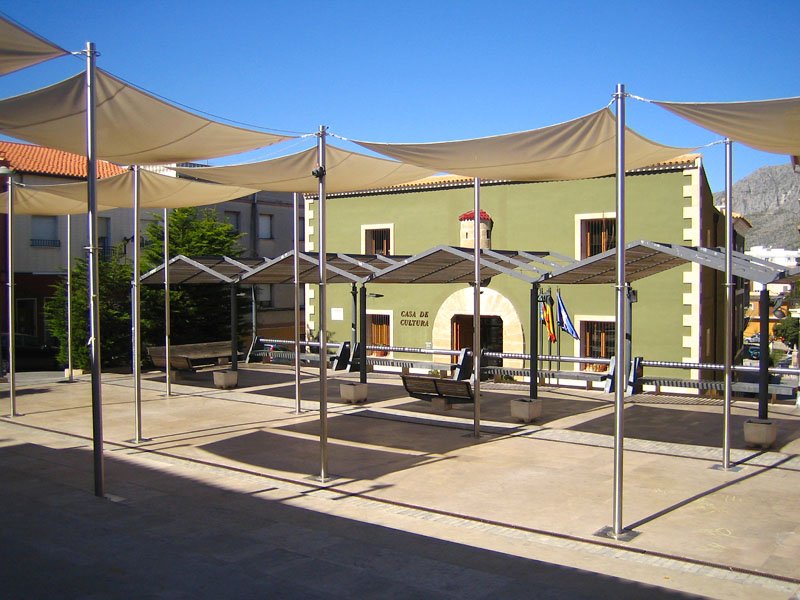
In Benialí, a restored olive mill sits near the main square. The machinery inside, though no longer operational, shows the mechanics of pre-industrial oil production. It is a functional building, not a grand museum.
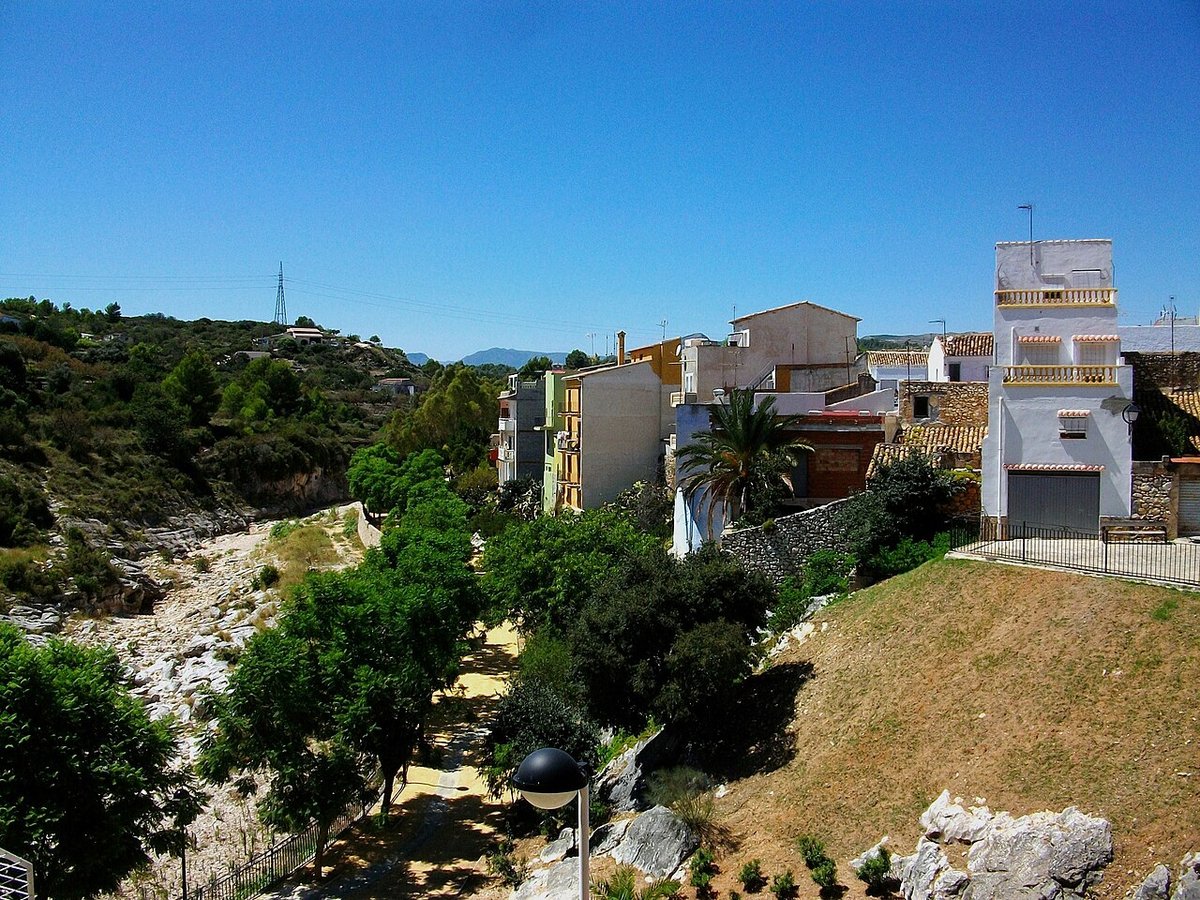
Above the cultivated terraces, the ruins of several Islamic-era castles watch over the valley. The so-called Castillo de Gallinera is the most prominent. What remains are fragments of walls and foundations on a rocky outcrop. The climb to it is steep and unshaded, but from the top the logic of the territory reveals itself: the linear valley, the villages like beads on a string, the relentless terraces that climb toward the sierra.
A landscape shaped by work
The defining feature of Vall de Gallinera is its worked terrain. The terraces are not scenery; they are the result of sustained labour. They form a vast agricultural amphitheatre on both sides of the road, each wall built by hand from local stone.
The agricultural calendar dictates the valley’s colour. In late January or early February, depending on that year’s winter, the almond trees bloom. The white and pink flowers last only a week or two before giving way to green. By April, the cherry trees follow, their blossom another brief spectacle. These cycles are fragile, entirely subject to frost and rainfall.
The infrastructure you see—the water تقسیم points where channels split, the narrow camins between plots—is still in use. It was built for utility.
Walking between villages
The most coherent way to experience the valley is on foot, following the old paths that connect the settlements. A network of agricultural tracks and some signposted trails allows you to link several villages in a day’s walk.
The walking is rarely flat. You will constantly gain and lose elevation as you move from one village to the next. In summer, the sun on these slopes is severe; carrying water and planning your route for shade is necessary.
Near Alpatró, the Barranc de la Encantada ravine cuts into the landscape. After significant rains, it can hold pools and small cascades. In typical months, especially from June onward, it is often dry or reduced to a trickle. Its state is a reliable indicator of the water level in the valley’s springs.
Local calendar and everyday details
The almond blossom is marked by the Festa de l’Ametller Florit. It typically involves guided walks through the orchards and perhaps a market, but its specific activities are decided annually by the village associations.
Each settlement holds its own summer festes majors, with processions, dolçaina i tabalet music in the plaça, and communal dinners. These are local events first; visitors are observers.
An autumn craft and produce fair takes place, usually rotating between villages. Dates are not fixed far in advance—checking with the valley’s tourist information point is advisable if you wish to coincide with it.
Driving the CV-700 gives you an overview, but the texture is in the details you find on foot: the stone lintels over doorways, the covered public washhouses (llavadors), the low stone pens attached to older houses. These elements are quiet, but they document a way of life organised around agriculture, livestock and shared water.