Full Article
about Xaló
Heart of the Pop Valley; known for its antiques market, wines, and cured meats.
Ocultar artículo Leer artículo completo
The queue outside the bodega starts at nine. By half past, it stretches past the baker’s and blocks the doorway of the ironmonger. No one minds; they’re here for the same thing—plastic five-litre jugs of local red, filled straight from the stainless-steel tap at €1.50 a litre. This is Saturday morning in Xaló, and the ritual is as much about gossip as it is about grocery.
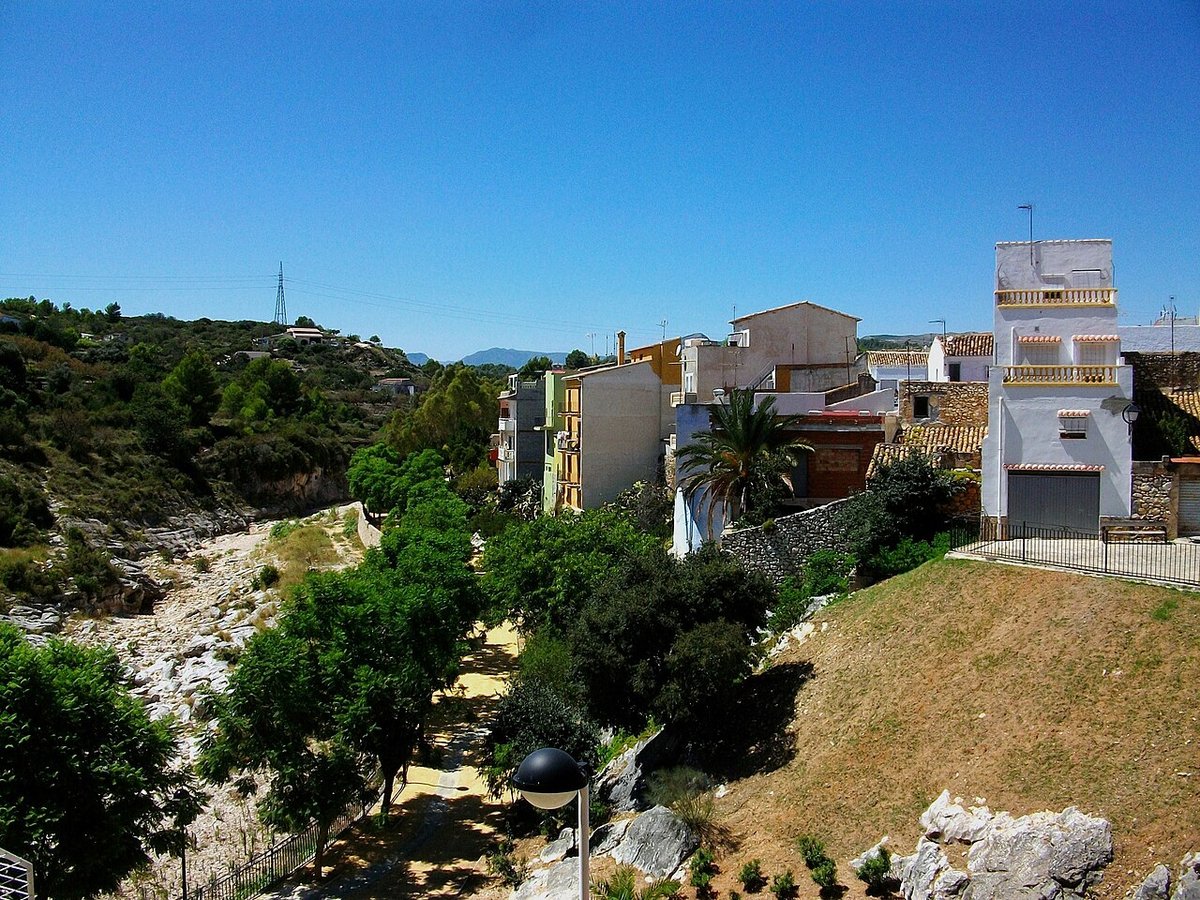
Xaló sits 189 m above the Costa Blanca, yet feels continents away from the high-rise strip. From Alicante airport it’s 75 minutes by car: turn off the AP-7 at Ondara, climb the CV-750, and watch the orange groves give way to almonds stitched into terraces of limestone scree. The first glimpse of the village is a scatter of ochre roofs cupped between the Serrella and Aitana ranges, the bell tower of the eighteenth-century Nativitat church poking above the canopy like a waymarker for the thirsty.
Market day and other honest truths
The weekly market fills the central grid of streets from 9 am till 2 pm. Stalls sell almonds the size of a child’s thumb, strings of dried ñora peppers, and buckets of olives that smell of fennel and wild rosemary. Bring cash: most vendors don’t take cards and the solitary ATM beside the bakery habitually runs dry before eleven. Parking is simpler—leave the car in the signed dirt lot on the CV-750 and walk the last 300 m; the alternative is a sweaty reverse park between dry-stone walls while half of Derbyshire watches from the terrace.
British voices dominate the queue at the cooperativa, but the village is far from expat territory. Of 2,800 permanent residents, fewer than 300 are non-Spanish, and you will still hear Valencian in the bars at lunchtime. The trick is knowing when that lunch happens—menu del día is served 1–3 pm, after which kitchens close until eight. Turn up at four expecting tapas and you’ll be handed a packet of crisps and a look of pity.
What you can (and can’t) do between glasses
Xaló is not a resort; it’s a working agricultural centre with one main street, two traffic lights, and zero nightclubs. A slow circuit of the old quarter takes 45 minutes: stone doorways from 1780, forged balconies painted the colour of dried blood, the church interior all gilt and brocade if the sacristan remembers to unlock it. The ethnographic museum—really just two rooms in the town hall—has rusting espadrille machines and a video of the grape harvest. Entry is free; the soundtrack is worth the detour if you like hearing Valencian grandfathers argue about pruning.
Outside the village, footpaths follow the dry-stone margins of almond terraces. Late January to mid-February turns the valley white with blossom; photographers arrive at dawn and are gone by March, when the landscape reverts to sage-green and khaki. The signed PR-circular to the Fonts de l’Algar is an easy 6 km, but after heavy rain the clay sticks to boots like wet cement. Summer walkers should start at sunrise and carry more water than they think—shade is scarce and the mirage of the sea in the distance only makes the climb feel longer.
Wine growers will open their cellars if you telephone first. Bodega Xaló offers a 30-minute tasting of two whites, a rosé and the local moscatell dessert wine; the pourer explains solera in fluent Benidorm English and will ship cases home for £2 a bottle if you buy twelve. Smaller family bodegas—Casa de la Ermita, L’Era—prefer a day’s notice and sell only en rama, the wine unfiltered and cloudy. Decant before the sediment sets your teeth on edge.
Eating without surprises
The British craving for something recognisable is quietly catered for. Rull on the plaza does a bocadillo of serrano ham on crusty barra that tastes like the Costa version of a Yorkshire ham sandwich, only with olive oil instead of mustard. Pizzeria Capriccio turns out thin-crust margheritas that keep under-tens quiet while parents work through a carafe of house red. For the braver, Restaurante Casa Marta serves rice dishes baked in individual clay cazuelas—rabbit and snail for the traditionalists, artichoke and cod for the faint-hearted. Expect to pay €14–16 for a main; bread and alioli appear whether you ask or not.
Pudding is usually something involving almonds. Turrón is sold year-round at the Saturday market: soft Jijona version for spreading on toast, hard Alicante for chipping teeth. A quarter kilo wrapped in waxed paper survives the flight home and makes a cheaper souvenir than anything sold at the airport.
Seasons and sensible timings
Spring and autumn deliver 22 °C afternoons and cool nights—perfect for hiking or simply sitting outside without moving into the shade every ten minutes. August tops 36 °C; sensible folk do their wine shopping at 9 am then retreat to the coast. Winter is crisp, 12 °C in sunlight, zero at night; the village fills with cyclists training on nearby climbs and retirees who’ve swapped Torrevieja for something quieter. If snow falls on the Serrella, the CV-750 can ice over; carry chains or wait for the midday thaw.
The practical bit, woven in
Getting here: No direct public transport. Fly to Alicante, pre-book a shuttle (€55 with ShuttleDirect) or hire a car—diesel, not petrol, for the climb. If you insist on buses, take the ALSA to Benissa then a taxi (€25) or risk the Moventis line that reaches Xaló at 1 pm and leaves again at 2 pm, market day excepted.
Staying: Casa Susi is a three-room British-run B&B among the vines; hosts lend OS maps and will wash walking kit overnight. Hotel Rosa on the main drag has doubles for £65 with breakfast that includes proper tea bags. Villa agencies list four-bed pool houses on the outskirts from £950 a week—worth it if you want to self-cater and drink your €1.50 wine under the stars.
Leaving: Last bottle shop shut is 8 pm; after that, the only alcohol on sale is at the petrol station on the N-332, and even that closes at ten. Plan accordingly.
The bottom line
Xaló will not change your life. It will, however, give you a litre of decent red for the price of a London coffee, a Saturday morning that smells of orange blossom and wet earth, and the pleasant realisation that somewhere between the airport and the coast the conveyor belt of BritishSpain simply stopped. Enjoy the pause—just remember to fill your jug before the queue gets silly.