Full Article
about Confrides
The highest village in the Marina Baixa; set in the Puerto de Ares with mountain climate.
Hide article Read full article
A Different Side of the Marina Baixa
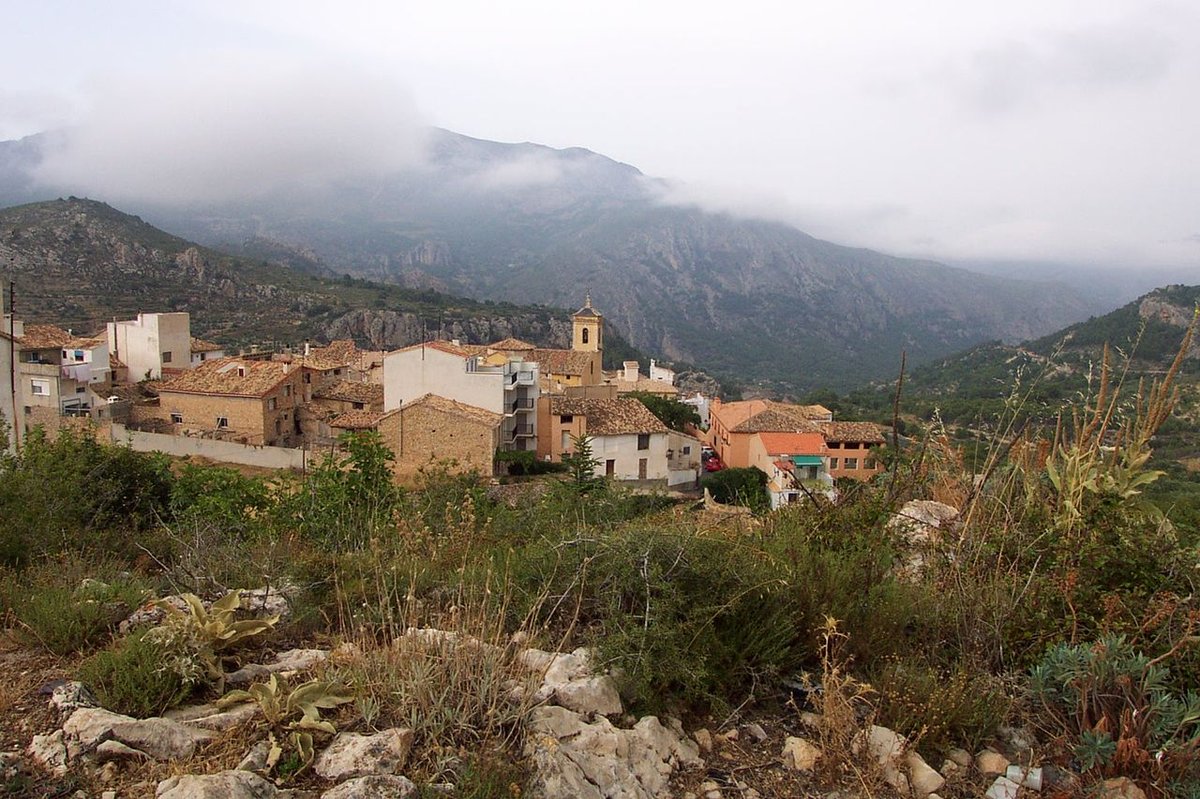
At around 785 metres above sea level, Confrides sits high in the Marina Baixa, and that altitude often comes as a surprise. The comarca is widely associated with the coast, yet here the scenery shifts completely. This is mountain country. The village clings to a slope overlooking the Guadalest valley, under the nearby presence of the sierra de Aitana, and its shape follows the logic of the mountains rather than that of Alicante’s shoreline.
With barely three hundred inhabitants, Confrides remains small in every sense. The streets descend towards the valley and still reflect the layout of former agricultural settlements: houses grouped closely together, narrow lanes and quick access to the paths leading out to the terraced fields. The connection between the village and the land around it is still easy to read.
Homes are arranged along the hillside, most facing into the valley. Many retain whitewashed façades and simple woodwork. Around the edges of the settlement, dry-stone terraces stand out clearly. For generations these supported dryland crops adapted to both the terrain and the Mediterranean mountain climate. Daily life moves at a steady pace. The sound of a tractor, church bells or wind sweeping down from Aitana occasionally breaks the quiet.
There are no formal viewing platforms. Instead, wide views open up naturally from different points in the village. Often it is enough to reach the end of a street or follow a track out of the centre to understand Confrides’ position within the valley and the ring of mountains around it.
San Juan Bautista and the Old Quarter
At the heart of the village stands the parish church of San Juan Bautista. The current building dates back to the 16th century and was later reformed. It is not monumental in scale, yet it carries the weight typical of churches in small Spanish villages. It shapes the rhythm of the main square and remains one of the village’s meeting points.
The old quarter spreads out around it, formed by short streets and steep slopes. Most houses have two storeys and simple façades, many of them whitewashed. Some properties have been restored in recent years, while others stay closed for much of the year. This contrast reflects a common pattern in inland Alicante: a reduced resident population, inherited homes and a slower pace of change than along the coast.
A slow walk through the centre reveals details of traditional architecture that are easy to miss at first glance. Wide doorways were designed to store tools and equipment. Small animal pens were built into the house itself. Stone walls mark the boundaries of former vegetable plots. These elements speak of a time when agriculture shaped daily life far more directly than it does today.
Paths Into the Sierra de Aitana
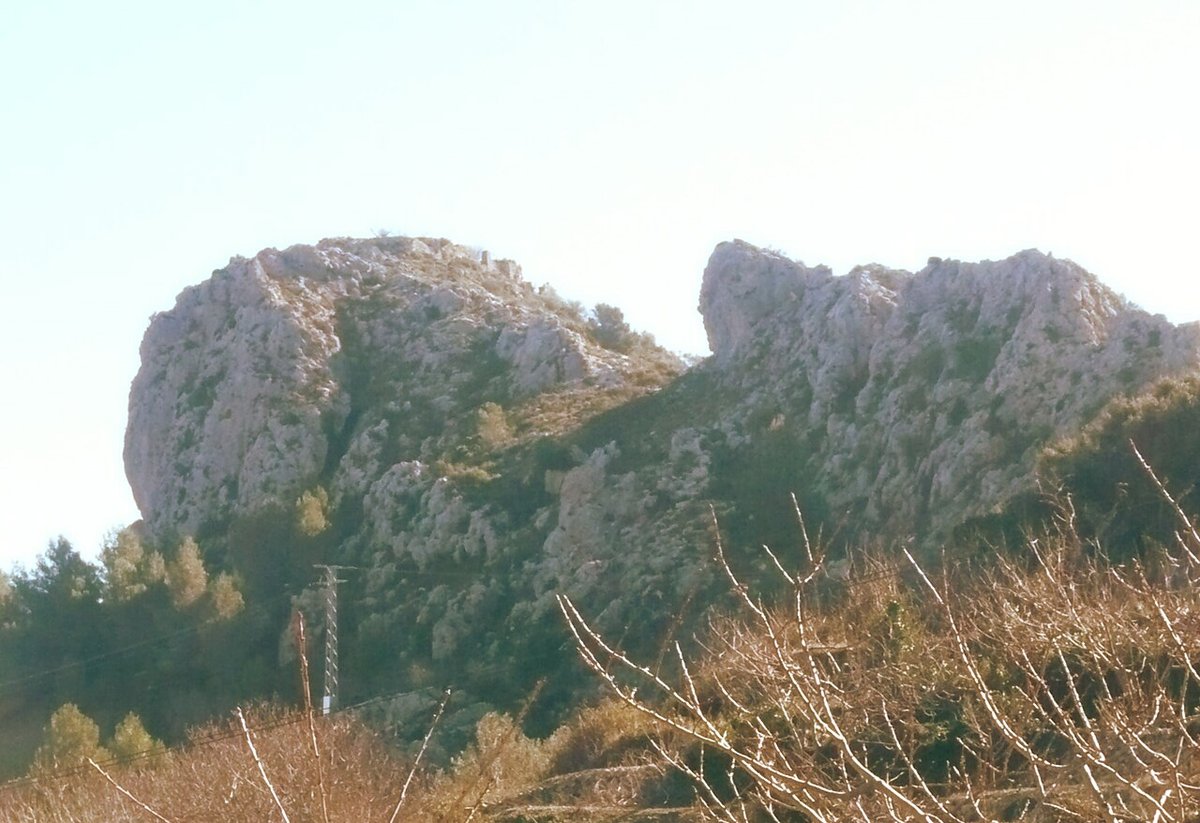
More than the village itself, it is the surrounding landscape that explains Confrides. The settlement lies within the mountainous area that surrounds the sierra de Aitana, one of the highest ranges in the province. Pine trees, holm oaks and Mediterranean scrub cover much of the slopes, although closer to the village the pattern of terraces, some abandoned and others still cultivated, is clearly visible.
Traditional paths lead out from the centre towards former fields, livestock enclosures and springs. Some of these routes are now used for walking and connect with forest tracks that climb deeper into the sierra. There are shorter walks that pass between terraces and nearby ravines, and others that gain considerable height with a marked gradient.
Water is essential, and it is wise to check the route in advance if unfamiliar with the area. Even at altitude, summer heat can be intense. Distances in the mountains often feel longer than they appear on a map.
From higher ground the scale of the Guadalest valley becomes clearer, framed by successive ridgelines. In winter, the peaks of Aitana can occasionally appear dusted with snow. Cold air funnels down through the valley, bringing temperatures that may surprise those who associate this part of Alicante only with mild coastal winters. Warm clothing is advisable when spending time outdoors during the colder months.
Festivals and the Village Calendar
The festive calendar follows the rhythm common to many inland villages. Celebrations dedicated to San Juan Bautista, the village’s patron saint, bring together much of the collective activity. Religious events sit alongside more festive gatherings, drawing back people who return to Confrides for those days.
In summer, patron saint festivities bring activity into the streets and a livelier atmosphere than at other times of the year. During winter and at Christmas, life is much quieter. Celebrations take on a more domestic tone, shaped by the smaller number of residents who remain throughout the year.
The contrast between these periods reflects the village’s scale. With a limited permanent population, daily life is defined by those who live here year round. Seasonal returns and summer events create brief moments of intensity before the calm settles back in.
When to Go and What to Expect
Spring and autumn are generally the most comfortable seasons for walking around Confrides and its surroundings. Temperatures make it easier to explore the paths without the strong heat of summer, and the landscape changes noticeably after rainfall.
Winter can be colder than many expect in this corner of Alicante. The nearby heights of Aitana sometimes show snow, and wind moving down the valley sharpens the air. Preparation matters, especially for time spent outdoors.
Confrides does not operate as an organised tourist destination. It is a small village with limited services and a daily rhythm closely tied to its residents. A visit makes more sense when approached as a quiet pause within the mountains of the Marina Baixa, rather than as a standalone resort. The appeal lies in understanding how settlement, agriculture and landscape still fit together here, high above the Guadalest valley and under the watch of the sierra de Aitana.