Full Article
about El Castell de Guadalest
Picturesque village perched on a rock; famous for its castle and views of the emerald-green reservoir.
Hide article Read full article
A settlement shaped by height and stone
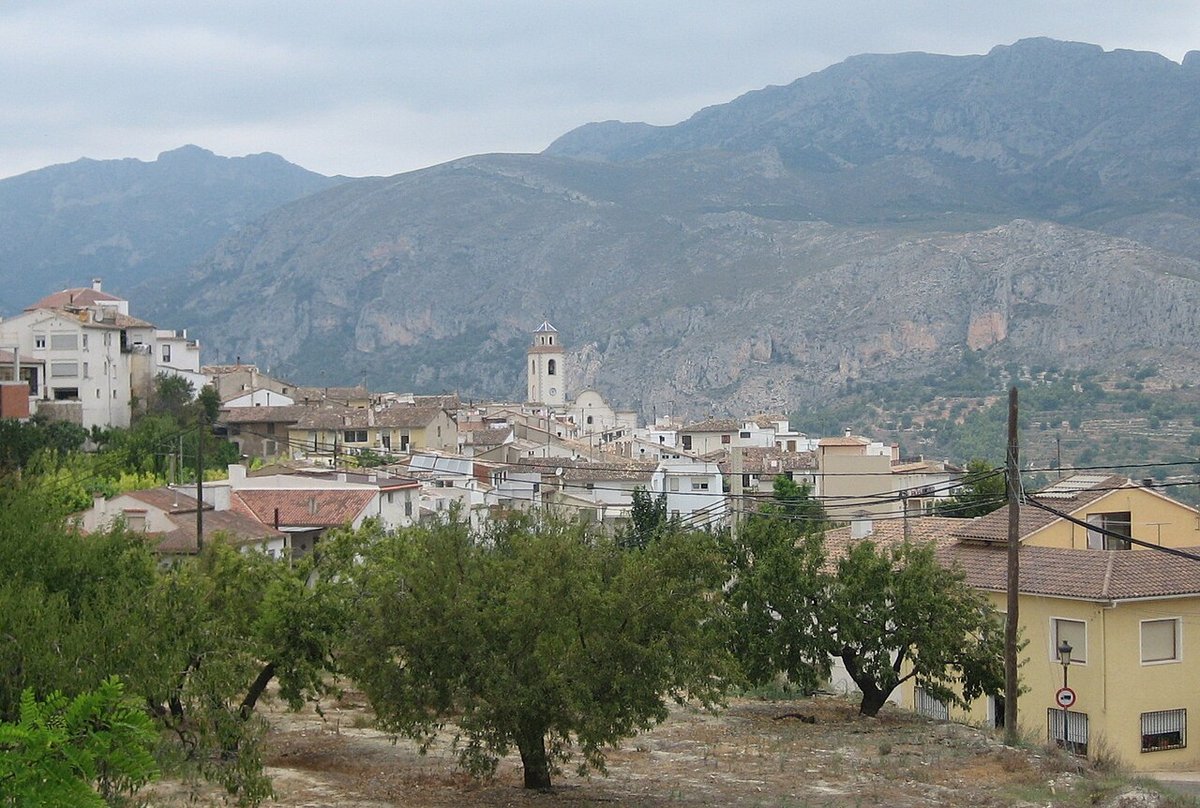
Tourism in El Castell de Guadalest begins with its position. The village sits on a rocky promontory around 570 metres above sea level, in the interior of the Marina Baixa. It is far from the coastline, yet visually close to the landscape that defines this part of Alicante: steep mountain ranges, deep ravines and, below, a reservoir that now fills what was once a valley. The layout of the settlement, quite literally perched on rock, follows a clear medieval defensive logic that remains easy to recognise when walking through it.
Today, just over 280 people live here. That number contrasts with the steady flow of visitors who arrive throughout much of the year. Even so, the structure of the place still reflects a small fortified settlement. Its designation as a Historic-Artistic Site acknowledges precisely that link between architecture, history and terrain, which gives the village its meaning.
The fortress above the valley
The origins of the Castillo de Guadalest go back to the Andalusi period. The fortress occupied the highest point of the crag and controlled a natural passage into the inland valleys of the Marina Baixa. After the Christian conquest, it continued to hold strategic importance for centuries, although much of the structure was damaged by the earthquake of 1748.
What remains today, sections of wall, traces of towers and the fortified rock itself, gives a clear sense of how the site once functioned. Part of this elevated area is now occupied by the cemetery. From there, the logic of the location becomes evident: it was all about watching over the valley and the routes that crossed it.
A short distance away stands the Casa Orduña, a stately residence linked to the family that administered the territory for centuries. The building was constructed after the 18th-century earthquake and now houses the municipal museum. Inside, there are documents, furniture and objects connected to life in these mountains, along with archaeological materials found in the surrounding area.
The bell tower of the Iglesia de la Asunción, also dating from the 18th century, rises above the cluster of houses and can be seen from different points across the valley. Reaching the historic centre involves passing through a tunnel carved into the rock. This narrow passage marks the entrance to the old enclosure in a very direct way.
At the foot of the village lies the Embalse de Guadalest, built in the 20th century to regulate water in the basin. Its colour shifts noticeably depending on the light and the time of year. From the viewpoints in the village, the flooded valley opens out completely, framed by surrounding mountain ranges.
Within the historic centre itself, there are also several small and highly specific museums. These collections, dedicated to everyday objects, miniatures or various curiosities, have been part of the village’s tourist landscape for decades.
Walking the surrounding sierras
The interior of the Marina Baixa presents a very different terrain from the coastal strip. Ravines, rock faces and pine forests define the scenery, which is why walking routes often appeal to those who spend more time in Guadalest.
One of the better-known routes nearby is the Barranc de l’Arc. It passes through areas of limestone rock and Mediterranean vegetation. This is not a short or casual walk and requires a certain level of preparation, but it offers a view of a more rugged landscape than the one usually associated with Alicante.
Further afield rises the Puig Campana, one of the most recognisable mountains in the province, reaching 1,406 metres. The ascent is long and demanding. On clear days, the summit offers views across much of the Marina Baixa and even as far as the coast.
In the wider area, there are also interpretation centres and information panels that explain the surrounding sierras and their biodiversity. These often serve as a starting point for understanding the network of paths that runs through this mountainous interior.
As for local food, it remains closely tied to produce from both garden plots and upland areas. Hearty stews, rice dishes prepared with inland ingredients, cured meats and aromatic herbs are typical. Among the traditional sweets, those made with aniseed or almond appear frequently, as in many villages across the province.
The historic centre itself is small and best explored slowly. Narrow streets and cobbled sections lead to viewpoints overlooking the valley and the reservoir. Rather than following a fixed route, the place is best understood by walking without hurry and noticing how the houses adapt to the rock beneath them.
Festive dates in a small community
The festive calendar includes several celebrations common across the Comunidad Valenciana, although on a much smaller scale. In March, the Fallas are usually held here too, in a more modest format than in large cities but still involving local participation.
The patron saint festivities dedicated to San Bartolomé take place in August. These combine religious events with popular activities that bring together residents and those who return to the village for these days.
Also in August, a romería linked to local tradition is held, continuing the pattern of gatherings that connect the community with its surroundings and its past.