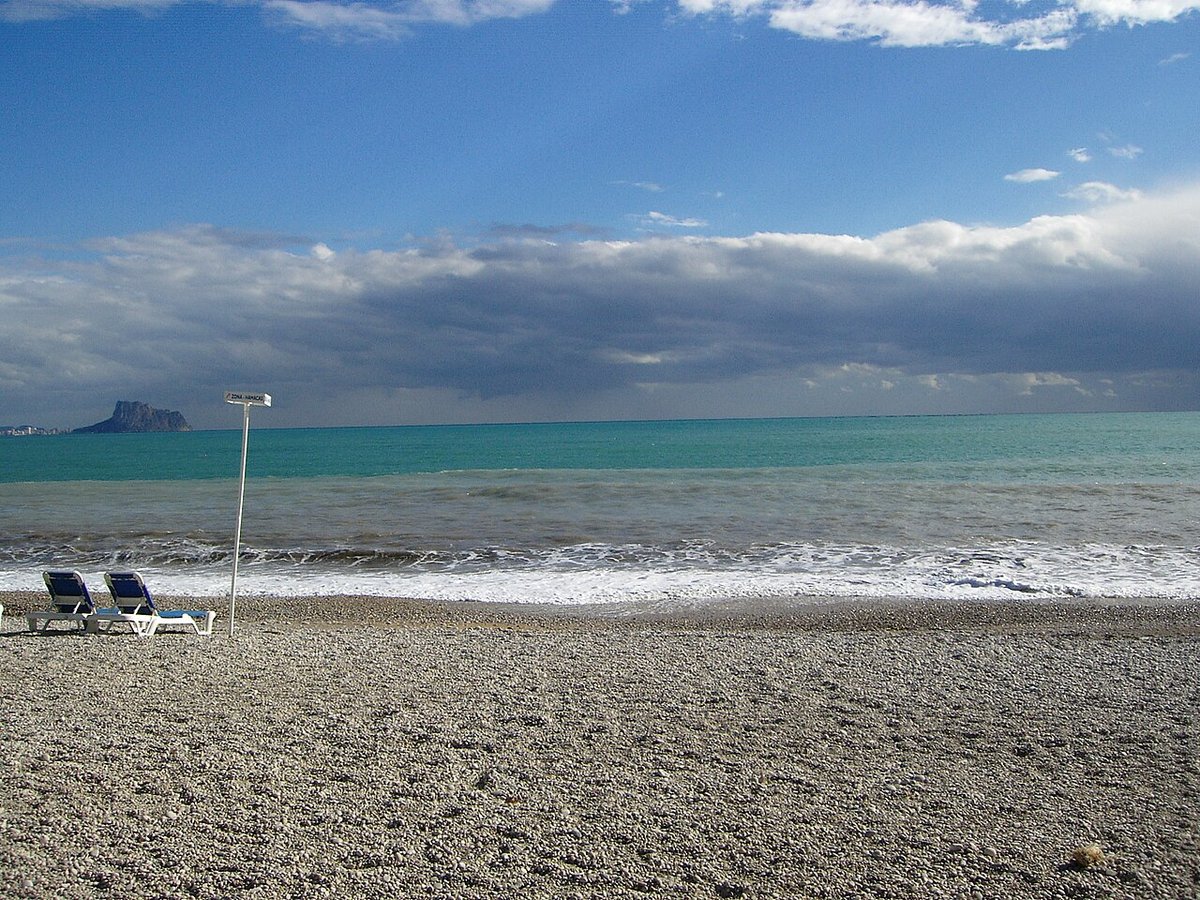
Playa del Racó del Albir.JPG
Comunidad Valenciana · Mediterranean Light

L'Alfàs del Pi

The road signs say L’Alfàs del Pi, yet half the residents call the place simply “Albir”. Stand by the 18th-century church at midday and you’ll hear...

21,080 inhabitants · INE 2025
88m Altitude
Coast Mediterráneo

Why Visit

Coast & beaches Albir Lighthouse Lighthouse Walk, Albir

Best Time to Visit

summer

Christ of Good Success Festival (November) noviembre

Things to See & Do
in L'Alfàs del Pi

Heritage

  • Albir Lighthouse
  • Roman Villa of Albir
  • Stars Promenade

Activities

  • Lighthouse Walk, Albir
  • Film Festival
  • Albir Beach

Festivals
& & Traditions

Fecha noviembre

Fiestas del Cristo del Buen Acierto (noviembre)

Las fiestas locales son el momento perfecto para vivir la autenticidad de L'Alfàs del Pi.

Full Article
about L'Alfàs del Pi

International tourist town with a large Norwegian community; it blends an inland old quarter with a beach and lighthouse.

Ocultar artículo Leer artículo completo

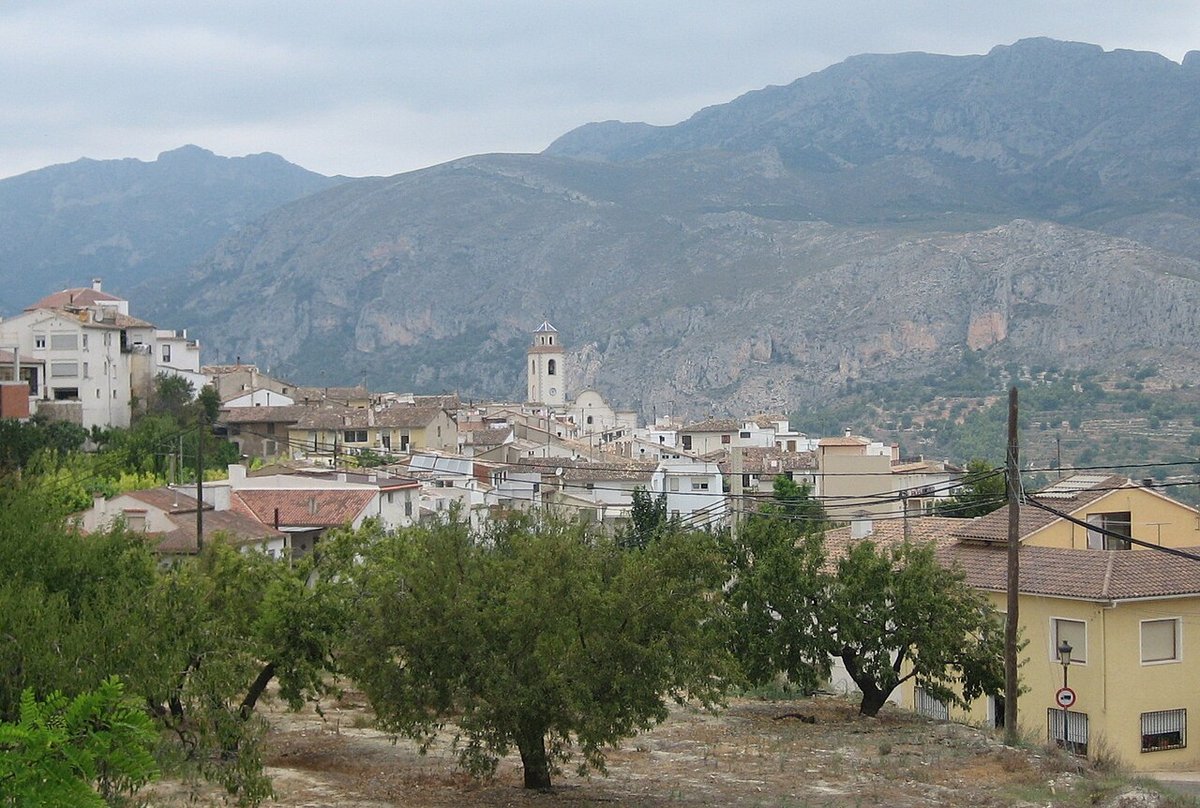
The road signs say L’Alfàs del Pi, yet half the residents call the place simply “Albir”. Stand by the 18th-century church at midday and you’ll hear Valencian spoken in the bakery queue; walk two kilometres downhill to the seafront and the same voices switch to Norwegian, Dutch or English as they order a cortado. One municipality, two distinct settlements: an inland grid of orange trees and low-rise flats, and a linear coastal strip that feels closer to Scandinavia than to Alicante province.

The village that slid downhill

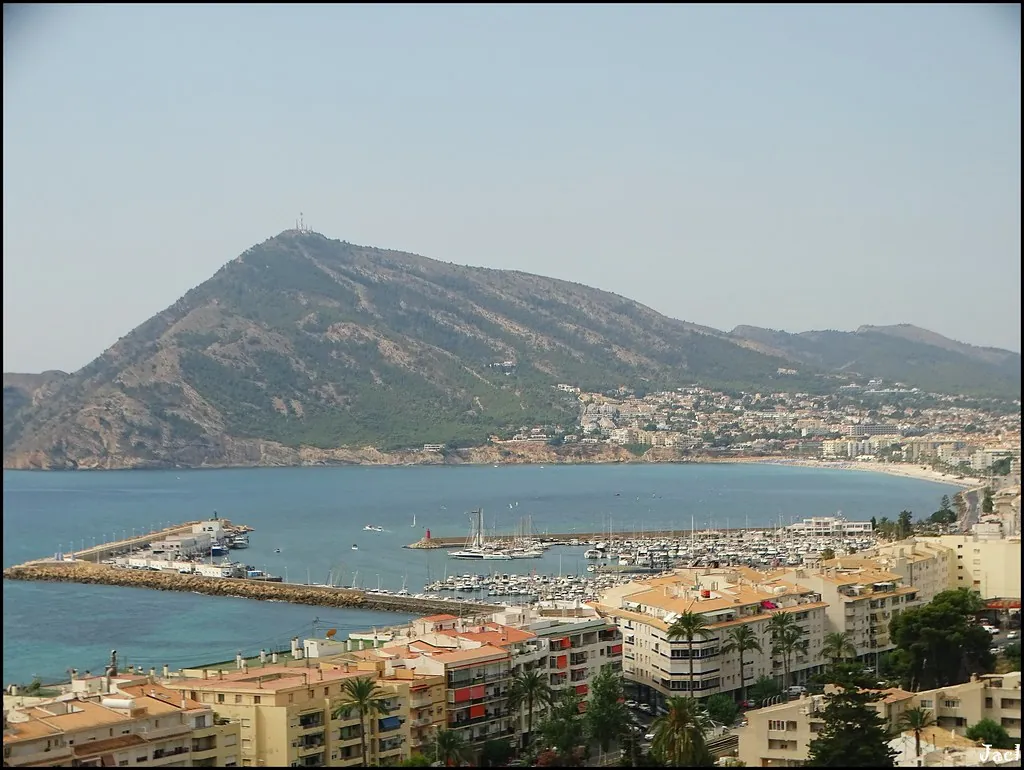
Altitude explains the split. The original town sits 88 metres above sea level, cooled by evening breezes that slip off the Sierra Gelada. When coastal tourism exploded in the 1960s, developers followed the slope westwards until the tarmac ran out at a shingle cove now marketed as Playa del Albir. Property prices followed the gradient: a two-bed apartment within 200 metres of the shore rents for €900 a week in May, while an identical flat uphill costs €450. The municipal boundary never moved, but psychologically the two halves drifted apart.

Buses reinforce the divide. The L-2 local service trundles between the church square and the beach every twenty minutes; buy a Bono card for €8 and the fare drops from €1.50 to 75 cents a ride. Taxis make the same trip for €8–€10, useful after 22:30 when the last bus back to town leaves the Albir promenade. Drivers should note that August brings gridlock: the single coast road becomes a slow-moving car park, and the free car park behind the medical centre fills by 10 a.m.

A shore made of pebbles and languages

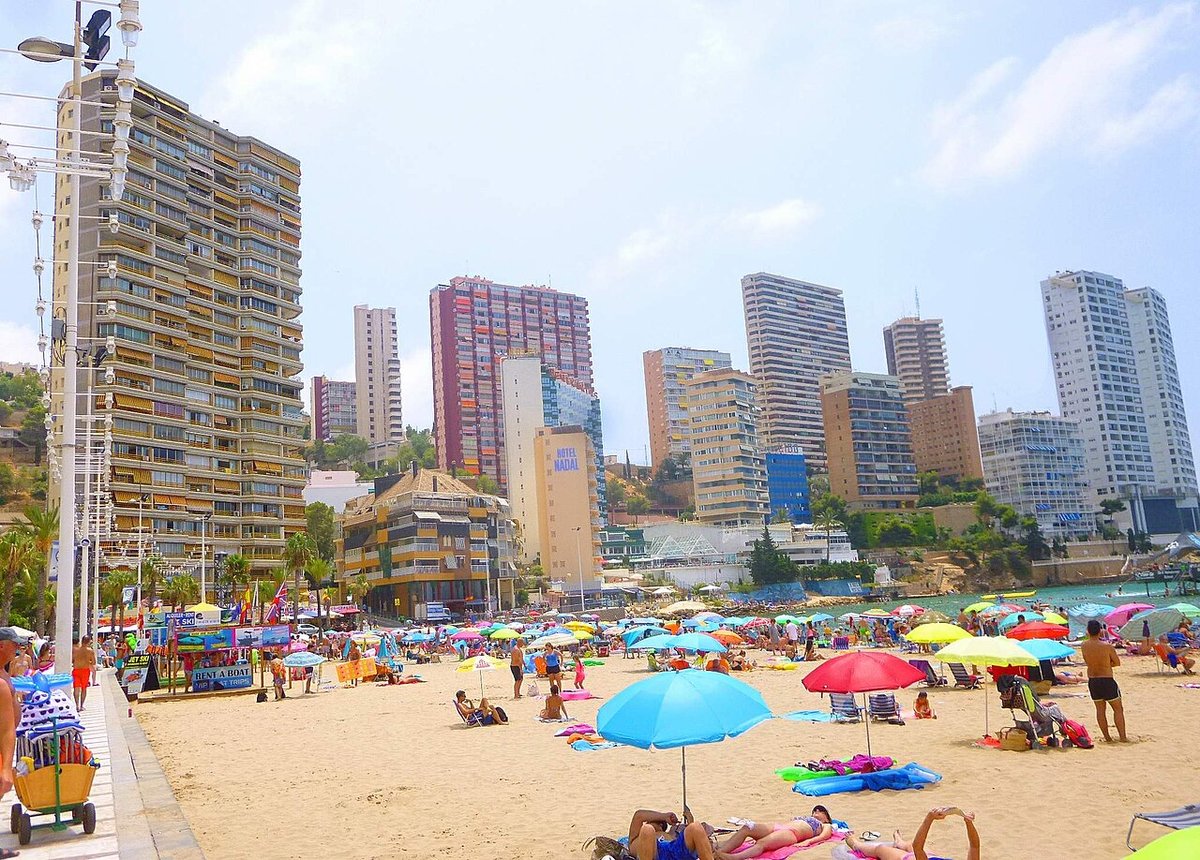
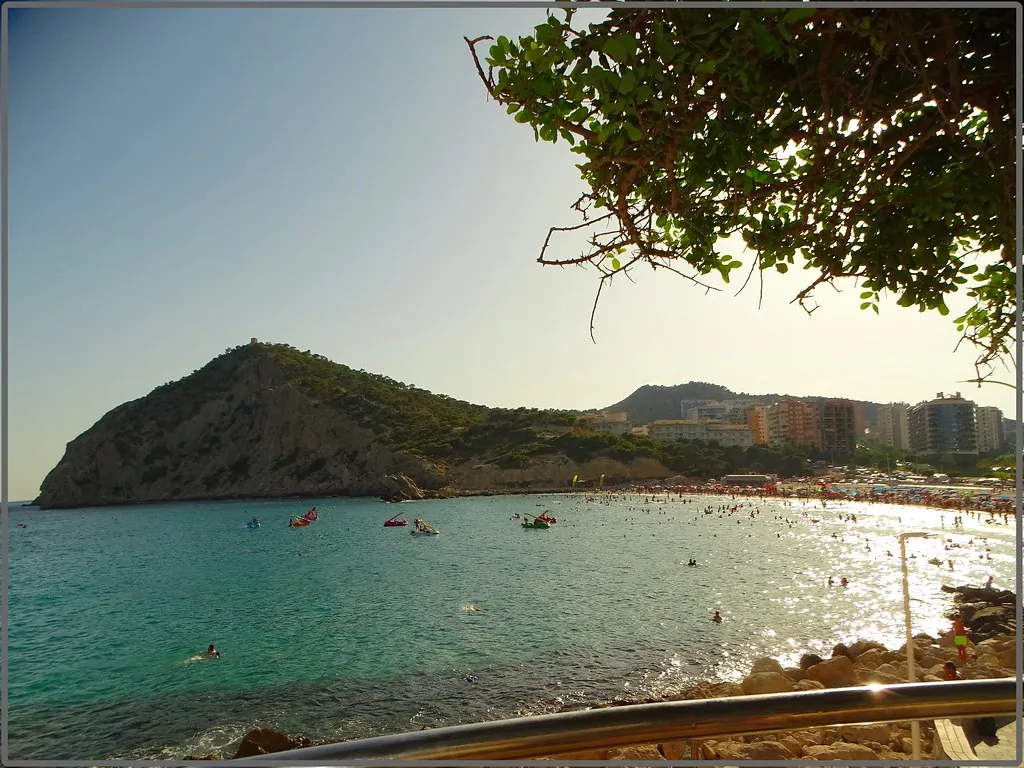
Albir’s strand is not the powder-white stuff of postcards. The beach is coarse grit and flat pebbles, comfortable enough for reading yet murder on bare feet. Aqua-shoes solve the problem and are sold in every supermarket for €6 a pair. The reward is water that stays crystal-clear even when Benidorm bay, ten minutes away by bus, looks murky. Lifeguard towers, showers and a Blue Flag operate from Easter to October; sun-loungers with parasol rent for €5 a day, cheaper if you haggle for a week ticket.

The promenade is the real living room. At 07:00 it’s Nordic power-walkers timing laps between the stone cairns that mark each kilometre. By 11:00 the terrace cafés switch to full English, Norwegian waffles and churros in the same breath. Look down and you’ll spot brass plaques set into the pavement: the July film festival honours visiting actors in the manner of Hollywood Boulevard, only here the handprints belong to Spanish soap stars and the occasional British voice-over artist.

Thursday’s morning market, held inland in the town’s polideportivo car park, is more utilitarian. One stall sells nísperos (loquats) so sweet they taste like apricot-flavoured grapes; another offers extension leads, underwear and kitchen knives laid out with military precision. Prices are labelled in euros per kilo, but stallholders will swap to pounds if asked, mental maths done at today’s rate without blinking.

Walking off the waffles

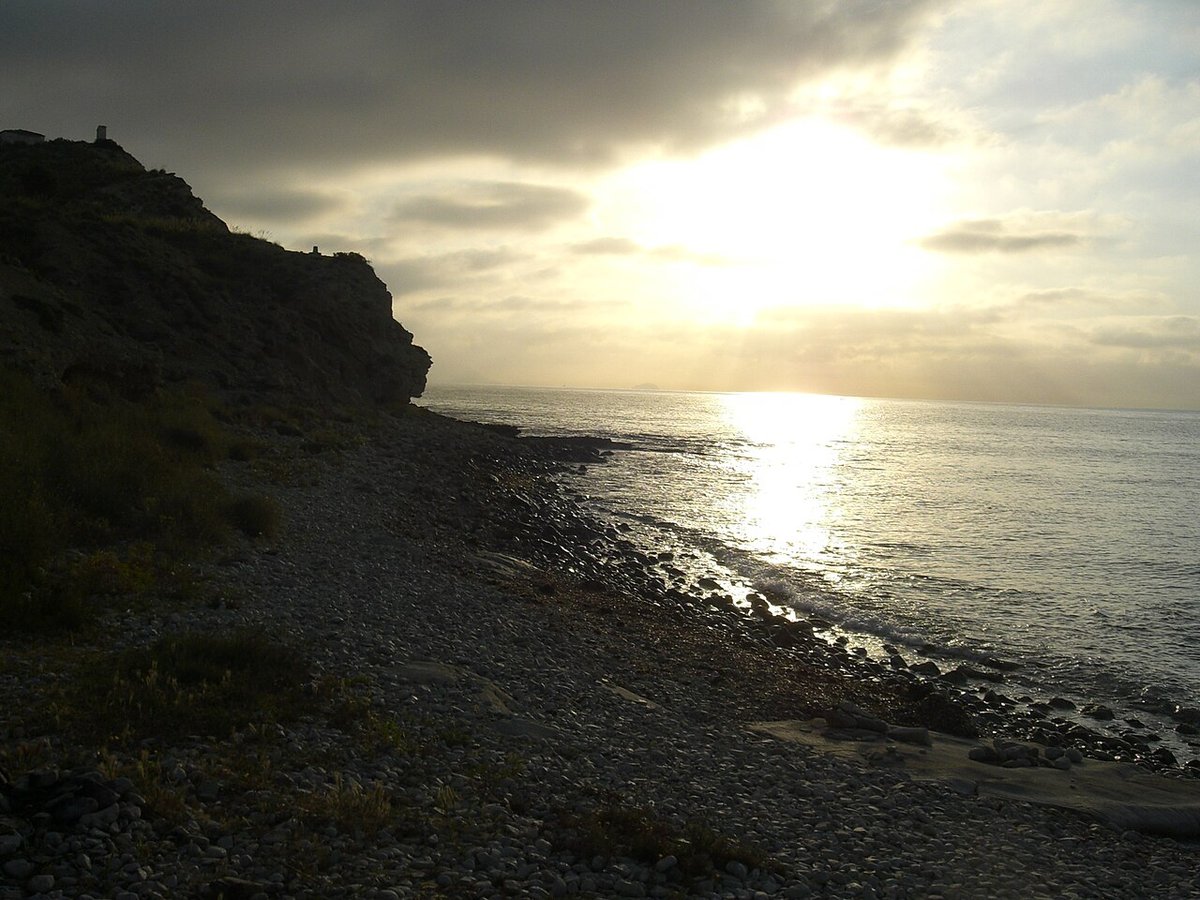
The lighthouse walk is the default excursion. From the Albir seafront a wide track climbs gently into the Serra Gelada Natural Park, threading between Aleppo pines and rosemary scrub. The round trip to the 19th-century Faro de l’Albir takes 45 minutes each way, with benches every 500 metres for the less committed. At the top the view south reveals Benidorm’s skyscrapers in miniature, while northwards the coast wriggles towards Calpe’s rock. Take water: the only kiosk is back at sea level, and the summer sun reflects off white limestone.

Serious hikers can keep going. A second path drops from the lighthouse to the secluded cove of La Mina, then climbs again to the Ermita de Sant Antoni, a 15th-century chapel wedged between cliffs. The full circuit is 11 km and requires footwear with grip; in July the park service starts fining people in flip-flops. Winter visitors get the reverse problem: a stiff tramuntana wind can make the ridge path feel like the Pennines in February, so pack a windproof even if the coast below is 20°C.

Rice, chips and everything between

Eating options mirror the demographics. On the beachfront, Casa Modesto does a three-course menú del día for €12: grilled chicken, chips and ice-cream laced with chocolate sauce, served by waiters who learned their English working in Magaluf. Step one street back and you’ll find Paella y Más, where the €14 portion for two arrives in the traditional wide pan, rabbit and garrofón beans included. The rice is properly socarrat (crisp at the bottom); ask for “no bones” if you’re feeding cautious children.

Self-caterers head to the Mercadona in the old town, the aisles stocked with Tetley tea and Cathedral City cheddar alongside jamón and gazpacho. Norwegian brown cheese appears briefly each autumn when the diaspora return from Oslo with empty suitcases. Friday is the best day for fish: a van from Altea harbour parks opposite the health centre at 09:00 and sells dorada and red mullet until the crates are empty. Bring cash; the vendor doesn’t do cards.

When fireworks meet hygge

Fiestas reveal the cultural layering. Mid-August honours Cristo del Buen Acierto with processions, brass bands and fireworks that rattle the balcony windows. The British-owned bars break out warm San Miguel and commentate like it’s Bonfire Night. Three weeks later the Semana Cultural Internacional occupies the church square with Dutch cheese tastings, German brass ensembles and a Saturday night screening of Mamma Mia dubbed into Spanish. The event is free, organised by the town hall’s foreigners’ department, and ends with everyone singing Abba in three languages.

Firework-phobes should note that Fallas in March is milder than Valencia city’s but still involves daily mascletàs (gunpowder concerts) at 14:00. Light sleepers book Albir accommodation during that week; the town centre echoes like a drum.

Practicalities without the brochure speak

Alicante airport is 50 km south. The ALSA A1 coach leaves the terminal every hour, reaches Albir in 45 minutes and costs €8–€10 online. Taxis hover at arrivals asking €70—polite refusal saves enough for three meals. Car hire desks cluster downstairs; a Fiat 500 is fine for the flat coast roads but struggles on the mountain switchbacks if you plan inland detours.

Accommodation choice determines holiday flavour. Albir hotels within 500 metres of the beach are family-oriented, pools fenced by EU regulation and buffet dinners that include chips with everything. Move uphill to the urbanización streets above the N-332 and nightly rates halve; you’ll need a car or stout calves to reach the sea. The old town’s pensiones are cheapest, but August books out to language-school teenagers.

Weather is dependable April–June and September–November: 24°C by day, cool enough for a fleece after dark. July-August climbs past 30°C and the beach stones scorch; January hovers at 16°C, warm enough for lunch outside if the wind drops, but not for sunbathing. The Spanish state meteorology app (AEMET) is more accurate than UK-based forecasts that tend to overstate rain.

L’Alfàs del Pi will never make the cover of “Spain’s Prettiest Villages”. It lacks the medieval core of Altea or the drama of Guadalest, and anyone craving nightlife after 1 a.m. ends up in a Benidorm taxi. What it offers is a working bilingual suburb where you can eat proper paella at midday and be back on a sun-lounger before the toddler wakes from a nap—assuming you remembered the aqua-shoes.

Key Facts

Region
Comunidad Valenciana
District
Marina Baixa
INE Code
03011
Coast
Yes
Mountain
No
Season
summer

Livability & Services

Key data for living or remote work

2024
ConnectivityFiber + 5G
TransportTrain nearby
HealthcareHospital 4 km away
EducationElementary school
Housing~6€/m² rent · Affordable
CoastBeach nearby
Sources: INE, CNMC, Ministry of Health, AEMET

Planning Your Visit?

Discover more villages in the Marina Baixa.

View full region →

More villages in Marina Baixa

Traveler Reviews