Full Article
about Polop
Picturesque town with its iconic fountain square and a castle steeped in literature.
Hide article Read full article
A village shaped by water and stone
The bells of San Pedro strike ten as sunlight crosses the square of 221 jets. Water falls in a steady murmur, blending with the footsteps of early walkers already coming down from the Ponoig. In Polop, water is more than scenery. It sets the rhythm of the day.
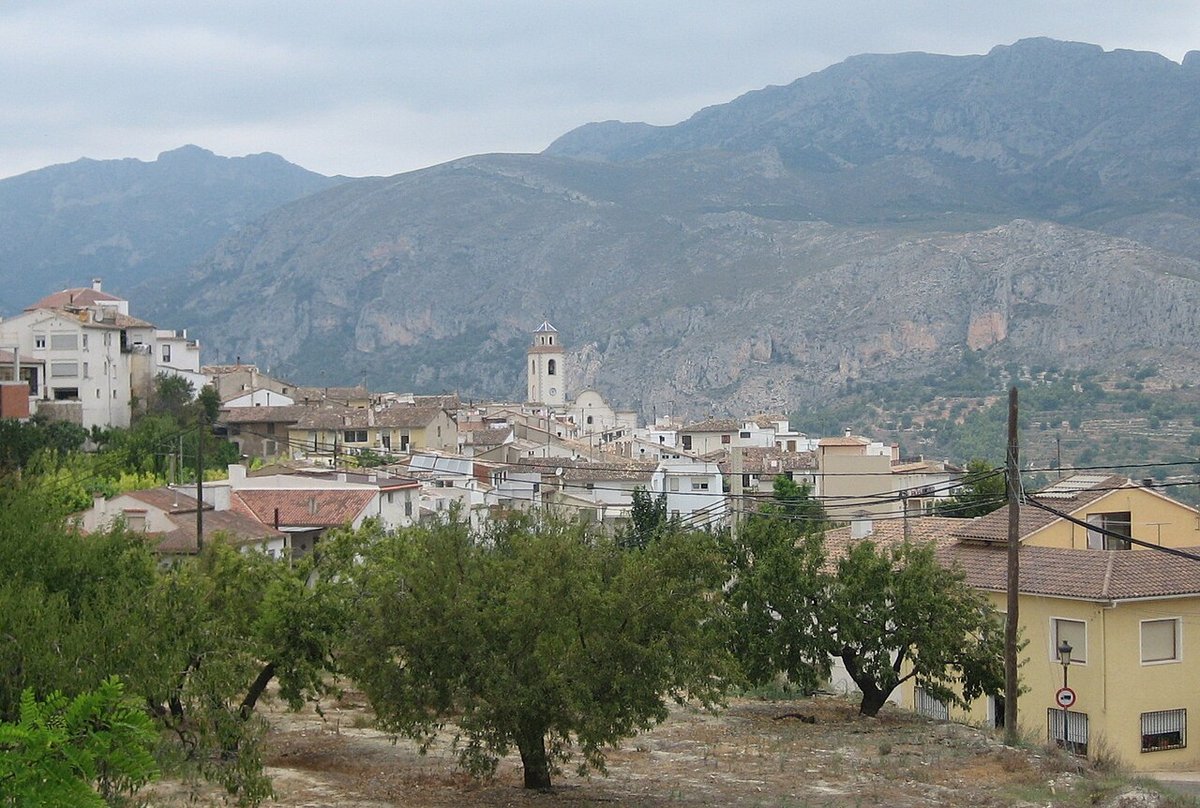
The castle is visible from almost anywhere. It is not large or dramatic, yet it holds its place like an old watchman who no longer rushes. Houses cluster around the hill in baked-earth colours: reddish tones, ochres, muted yellows, as if a sack of soft caramel had been poured down the slope. The church tower rises among them, newer than the castle but just as stubborn in its presence.
The square where water marks the hours
Plaça dels Xorros began with eleven spouts in 1855. Today the fountain front carries 221 jets, fed by local springs including those of Garrofer and Terrer. In the past, women came with large ceramic jars to collect water. Now children slip their hands under the flow while older residents sit for a while along the stone edge.
The pressure is strong enough that the ground is often damp. In summer, the smell of wet stone mixes with soap when someone washes their hands or fills a container.
On one side of the square sits a small, traditional food shop. Cured meats hang inside, bottles line high shelves, and the fridge door opens and closes constantly. Around midday, when the sun falls directly onto the square, the sound of ice being crushed carries across as drinks are prepared for those arriving from the surrounding hills. There are no outdoor tables, yet the fountain itself becomes the meeting point.
A house where summers once smelled of ink
Gabriel Miró spent several summers in the modernist house that now bears his name. This was in the 1920s, when the road did not make access so easy and the village smelled more of firewood than petrol.
Inside, furniture, books and everyday objects from that time remain. A writing desk, wicker chairs, green shutters that soften the afternoon light. In the garden stands an old orange tree whose fruit falls to the ground with a dry thud, almost like a book being closed.
The so-called literary cemetery lies in the old burial ground, no longer in use since the mid-20th century. It recalls the outsider who took his own life, mentioned by Miró in one of his texts. The grave is modest: a slightly tilted slab, flowers that someone replaces from time to time, and the sound of wind moving through the cypress trees.
Up towards the Ponoig
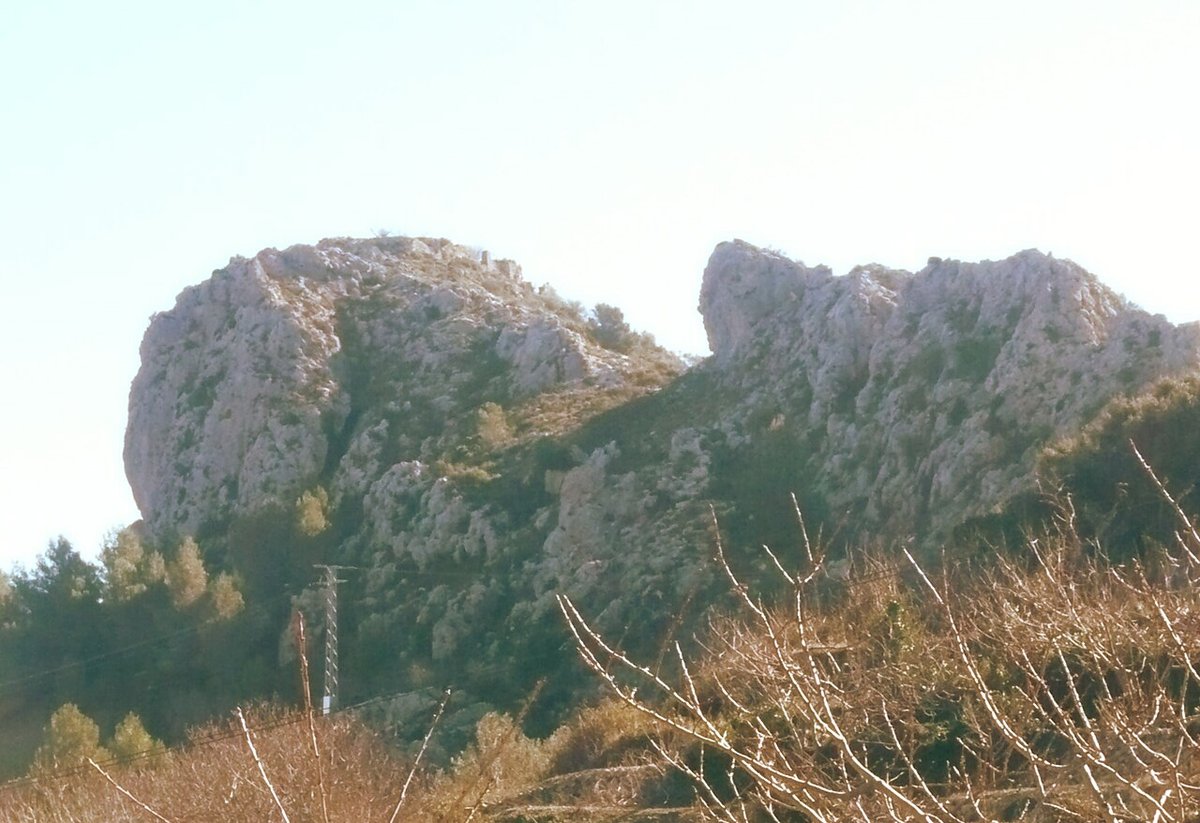
The Ponoig, at 1,337 metres, dominates the landscape around Polop. From the town centre its jagged outline is easy to pick out, especially on clear winter days when the air arrives clean from inland.
One of the usual routes to the summit is around twenty kilometres there and back, with a fair amount of elevation gain. It begins among terraces of almond trees and ends on pale limestone that crunches underfoot. From the top, on a clear day, the Mediterranean appears in the distance, and the towns of the Marina Baixa can be seen spread between cultivated land and residential areas.
Spring is often the best time to walk here. Almond trees bloom at the end of January, and by March the countryside smells of rosemary and damp earth after rain. In August, the heat presses down and the streets of the village fill with cars and visitors coming up from the coast.
If arriving in the height of summer, early morning makes a difference. At that hour the castle is almost empty, and the only sound is the swift flight of swifts nesting among the stones.
What photographs leave out
From the road coming in from La Nucía, the most familiar image of Polop appears: houses stacked along the hillside, the church tower at the centre, the castle at the top.
What the image cannot convey is the constant sound of water in the square or the smell of fresh bread drifting along Calle Major early in the morning. Nor does it show the incline rising from the fountain up to the church. It is short, yet when the summer sun falls straight down, it makes itself felt.
In the upper part of the village there are a few terraces where it is possible to sit for a while towards the end of the afternoon. From there, the valley opens towards citrus terraces and roofs of curved tiles, with the Ponoig cut sharply against the sky.
Polop has no beach and no grand monuments. It has water running all day, old stone that has watched centuries pass, and a square that works like a clock. On the way down from the castle, just before reaching the fountain, it is worth turning back for a moment. The church tower stands against the sky, and the houses seem to lean into each other so they do not slide down the slope. That image tends to linger, even once the car has moved away and the sound of water has faded.