Full Article
about Tàrbena
Mountain village with Majorcan heritage; known for its cured sausage and views
Ocultar artículo Leer artículo completo
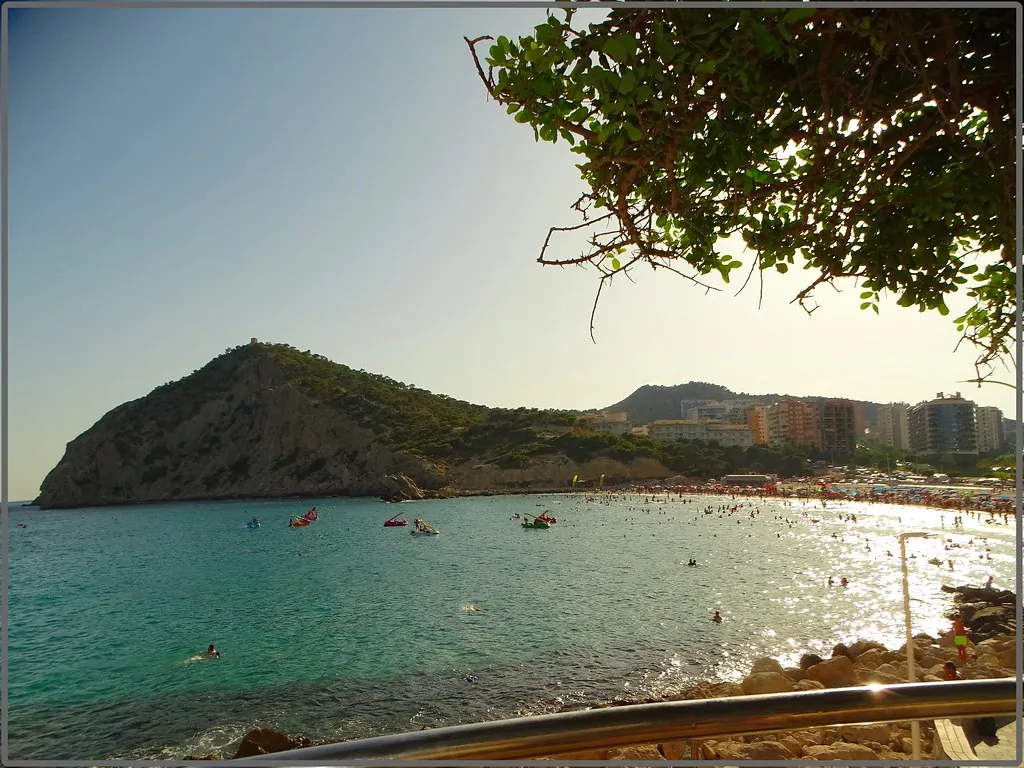
The almond blossom drifts across the terrace like confetti, settling on plates of sobrasada glazed with local honey. Fifteen miles away, Benidorm’s towers glint in the hazy afternoon heat, but up here at 560 m the air carries the scent of pine and wood-smoke. Someone at the next table is ordering in broad Yorkshire. Nobody turns a hair.
A village that speaks two languages
Tàrbena’s accent is unmistakable: Valencian threaded with Mallorcan vowels, a linguistic relic from the 1570s when 150 islanders were shipped inland to repopulate the area after the Morisco rebellions. The heritage survives in the soft “bon dia” that greets visitors in the bakery, and in the sausage that arrives at every fiesta. Ask for sobrasada amb mel at Bar Bernia on the small plaça and you’ll be brought a terracotta dish of rust-coloured spread, sweet, smoky and nothing like the fiery chorizo Brits expect. Slivers of just-toasted village bread cost 80 céntimos each; the view of the Sierra de Bernia ridge is complimentary.
Roughly 630 registered residents live in the old core, yet the wider municipality counts nearer 5 000 once the scattered cortijos and the UK-owned villas tucked into almond terraces are added. The result is a place where the Friday market still weighs out beans in kilos but the pharmacist will happily explain dosing in ounces. If your Spanish stalls halfway through a sentence, the woman behind you in the queue is as likely to rescue you with a Sunderland accent as a Castellano one.
The uphill bit (bring grip)
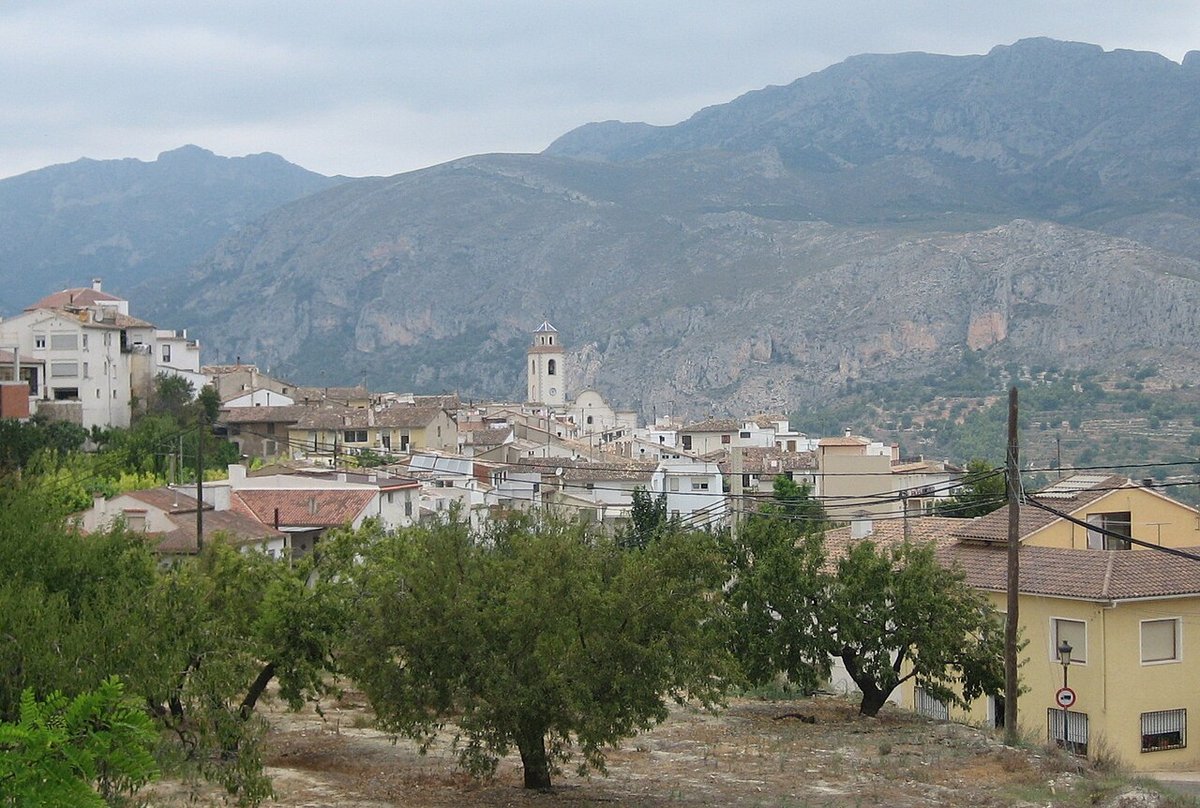
Whitewashed lanes spiral out from the seventeenth-century church of Sant Antoni Abat, narrow enough that shoulder bags scrape the walls. Some ascend so sharply that builders have cut shallow steps into the concrete. The reward for the calf-burning climb is a sudden breach in the houses: the Mediterranean laid out 18 km south, a silver blade between terracotta rooftops and the hazy sky. On winter mornings after a levante wind the outline of Ibiza rises like a mirage; in summer the same view shimmers above sheets of almond leaf that rustle like paper.
The official mirador beside the cemetery is only five minutes from centre-plaza parking, but locals prefer the unofficial balcony formed by the last bend of the Camí Vell de la Sierra. A waist-high wall, no sign, no safety rail: stand there at sunset and the whole of the Marina Baixa folds below you like a crumpled green counterpane, stitched with the white thread of the CV-715 coast road.
Walking without the hard-core kit
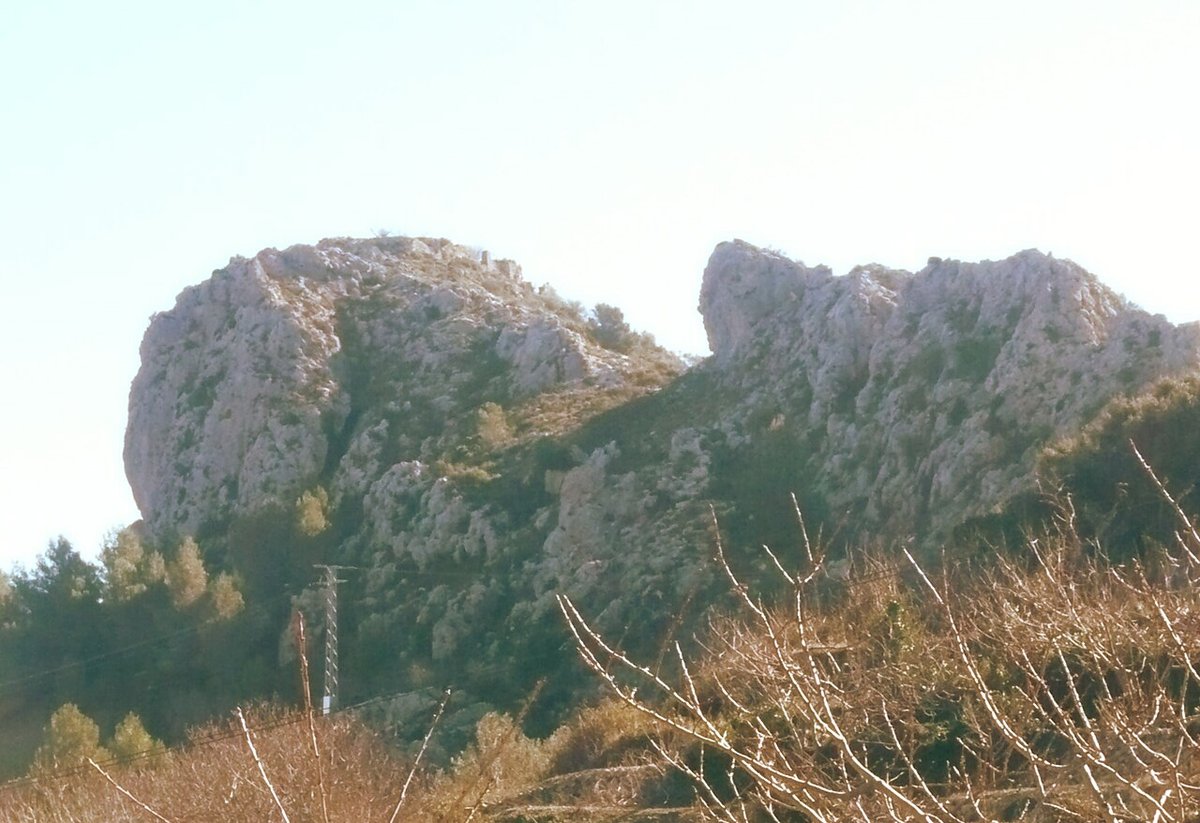
You don’t need boots worthy of Snowdonia to enjoy the hinterland. A 40-minute circuit leaves the upper end of Carrer d’Alacant, follows a stony track between dry-stone terraces, then drops back into the village past an abandoned lime kiln smothered in rosemary. Spring brings waist-high fennel and the clatter of resident rock thrushes; autumn smells of damp earth and second-blossoming almonds. If that feels too gentle, pick up the PR-V 147 waymarks that zig-zag onto the Bernia ridge: three hours return, 450 m of ascent, limestone karst that will remind Yorkshire folk of Malham with better weather.
Cyclists matter here too. The Coll de Rates, rated by Team Ineos as perfect winter training, starts properly in neighbouring Parcent but the Tàrbena approach road is the bit that makes passenger knuckles whiten: hairpins, 12 % gradients, and weekend Lycra convoys who treat the white line as sacrosanct. Drivers should drop a gear, crack the window for pine-scented coolant and resist the urge to clock-watch: the 24 km to the coast takes 35 minutes if you value your brake pads.
What lands on the plate
Agriculture hangs on, just. Olives, almonds and rain-dependent tomatoes survive on terraces too small for machinery. The village co-op still presses oil every November; you can refill a five-litre container for €23 if you remember to bring one. Restaurants work with what surrounds them, so winter menus lean heavily on pork – sangonera (black pudding spiced with cinnamon and pine nuts) appears as tapa or stuffed inside mountain cabbage. Summer means escaldà: tomatoes, onion and green pepper flash-boiled, then cooled under the tap and served with oily tuna and crusty bread – essentially gazpacho you can chew.
Most kitchens close by 4.30 p.m. off-season, yet both Bar Bernia and Casa Félix will fry eggs or rustle up a toastie for stragglers if you ask nicely. The nearest proper supermarket is down in Callosa d’en Sarrià, 12 twisting kilometres away; locals treat the village shop like a corner pantry, buying single onions and gossip in equal measure.
Seasons that change the map
February turns the hillsides into a Pointillist canvas: almond blossom first, then the pink flash of peach orchards nearer the river. Photographers arrive in hire cars, tripods lined along the CV-750 like artillery. By late May the petals lie mulched into the earth and the serious heat starts; thermometers can nudge 36 °C at midday but drop to 18 °C after midnight, perfect for sleeping with shutters open. September sees the grape harvest in the lowlands and the first setas (wild mushrooms) up on the shaded northern slopes – locals guard spots with the same fervour Sussex gardeners reserve for asparagus beds.
Winter feels properly inland. Night frost is common, the kind that powders car windscreens and makes the stone houses inhale damp. Daytime sun can still hit 16 °C on the south-facing benches, but once it drops behind the Bernia the temperature plummets. A log burner isn’t lifestyle décor here; it’s why estate agents put chimneys in bold type.
Honest logistics
Accommodation choices are thin: three village houses registered for holiday lets, a clutch of UK-owned villas on the periphery and, if you’re self-catering, one tiny Friday produce stall. There is no cash machine; the nearest is in Bolulla, 8 km back towards the coast. Mobile coverage is patchy inside stone walls – WhatsApp messages may only ping when you step into the street wearing pyjamas. Parking on the plaça is free but fills early at fiesta weekends; the overflow dirt area by the football pitch adds a five-minute uphill stroll.
Come expecting buzz and you’ll be disappointed. Evenings revolve around the two bars, a handful of tables under the plane tree and, on clear nights, the Milky Way unpolluted by neon. Bring a pack of cards, order a carta de vinos that runs to four reds and one rosado, and listen for the owls that hunt between streetlights.
Tàrbena won’t keep you busy for a week unless you’re the sort who counts butterflies or wants a base for 30-km ridge hikes. What it does offer is the simplest of formulas: mountain air fifteen miles from the sea, a bilingual welcome that isn’t staged for tour buses, and the quiet realization that, while much of the Costa Blanca races to build higher, somewhere inland still measures life in almond harvests and the slow toll of church bells.