Full Article
about Vilafamés
One of Spain’s prettiest villages, with a reddish-stone old quarter; highlights include its castle and the Museo de Arte Contemporáneo.
Ocultar artículo Leer artículo completo
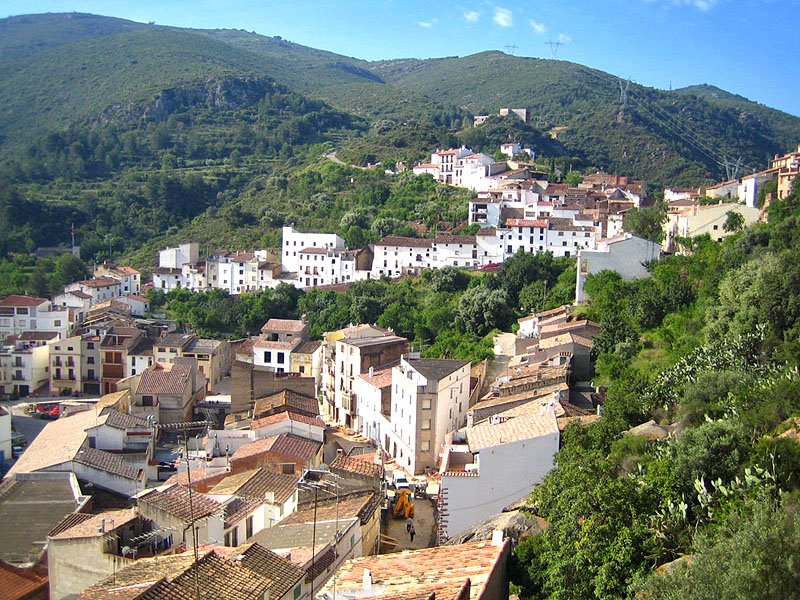
The first thing you notice is the colour. Not the beige-and-ochre palette of most Valencian hill towns, but a deep terracotta that glows copper when the sun drops. Vilafamés sits 390 metres above the orange groves of La Plana, its houses built from a local sandstone that turns every street into a photographer’s grey-card test. From the CV-10 motorway the village looks like someone has sliced a wedge off the sierra and painted it rust.
Getting up there demands commitment. The public car park beneath the modern grid is clearly signed—ignore the sat-nav’s pleas to keep climbing. Leave the car, tighten your laces and start walking; the old quarter is residents-only and the Guardia Civil do patrol. The cobbled lanes rise steeply enough to make calf muscles complain, but each bend reveals something worth the burn: a 15th-century portal still studded with iron nails, a ceramicist’s workshop wedged into a former oil press, the sudden slice of valley that appears between houses like a cinema screen dropping into place.
At the top, what remains of the castle is more atmosphere than masonry. A single tower and fragments of wall survive, enough to orient yourself. North lies the Maestrazgo, south the coastal plain dissolving into the Mediterranean haze thirty kilometres away. On clear winter days you can pick out the ferry leaving Castellón port; in July the heat shimmer erases everything beyond the almond terraces. The climb takes fifteen minutes if you’re fit, twenty-five if you stop to photograph every turn.
Back in the lanes, the village’s split personality emerges. Doorways open onto studios where potters throw clay the same colour as the walls. One workshop, Ceramica Ferrando, still uses a Moorish-style updraft kiln; ring the bell mid-morning and you’ll likely be shown round by the owner’s daughter who fires in reduction because “it makes the reds angrier”. Further down, the Museu d’Art Contemporani occupies the restored Palau del Batlle. The collection—Spanish abstract work from the 1950s onwards—hangs on rough stone walls whose temperature never rises above 20 °C, a natural climate control that beats any London gallery’s HVAC bill. Admission is €4; on Wednesdays pensioners get in free and the curator sometimes gives impromptu tours in English if you ask nicely.
Food follows the same honest pattern. There are no sea-view paella terraces here; instead, inland flavours dominate. At La Vinya, a family dining room that opens onto a tiny plaza, the weekday menú del día costs €14 and arrives in three waves: lentil stew thick enough to stand a spoon in, rabbit braised with bay leaves, and a slab of coca de tomata still warm from the bakery next door. House wine comes from Castellón’s high vineyards and tastes like Beaujolais that’s been to the gym—light but with grip. Finish with an espresso made from beans roasted in Onda village; they grind to order, so expect to wait while the machine coughs itself awake.
Walking it off is straightforward. Two signed footpaths start from the upper gate. The shorter, Ruta del Castell, loops for 3 km through olive groves and abandoned terraces where rosemary grows wild. The longer, Ruta dels Molins, drops to the abandoned windmills that once ground the village’s grain. Neither is strenuous, but both demand decent footwear; the limestone is polished to marble by centuries of mule traffic. If you’re here in February the almond blossom turns every slope white; by late May the same trees have become silver-green skeletons and the temperature nudges 30 °C by eleven o’clock. Start early or risk becoming part of the landscape.
That landscape changes dramatically with the seasons. Winter mornings can start at 2 °C; the village well sometimes sports a skin of ice. Snow fell in March 2022, stranding the twice-daily bus from Castellón and forcing the baker to hand out yesterday’s bread for free. Summer afternoons are a different test: thermometers hit 38 °C and the stone radiates heat like a pizza oven. Siesta is not quaint tradition, it’s survival—everything except the chemist shuts from 14:00 to 16:30. Plan accordingly or you’ll be photographing closed doors until the bells strike five.
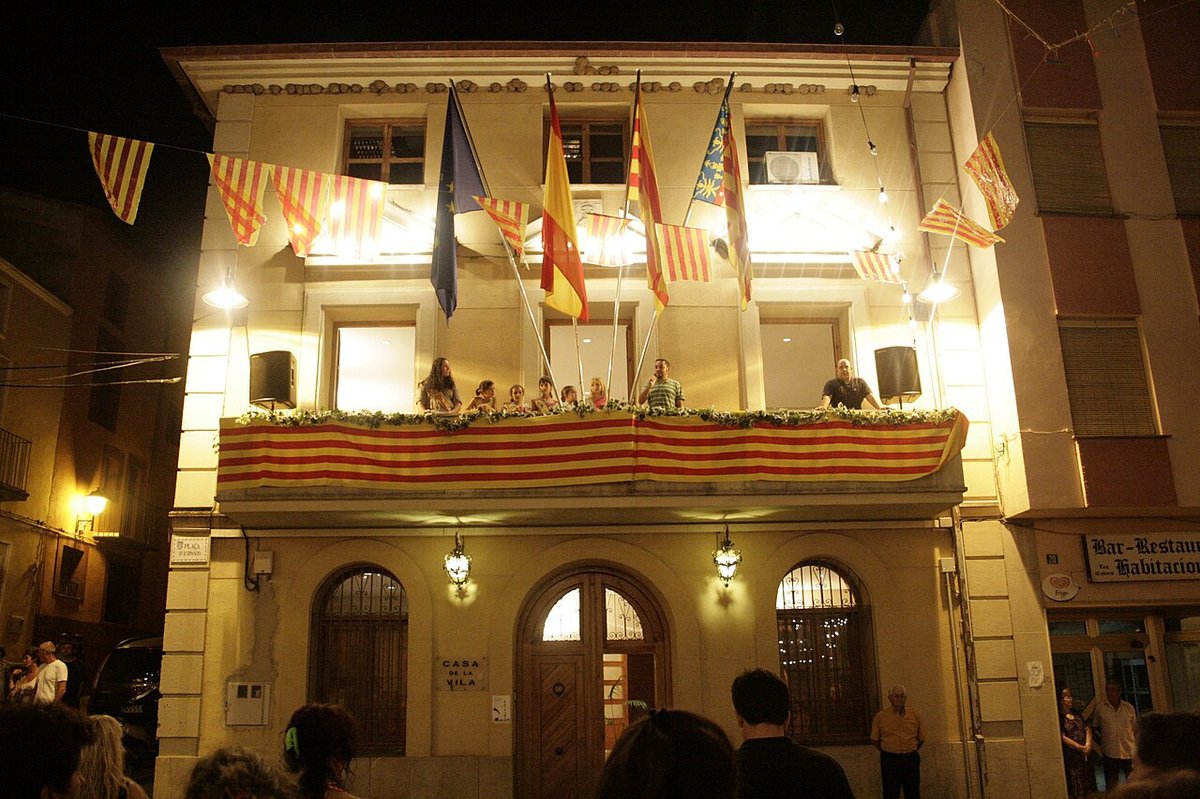
Evenings bring relief and a gentle social buzz. Locals emerge onto Carrer Major carrying canvas chairs; they sit in the shade of the 17th-century town hall debating rainfall and the price of almonds. Visitors are noticed but not fussed over. English is spoken in the museum and one ceramic studio; everywhere else a cheerful “Bon dia” followed by pointing will get you fed, watered and sold a hand-thrown bowl whether you need one or not. The single ATM occasionally runs dry—top up in Castellón if you’re staying for dinner and a taxi back.
The practical notes matter. Buses leave Castellón’s main station at 09:15 and 13:15, returning at 14:30 and 18:00. There is no Sunday service. A one-way ticket costs €2.85 and the journey takes fifty minutes through a landscape that gradually folds in on itself until only red cliffs and green almonds remain. Driving is faster—thirty minutes from the coast—but parking above the designated zone risks a €90 fine and the tow truck arrives from Benicàssim, an expensive retrieval. If you’re combining Vilafamés with somewhere else, pair it with Culla or La Todolella; the beach is forty minutes away in spirit but an hour-and-a-half in traffic.
Leave time for the rock. Halfway up Carrer de l’Església a huge sandstone boulder known as La Roca Grossa bulges from the wall like a geological afterthought. Children use it as a slide; photographers as a foreground; potters claim its iron oxide stains their glazes. It is, in its understated way, the village mascot. Stand here at sunset and the stone turns the same colour as the houses, the houses the same colour as the sky, and for a moment the whole place feels like one continuous chunk of mountain that someone has carved windows into.
Night-time is quiet. The last bar closes at 23:30 unless there’s a fiesta, and August brings two weeks of them—fireworks, brass bands, and a running-of-the-bulls that uses the main street as a chute. Book accommodation early or you’ll be driving the serpentine road back to the coast in the dark. The rest of the year you can hear owls from the castle ruins and, if the wind is right, the sea that you can’t quite see. It’s that absence of surf that makes Vilafamés feel different from the postcard Spain sold down on the coast. Here the horizon is land-locked, the soundtrack is church bells and cicadas, and the colour—always the colour—belongs to stone rather than salt water.