Full Article
about La Vilavella
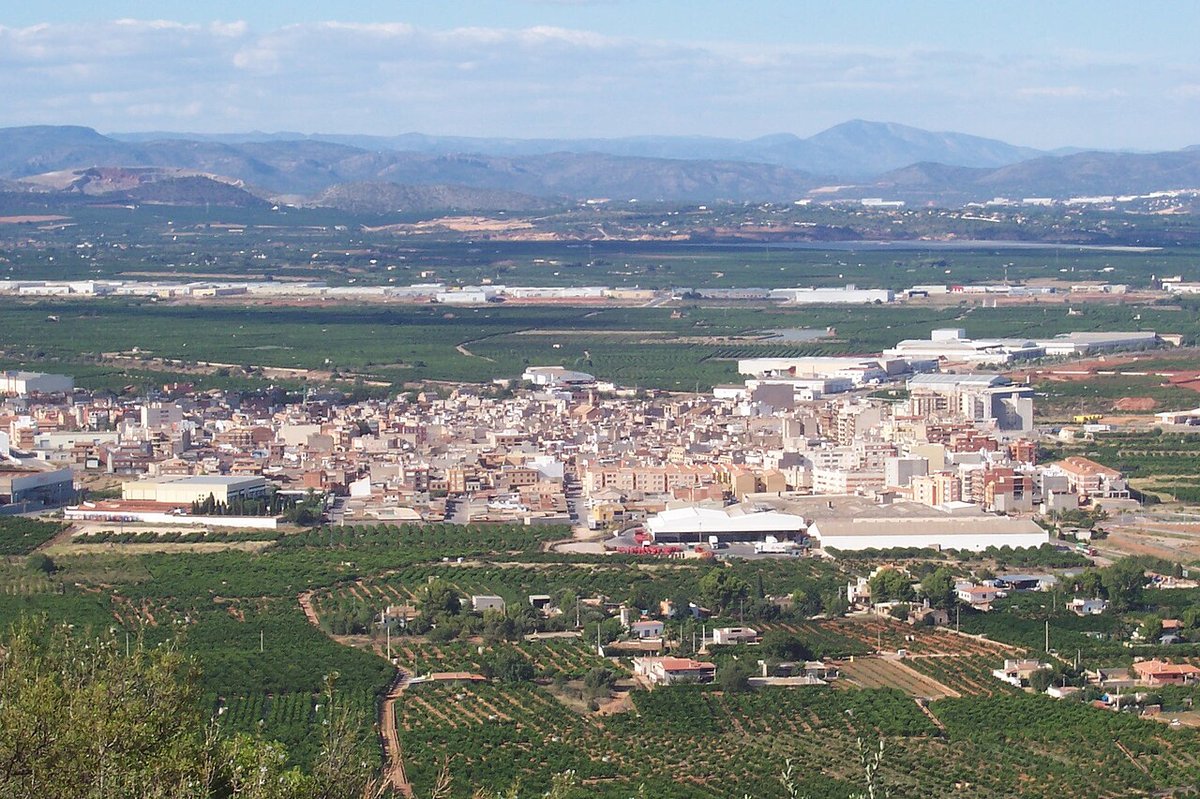
Historic spa town at the foot of a castle, known for its medicinal waters and gateway to the Sierra de Espadán.
Hide article Read full article
A village shaped by warm water
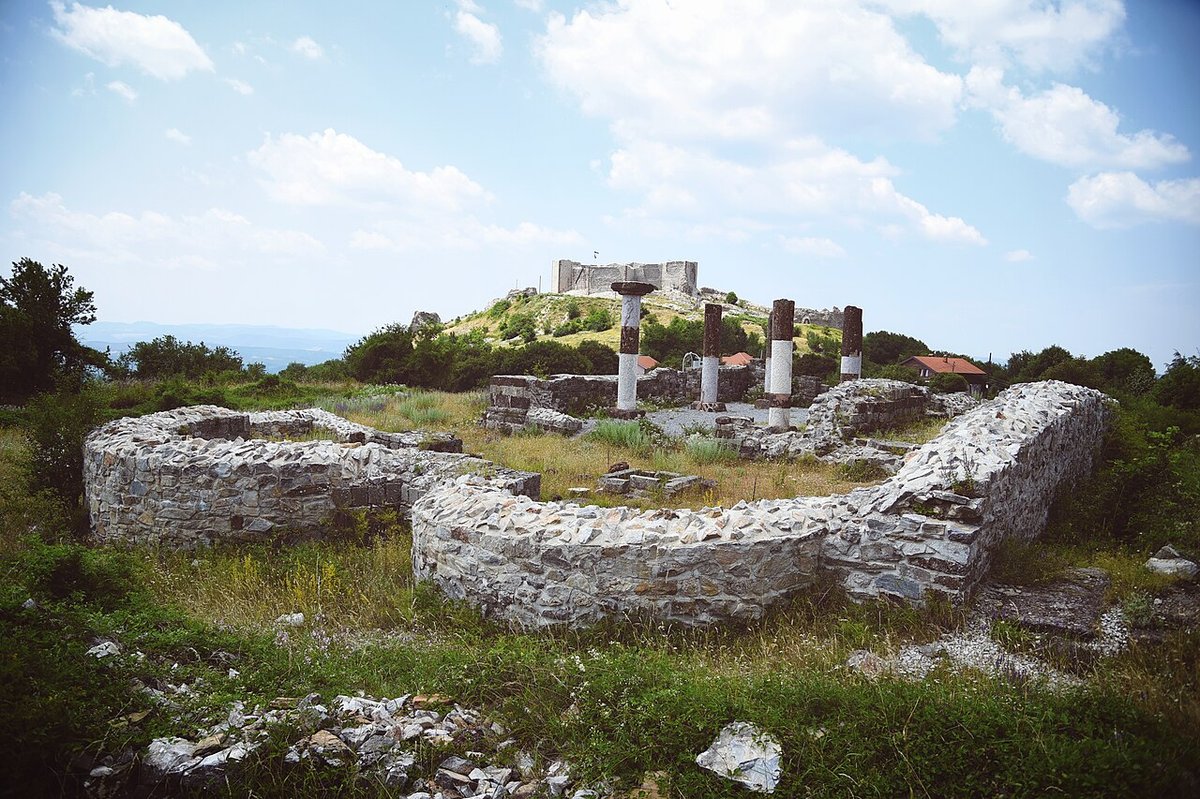
Tourism in La Vilavella has always revolved around water. The thermal spring of the Fuente Calda rises at around 27 degrees Celsius, and it was flowing long before the village acquired its present name. On the summit of Santa Bárbara there was once a Roman sanctuary. Later, Muslim rulers fortified the nearby hill, and after the Christian conquest the barony passed into the hands of the Moncada family, who also controlled the use of the waters.
La Vilavella is not simply a place with springs. The old quarter grew up around them. Several streets follow the line of the underground watercourse that descends from the sierra, and older residents still remember when the washhouse beside the spring was used daily for laundry. Today it is more common to see neighbours filling large bottles with the warm water.
The link between the settlement and the spring is direct and visible. The water emerges at the edge of the historic centre, and from there the village extends uphill, its layout shaped by centuries of adapting to what the land and the spring allowed.
The castle that did not resist
In the spring of 1238, James I of Aragon advanced from inland and laid siege to the Muslim castle that dominated the hill. The chronicles refer to it as Bellvís. It was not a vast fortress, but rather a main tower and a walled enclosure controlling the natural route between the coast and the interior mountains. The position, however, was strategic.
The surrender came without open battle, a common outcome when a garrison was left isolated. Soon afterwards, the new Christian settlement was organised and the barony came under the control of the Moncada family.
Little of the castle remains visibly intact. A section of wall and the foundations of the tower are now incorporated into houses in the upper quarter. To find them, it is necessary to walk up carrer del Castell and look closely at the stonework that appears between patios and terraces. There are no information panels and no marked route. The remains are embedded in everyday life, half-hidden among homes and gardens.
This quiet integration into the neighbourhood gives a sense of continuity rather than spectacle. The stones are not set apart behind fences; they are part of the fabric of the village.
When the waters drew visitors from across the province
During the nineteenth century, La Vilavella experienced a period defined by its spa culture. Several establishments operated at the same time, and contemporary records speak of thousands of visitors each season. Members of the Valencian bourgeoisie travelled here to take the waters, convinced of their benefits for gout, skin conditions and nervous ailments.
Today only one spa remains in operation, located on the main square. Yet traces of that boom are still visible in some of the grander houses in the old quarter. A signposted route of around two kilometres links several of the former buildings associated with the thermal waters. Many can be recognised by their stone coats of arms or wrought-iron window grilles, even though they are now private homes.
The route usually ends at the Fuente Calda. The water continues to flow at the same temperature, and beside it stands the nineteenth-century washhouse, with rows of stone basins and channels that once carried the warm water through. A sign makes clear that the water is not drinkable, although some residents use it to irrigate small vegetable plots at the bottom of the valley.
The atmosphere here is practical rather than ornamental. The spring is still part of daily routines, whether for filling containers or tending gardens, and that continuity connects the present village with its nineteenth-century heyday.
Espadrilles and an unexpected manuscript
In one of the streets of the old quarter there is a small museum dedicated to the craft of the alpargatero, the maker of espadrilles. It occupies a former workshop where esparto grass espadrilles were produced for decades. The looms, wooden tools and sole moulds have been preserved.
The explanation focuses on process: how the esparto was braided, why it was soaked for several days, and how the fabric ribbon was stitched on by hand. The museum presents a trade that shaped the local economy for years, rooted in materials gathered from the surrounding landscape.
A short walk away stands the municipal museum. Here a singular piece is kept: an Arabic manuscript known as the Risala, an Islamic legal treatise copied in the eleventh century. It is generally described as the only manuscript of its kind preserved in the Comunitat Valenciana. The document is displayed in a climate-controlled case, and for conservation reasons only one side can be viewed.
The short distance between these two spaces says much about La Vilavella’s history. An Islamic past, a Christian reconquest and a rural economy centred on specific trades all coexist within a few streets.
Up into the Sierra de Espadán
The Sierra de Espadán begins almost at the edge of the village. From the Fuente Calda, the long-distance footpath GR‑36 sets off through pine woods and holm oak groves towards Eslida. The ascent is considerable and completing the full route requires several hours.
Closer to the urban area there are other options. An old quarry has been adapted as a via ferrata, with vertical sections and a couple of suspension bridges, mainly used by those with some experience. There is also a circular walk that passes remains of trenches and shelters dug during the Spanish Civil War, when the front line stabilised in these hills in 1938.
In spring the contrast is particularly noticeable. Down on the plain, orange groves are in blossom. Higher up, the mood shifts to that of a quiet mountain landscape, with the sound of wind moving through the pines.
What is eaten at home
Local cooking follows the traditions of the Plana Baixa area. In winter, olla de la plana appears on family tables, a stew made with rice, beans and turnip. Espencat typically combines roasted red pepper and aubergine with cod and olives.
These dishes reflect a cuisine shaped by the surrounding farmland and by habits passed down within households. As with the thermal waters and the old workshops, what defines La Vilavella is not spectacle but continuity. The spring still flows, the castle stones remain in the walls, and the sierra rises just beyond the last houses.