Full Article
about Alberic
Known for its traditional panquemado and set at the foot of the Muntanyeta hill.
Ocultar artículo Leer artículo completo
The Smell of Money
Step off the train in Alberic and the first thing that hits is the scent. Not sea-salt or pine, but orange blossom so heavy it clings to clothes like smoke. This is the Ribera Alta's cash crop in olfactory form—millions of citrus trees pumping perfume into the air each April. The locals call it azahar and claim it cures everything from insomnia to heartbreak. Scientists might argue, but after a few breaths you'll understand why nobody here locks their windows.
Alberic sits 45 minutes south of Valencia-Nord on the C-3 cercanías line, a journey that costs less than a London coffee. The town spreads flat across the flood plain of the Júcar river, ringed by irrigation ditches that pre-date the Moors. There's no castle on a hill, no dramatic gorge—just a compact grid of houses surrounded by an ocean of green. It's agricultural England turned Mediterranean: think Kent with better weather and considerably more swagger.
A Palace That's Seen Better Days
The historic centre amounts to exactly three streets and a square, enough for a half-hour wander before the Tuesday market shuts at 2 pm. The Palau dels Ducs de l'Infantado squats on Carrer Major like a grandee who's drunk his inheritance. Its Renaissance doorway still shows traces of cobalt paint, but inside is municipal offices and a faint smell of floor polish. Peer through the ground-floor windows and you'll spot 1970s filing cabinets parked against Gothic arches—a practical marriage the original dukes probably didn't envisage.
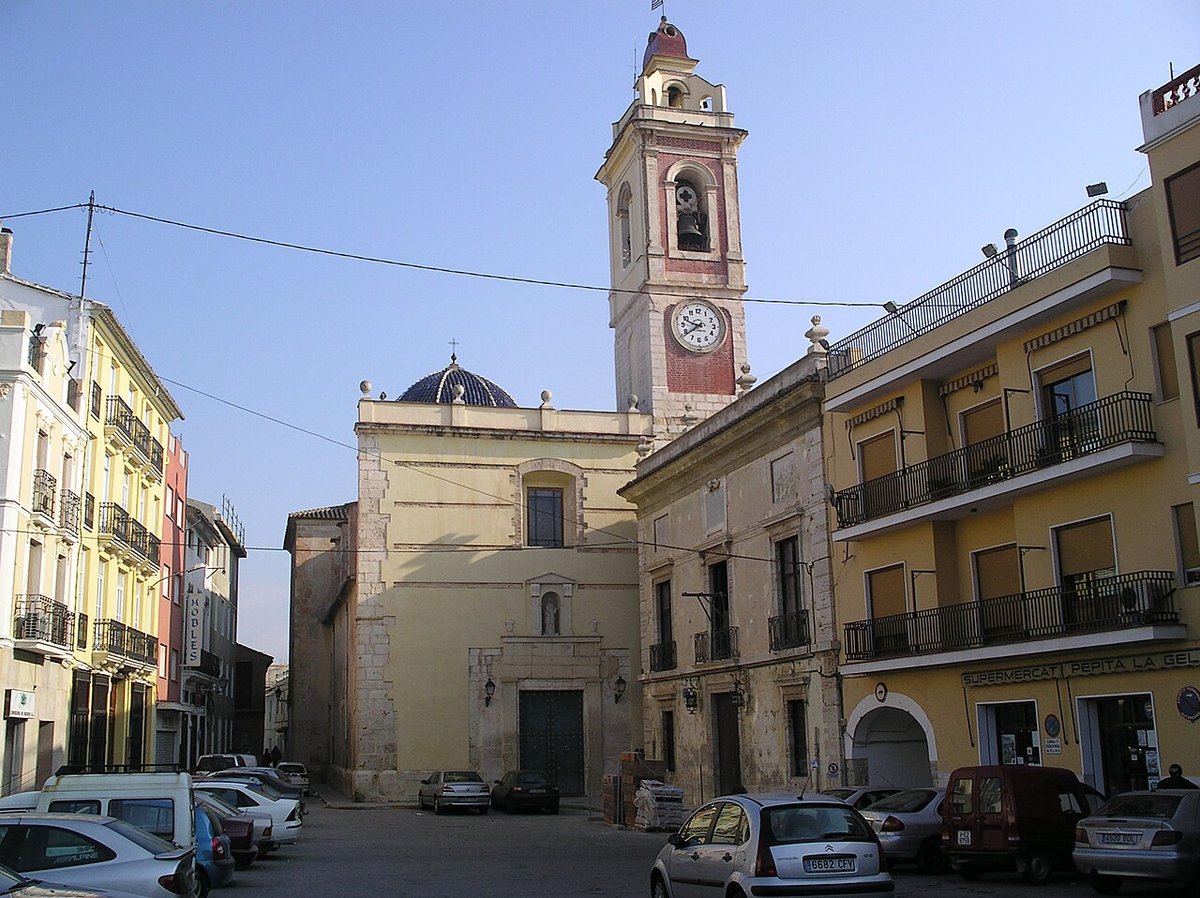
Opposite stands the parish church, a barn of a building whose bell tower serves as the town's timekeeper. The interior mixes Baroque bling with Victorian-style pews installed during a 19th-century remodelling that still divides opinion. Check the side chapel for a 16th-century Flemish panel that local guides insist is a Rubens. Art historians remain unconvinced, but the painting's survival through civil war and church renovations deserves respect whatever the attribution.
Cycling Through a Living Supermarket
Flat terrain and almost zero traffic make Alberic ideal for two-wheeled exploration. Pick up a €10 day rental from the bike shop behind the sports centre—ask for Paco, who speaks fluent bicycle if not English—and follow the signed route towards Alzira. The path hugs an irrigation channel built by the Arabs, its stone sides furry with moss even in July. Within five minutes you're between citrus groves whose trunks are painted white against ants, the fruit hanging like orange lamps.
Stop at the first open gateway and someone will inevitably offer you a bag of clementines. Accept; refusing offends. These aren't the dry, pithy specimens flown to British supermarkets but juice grenades that stain fingers instantly. Eat them like apples, spitting pips into the irrigation water where carp the size of forearms cruise lazily. The route continues for 22 kilometres, but most riders turn back after the wooden footbridge at kilometre eight, where a roadside hut sells home-made horchata for €1.50 and stories about the 1957 flood that floated tractors into trees.
Rice, But Not As You Know It
British visitors expecting paella on every corner face Monday disappointment—most restaurants close, leaving only Bar Central's toasties and the petrol station's microwave bocadillos. Return Tuesday through Saturday and options multiply. Calaluna on Avenida de la Constitución does a competent mixed paella for two (€18 each) but locals order arroz caldoso, a soupy rice closer to risotto that arrives in individual metal pots. The stock tastes of sea despite Alberic being 25 kilometres inland; squid and cuttlefish arrive frozen from the coast, a logistical detail nobody bothers to hide.
El Racó de la Pintora offers an English menu for the linguistically terrified, though the translations raise more questions than they answer—what exactly is "little fishes of the river" turns out to be fried anchovies eaten whole like whitebait. Order the house wine; it's from Utiel-Requena and costs €2.50 a glass, cheaper than the bottled water. Pudding is often pan de Calatrava, a set custard of medieval origin that tastes like cold crème caramel on sliced bread. Sounds odd, works brilliantly.
When the Town Lets Its Hair Down
Visit during the August fiestas and Alberic temporarily triples in population. The programme mixes religious processions with events that feel distinctly un-Anglican: bull-running through orange groves at dawn, paella competitions using pans three metres wide, and nightly fireworks that set off every car alarm in the parish. Accommodation quadruples in price; book early or stay in nearby Alzira where the three-star Vila d'Alzira still charges sane rates.
December's Purísima celebrations are tamer but offer the year's best people-watching. Grandmothers in black lace parade statues of the Virgin while teenagers in crop tops Snapchat the proceedings. Street stalls sell buñuelos—doughnut-like fritters filled with pumpkin cream—that taste best when eaten scalding, hopping from foot to foot to avoid dripping syrup on your shoes.
The Practical Bits Nobody Mentions
Alberic's train station sits ten minutes' walk north of the centre along a pavement that's more potholes than concrete. Taxis exist but must be pre-booked; the rank outside the station is decorative. Sunday trains run every two hours, a timetable that catches out day-trippers who arrive full of optimism and leave hungry after discovering everything except the Chinese bazaar is shut.
Cash remains king. Many bars still use the till drawer as a calculator, and contactless is viewed with deep suspicion. The Tuesday market accepts euros only—bring small denominations or face the embarrassment of watching a stall-holder break a fifty for three euros' worth of tomatoes. ATMs live inside the Cajamar branch on Plaza de la Constitución; Santander customers pay €2.50 per withdrawal.
Summer heat hits different here. The town sits in a natural bowl where humidity pools; 35°C feels like 40 by lunchtime. Sensible visitors adopt the Spanish schedule—sightsee before 11 am, lunch at 3 pm, siesta until 6 pm, then emerge as the orange pickers knock off. Winter brings the opposite problem: damp cold that seeps into bone. Pack layers; that sunny café table can turn arctic the moment cloud covers the sun.
Leaving With Sticky Fingers
Alberic won't change your life. It lacks the drama of Ronda or the selfie potential of Cadaqués, but that's rather the point. This is a place where agriculture still dictates the rhythm, where the weekly market smells of soil rather than incense, where a bag of oranges costs less than the plastic bag you'd carry them in. Come for the blossom, stay for the rice, leave with fingers smelling of citrus and the realisation that "authentic" doesn't have to mean quaint. It just means real.