Full Article
about Alfarp
Farming village in El Marquesado with remains of an Arab castle and dryland surroundings.
Hide article Read full article
By mid-afternoon, when the sun begins to dip westwards, light filters through rows of orange and lemon trees and hangs in the air with a sweet scent that blends ripe fruit and damp earth. Tourism in Alfarp begins there, before reaching the town centre itself, in the continuous stretch of market garden that surrounds the village and shapes the rhythm of everything that happens within it.
Alfarp lies in the Ribera Alta of the Comunidad Valenciana, some distance from the sea and closer in spirit to agriculture than to conventional tourism. Time here is often measured by harvests and by the irrigation of the acequias, the traditional water channels that distribute water across the fields. There are no grand monuments or streets arranged for quick photographs. Instead, this is a place that grew around its farmland and still makes most sense when explored at an unhurried pace.
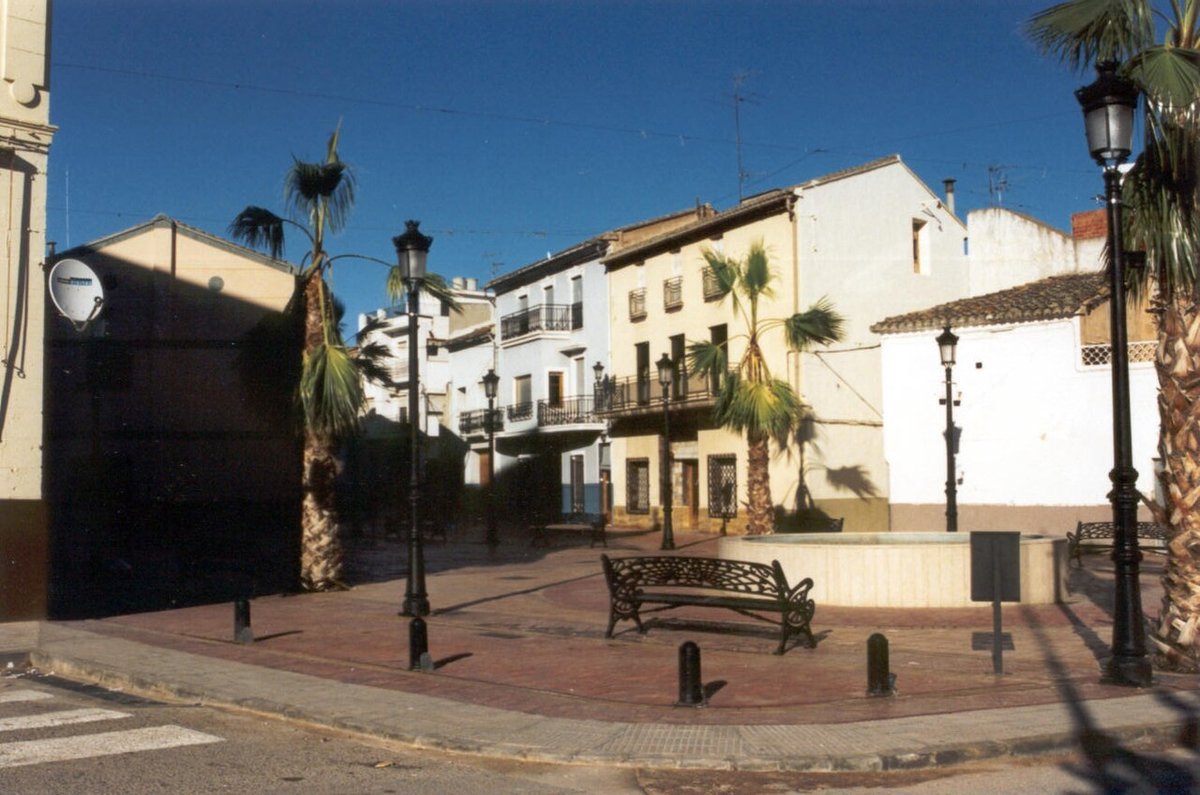
From the road, crops extend in rectangular plots divided by ditches and narrow dirt tracks. On entering the urban area, low houses appear, many with pale façades that reflect the intense midday light. Some retain wooden gates darkened by age and iron balconies where washing sometimes hangs, barely moving in the breeze.
Around the Church and the Central Streets
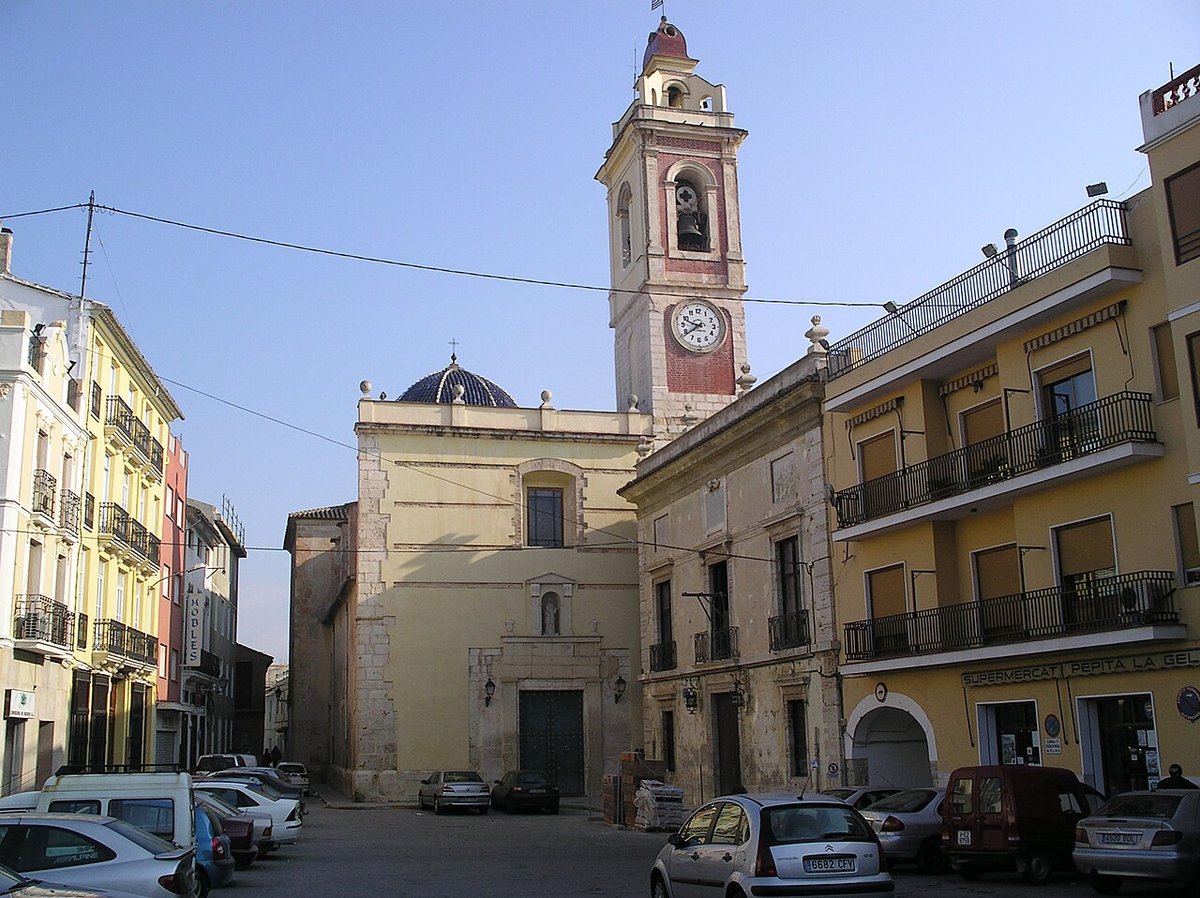
At the centre of the village stands the church of San Miguel Arcángel, the main point of reference. Its bell tower is visible from several nearby streets and helps with orientation while walking without a fixed route. It is not monumental in scale, yet it continues to fulfil the role of meeting place that churches still hold in many Spanish towns.
The surrounding streets are quiet and slightly irregular in layout. Renovated houses sit alongside others that preserve wooden shutters, old ceramic tiles at their entrances or small interior courtyards only faintly visible from the street. At certain times of day, everyday sounds carry through the open air: conversations drifting from inside, the thud of a shutter being raised, a car engine passing slowly.
Leaving the centre, the village opens back out towards the huerta, the cultivated land that defines the area. Rural tracks allow for walking or cycling among orange trees and vegetable plots. In spring, when citrus trees are in blossom, the atmosphere shifts completely. The scent of azahar, orange blossom, arrives suddenly on each gust of wind and lingers on clothes for a while.
The acequias that organise irrigation are clearly visible. Some have simple sluice gates and small diversions that guide water towards individual plots. Nothing is arranged as a display. It is simply the system that continues to keep the huerta working.
Orchard Paths and a Slower Rhythm
Getting around the outskirts of Alfarp is straightforward thanks to the largely flat terrain. Agricultural tracks stretch for kilometres without significant inclines. Early in the morning there is usually more activity: people checking their plots, a tractor moving at a steady pace, dogs barking somewhere in the distance.
As the afternoon progresses, the atmosphere quietens. Fields change colour as the sun lowers, and the deep green of the orange trees darkens. Those who pay attention to small details notice fleeting scenes: a clear stream of water running through a ditch between stones, an old wall covered in lichen, the constant hum of insects at nightfall.
A summer visit requires some care around the middle of the day. Heat in the huerta can be intense, and outside the trees there is little shade.
Festivals and Everyday Life
The festive calendar preserves several long-established traditions. In September, celebrations are usually held in honour of San Miguel Arcángel. Religious events are combined with activities that bring movement to the streets for several days. It is one of the times when more people return to the village.
March brings the presence of Fallas, the well-known Valencian festival involving large sculptural monuments that are eventually burned. In Alfarp, it takes place on a small scale. Monuments are set up in some streets, and there are parades and fireworks, elements typical of this part of the Comunidad Valenciana.
During Semana Santa, Holy Week before Easter, sober processions pass through the centre. In summer, evenings often stretch out into the street itself. Chairs are placed outside front doors, conversations link from one group to another, and open-air dinners take place once the heat eases.
Between these marked dates, daily life continues at a steady pace. During the week the village remains calm. At weekends there is a little more movement, particularly when the weather is favourable. The overall impression is of a place where agriculture still sets the tempo of the days.
Getting There and Choosing the Moment
Alfarp is around 40 kilometres from Valencia. It is most commonly reached by car via the A‑7 and then the CV‑50, which connects several municipalities in this inland part of the Ribera Alta.
To explore the huerta, comfortable footwear and some water are advisable, especially when walking beyond the built-up area. Spring and autumn are generally the most pleasant seasons, with mild temperatures and fields in full activity. In spring, the scent of azahar can be noticed even from the approach road into the village.
There are no major tourist attractions drawing large crowds. What Alfarp offers instead is the experience of a village still closely tied to its land, where irrigation channels continue to run and where the light at the end of the day filters through citrus trees before reaching the streets.