Full Article
about Algemesí
Town world-famous for its Mare de Déu de la Salut fiestas, a World Heritage Site
Hide article Read full article
Between irrigation channels and citrus groves
To understand Algemesí, start with the land. The town sits in the Ribera Alta, some thirty kilometres southwest of Valencia, on a flat plain defined by water. The landscape is one of citrus groves and rice fields, ordered by a network of irrigation channels that date to the medieval period. Life here has long followed the rhythm of harvests and the particular pulse of its own September festival, not the conventional tourist calendar.
That agricultural reality translates directly to the table. Rice is the staple, often prepared al forn—baked until a crust forms from beaten egg stirred in at the end. You’re more likely to encounter this in a home on a Sunday than on a restaurant menu; it remains a dish for family gatherings and local celebrations across the comarca.
From aljama to independent town
Algemesí began as an aljama, a Muslim farming community dependent on the nearby city of Alzira. Its early existence was tied to the irrigated plots established during Islamic rule. After the Christian conquest in the 13th century, the land was redistributed among new settlers, though the Mudéjar population largely remained to work it.
A local story, more legend than documented history, tells of the discovery of an image of the Virgin in a carob tree, founding the devotion to the Mare de Déu de la Salut. The town gained its administrative independence from Alzira in the early 17th century, a period that also saw the expulsion of the Moriscos. This depopulation left fields untended for years. The subsequent recovery shaped the historic centre you see now, with its 17th and 18th-century houses and an irregular street plan that hints at its older layout.
Sant Jaume and the civic centre
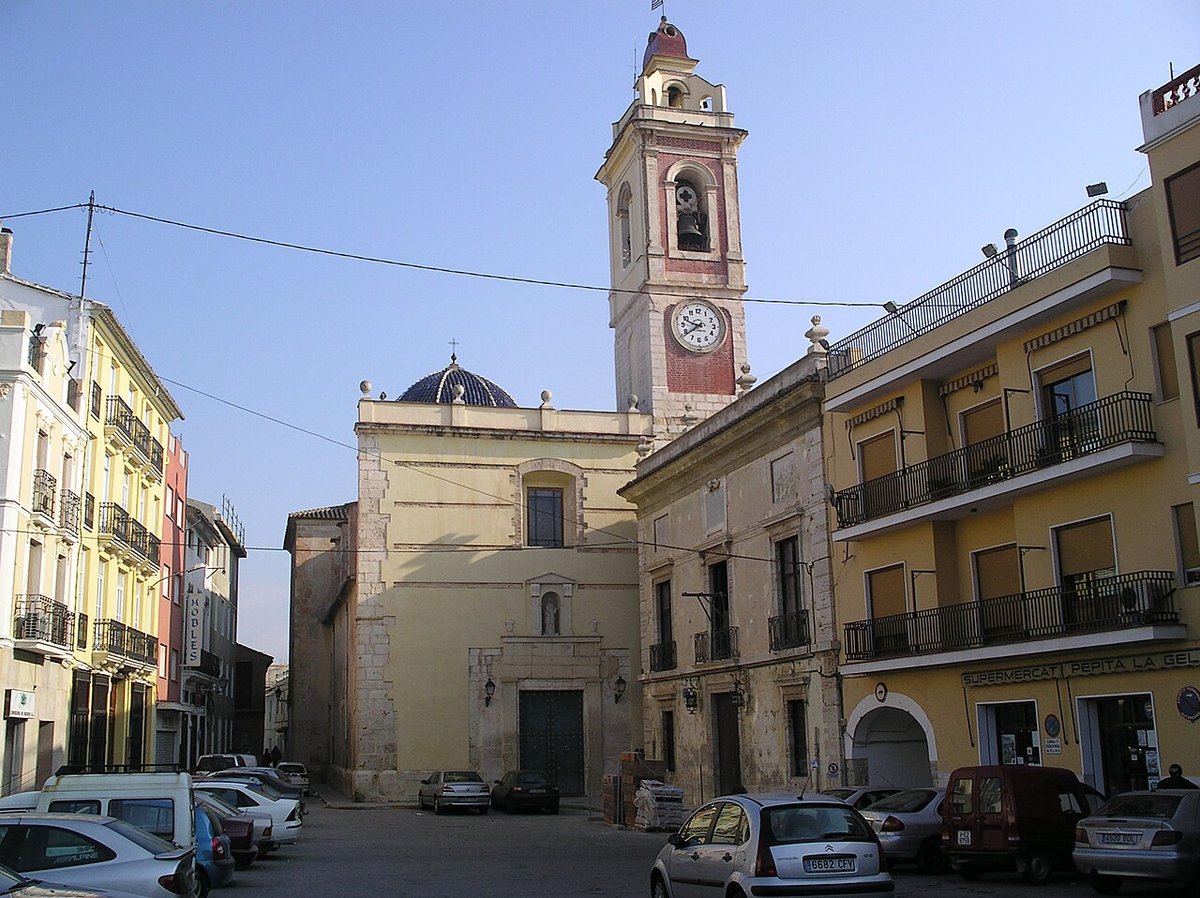
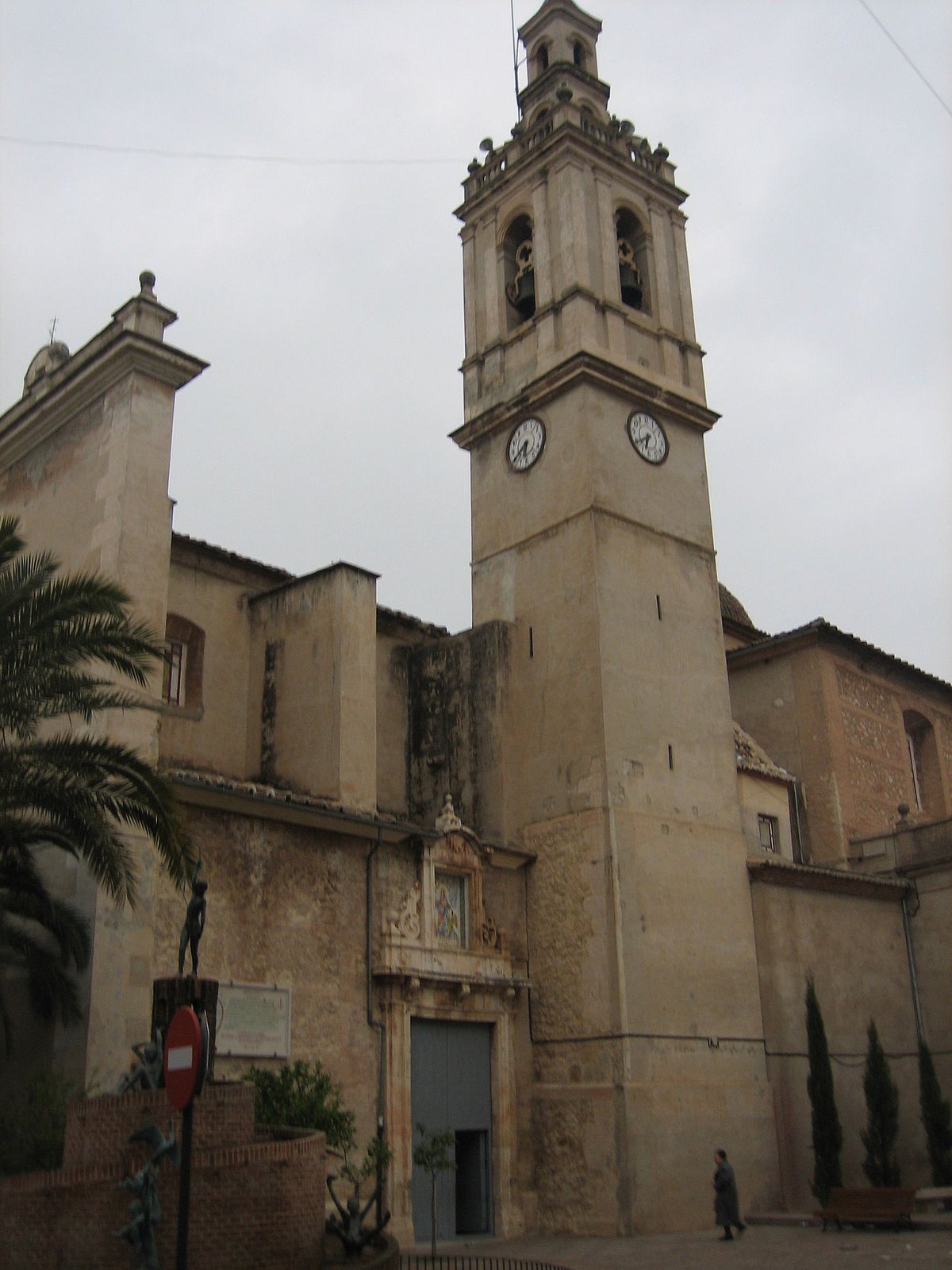
The Basílica de Sant Jaume anchors one side of the Plaza Mayor. Built from the 16th century onward over previous structures, its architecture shows a mix of Renaissance and later Baroque additions. The bell tower is a constant presence, marking the hours and calling for festivities.
The square itself has functioned as the civic heart for centuries. Inside the church, altarpieces and artworks span several eras. Algemesí was the birthplace of Joan Baptista Cabanilles, a significant 17th-century composer of the Valencian Baroque. While the current organ is not from his time, his connection to the region’s musical tradition is still noted here.
A September festival that shapes identity
For several days each September, the town’s normal pace gives way to the festivities for the Mare de Déu de la Salut. Processions fill the narrow streets of the centre, accompanied by the sound of dolçaina and tabal, and dances that blend sacred and popular elements.
The Muixeranga, a tradition of building human towers as the Virgin’s image passes, is one of the oldest components. The activity concentrates around the main square, where the line between participant and spectator often blurs. The festival holds UNESCO Intangible Cultural Heritage status, but what defines it is the depth of local involvement. Many dances and roles are maintained through family lines and community associations, passed directly from one generation to the next.
The huerta and the wider landscape
The municipality is part of the historic irrigation system of the Ribera del Xúquer. Many of the water channels you see cutting through orange groves have medieval origins. Agricultural tracks, used by tractors during season, allow for walking or cycling into this flat, productive landscape.
The interest here is not scenic in a dramatic sense. It lies in observing the workings of the Valencian huerta: the small plots, the flow of water through acequias, the scattered farm buildings. The colour of the land shifts with the crop cycle—lush green in winter and spring, busy with activity during the autumn citrus harvest.
Getting around Algemesí
Algemesí is connected to Valencia by road and by a cercanías rail line that serves the towns of the Ribera. The walk from the station to the historic centre takes about ten minutes.
The urban core is compact and easily walked. Streets radiating from the Plaza Mayor reveal older houses with wrought-iron balconies and carved stone portals, architectural details that speak to periods of agricultural prosperity and local trade.