Full Article
about Antella
Known for l'Assut de Antella, where the Acequia Real del Júcar originates and a popular swimming spot
Ocultar artículo Leer artículo completo
The Júcar slips past Antella at barely walking pace, its coffee-coloured water nudging a concrete weir that locals call “the beach”. On summer weekday mornings the only splash comes from a lone woman doing steady lengths against the current; by Saturday the riverbank swells with multi-generational picnics, cool-boxes wedged between plane-tree roots, and teenage boys perfecting bomb-drops from the upstream footbridge. No sand, no lifeguard, no entry fee—just a grassy verge and a 200-metre pool deep enough to swim before the current quickens again.
That low-key riverside scene sums up Antella: 1,100 inhabitants, 44 m above sea level, and in no particular hurry to be anywhere else. The village sits half an hour south-west of Valencia city, yet the commuter belt stops decisively at Alzira, ten kilometres away. Beyond that point the CV-564 narrows, orange groves press in from both sides, and mobile-phone coverage flickers like a shy pulse. What you get is the audible hum of agricultural pumps rather than the drone of traffic, and a skyline defined by date-palms rather than cranes.
The Working Landscape
Antella’s grid of whitewashed lanes was laid out for flood, not fashion. Houses back straight onto irrigation ditches; front doors open onto streets just wide enough for a tractor towing a trailer of freshly picked clementines. Come late March the azahar—citrus blossom—releases a scent sugary enough to smother diesel fumes, and the entire village smells as though someone has left the lid off a giant tin of orange blossom honey. By November the trees glow with unpicked persimmons, lantern-bright among the dark green leaves, and the roadsides are sticky with fallen fruit that tyres mash into a burnt-sugar paste.
Walk the agricultural service roads at dawn and you’ll meet crews of pickers wearing head-torches and padded mitts that look like oven gloves. They work fast: Valencian oranges reach Covent Garden within 48 hours, and Antella’s cooperative still ships by lorry every afternoon. Ask politely and they’ll let you taste a split orange, still warm from the branch; the flesh is less sharp than supermarket fare, almost apricot-sweet, with a perfume that lingers on your fingers for hours.
Church Bells and River Loops
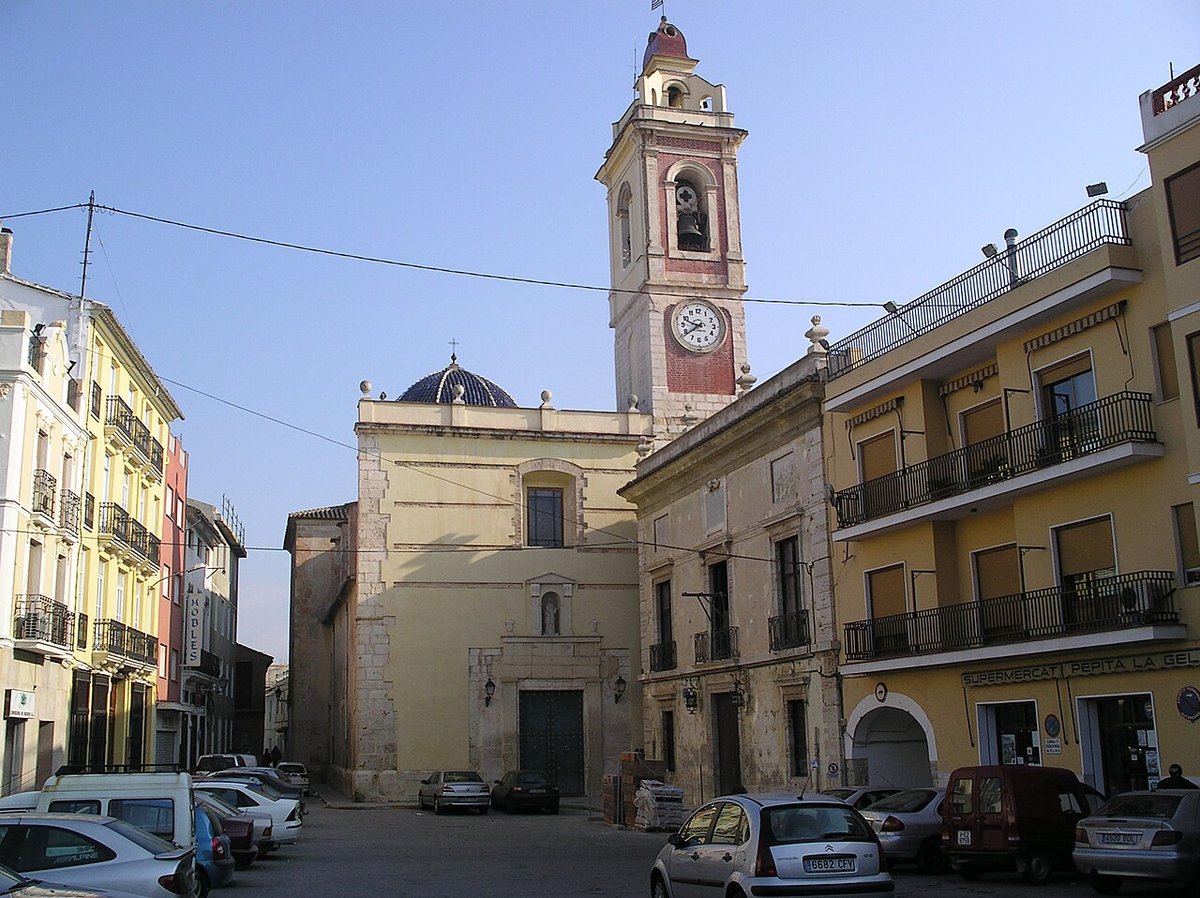
The parish church of Nuestra Señora de los Desamparados squats at the geometric centre of the village, its bell tower patched with mismatched brick after an 18th-century collapse. Inside, the air carries cold stone and candle wax; a side chapel displays a miniature Falla tableau saved from last March’s pyre—papier-mâché figures no bigger than Barbie dolls, already scorched at the ankles. Outside, the plaza is tiled in the traditional Valencian blue-and-cream pattern that looks like giant azulejo Scrabble pieces. Elderly men occupy the same bench every afternoon, arguing over cycling statistics while swifts stitch the sky above them.
From the plaza any street heading east will deposit you on the river path within five minutes. Turn upstream and you reach the medieval azud, a low stone dam that once fed a mill race; downstream the track widens into a gravel lane suitable for bikes. Kingfishers flash turquoise here, and the reed beds rattle when the wind swings south. A gentle 40-minute pedal brings you to an abandoned brick factory swallowed by ivy; inside, swallows nest between rusted conveyor belts and the kiln still smells faintly of burnt coal. Nobody charges admission, nobody sells postcards, and the only soundtrack is the river and your own breathing.
Eating (and Drinking) Like a Resident
There is no restaurant row. The single pavement café, Casa Mari, opens at seven for brandy-and-coffee breakfasts and shuts when the owner feels like it. Midday menu is chalked on a board: oven-baked rice with pork rib, salad of tomato and spring onion, and a jug of watery sangria that costs €2.50 a glass. Portions are built for field workers; ask for a half-ration (“media ración”) if you want to stay awake for the afternoon. The town’s only supermarket, Mas y Mas, closes for siesta between 13:30 and 17:00—plan sandwich ingredients accordingly.
Evening drinking happens at the river. Teenagers bring litre bottles of Mahou, grandparents bring plastic chairs, and someone inevitably produces a guitar missing two strings. British visitors will recognise the DIY pub-garden vibe; what they won’t find are craft-gin prices or a card machine. Bring cash, and take your empties away—bins are scarce and the council fines on the spot.
Festivities that Fill the Lanes
March’s Fallas transform the village into a temporary building site. Neighbourhood crews spend months constructing ninots—satirical figures that might lampoon the local mayor or, this year, a certain British prime minister clutching a Brexit bus. On the night of the cremà the bonfire is lit at 23:00 sharp; fireworks ricochet between houses, brass bands march, and every balcony hosts a bucket of water for stray sparks. Tourists are welcome but beds are non-existent—most outsiders bunk in motorhomes parked by the sports ground.
May brings the fiestas patronales, five days of processions, paella contests and bull-running through streets barely four metres wide. The bulls are not the fearsome Miura strain seen in Pamplona but younger, lighter animals with padded horns; even so, the crowd is mostly local, the medical tent is a folding table, and travel insurance may take a dim view. If you prefer lower adrenaline, wait for August’s summer fiestas: foam parties for toddlers, late-night open-air cinema, and a Saturday disco where DJ equipment is powered from the mayor’s Peugeot.
Getting There, Staying Over, Getting Out
Antella has neither hotel nor hostel. The nearest reliable beds are in Cullera, 25 minutes by car, where Hotel Sicania faces the sea and charges around €85 for a double with breakfast. Closer, the rural cottage El Racó de l’Estany sits four kilometres outside the village—self-catering, pool shared with the owners, and thick enough walls to drown out the dawn tractors. Book early for Fallas; cancellations are rare.
Driving is straightforward: Valencia airport to Antella takes 45 minutes via the A-7 and CV-564. A single-carriageway stretch just after Benimuslem can clog with lorries at shift-change time; build in an extra ten minutes. There is no petrol station in Antella—last chance is Alzira. Public transport exists on paper: ALSA bus 5300 leaves Valencia’s estación intermodal at 14:15 daily, reaches Alzira at 15:05, where a local minibus meets the connection—unless it doesn’t. Taxi from Alzira costs €18 and mobile signal dies halfway, so pre-book.
The Catch
Out of season Antella folds in on itself. October to March most bars close by 20:00, the river water drops to 14 °C, and Saturday night can feel like a rehearsal for a play nobody turned up to. Rain is infrequent but biblical when it arrives; the Júcar rose two metres in October 2022, swamping the picnic lawns and leaving a tidemark of plastic chairs halfway up the cane stalks. Come prepared with waterproof shoes and a Plan B that involves Alzira’s multiplex.
Nor should you expect artisan gift-shops or bilingual menus. English is spoken haltingly, if at all; a few words of Spanish (or better, Valencian) will unlock warmer prices and directions to the persimmon orchard that lets you pick for €1 a kilo. Politeness costs nothing, but a six-pack of Estrella left in the river to chill works faster than please or gracias.
Leave before sunset on your final day and you’ll see the same woman still swimming against the current, her silhouette cutting a quiet V through copper-coloured water. Antella doesn’t do drama; it simply keeps going at river speed, indifferent to whether you stayed for one drink or one week. That, rather than any brochure superlative, is why you might drive the same road back next year—slower, this time, with the windows down and the orange blossom already in your lungs.