Vista aérea de Benimodo
Instituto Geográfico Nacional · CC-BY 4.0 scne.es
Comunidad Valenciana · Mediterranean Light

Benimodo

The tractor arrives before the tourists do. At seven-thirty on a March morning, when Valencia city commuters are still queuing for their trains, a ...

2,332 inhabitants · INE 2025
42m Altitude

Why Visit

Church of the Purísima Visit the Ullals del Río Verde

Best Time to Visit

summer

San Felipe Festival (August) agosto

Things to See & Do
in Benimodo

Heritage

  • Church of the Purísima
  • Republican Social Club

Activities

  • Visit the Ullals del Río Verde
  • Cycling tourism

Festivals
& & Traditions

Fecha agosto

Fiestas de San Felipe (agosto)

Las fiestas locales son el momento perfecto para vivir la autenticidad de Benimodo.

Full Article
about Benimodo

A farming village near the Ullals del Río Verde natural park.

Ocultar artículo Leer artículo completo

The tractor arrives before the tourists do. At seven-thirty on a March morning, when Valencia city commuters are still queuing for their trains, a farmer in Benimodo has already completed his first circuit of the orange lanes, checking irrigation channels that have moved water since Moorish times. This is the soundtrack that defines a village where agricultural time remains more relevant than Greenwich Mean.

Forty-two metres above sea level and thirty-five kilometres south of Valencia, Benimodo sits in the Ribera Alta, a flat quilt of smallholdings that supply much of Spain's citrus. The municipality counts 2,300 permanent residents, a figure that swells only during Fallas (mid-March) and the August fiestas honouring Saint Peter. The rest of the year the place runs on its own gentle pulse: bread delivered to doorways before eight, siesta shutters closed at two, the church bell marking quarters without hurry.

Streets that smell of blossom and diesel

The centre is walkable in twelve minutes, yet most visitors stretch it to an hour once they start noticing the joinery: stone doorways carved with dates from the 1700s, iron balconies still painted the municipal green that Valencia province favours, ceramic tiles set directly into plaster rather than fixed later as an afterthought. Number 8 Calle Mayor has a particularly fine example—blue and white azulejos showing the town's coat of arms, oranges included.

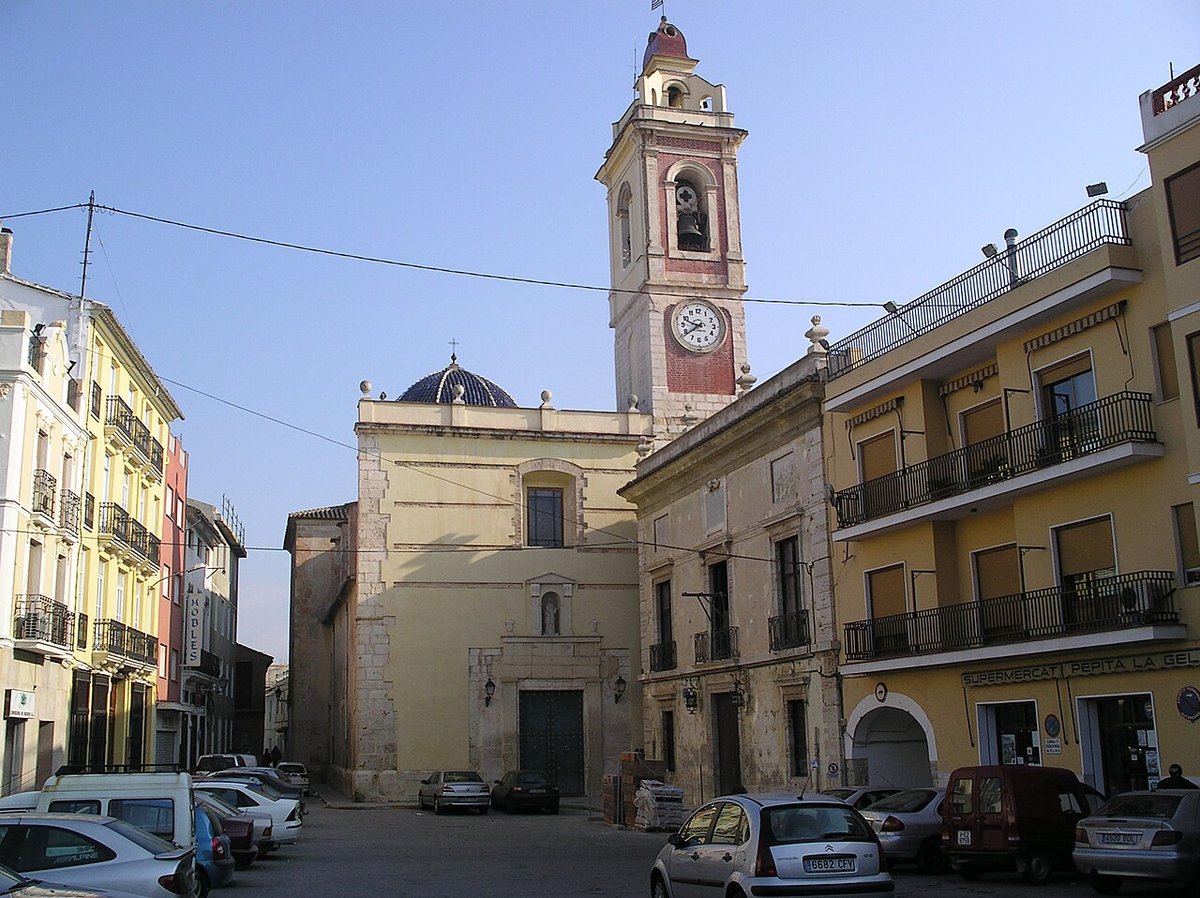
The parish church of San Pedro Apóstol dominates the small main square, its tower visible from every approach road. Inside, the retablos move from Gothic severity to nineteenth-century fussiness in three panels, a quick lesson in how rural parishes upgraded when the orange trade began to pay. The building is usually open; if not, the key hangs next door at the bakery, a system that works because nobody has thought to abuse it.

Behind the church, two parallel streets contain the only mansions the village ever needed. One now houses the doctor's surgery, another the cultural centre where Spanish classes for newcomers take place on Tuesday evenings. The rest have been divided into flats, but the original carriage entrances remain, wide enough for the small tractors that residents prefer to cars when popping out for loaf.

Eating what the grove provides

British expectations of Spanish village food—cheap, plentiful, rustic—are met, but with caveats. At Bar Polideportivo, attached to the football pitch on the northern edge, a menu del día costs €12 and arrives with ingredients that were growing forty-eight hours earlier. The rice in the paella comes from paddies outside nearby Sollana, the artichokes from a plot behind the cemetery, the oranges on the pudding plate from the owner's cousin.

Evening dining is limited to two bars and a takeaway pizza window. Visitors expecting a plaza lined with restaurants will be disappointed; Benimodo assumes you know someone who is cooking. The workaround is to phone the bakery before noon and order a coca—Valencia's answer to pizza—topped with local anchovy and sweet peppers. They will deliver it warm to the square at 1.30 pm, price €7, napkins included.

For self-caterers, the Friday morning market fills one side of the Avenida de la Constitución: two fruit stalls, a van selling cheese from the nearby village of Llombai, and a butcher who will joint a chicken while discussing last weekend's football. Seasonal timing matters: visit in late April and the blossom honey is still liquid; by June it has set and the same jar requires excavation.

Flat pedals through scented tunnels

The agricultural lanes that radiate from Benimodo are tarmacked but single-track, built for the small Bedford lorries that carried oranges to Covent Garden in the 1960s. Today they suit bicycles perfectly. Hire is not available in the village itself; take the thirty-minute Renfe train to nearby Alzira and collect a hybrid from the shop opposite the station, €18 per day, then follow the signed green-way that shadows the Júcar river.

A circular route of fourteen kilometres passes through three hamlets and two packhouses where conveyor belts grade fruit by size. The smell changes every kilometre: orange blossom in spring, fermenting fallen fruit in autumn, warm dust in July when the earth is cracked and farmers run the irrigation nightly from 10 pm to 4 am. There is no gradient worth mentioning; even occasional cyclists manage it in under an hour, longer if stopping to photograph the 1950s brick chimneys that once powered frost-protection fans.

Walkers can follow the same lanes, but should remember that shade is scarce. A spring morning start is pleasant; an August attempt after ten o'clock feels like stepping into a fan oven. The village tourist office—open Wednesday and Friday only—hands out a simple map marking the three signed footpaths, all under five kilometres. The most interesting heads south to the ruined railway halt of Les Casas, where a 1930s waiting room wall still displays the old timetable to Alicante.

When the quiet breaks

Fallas, 15–19 March, is the one week Benimodo stops being quiet. Each neighbourhood builds a satirical papier-mâché sculpture, usually mocking national politicians or local gossip, then burns it on the final night while fireworks rattle the church windows. Accommodation within the village is impossible; even cousins sleep on sofas. Visit during the day by all means—orange blossom peaks then—but leave before the street parties begin unless you have a spare earplug factory.

August patronal fiestas are more manageable. The bull-running here uses heifers rather than full-grown males, and the course is a barricaded lane rather than the narrow alley of Pamplona. Events start at 7 pm when the temperature drops to a mere 32 °C; locals bring folding chairs and cool boxes of ice-cold horchata. The noise finishes by midnight sharp because the village band has work the next morning.

Getting there, getting away

Benimodo has no train station. From Valencia's Estació del Nord take the C-2 cercanías towards Xàtiva and alight at Alzira, thirty-two minutes, €4.10 each way. From Alzira bus station, Line 11 departs hourly and reaches Benimodo in twelve minutes, €1.45. The last bus back leaves at 21.10; miss it and a taxi costs €18.

Drivers should ignore the coastal A-7 motorway and take the older CV-50 via Silla and Algemesí; the road cuts straight through the groves and gives a better sense of scale. Parking is unrestricted except during Fallas, when every verge becomes a space and the local police direct traffic with the resigned air of men who know their instructions will be ignored.

Worth knowing, worth forgetting

The village swimming pool opens only from mid-June to early September; outside those dates a dip requires the river beach at Alzira, ten minutes away by car. Wi-Fi is reliable in cafés but patchy in the countryside lanes—download offline maps before setting off. Credit cards are accepted everywhere except the market stalls; carry small notes because change can be scarce before the weekend bank run.

Benimodo will never make anyone's list of Essential Spain. It offers no cathedral, no castle, no Michelin star. What it does provide is a functioning agricultural village comfortable with its own rhythm, happy to sell you an orange that actually tastes of orange, and equally happy for you to leave before the next irrigation cycle starts. Come for half a day between Valencia and Alicante, stay for lunch, then drive away with the window down—spring blossom or autumn wood-smoke, depending on the month—following the tractor that set off this story.

Key Facts

Region
Comunidad Valenciana
District
Ribera Alta
INE Code
46063
Coast
No
Mountain
No
Season
summer

Livability & Services

Key data for living or remote work

2024
ConnectivityFiber + 5G
TransportTrain nearby
HealthcareHospital 10 km away
EducationElementary school
Housing~5€/m² rent · Affordable
Sources: INE, CNMC, Ministry of Health, AEMET

Planning Your Visit?

Discover more villages in the Ribera Alta.

View full region →

More villages in Ribera Alta

Traveler Reviews