Full Article
about Benimuslem
Small farming town growing citrus in the Ribera plain.
Hide article Read full article
A village defined by its surroundings
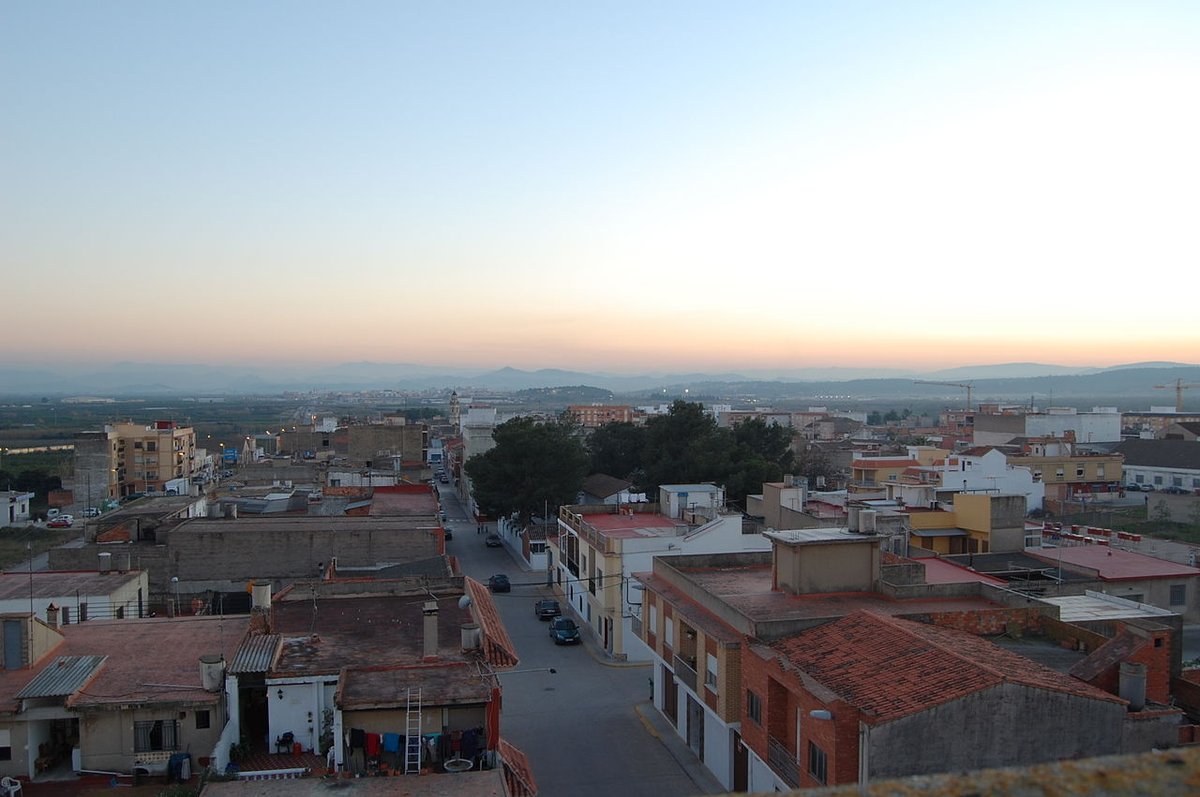
Benimuslem sits in the comarca of Ribera Alta, very close to Alzira, and still makes sense when seen in relation to the huerta that surrounds it. With just under 700 residents, it keeps the scale of a small agricultural settlement. The layout reflects that origin, with the village organised around its church and a network of paths that lead directly out into the citrus fields.
This part of Ribera Alta underwent major changes between the 18th and 20th centuries as irrigation expanded and orange cultivation spread across the landscape. Benimuslem forms part of that transformation. The fields are laid out in regular plots, irrigation channels distribute water across the land, and agricultural storehouses appear scattered along the edges of rural tracks. Much of the irrigation system traces back to infrastructure from the Andalusi period, later adapted and extended over time.
Streets and the church at the centre
The built-up area is compact and easy to walk through in a short time. Streets tend to be short and fairly straight, lined with low houses of one or two storeys. Many still retain features linked to agricultural life, such as wide entranceways, الحديد iron grilles and interior courtyards.
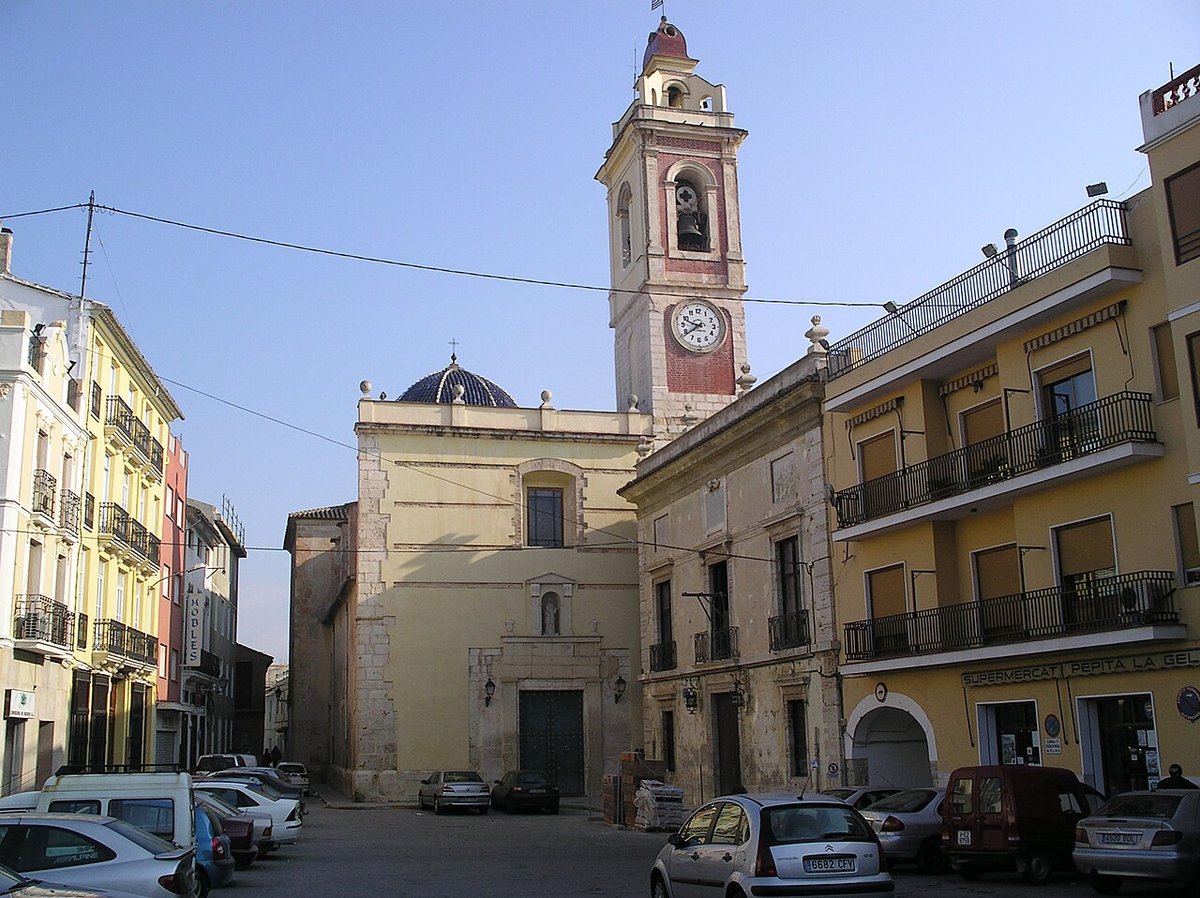
At the centre stands the church of San Miguel Arcángel. The current building largely reflects later modifications from the early modern period, although the parish itself has older origins tied to the Christian reorganisation of the territory after the medieval conquest. Rather than standing out for its size, the church works as a reference point for the village. From the square around it, the structure of the settlement becomes clear, with streets extending outward in a pattern shaped over time.
The huerta beyond the last houses
Leaving the village, the fields begin almost immediately. Most of the surrounding land is given over to citrus groves, though there are also small vegetable plots and parcels used for seasonal crops.
A network of agricultural paths makes it possible to walk or cycle between irrigation channels and cultivated terraces. These are not marked routes, but the system of tracks is straightforward and mostly flat. During irrigation periods, water can still be seen moving through the canals. In harvest season, the presence of tractors and trailers brings a sense of activity that shows the huerta is still a working landscape rather than a static backdrop.
The relationship between the village and these fields remains direct. There is no clear separation between urban and rural space, and the transition happens within a few steps. This closeness helps explain the persistence of traditional elements in the layout and daily life of Benimuslem.
Local traditions and everyday life
The main celebrations revolve around San Miguel Arcángel, traditionally at the end of September. During these days, the village gathers for processions, popular events and neighbourly meetings that take place in the streets.
Semana Santa also has a presence, though on a very local scale, with short processions moving through the town centre. In summer, outdoor activities become common in squares and streets once the heat eases in the evening. This pattern is typical across towns in the Ribera, where social life shifts outdoors after sunset.
These moments of festivity do not alter the scale of the place. Instead, they reinforce the sense of a small community where public space remains closely tied to daily routines.
Getting there and moving around
Benimuslem lies about eight kilometres from Alzira and roughly 45 kilometres from Valencia. The simplest access is usually by road, connecting with the A-7 and then continuing along regional routes.
Once there, the size of the village makes it easy to explore on foot. To understand its surroundings, the most interesting option is to head out along the agricultural paths that encircle the settlement. Within a short distance, the streets give way to cultivated land, offering a clear view of how the huerta shapes this part of Ribera Alta.