Vista aérea de Càrcer
Instituto Geográfico Nacional · CC-BY 4.0 scne.es
Comunidad Valenciana · Mediterranean Light

Càrcer

The church bell strikes noon and every bar stool in Càrcer fills within minutes. Farmers in soil-dusted boots queue for €2 glasses of tempranillo a...

1,795 inhabitants · INE 2025
42m Altitude

Why Visit

Church of the Assumption River walks

Best Time to Visit

summer

Moors and Christians (September) Septiembre

Things to See & Do
in Càrcer

Heritage

  • Church of the Assumption
  • Bridge over the Júcar

Activities

  • River walks
  • Cycling tourism

Full Article
about Càrcer

A farming village in the Càrcer valley watered by the Júcar and Sellent rivers.

Ocultar artículo Leer artículo completo

The church bell strikes noon and every bar stool in Càrcer fills within minutes. Farmers in soil-dusted boots queue for €2 glasses of tempranillo and plates of squid-ink rice, while the barman keeps mental tabs on who owes what. There are no card machines, no multilingual menus, and certainly no rush. This is how lunch works when a village has 1,800 souls and three generations still work the same citrus groves their grandparents planted.

Càrcer sits 42 metres above sea level in the Ribera Alta, forty minutes south-west of Valencia city by car. The approach road slices between rectangular plots of oranges, lemons and persimmons so uniform they look laid out with a spirit level. Irrigation channels—some Roman in origin—glint on either side, fed by the River Júcar six kilometres north. Pull off the CV-563 and the asphalt immediately narrows; if you meet a tractor, reverse until someone finds a gateway. Sat-nav tends to panic here, which is half the point.

A Grid Drawn by Irrigation Ditches

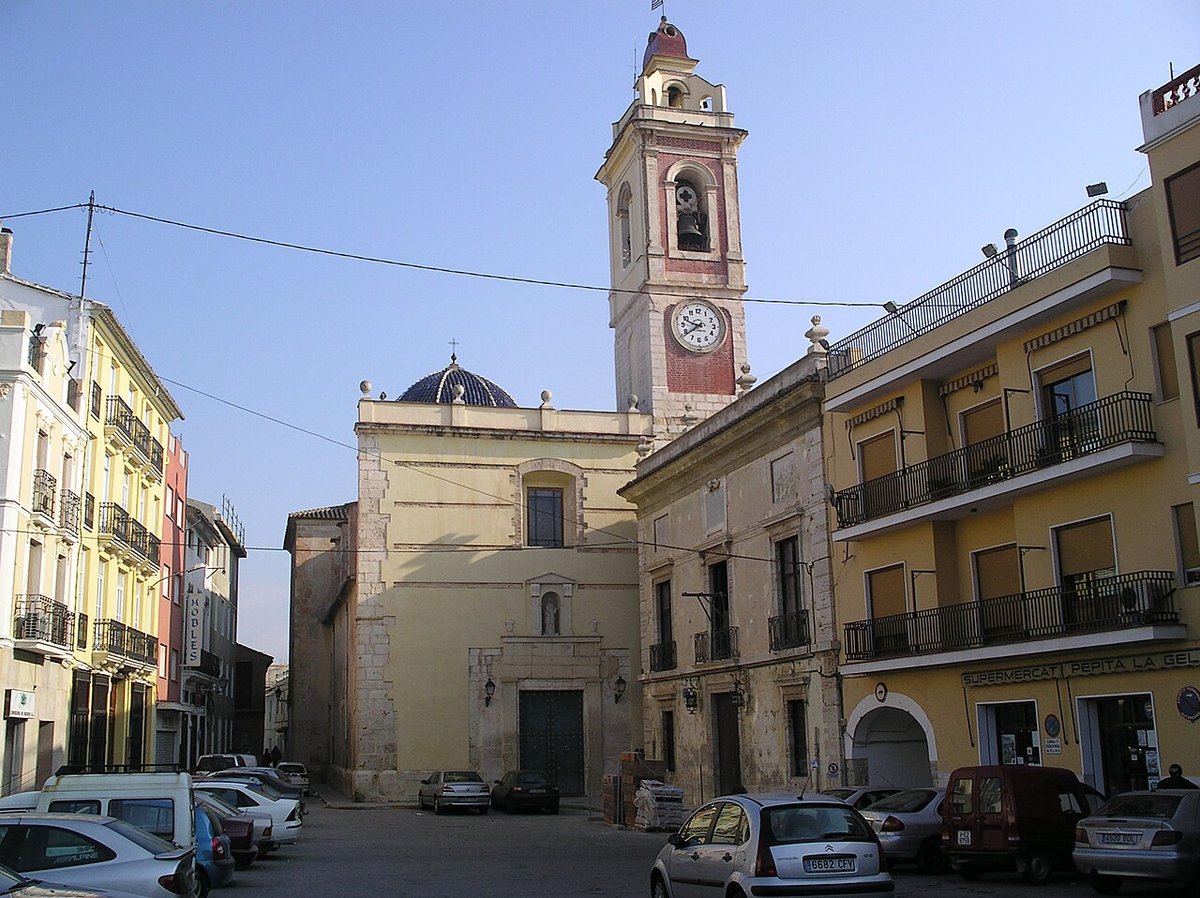
The old centre is a twenty-stroke patchwork of whitewashed houses, their wooden doors painted the traditional indigo and mustard to ward off, depending on who you ask, insects or the evil eye. Numbered streets don’t exist; instead you’ll find Carrer del Forn, Carrer de l’Aigua, Carrer de la Creu. The logic follows water and bakeries, not municipal planners. Half an hour of wandering brings you repeatedly to the same three landmarks: the 18th-century church of Sant Joan Baptista, the 19th-century washhouse whose stone basins still fill after every storm, and Bar Bernat where the coffee is 80 cents if you stand at the counter.

Step inside the church at 6 pm and you may catch the voluntary organist practising. He’ll pause, surprised, then launch into a jaunty pasodoble as if you’d requested it. The interior is surprisingly airy, all ochre stonework and blue-and-white tiles commemorating local families who paid for pews when the building went up in 1743. Look up and you’ll see the original bell rope dangling through the ceiling; tug it without permission and the entire plaza knows within minutes.

What Smells Like Orange Blossom and Sounds Like a Tractor?

From late March to early May the air is almost thick enough to chew. Citrus blossom releases its perfume at dusk, attracting moths the size of postage stamps. Walk any lane east of the church and you pass through invisible clouds of it, mixed with diesel from the Kubota that’s probably tailgating you at 15 km/h. The farmer will wave you into the verge, but only if the ditch isn’t running; irrigation day means muddy boots and no negotiation.

You can join the water trail on foot. A signed but little-publicised 7 km loop, the Ruta de les Sèquies, starts behind the municipal sports ground. It follows three separate channels—Sèquia Major, Sèquia de l’Horteta, Sèquia de Dalt—through groves where kumquats hang like Christmas lights. The path is flat, shadeless and best attempted before 10 am; summer temperatures sit in the mid-thirties and the only fountain is at kilometre five. Picking fruit is frowned upon unless the owner is present and you’ve agreed on a price. Expect to pay €2 a kilo for navel oranges, less if you’re buying a 20 kg sack and bring your own bag.

Rice, Rabbit and the Midday Deadline

Gastronomy here is dictated by wood-fired ovens and the agricultural clock. Kitchens light at 8 am to cook rice for lunch; by 3 pm the fire is out and dinner will be whatever fits on a small gas ring. Restaurant options are limited to two: Casa Vicent on Calle Mayor, where the set menu is €12 and changes daily, and Bar Bernat whose chalkboard offers three dishes only. Order the arròs al forn (oven-baked rice with pork rib, chickpeas and morcilla) and you’ll wait twenty-five minutes while it’s finished in a clay dish the size of a wagon wheel. Ask for vegetarian and the waiter will shrug: “Today, no.”

If you’re self-catering, the Co-op supermarket closes at 2 pm and reopens at 5, but stocks only basics. For fresh produce track down the mobile market that parks on Plaza de la Constitución every Thursday morning: two vans, one for fish and one for fruit, both from the Albufera coast an hour away. The fish man will gut your dorade for free; the fruit man offers slices of persimmon as a sales pitch.

Fallas, Firecrackers and the Population that Doubles

Visit in mid-March and you’ll witness Fallas stripped of tourist gloss. Each neighbourhood builds a satirical papier-mâché effigy no taller than three metres, then sets light to it on the 19th amid homemade firework displays that would give British health-and-safety inspectors nightmares. The village brass band marches at ear-bleed volume, stopping only for beer. Accommodation is impossible unless you know someone; the single hostal has eight rooms and they’re booked by returning emigrants months ahead. If you do score a bed, expect to be woken at 8 am by despertàs—teenagers drumming past your window throwing fireworks under your balcony. It’s equal parts exhilarating and exhausting, and it explains why half the town leaves for the coast the following week.

Getting Here, Staying Here, Leaving Here

There is no train station. Valencia’s Estació del Nord runs a regional service to nearby Alzira eight times daily; from there, Autocares Buigues bus 117 continues to Càrcer twice on weekdays, once on Saturdays, never on Sundays. A taxi from Alzira costs €18 if you phone in Spanish, €25 if you hesitate. Driving remains the realistic option: take the A-7 south, exit 322, follow signs for Alzira then Càrcer. Park where the road ends; the centre is pedestrian-only and policing is done by neighbours who know every car.

The single hostal, Casa Rural La Font, charges €45 a night for a double room with breakfast that arrives as a baguette, a carton of fresh orange juice and a cafetière you plunge yourself. Rooms look onto the internal courtyard where the owner’s canary sings from 7 am. Check-out is 11 am sharp; after that she heads to the fields to tie up tomato plants.

The Catch in the Orange Juice

Càrcer is quiet to the point of inertia. Shops shut for two hours at lunch, reopen reluctantly, then close definitively at 8 pm. English is rarely spoken; attempts in Spanish are met with Valencian replies. August humidity reaches 80 %, mosquitoes breed in the irrigation channels, and the village’s lone ATM runs out of cash at weekends. If you need nightlife beyond the bar closing at midnight, Alzira is fifteen minutes away and equally subdued.

Yet for travellers who measure value in kilometres walked without seeing a souvenir stall, Càrcer delivers. The orange-blossom scent really does drift through open windows, the rice tastes of wood smoke and time, and when the church bell counts down the day, nobody checks their phone. Turn down the lane beside the dried-up fountain, nod at the old woman peeling almonds on her doorstep, and keep walking until the houses thin out. The groves stretch ahead, identical rows fading into heat haze, and for a kilometre or two you have the soundtrack of Spain that guidebooks forgot: pruning shears, distant dogs, and irrigation water chuckling into a ditch exactly as it did two centuries ago.

Key Facts

Region
Comunidad Valenciana
District
Ribera Alta
INE Code
46084
Coast
No
Mountain
No
Season
summer

Livability & Services

Key data for living or remote work

2024
ConnectivityFiber + 5G
TransportTrain nearby
HealthcareHospital 9 km away
EducationElementary school
Housing~5€/m² rent · Affordable
CoastBeach nearby
Sources: INE, CNMC, Ministry of Health, AEMET

Official Data

Institutional records and open data (when available).

  • Escudo de los Blanes de Palafox, Señores de la Baronía de Cotes
    bic Monumento ~0.8 km

Planning Your Visit?

Discover more villages in the Ribera Alta.

View full region →

More villages in Ribera Alta

Traveler Reviews