Full Article
about Carlet
Town with a unique Romanesque chapel and farming and industrial roots.
Hide article Read full article
Hay pueblos que se reconocen por el olor. Llegas a Carlet en febrero y lo notas al bajar del coche. El azahar de los naranjos lo llena todo. No hace falta ver las huertas para saber que están ahí.
Carlet está en la Ribera Alta, en la Comunidad Valenciana. Es un pueblo de esos que funcionan a otro ritmo. No vengas buscando monumentos espectaculares. Mejor venir sin prisa. En un par de horas lo recorres entero.
Cerca del mercado, la fruta se vende de forma directa. A media mañana, los últimos cajones se recogen y la gente charla. Aquí el cítrico es algo más que un cultivo. Es parte del código local. La familiaridad entre vecinos es palpable. Te miran como si fueras un primo que vuelve después de años.
Una estación con forma de pastel
La estación de tren suele ser la primera parada. Pertenece a la línea que une con Valencia. El edificio es de principios del siglo XX.
Tiene algo especial. Ventanas redondas, ladrillo rojo y detalles que recuerdan al modernismo. Parece una maqueta cuidadosamente hecha, de esas que ves en museos ferroviarios. Sus proporciones son casi juguetonas, como si fuera una versión reducida.
No pide mucho esfuerzo. Sentarte un rato en el andén y ver pasar trenes ya es parte del plan. El ritmo es tranquilo aquí. La vida no gira alrededor de llegadas constantes. Simplemente avanza, sin alboroto.
Arroz al horno y sus rituales
Los domingos, Carlet huele distinto. El azahar cede paso a romero y sofrito. Las panaderías se llenan ese día.
El arroz al horno se toma en serio. Es un plato valenciano que se cuece en una cazuela ancha y baja. Muchas familias preparan los ingredientes en casa. Luego llevan la cazuela al horno del barrio para cocinarla. Después vuelve a una mesa grande, a menudo puesta en un patio.
Es fácil verlo pasar por la calle: alguien con una cazuela tapada va o viene del horno comunal. Aquí la comida funciona como un grupo de WhatsApp local.Todos parecen saber quién cocina y para cuántos comensales.La noticia viaja rápido.El almuerzo rara vez es un asunto solitario.
Para quien no conozca la costumbre: este uso compartido de hornos es tradición en muchos pueblos españoles.Convierte una comida en un pequeño evento público,aunque luego se coma en casa.
La iglesia que se tomó su tiempo
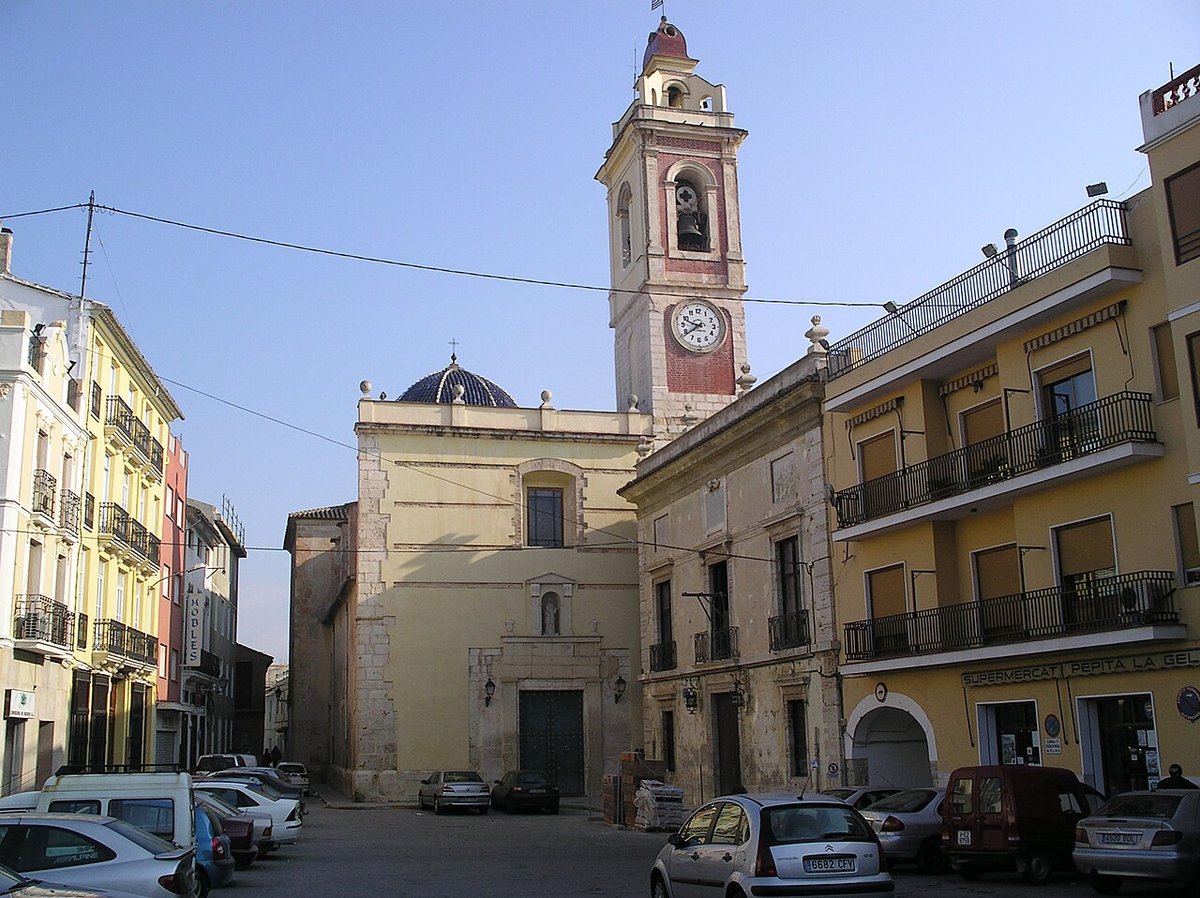
En el centro está la Iglesia de la Asunción.Su construcción empezó en el siglo XVIII.Y se alargó bastante.Ese proceso dilatado se nota al mirar la torre.
La fachada es clara y bastante sobria.Luego está el campanario.Parece pertenecer a otra conversación.Parte piedra,parte solución posterior.Refleja una historia constructiva larga.El resultado no es uniforme.Precisamente por eso tiene carácter.
Dentro,hay calma.Huele a cera y madera vieja.La luz entra suave e ilumina el retablo.Los detalles agradecen una mirada atenta.Es el tipo de sitio donde un vecino puede señalarte algo.Y explicarte un trozo de historia local antes de seguir su camino.
La iglesia no abruma con su tamaño o ornamentación.Simplemente ancla el pueblo.Desde aquí,las calles llevan al mercado,a la estación y hacia las huertas.
Entre naranjos y depósitos de agua
Con coche o bici preparada para caminos polvorientos,puedes llegar a Els Pinets.Allí siguen en pie los antiguos depósitos municipales de agua.Son cilindros grandes de ladrillo.Posiblemente del siglo XIX.
De lejos parecen silos.De cerca se entiende su función original.Formaban parte de la infraestructura que sostenía la agricultura local.A su alrededor se extienden los caminos de huerta.Son vías rurales usadas por tractores y gente que va a sus parcelas.
El paisaje es práctico,no ornamental.Las acequias corren junto a los caminos.Al atardecer,el agua refleja los naranjos.El silencio puede ser total.Solo lo rompe ocasionalmente alguien trabajando la tierra.
El barro forma parte del trato si vas sobre dos ruedas.En tiempo seco hay polvo.En días húmedos,tierra mojada.El entorno merece el esfuerzo.Els Pinets ofrece otra perspectiva sobre Carlet.Una visión arraigada en los sistemas que han mantenido sus huertas durante generaciones.
Una pausa,no un plan
Carlet funciona mejor como paseo corto.Camina un par de horas.Pasa por la estación,la iglesia y el mercado.Luego siéntate un rato en la plaza principal.Mira cómo transcurre el día.
Si es domingo,sigue el olor a arroz al horno.Suele llevarte adonde hay gente reunida alrededor de una mesa.La comida puede ser privada.Pero el ambiente festivo sale a la calle igualmente.
Antes de irte,coge una bolsa de mandarinas.Pela una días después en casa.El aroma volverá al instante.En Carlet,esa fragancia es lo que más perdura