Full Article
about Catadau
Municipality in El Marquesado with a wine-growing tradition and low-mountain setting
Hide article Read full article
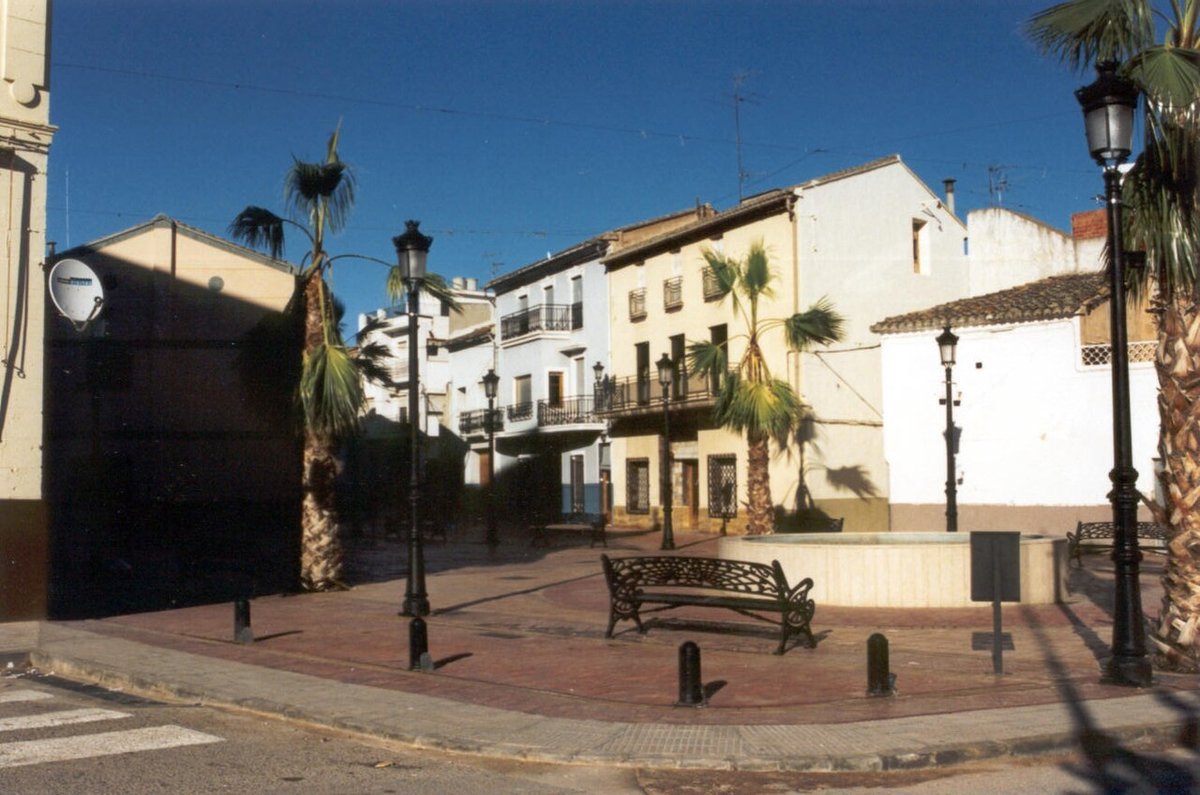
At five in the afternoon, the light drops low across the orange groves and the whole village smells of orange blossom warmed by the sun. In the Plaza Mayor, a man hoses down the pavement and the water runs towards the drain, carrying small whirlpools of dust and dry leaves. It is a recognisable moment of the day in Catadau. Tractors return from the fields, someone takes washing in from a balcony, and the scent of sofrito drifts from a kitchen. The noise level dips and for a few minutes the village seems to pause.
Catadau sits in the Ribera Alta, in the province of Valencia, surrounded by farmland laid out in neat plots. Life here follows patterns shaped by agriculture and the seasons, and much of what there is to see comes with that unhurried rhythm.
Layers of faith in the centre
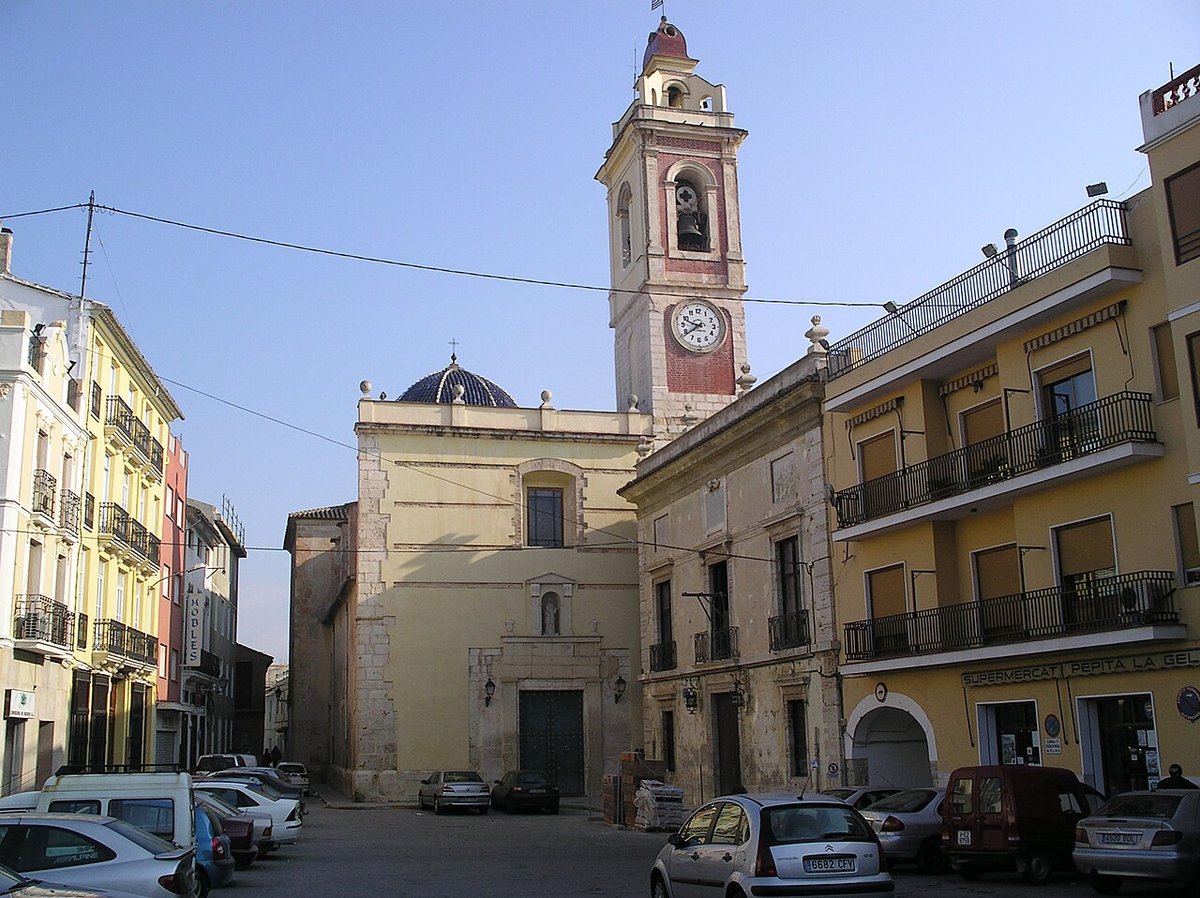
The tower of San Pedro Apóstol is visible from almost any street because the town centre is largely flat. From the main square it is a short, gentle walk uphill along quiet streets where some houses still have old ceramic tiles framing their doorways.
The current church reflects a later renovation, closer to Neoclassical style, yet beneath that exterior are traces of earlier periods. Locals often repeat that the church was built over a former mosque, something common in this part of the Ribera after the Christian conquest, although the details are not always clear. Inside, those layers can still be sensed. Certain arches do not quite align with the rest of the structure, and some walls appear older than the surface finish that covers them.
Next to the parish church, people usually mention the Centro Católico‑Social. Its façade draws attention, as does the clock that many residents glance at even though it does not always show the correct time. Inside, card games and neighbourhood meetings are still held on certain days of the week.
If the sacristy is open, visitors are sometimes allowed into the small parish museum. It preserves old pieces of gold and silverwork and liturgical objects that only leave the building in procession on specific religious dates.
The hill of Santa Bárbara
When someone refers to the castle of Catadau, it helps to imagine more the place where it once stood than a complete fortress. Today what remains is mainly the hill itself and a niche with the image of Santa Bárbara looking down towards the village.
The path up begins close to the urban area and follows a dirt track. It is not a long climb, yet it is steep enough to make it clear that the valley floor is being left behind. On Sunday mornings cyclists often pass by, along with people heading up for a walk before lunch.
At the top, the view opens out across the Ribera Alta. Market gardens spread in orderly plots, straight tracks run between orange trees, and when the air is clear a bluish line of mountains appears in the distance. Towards evening the light changes quickly and the fields take on a golden tone that lasts only a few minutes.
Nearby lies the pine woodland area of La Fonxela. Some local families come here for a short stroll with children or to walk the dog once the heat begins to ease.
Notes from the town hall
In the town hall, a few curious references from the late nineteenth century have been preserved. Over a relatively short period, the position of mayor seems to have changed hands several times. In the municipal archives this appears almost as a marginal note. Stories of that kind are not unusual in agricultural villages of the time, where local politics often depended on delicate family and economic balances.
Today the tempo is different. Evenings still have something predictable about them when the weather is warm. Neighbours sit outside their front doors, conversations stretch out in the square, and card games continue without too much concern for the clock.
Walking between orange trees and ravines
Anyone arriving with walking shoes will find several waymarked routes in the nearby hills. One of the best known passes through the area of Matamón. It is a circular route that usually starts near the cemetery and heads into the Barranco de la Romana.
The path alternates between dirt tracks and narrower stretches of trail. Some uphill sections slow the pace, though in general it can be completed without special equipment by those used to walking.
In the ravine lies Charco Claro, a natural pool that in summer attracts local teenagers. The water is not always as clear as the name suggests, but when there has been rain in previous weeks there is often enough to cool off or at least paddle.
Another, shorter route climbs towards the ridge of the sierra through an area many call La Coladita. At the top there is usually a steady breeze even on hot days. When humidity is low, some say the sea can be glimpsed far in the distance.
Anyone planning to walk should avoid the middle of the day in summer. The heat in the Ribera can be intense and some stretches offer very little shade.
Getting there and catching the right moment
Catadau is around 35 minutes from Valencia by car. Many people arrive via the A‑7 motorway, although the smaller regional roads that cut through the orchards give a clearer sense of the agricultural landscape surrounding the village.
In March, the air often fills with the scent of orange blossom. It is not a constant perfume. It comes and goes depending on how the wind moves between the fields.