Full Article
about Cotes
Small farming village in the Càrcer valley with rural quiet.
Hide article Read full article
A small village that moves at its own pace
Some places draw you in without making a fuss. You arrive thinking you will look around for half an hour and carry on, and before you know it you have wandered further than planned. Cotes has that effect. What seems at first like a quick stop becomes a slow circuit past irrigation channels, orange groves and quiet streets where daily life sets the rhythm.
Tourism in Cotes is not about major monuments or attractions created for visitors. It is about understanding how a small village in the Ribera Alta functions, where market gardening still shapes the calendar. Tractors pass steadily through the streets. Conversations revolve around how the harvest is looking this year.
Anyone arriving with a checklist of sights may find it short. Anyone curious about how life unfolds in this part of the Ribera will find more to hold their attention.
The compact heart of Cotes
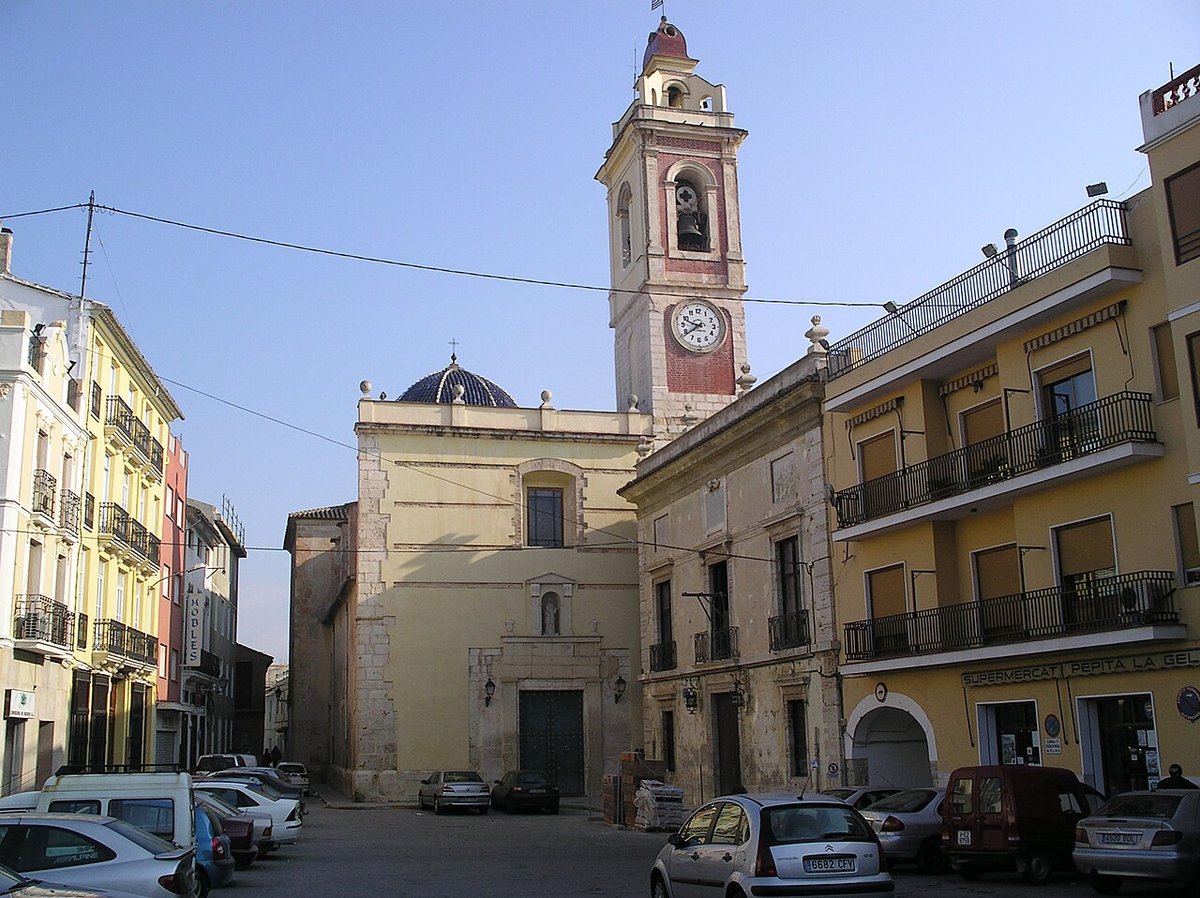
The village centre is compact, the kind you can cross on foot in a matter of minutes. At its heart stands the parish church dedicated to San Miguel Arcángel. It acts as a clear reference point. This is not a monumental church built to impress; it fulfils the familiar role found across towns in the Ribera. The bells carry along several streets, and the square nearby is a place where something is always happening, even if that simply means neighbours chatting.
Many houses retain a traditional appearance. Large wooden doors, iron grilles and interior courtyards are still common. In the past these spaces were used to store tools or keep small agricultural supplies. They are not preserved as a backdrop for visitors or presented as a museum piece. They are ordinary homes, still in use.
Step beyond the urban core and Cotes begins to make more sense. Almost immediately, citrus fields take over the landscape. In the Ribera Alta this is a familiar scene: carefully aligned rows of orange trees, dirt tracks dividing the plots and the occasional acequia, an irrigation channel, crossing the land.
During the flowering season, the scent of azahar, orange blossom, can be noticeable even from a car window left open. It is one of those details that quietly defines the area.
Walking the irrigation channels and farm tracks
The most natural activity here is simple: walk or cycle along the agricultural paths. The terrain is completely flat. There are no steep gradients or technical routes to navigate. This is the kind of place where you choose a track at random, follow it for a while and return along another without worrying about maps.
The network of acequias still plays an important role. Many belong to the traditional irrigation system of the Ribera, which distributes water between plots using gates and small channels. A closer look reveals water still moving through this straightforward but effective system.
During the harvest season, usually in the colder months, it is common to come across teams working among the trees. Their presence is not staged for visitors. It is simply part of the village’s daily landscape. The fields are not decorative. They are working land.
Time here feels tied to agricultural cycles rather than to tourist timetables. The pace changes with the seasons. Some days are busier, others quieter, but the connection to the land remains constant.
Eating according to the land
Local cooking revolves around what the surrounding fields provide. In many homes, rice dishes prepared in the interior Valencian style are still common. These typically combine meat with seasonal vegetables. When the colder weather sets in, simple spoon stews appear on the table.
This is not a cuisine built on experimentation. It is the kind of food prepared when someone suggests making a rice dish on Sunday and everyone gathers around the table.
Being in the Ribera, citrus fruit naturally features in different forms. It might appear in homemade desserts. It might simply be a freshly peeled orange after lunch. The connection between field and plate is direct and uncomplicated.
Festivities rooted in the community
Local celebrations in Cotes retain a strong neighbourhood feel. In summer, several events are usually concentrated into the warmer months. Music in the streets, shared meals and activities organised by residents themselves form the core of these days.
In winter, the tradition of San Antonio Abad continues. Across many Valencian villages this celebration includes the blessing of animals, and Cotes maintains that custom. The atmosphere is simple and community focused.
Semana Santa, Holy Week, is also observed here. It is not large in scale, yet it is well supported by local people. Participation matters more than spectacle.
These events follow the village calendar rather than an external tourist agenda. They are moments when the community comes together, reflecting rhythms that have more to do with tradition and shared life than with attracting visitors.
Getting there and choosing your moment
Cotes lies in the comarca of the Ribera Alta, less than an hour by car from Valencia when traffic is light. The final stretch runs along regional roads that pass through agricultural areas, so the landscape sets the context before arrival.
Spring and autumn are often good times to visit, with milder temperatures and active fields. Summer can be very hot, as in much of the Valencian plain.
Comfortable footwear and a willingness to walk along farm tracks are enough. There is no need for complex planning.
If you only have an hour
Park near the centre and take a short walk around the church of San Miguel Arcángel. Wander through a couple of streets to get a feel for the village from the inside. Then head out on foot towards any of the paths that lead to the orange groves.
Within ten minutes you will be among acequias and cultivated plots. That is where Cotes becomes clear. Not through what it displays, but through the way it lives.