Full Article
about Llombai
Known for its Renaissance Market of the Borja and leather production
Hide article Read full article
The air at eight in the morning smells faintly of bitter orange. In one of the village’s agricultural warehouses, voices murmur as farmers arrive with crates of clementines still damp with dew. In Llombai, the day begins when the cold stings your hands. There is no rush here. Not even the River Magro seems in a hurry.
A village built on two rhythms
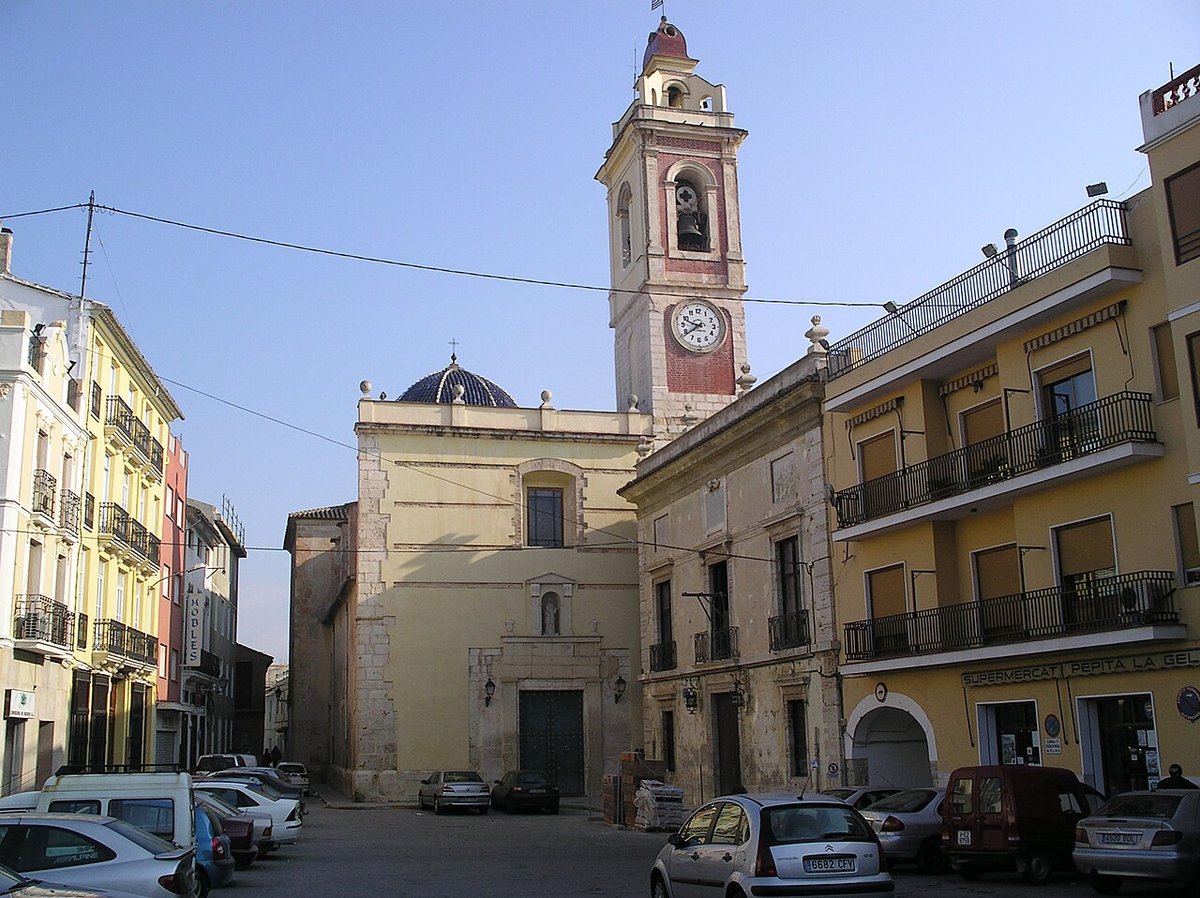
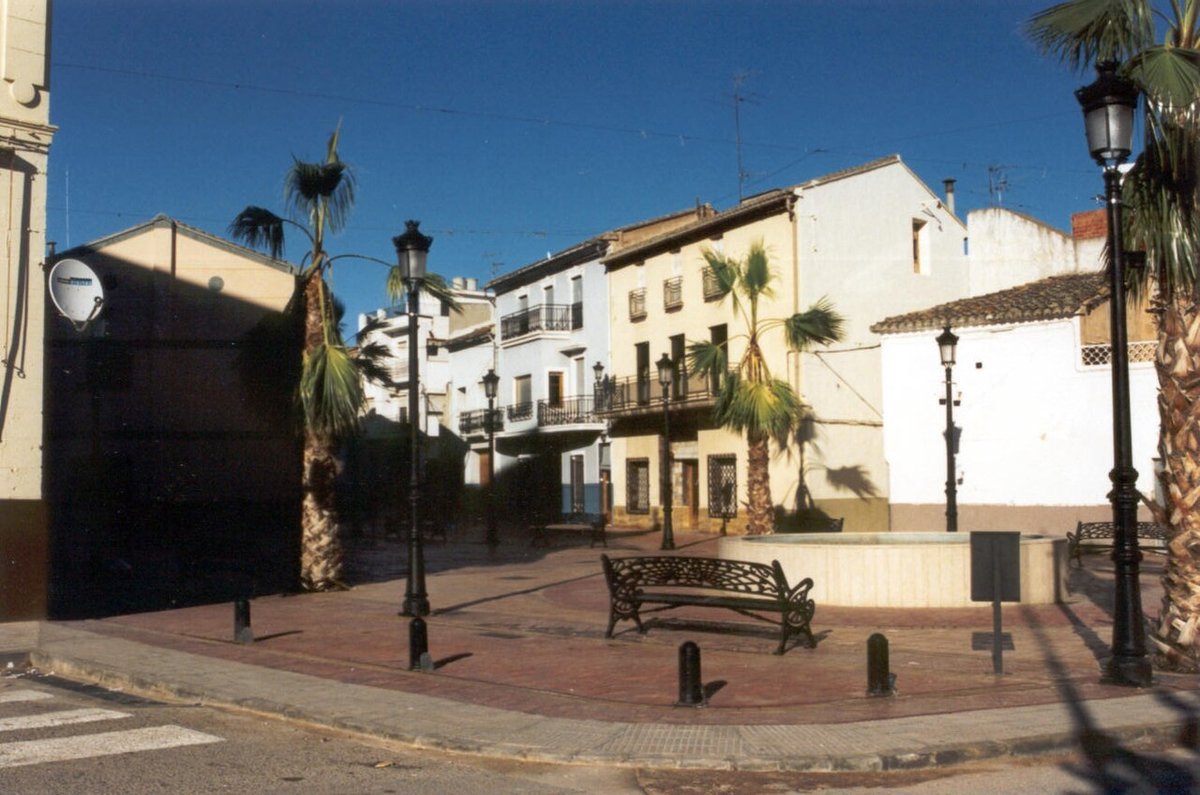
Walking through the centre feels like crossing an invisible line between two tempos. The low houses, with wooden doors worn by sun and damp, belong to the slow rhythm of the huerta, the fertile market garden that surrounds the village. The newer parts speak of a faster, more practical life. The Plaza Mayor holds the town hall, built over a former church dedicated to the Sants Joans. Remnants still surface during building work; once, ancient burials were visible through a small protective opening for a time. Here, history lies just beneath the tiles.
A few steps away, the church of the Santa Cruz is more restrained than its name suggests. Inside, it houses a silver cross linked to San Francisco de Borja. If you catch the late afternoon sun filtering through a side stained-glass window, the silver catches the light for a few brief minutes. It’s a quiet moment that passes almost as soon as it arrives.
The former Dominican convent, founded in the 16th century by Borja himself, usually stands in silence. Its pale stone cloisters change character during occasional markets or fairs connected to the Borja family history. Then the space fills with craft stalls and the scent of fried dough, and for a while, the past and present share the same courtyard.
What to eat and when
Cooking here follows the calendar. Olla de la plana, typically prepared in winter, combines white beans, turnip and pork in a thick broth that warms your hands even before the first spoonful. It is practical food, designed for long days among orange trees.
Look in local bakeries for coca de mollita, a simple flatbread topped with crumbs, olive oil and salt. The surface is crisp and slightly uneven, as though the breadcrumbs were scattered without much concern for neatness.
At the beginning of February, rosquillas de San Blas appear. These dry ring-shaped biscuits carry a distinct hint of aniseed that lingers more in the nose than on the palate. They are made for that specific date and tend to sell out by mid-morning.
The path by the river and the climb
From the regional road, Llombai can seem little more than a cluster of rooftops among orange groves. Leave the car behind and walk towards the Magro, and the picture changes.
Paths descend to narrow stretches where water runs between tall reeds and low rock walls. In autumn, everything turns shades of gold. The sound is of birds shifting in the rushes. With patience, you might spot herons or the quick flash of a kingfisher.
The ascent towards the Sierra del Caballón alters everything again. The path begins gently among fields, then becomes stonier underfoot. It’s roughly ten kilometres before linking with Real’s boundary. Higher up, the air carries rosemary and dry earth. From certain points, you see the entire valley: rectangles of orange trees alternating dark green and bright.
In winter, climbing towards sunset calls for a jacket. Once the sun drops, the cold descends quickly from the sierra.
When to see Llombai
February is often a good time to come. It coincides with San Blas, when bonfires are lit and those traditional sweets fill a few street stalls. The village grows livelier.
In January, fires are also lit for San Antonio—the smoke clings to your clothes for hours, a familiar feature of these festivities here.
August brings celebrations for San Francisco de Borja: music, open-air dances, more visitors. The atmosphere shifts; the quiet that defines other months recedes.
If you prefer to walk in peace, try a weekday in winter or early spring. By mid-morning, when the sun warms the orange trees and cars pass only occasionally, Llombai settles back into its usual tempo—the steady rhythm shaped by fields, river and seasons.