Full Article
about Senyera
Agricultural municipality growing oranges and vegetables in the Ribera.
Hide article Read full article
Some villages are like that kitchen drawer where everything ends up: spoons, rubber bands, the bottle opener that disappears just when you need it. At first glance it seems unremarkable, even a little muddled, yet once you look properly you see how the whole house works around it. Senyera is much the same.
This small town in the Ribera Alta does not rely on monumental landmarks or headline attractions. What matters here is the everyday: quiet streets, market gardens pressed up against the edge of the urban centre, and a rhythm that feels half a step slower than elsewhere. There is no grand spectacle. The interest lies in how daily life unfolds.
Santa Ana, the church that sets the bearings
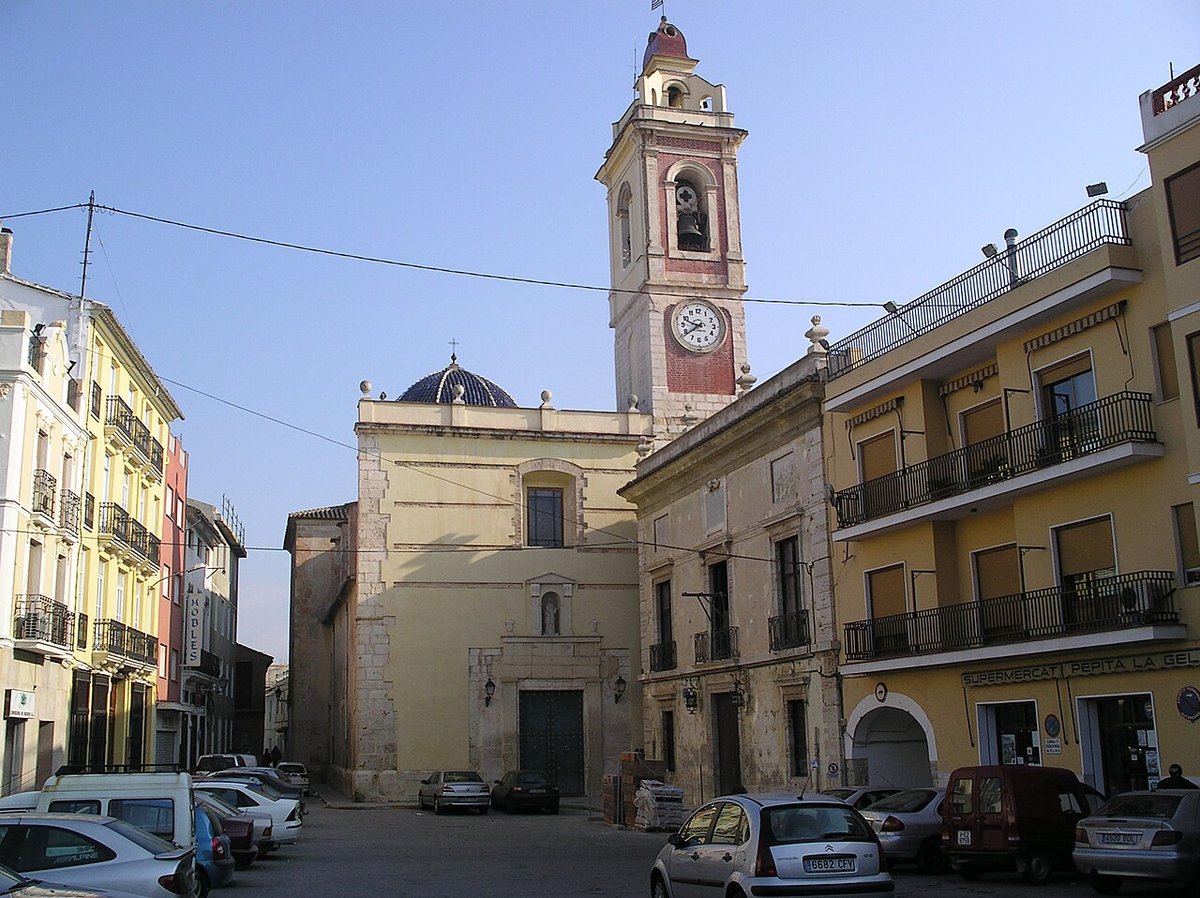
In Senyera, the Iglesia de Santa Ana serves a very practical purpose. It is the reference point people use when giving directions. In some places you are told to turn at the tobacconist; here, the fixed point is the bell tower.
The building is generally described in local sources as dating from the 18th century. Its appearance is restrained, with a light-coloured façade, simple lines and a bell tower visible from many surrounding streets. Nothing about it aims to dazzle. The interior follows the same logic. It feels like a space that has accompanied the town through generations, hosting celebrations, funerals and patron saint festivities.
If it happens to be open, stepping inside takes little time. A brief visit is enough to understand how the town organises itself around this spot. Santa Ana is not a monument in the grand sense, yet it acts as a centre of gravity.
Streets that lead straight to the fields
A walk around Senyera does not take long. This is not a place where you wander for hours without retracing your steps. The layout resembles a neighbourhood within a larger rural town: short streets, two-storey houses, and the occasional interior patio just visible above a wall.
What stands out is how close the huerta is. In this part of Valencia, “huerta” refers to irrigated farmland that has shaped local life for centuries. Leave the urban centre and within a few minutes you are among fields. Orange trees dominate today, although olives and almonds were once worked here too.
Many traditional houses retain details linked to agricultural life. Wide gates, former storehouses converted to other uses, courtyards that once held tools or produce. This is practical architecture, built to make daily tasks easier rather than to impress anyone passing through.
The main square keeps its role as a meeting point. There is a fountain and benches, and neighbours who stop for a chat. It does not feel staged. It is closer to the familiar bench outside a front door where someone ends up sitting as the afternoon cools.
Paths through orange groves
The landscape around Senyera is completely flat. Anyone expecting mountains or dramatic viewpoints will not find them here. Instead, there are rural paths that cross between citrus fields and irrigation channels that have been in use for centuries.
Walking along these tracks has something instantly recognisable about it. Early in the day there is quiet, perhaps the sound of a tractor in the distance. If the fields have recently been watered, the smell of damp earth lingers in the air.
In spring, when the orange trees blossom, the scent of azahar becomes noticeable. It can feel as though a vast bottle of floral cologne has been opened in the middle of the fields. The effect is not subtle.
The paths are easy to follow and there are no significant slopes. For that reason, many people explore them on foot or by bicycle. The pleasure lies in the simplicity: straight horizons, ordered rows of trees, water moving steadily through the acequias.
Festive dates and local rhythms
The festive calendar follows patterns common across this part of the province of Valencia, although each town adds its own tone. In Senyera, celebrations linked to San Pedro usually mark one of the key moments of the year. During those days the streets change pace. There is music, there are processions, and neighbours return to the village even if they now live elsewhere.
Summer brings verbenas and activities organised by local associations. A verbena is an open-air evening celebration, typical across Spain, with music and a strong sense of community. The atmosphere resembles a neighbourhood fête where almost everyone knows each other, and there is always someone ready to explain who your grandfather was or which house your family once lived in.
Semana Santa, or Holy Week, also sees the return of residents who come back for those days. This pattern is common in smaller towns across the Ribera region, where ties to family and place remain strong even after people move away.
What to expect from a visit
Senyera lies around 45 kilometres from the city of Valencia, in an area connected by regional roads that are straightforward to follow. It is easily reached by car.
This is not a destination for several days of monument-hopping. It works better as a calm stop to get a sense of life in the huerta of the Ribera Alta. A circuit of the urban centre, a stroll along the paths between orange groves, and some time spent in the main square watching the afternoon pass.
Within a few hours you will have seen almost everything. That brevity is part of the appeal. Senyera is not about ticking sights off a list. It is about slowing down enough to notice how the houses sit beside the fields, how the bell tower guides you through the streets, and how the scent of orange blossom drifts across the flat land in spring.
Nothing here demands attention loudly. Instead, the village reveals itself in ordinary details that only make sense once you pause and look.