Full Article
about Tous
Known for the great Tous reservoir and the relocation of the old town.
Hide article Read full article
A Slow Start in the Huerta
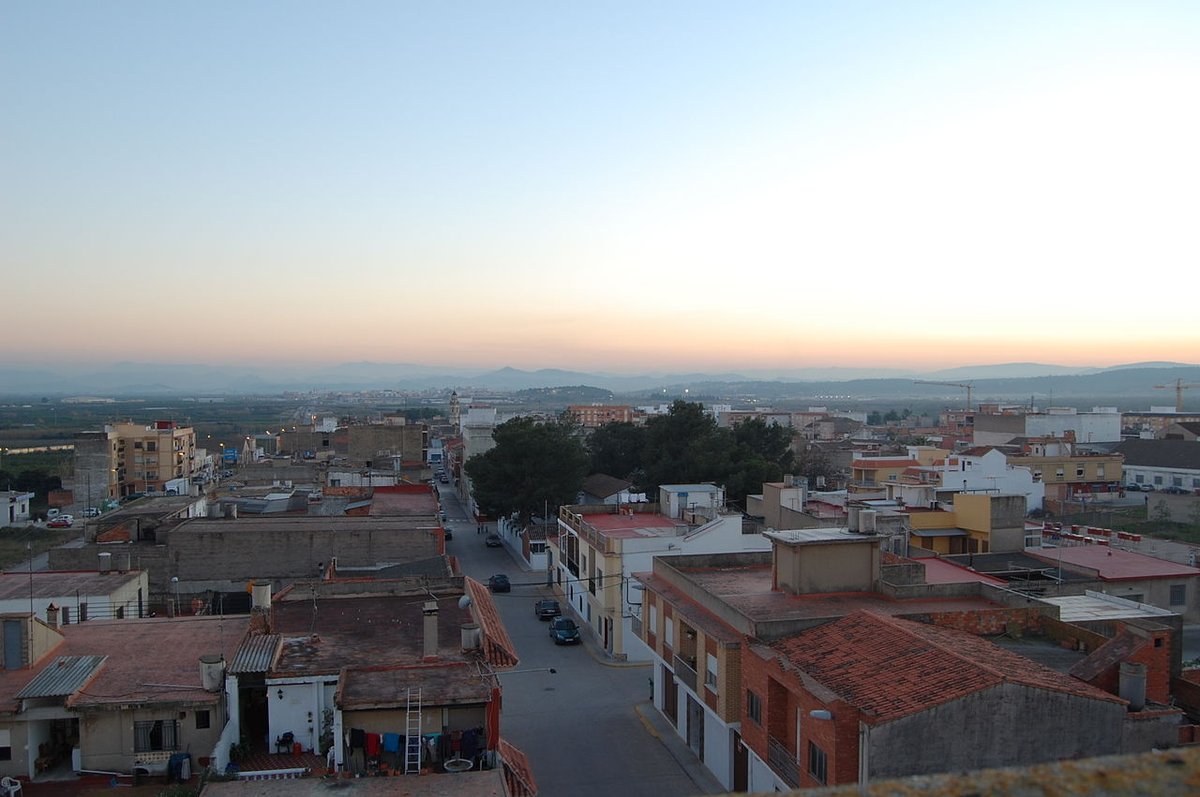
Early in the morning, while there is still a trace of moisture in the soil, the orange groves around the village of Tous release a scent that is both sweet and slightly sharp. Windows begin to open little by little, and now and then a car moves calmly along the main street. In the distance, a tractor starts up. Tourism in Tous begins like this, shaped by farmland, quiet and everyday routines that still define life here, about 60 kilometres from Valencia.
The municipality has just over 1,300 inhabitants and remains more connected to agriculture than to any established tourist circuit. Daily life revolves around the fields, with short journeys between plots of land, storage buildings and low houses. It is not a place that rearranges itself for visitors. Instead, it carries on at its own pace.
Short Streets and a Familiar Landmark
In the centre, the streets are short, with narrow pavements and façades that combine recent renovations with older features. Occasionally there is a wide wooden doorway, originally designed for carts or storage, or iron balconies that cast shade over the ground floor.
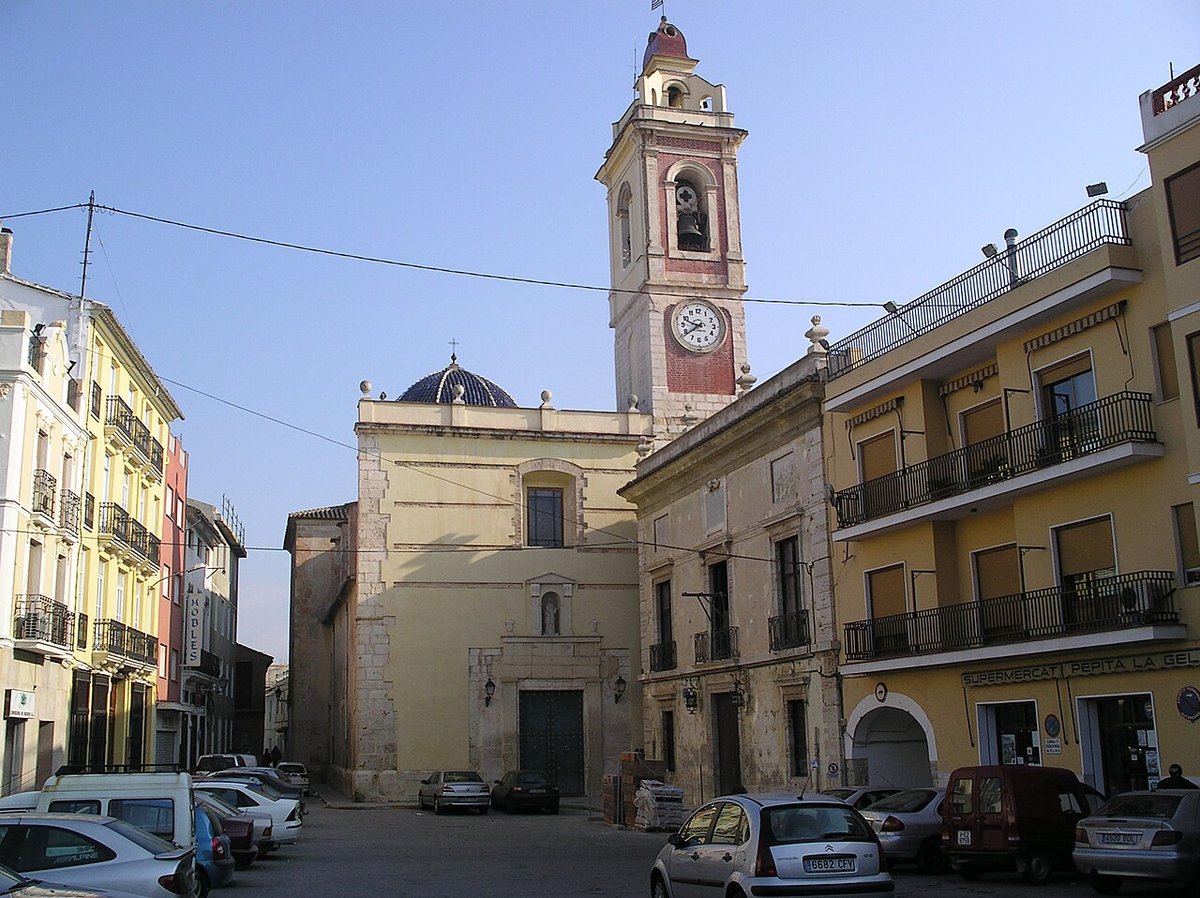
The Church of the Purísima Concepción is easy to recognise thanks to its bell tower, visible from several points in the village. The current building dates from the late eighteenth century and continues to serve as a reference point when finding your way through the streets. Religious celebrations still hold a place in local life, especially at certain times of the year.
Walking through the centre does not take long. In about half an hour, most of the streets can be covered. The interest often lies in small details: a freshly whitewashed wall, a half-open metal shutter, the sound of a television drifting out of a window. These fragments give a sense of how the village is lived in day to day.
Fields, Paths and the Edge of the Village
The landscape begins almost as soon as the last junction is left behind. Citrus plots appear straight away, along with scattered almond trees and compacted dirt tracks used both by farmers and by those heading out for a walk.
Agriculture continues to shape the surroundings throughout the year. Towards the end of winter, almond trees turn parts of the hillsides pale with blossom. In spring, the orange trees deepen to a vivid green and, for a few specific days, the air carries the scent of orange blossom. By summer, the ground becomes drier and dustier.
To the north, in the area known as Barranco del Agua, the terrain changes slightly. There are rocky formations, denser Mediterranean vegetation and stretches where the path narrows between scrub and low pine. It is not a landscape designed around viewpoints or dramatic features. Walking slowly reveals smaller elements instead: reddish stones, insects hidden among grasses, the sound of wind moving through branches.
If planning a longer walk, it is worth bringing water and wearing closed footwear. Many of the paths offer little continuous shade, and in the warmer months the heat builds quickly.
Wandering Between Irrigated Land and Dry Fields
Those who prefer not to follow a set route can simply leave the built-up area along one of the agricultural tracks. Many of these paths loop around the village, tracing small circuits between cultivated plots.
Some routes extend towards more open areas that connect with the surroundings of the Turia river, although the river itself lies several kilometres away. These are quiet walks, without elaborate signposting, where it is common to pass a local resident working in the fields or checking irrigation systems.
From November to February, much of the citrus season takes place. During these months there is more visible activity, with tractors and trailers carrying loads of fruit. Occasionally, certain farms allow visits or offer the chance to take part in the harvest, but this does not happen regularly or every year. If the opportunity arises, it is best to ask about it within the village itself.
Eating in Tous
Local cooking follows the pattern found across many inland areas of the Valencian Community. Dishes are simple and filling, intended to provide a proper meal after a morning of work.
Rice features prominently, including dishes such as arroz al horno, a baked rice, or arròs amb fesols i naps, made with beans and turnips. Locally produced cured meats are also common, along with salads that include citrus fruits when they are in season. There are not many places set up specifically for dining out, and the atmosphere leans more towards traditional village bars than menus designed for visitors.
Festivities and the Rhythm of the Year
The festive calendar blends religious tradition with village life. In December, the feast of the Inmaculada Concepción is celebrated with events centred around the church and nearby streets.
August brings the main local festivities, when many families who live elsewhere return for a few days. The streets become livelier in the evenings, with activities organised by local groups or the town council. In contrast, Easter keeps a quieter tone, with processions that move slowly through the centre.
When to Visit
The climate is typical of inland areas close to the Valencian coast, with relatively mild winters and quite hot summers.
Between October and May is usually the most comfortable period for walking and spending time outdoors. During these months, temperatures are more moderate, and the agricultural landscape shifts gradually with the seasons, offering subtle changes rather than dramatic contrasts.