Full Article
about Turís
Famed for its wine and mistelle, and the La Carència archaeological site.
Hide article Read full article
A Village That Wakes Early
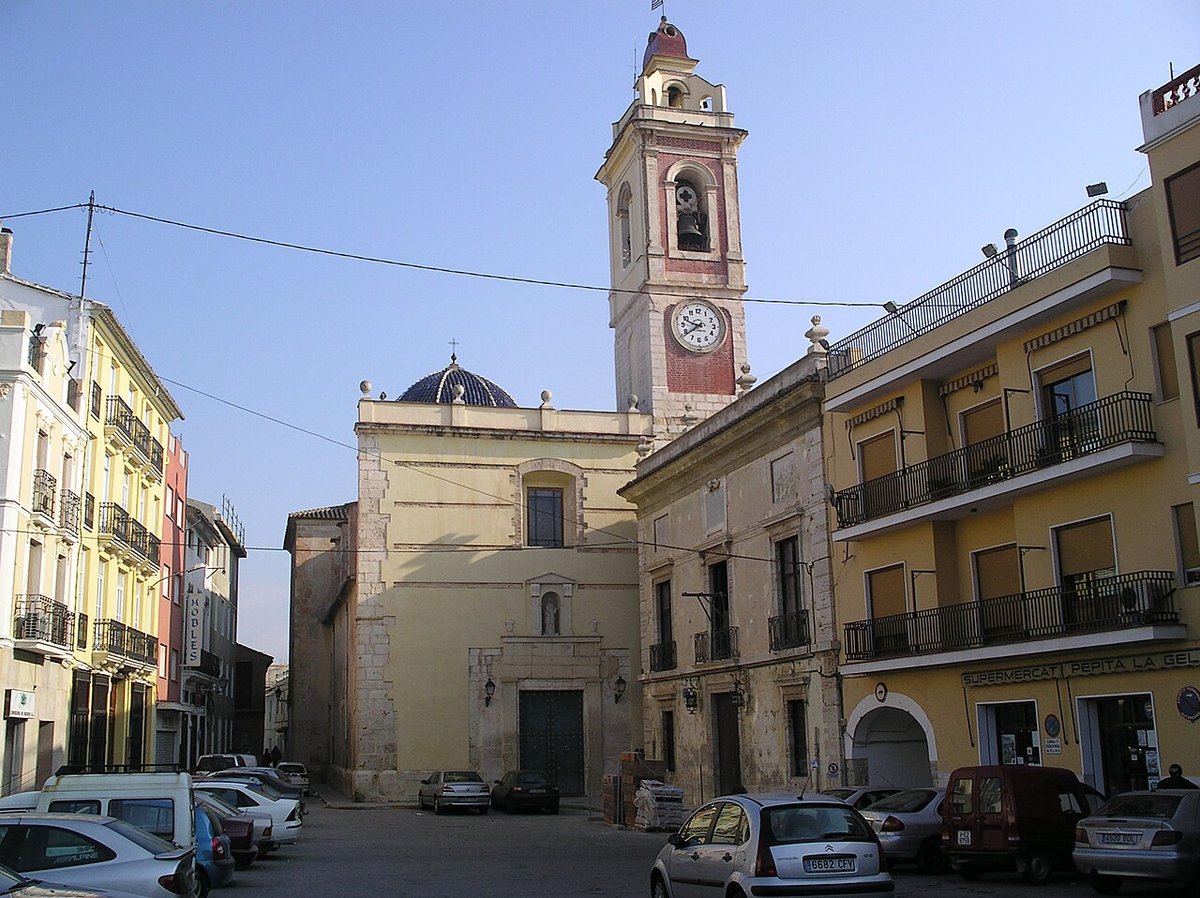
The bells of the Iglesia de la Natividad strike seven while the sun is still working its way over the fields around Turís. From the main square, the light filters between rooftops and kitchen gardens, touching the edges of paths before reaching the neat lines of vines and citrus trees that define the surrounding countryside. In the distance, tractors can already be heard. A metal shutter rattles upwards with the dry sound typical of agricultural workshops and storehouses.
This is how Turís begins the day: early, without fuss.
Walking through the village, tarmac gives way almost without notice. One street ends and a dirt track appears. Turn a corner and there is the faint scent of irrigation channels or orange blossom, depending on the time of year. In the quieter neighbourhoods, the sounds are those of a place shaped by farming life: a dog barking somewhere far off, the thud of a shutter, a voice calling across a courtyard.
In August, that calm shifts.
Mornings begin with the music of a brass band moving through the streets, followed by the sharp crack of rockets. These are the days of the patron saint festivities, when Turís fills with peñas, groups of friends who organise celebrations together, chairs set outside front doors and conversations that stretch late into the night. The toros en cuerda, bulls guided along certain streets on a rope, pass through the village and the atmosphere grows denser and louder, with visitors arriving from Valencia and nearby towns.
One of the most distinctive moments of these days is the Baile de la Taina in the square. The Reina de las fiestas wears traditional dress, while older residents watch from folding chairs, quietly recalling how things were in their youth. At night, albaes are sung from door to door, improvised verses performed in the Valencian tradition. It is a custom that continues because each year someone decides it should.
Patio Rice and Everyday Cooking
Many houses still have a small outdoor space used for cooking when the weather allows: a shaded patio, a built-in table, a wood fire or gas ring and a paella pan balanced over its stand. Around midday, smoke rises slowly and mingles with the scent of nearby orange trees.
Here, rice is usually prepared with chicken and rabbit, as in much of inland Valencia. Some families add their own variations, perhaps game or a touch of seafood. These differences are discussed at length around the table.
During the fiestas, paella competitions take place in the street. Groups claim their patch of ground, vegetables are chopped on improvised boards, and fruit grown locally appears to ease the wait. By early afternoon, the whole village seems to carry the aroma of sofrito and firewood.
Another regular presence on the table is coca en llanda salada, a savoury flatbread baked in a rectangular tin. It may be topped with tomato, sardine or pepper. The dough comes out thin, with a slight crispness at the edges, the kind that can be folded in one hand while conversation carries on.
Food here is less about presentation and more about rhythm. Cooking follows the pace of the day and the season. Meals gather family and neighbours without ceremony, particularly during the summer, when doors remain open and chairs migrate into the street.
The Path Up to Sant Francesc de Borja
The route up to the Ermita de Sant Francesc de Borja begins among low houses and gradually climbs. The path is not long, yet the incline is enough to slow the pace. Halfway up, the whole village comes into view: reddish roofs, the tower of the church, and beyond them an uneven patchwork of cultivated land.
At the top, the air feels different. In high summer it carries the scent of rosemary, warm earth and pine. Towards evening, light falls sideways across the terraced fields and the municipality darkens to deep green, marked by pale tracks cutting through the landscape.
Close to the town centre stands the old lavadero, the public washhouse once used for laundry. Today it functions as a small ethnological space, where tools and everyday objects from decades past are kept. The stone basins remain, worn smooth by water and fabric. It takes some effort to imagine the constant noise that must once have filled this place: conversation, splashing, the rhythmic strike of washing against stone.
These spots, the ermita above and the lavadero below, frame Turís in different ways. One looks outwards across fields; the other looks back towards daily routines that shaped village life for generations.
Choosing the Moment
Turís changes noticeably with the seasons.
In spring, when the citrus trees blossom, a sweet fragrance spreads through the streets, especially in the late afternoon. The pace is unhurried. As temperatures ease, neighbours sit outside their doors and talk while the light fades.
August tells a different story. The patron saint festivities bring concentrated activity, and for several days the population grows well beyond its usual size. Those curious to see how the streets are prepared, balconies draped in fabric, band rehearsals echoing and peñas arranging tables, may prefer to visit in the preceding days, during the week if possible.
Anyone hoping for a quiet walk through the centre or a silent climb to the ermita might want to avoid the main festival weekends. Traffic increases and cars end up parked along verges and open plots.
As evening falls, the rhythm softens again. In the square, conversations in Valencian and Spanish blend together. Cards are played on café tables and small glasses of chilled mistela appear. The liqueur is thick and sweet, sipped slowly while the last light drains from the fields that surround Turís.
The village does not try to impress. It follows its own timetable, shaped by agriculture, tradition and the cycle of its fiestas. Arrive early and you will hear the bells before the sun has fully risen. Stay until dusk and the day closes with quiet talk, the faint scent of crops, and the sense that tomorrow will begin in much the same way.