Full Article
about Almussafes
Known for its Ford plant and the historic Moorish tower in the center.
Hide article Read full article
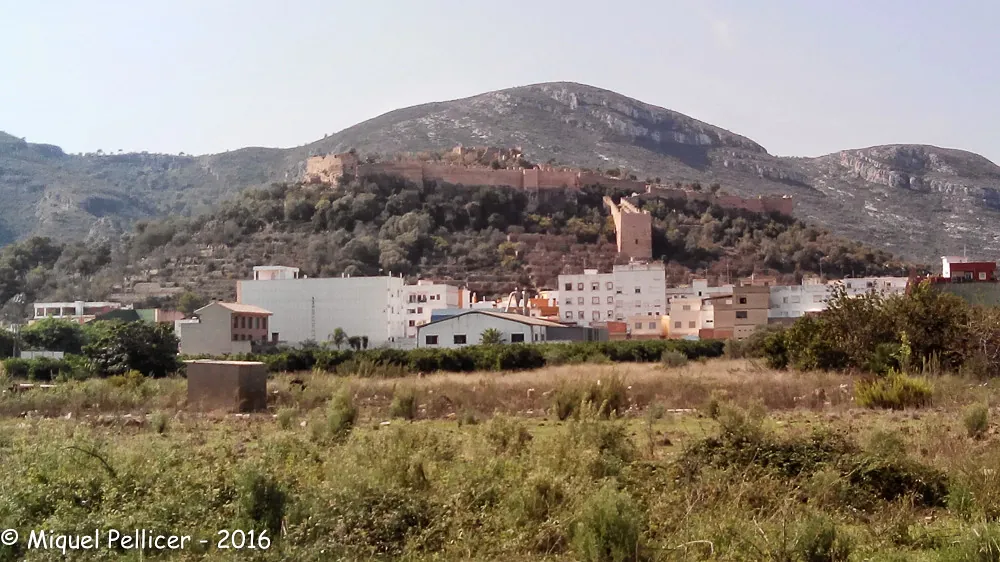
At six in the morning, smoke from the chimneys of the car plant blends with the low mist that hangs over the marjal. The air is cool and carries the damp, green smell of the wetland. People are already moving. You see them at bus stops with reflective work vests folded under an arm, or turning down lanes that lead to the orchards, where the orange trees are still dark shapes. In the centre, the smell of baking bread comes from a vent in a wall. It’s a quiet hour, before the first trucks roll through.
This is Almussafes. A place where you hear the distant hum of machinery as often as birdsong from the fields.
The view from the Torre Razef
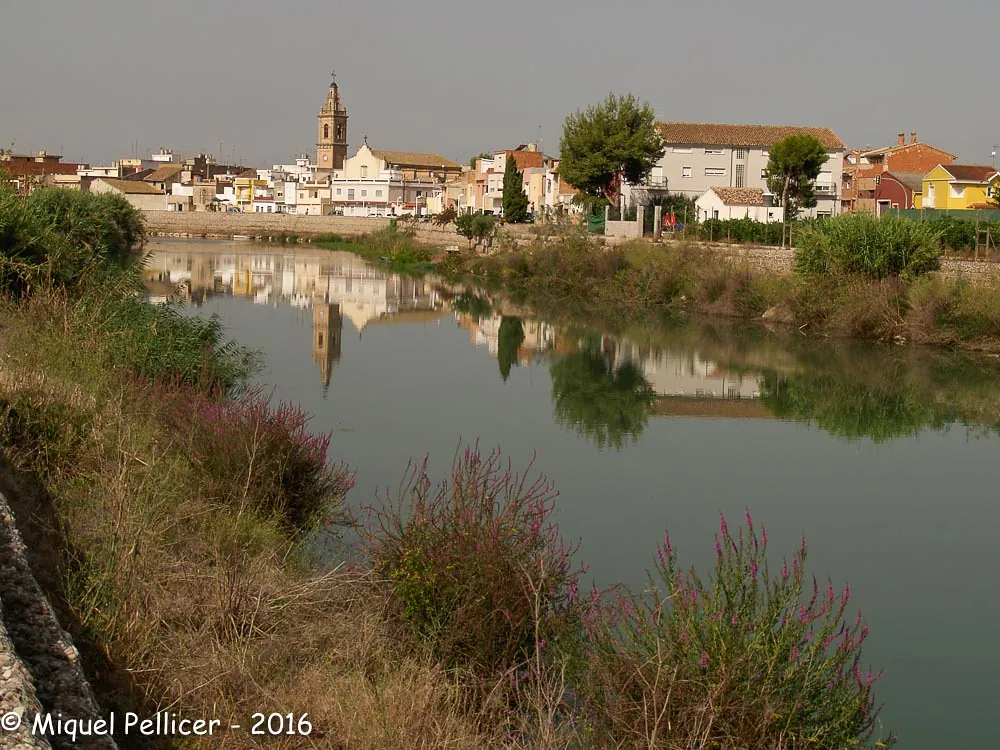
The tower is a sudden thing among the rooftops. It’s narrower than you expect, built from blocks of pale stone that have weathered to a patchy grey. The wooden door at its base is thick, studded with iron. Inside, the spiral staircase is a tight corkscrew of worn steps, and you climb in near-darkness until you emerge at the top.
From there, the town makes sense. You see the old core huddled around the square, and then the orderly grid of streets from the expansions of the seventies and eighties, built to house workers. Beyond it all, the vast, flat roofscape of the industrial estate dominates the southern view. It’s functional, not pretty. The tower isn’t always open; it tends to open on weekend mornings or for specific cultural events announced by the town hall. It’s worth asking.
Walking different decades
A morning walk takes you through layers. On one street, you’ll pass a house with nineteenth-century blue tiles flanking its door, right next to a building from the 1990s. The pavement is wide and clean. The sound is often that of cars, but not frantic; it’s the steady coming and going of a place used to shifts.
The light on the town hall façade is best seen around five in the afternoon. The low sun hits its brick and stonework, turning it warm and throwing long shadows from its small tower. Around midday, people seek out benches in the Parque de San Antonio under the pine trees. If you go in April, walk near the edge of town where the breeze brings in the narcotic sweetness of orange blossom from the huerta. After an autumn rain, that same air smells of turned earth and wet leaves.
The rhythm of fire and stew
In March, the fallas change everything. The monuments go up in squares overnight—cartoonish figures of politicians next to dragons—and for days, you hear the sporadic pop-pop-crack of firecrackers from dawn onwards. At night, fireworks explode above rooftops, their colours reflecting off the glass and metal of distant factory buildings.
Summer has a different pulse. For the fiestas of San Bartolomé, they drag long tables into closed-off streets. Large black paelleras are set over wood fires. One of the dishes they make is caldera de fesols i naps, a bean and turnip stew that simmers for hours; you smell the woodsmoke and paprika long before you see it. A local band walks through, playing pasodobles, and people lean out of balconies to watch. It feels like a big family dinner that spilled out onto the pavement.
Where the pavement ends
Take the road towards Port de Sollana. After about ten minutes by car, the buildings thin out and stop. Here, you find dirt tracks between irrigation channels, with reeds taller than a person. This is the edge of the marjal.
On Sunday mornings, you’ll meet cyclists here and people walking dogs. The ground is flat and open. In winter, fog can swallow this landscape whole, leaving only the sound of water and occasional bird calls. If it has rained recently, the paths turn to sticky mud that clings to your shoes in thick cakes—wear something you don’t mind getting dirty.
An unlikely stage for magic
For a town known for cars and oranges, its cultural streak is specific: magic. For years now, it has run festivals dedicated to illusionism. They set up small stages in plazas and in the theatre. You’ll see a magician pulling coins from a child’s ear while parents watch, half-smiling, arms crossed. It’s not flashy; it’s close-up and curious. Posters for these events appear on bus shelters and noticeboards months in advance.
Getting there and when to go
Almussafes is just off the AP-7 motorway south of Valencia. The exit is straightforward, but avoid it between 7:30-8:30 AM and 5-6 PM on weekdays; that’s when traffic builds around the industrial zone.
There’s no train station in town. The nearest is in Silla, on the Cercanías line from Valencia Estació del Nord. From Silla, it’s a short taxi or bus ride.
Come in late September or October if you want to see daily life at its usual pace and feel that first autumn coolness in the evening air. In August, many shops are shuttered and a particular quiet settles in; it’s not dead, but it feels like everyone is either at work or indoors waiting for dusk