Full Article
about Benicull de Xúquer
Young municipality split off from Polinyà, near the Júcar river.
Hide article Read full article
A Small Detour in the Ribera Baixa
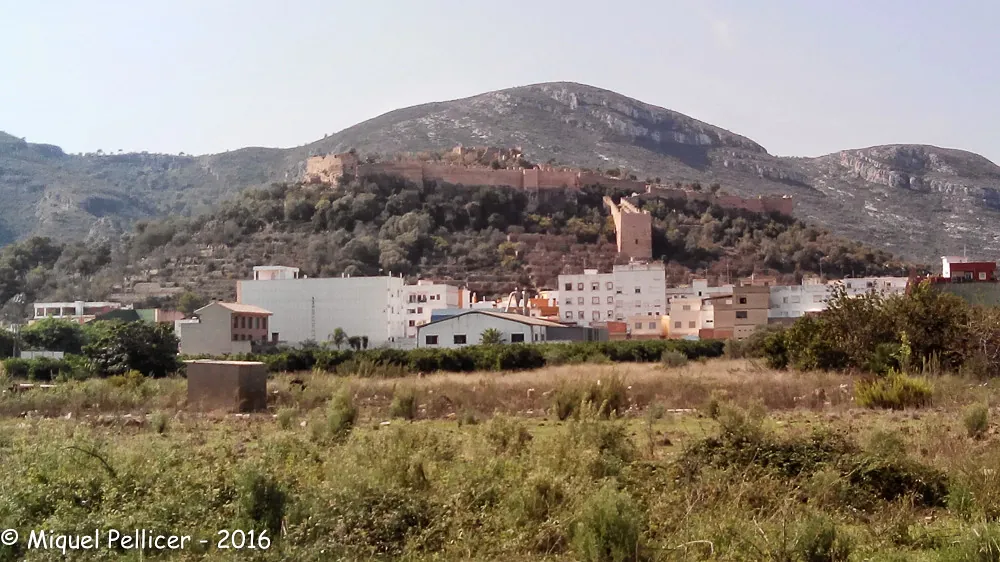
Some places are planned stops. Others appear because of a wrong turn and a decision to carry on a little further. Benicull de Xúquer belongs firmly in the second category. A short detour from a regional road, a couple of roundabouts, and suddenly the landscape opens into the most agricultural stretch of the Ribera Baixa, with orange groves spreading out on either side and irrigation channels cutting across the fields in straight, deliberate lines.
Tourism in Benicull de Xúquer is less about ticking off sights and more about taking in your surroundings. This is a small town closely tied to the land and to the river. What matters here is not a single landmark but the system that keeps everything moving: water flowing through the acequias, narrow lanes threading between orchards, tractors heading out early in the day.
A walk through the streets feels ordinary in the best possible way. Nothing appears staged for visitors. It feels like stepping into a place where daily life continues at its own pace, regardless of who passes through.
The Heart of the Town
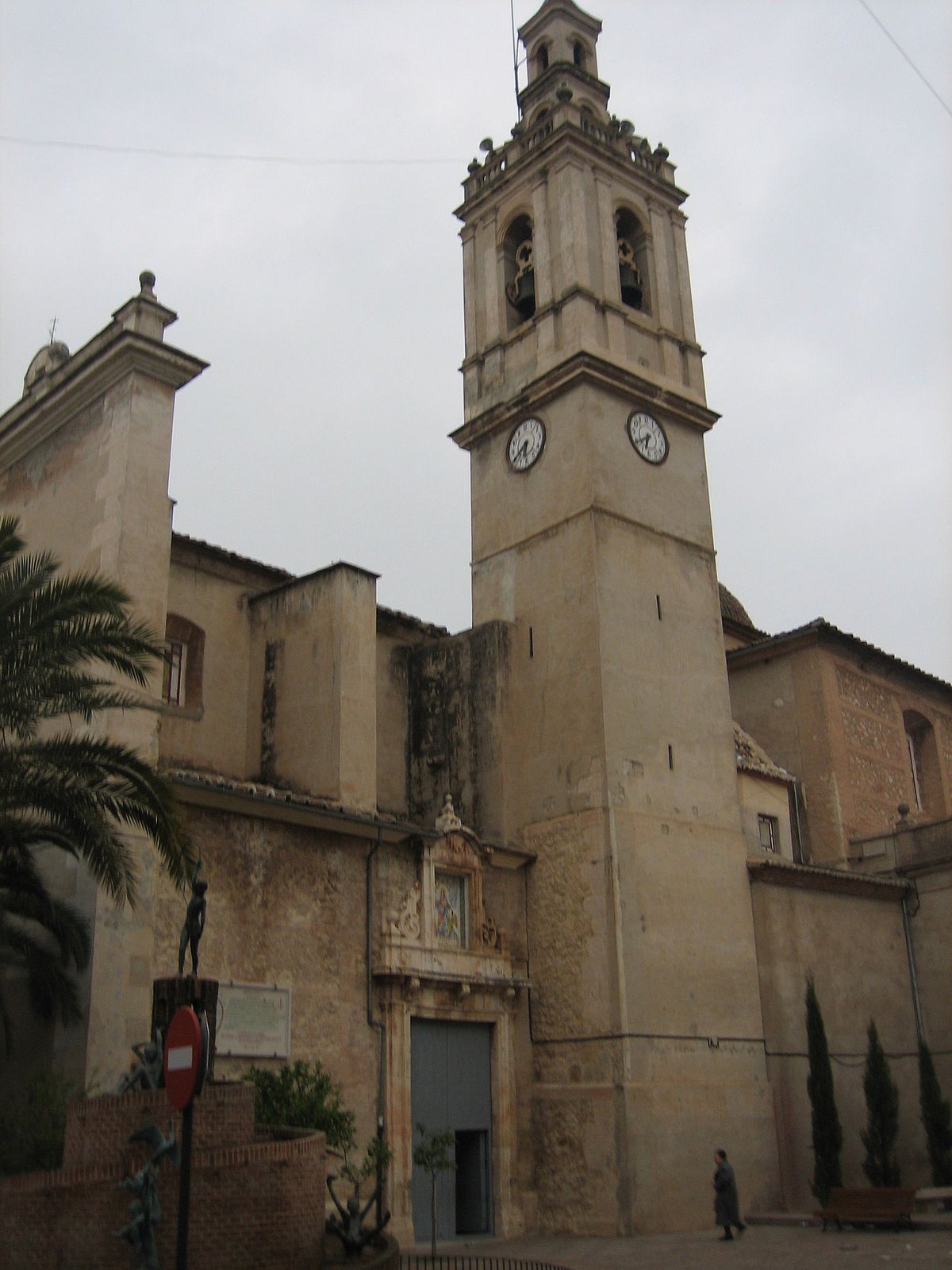
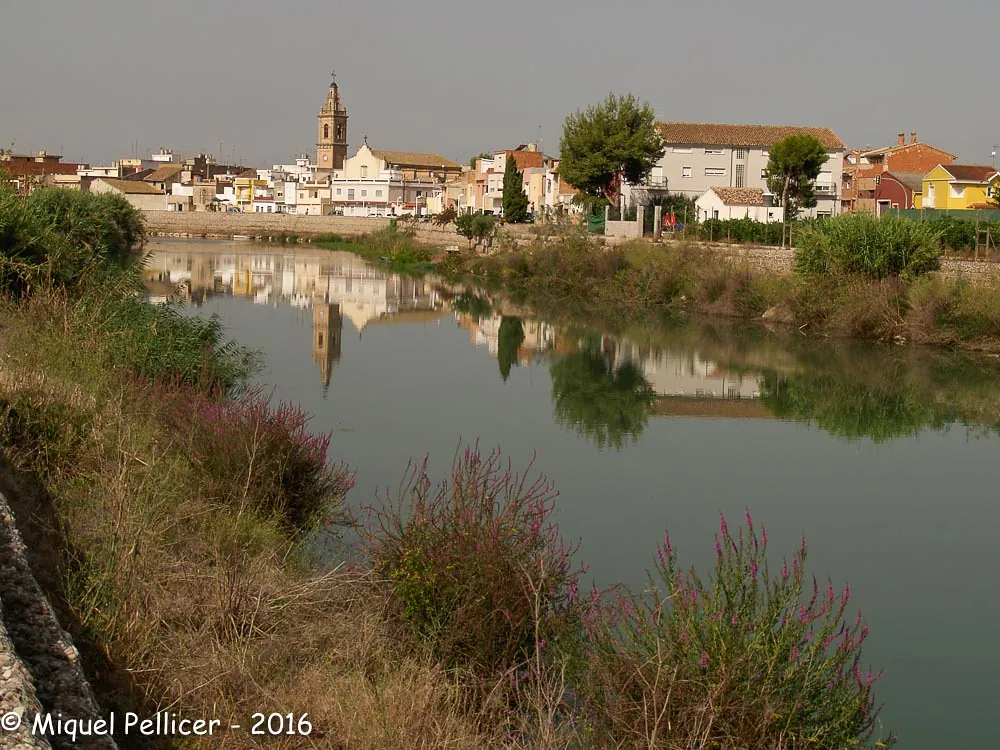
The clearest reference point in Benicull de Xúquer is the parish church dedicated to San Pedro Apóstol. It is not monumental, and it does not try to be. Its style is sober, similar to many churches found in towns along the Ribera. The façade is simple, the bell tower visible from most corners, and the square around it acts as a natural centre.
That square is where much of the town’s social life unfolds. At certain times of day neighbours stop to chat, people cross with shopping bags in hand, and children cycle in circles. Nothing spectacular happens, yet that is precisely the point. The appeal lies in watching the genuine rhythm of the place.
A short walk away from the centre, the urban layout quickly gives way to agricultural tracks. This is where Benicull makes the most sense. Orange groves line both sides of the paths. Narrow acequias carry water with almost mathematical precision. The plots shift in colour depending on the season. In spring, the scent of orange blossom hangs in the air. At other times of year the fields feel calmer, with the quiet sound of water moving steadily through the channels.
The river Xúquer lies nearby. It is not always visible from the town itself, yet it shapes the surrounding landscape. Riverside areas have denser vegetation, and a slow wander may reveal herons or other birds searching for space among the reeds.
Walking, Cycling and Watching the Fields
Enjoying Benicull de Xúquer does not require a plan. The simplest option works best: head out on foot or by bicycle along the agricultural paths. The terrain is almost completely flat, so there is no need for specialist gear or serious fitness. The route unfolds gently between orchards. Small bridges cross the acequias. Now and then a field hut appears, or a farmer working the land.
These walks rarely have a clear destination. Leave the town, follow a path that catches your eye, then return along another. For anyone who pays attention to detail, the organisation of the land becomes interesting in itself. The way water is distributed, the layout of the plots, the careful structure behind what might seem at first glance like simple countryside all tell part of the story.
Early morning and late afternoon bring noticeable changes. The light lowers and softens, the air often feels still, and the orange trees take on deeper tones. There is no need to search for a dramatic viewpoint. Any straight track between orchards can provide enough perspective.
Food follows the same logic as the landscape: local produce and traditional recipes. Rice dishes appear regularly, as do vegetables from the market garden and citrus fruit when in season. There is little complication, and that simplicity suits the setting.
Traditions Rooted in the Community
Local celebrations revolve around San Pedro Apóstol, the town’s patron saint. During those days the atmosphere shifts. Processions move through the streets. Events take place outdoors. Gatherings bring together a large part of the community.
Fallas are also celebrated, as in many towns across the province of Valencia. For those unfamiliar, Fallas are traditional festivals involving the creation and burning of large artistic monuments. In Benicull de Xúquer the scale is smaller. The mood feels closer to that of a neighbourhood than a major city. The monuments are more modest, people know one another, and many of the activities are designed with year-round residents in mind.
Summer brings the usual open-air dinners, evening music and activities in the square or other outdoor spaces. The calendar is not designed to draw large crowds. These are festivities that continue because the town keeps them alive.
Getting There and Slowing Down
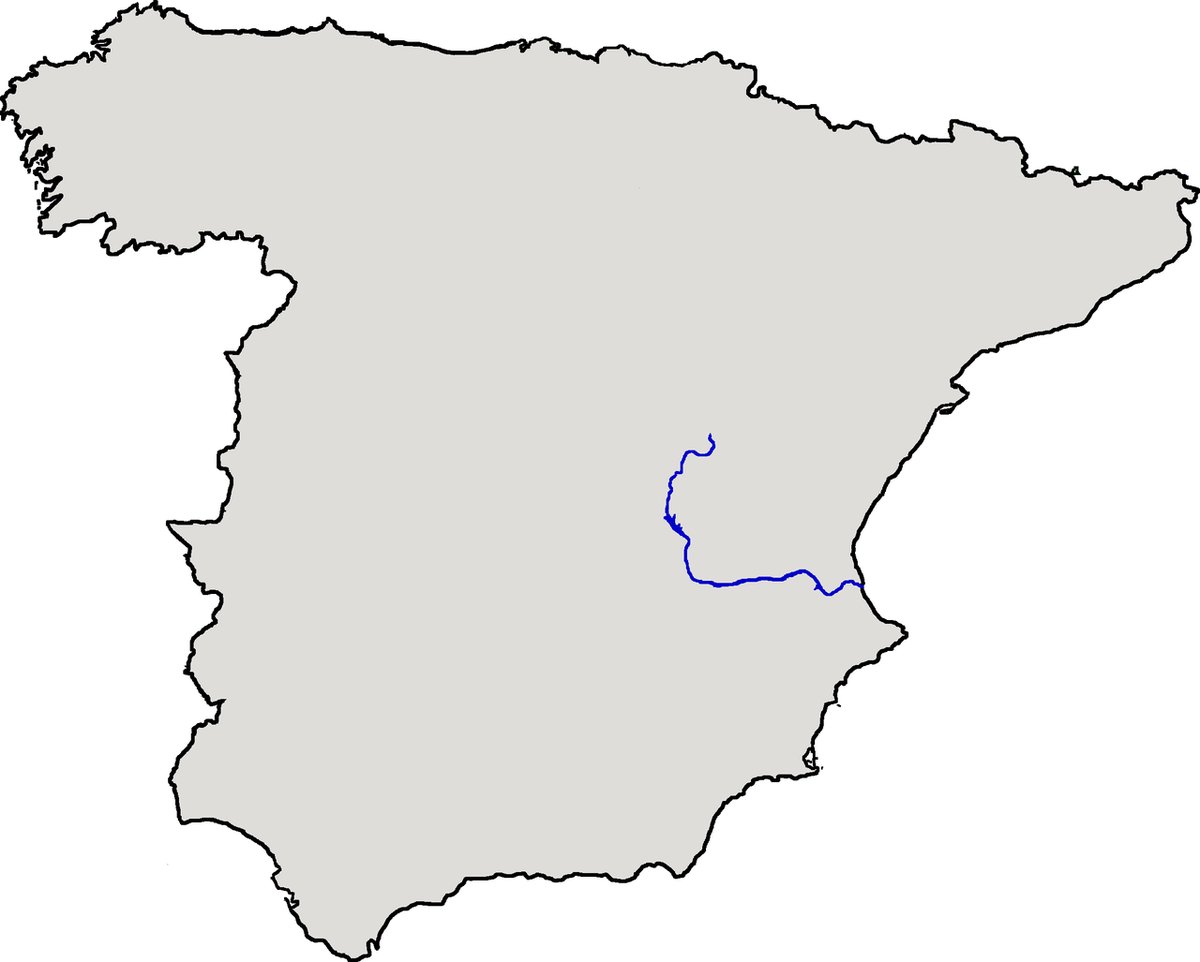
Benicull de Xúquer sits in the Ribera Baixa, relatively close to Valencia. By car, it can be reached in under an hour from the regional capital, following the main roads through the comarca before turning off towards the agricultural zone.
This is the kind of place that does not demand much planning. Arrival is straightforward. Parking is rarely a problem. Within minutes, you can be walking alongside acequias and orange groves.
Benicull de Xúquer does not compete with grand monuments or headline attractions. Its appeal lies in understanding how a small agricultural town functions, how water shapes the land, and how traditions remain part of everyday life. For travellers who are content to slow down and look around, that is more than enough.