Full Article
about Sueca
Rice capital with beaches and the International Paella Competition
Hide article Read full article
The first time many people hear the name Sueca, they assume it has something to do with Sweden. It does not. There are no flat-pack warehouses or Nordic monarchs here. What defines this town in the Ribera Baixa is rice, strong Mediterranean light and the unmistakable scent of paella cooked over wood fires, a smell that clings to your clothes long after you have left.
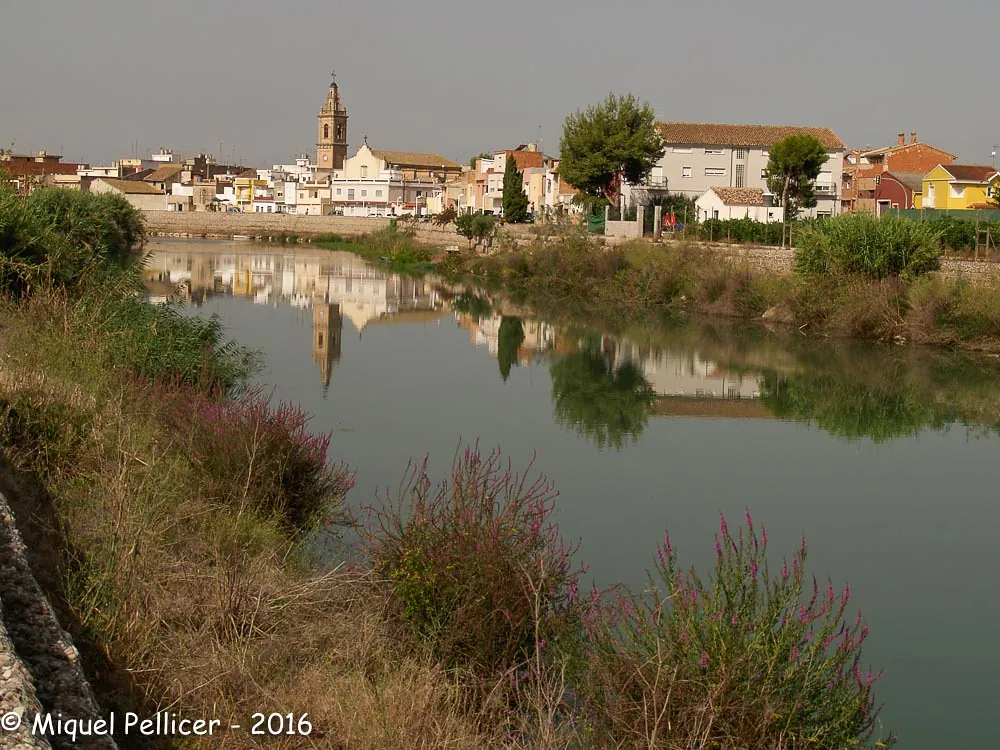
Sueca sits a short distance from Valencia city, yet its character feels rooted in fields rather than boulevards. With almost thirty thousand inhabitants, it is large enough to feel like a proper town, but tractors still pass through its streets with surprising regularity. Life here has grown around the rhythm of planting and harvesting.
Built on Rice Wealth
Sueca is not conventionally pretty. It does not present itself as a postcard scene. Instead, it draws you in slowly, the way a good conversation does. The town centre is flat, its streets relatively wide, and walking through it reveals unexpected details if you remember to look up.
At the beginning of the 20th century, when rice cultivation was bringing in good money, many local families invested in eye-catching homes. As a result, façades with gentle modernist curves appear where you might least expect them. There are colourful ceramic tiles, wrought-iron balconies and decorative flourishes that hint at quiet prosperity from another era.
You do not need a guidebook to appreciate this side of Sueca. A simple stroll through the centre is enough. Turn a corner and a splash of colour catches the eye. Another street offers a balcony with intricate ironwork. The pleasure lies in spotting these details yourself and realising that the town’s story is written into its buildings.
Paella, Taken Seriously
In Sueca, paella is not just another regional dish. It is part of local identity.
For decades the town has organised the Concurso Internacional de Paella Valenciana, usually held in autumn. During those days, Sueca changes pace. Streets are closed to traffic, wood smoke hangs in the air and teams arrive from all over the world carrying their paella pans, known as paelleras. Discussions about the exact point at which the rice is perfectly cooked can sound as intense as a cup final.
Visitors are better off observing than competing. Walk between the rows of pans, watch how the fire is managed and notice the calm concentration with which the rice is stirred. When portions begin to be served, there are often ways to taste the results through local associations or public events connected to the competition. By the end, your clothes will smell of smoke and you will have a clearer idea of why the subject is treated with such gravity here.
One small cultural warning: suggesting chorizo as an ingredient in a paella in front of someone from Sueca is still a risky move. In this part of the Comunidad Valenciana, the traditional recipe is defended with enthusiasm.
L’Albufera and the Changing Fields
Part of Sueca’s municipal area stretches into the surroundings of l’Albufera, the natural park south of Valencia. The landscape here is not the wide open lake many people picture when they think of the park. Instead, much of it consists of marjal, wetland criss-crossed by irrigation channels, and extensive rice fields.
These fields transform with the seasons. In summer they resemble a green sea, the plants moving gently in the breeze. When harvest time arrives, the scene turns golden and the scent of cut straw lingers in the air.
One of the simplest ways to explore this environment is by bicycle along the paths leading towards el Perelló. The routes are mostly straight, flanked by irrigation ditches and open farmland. It is an easy landscape to navigate, with big skies and long horizons.
Towards sunset, birds become part of the spectacle. Herons stand in the shallows, gulls wheel overhead and flocks cross the fields in shifting formations. It is common to encounter someone with binoculars who is more than willing to share detailed knowledge about the local birdlife.
Practicalities matter here. Water, a hat and protection against mosquitoes are advisable. The breeze across the marjal can be deceptive, and the sun is stronger than it first appears.
Gunpowder, Processions and Village Life
Festivals in Sueca combine religious tradition, gunpowder and the social life of a farming town. In summer, celebrations dedicated to the patron saints Abdón y Senén and to San Pedro bring processions, music in the streets and a noticeable buzz in the centre.
At other times of the year there are encierros, where bulls run through enclosed streets, toros de fuego, a fiery spectacle involving fireworks attached to a bull-shaped frame, and other popular events that fill the squares. Noise is part of the experience.
If you happen to visit during Semana Santa, Holy Week, the contrast is striking. Processions move through the streets in near silence, creating a solemn atmosphere. Soon after, the traditional despertà returns the town to its usual volume, with firecrackers set off early in the morning to wake the neighbourhood. In the Comunidad Valenciana, the day often begins loudly.
When to Go and What to Know
Autumn is an appealing time to visit. The rice fields shift in colour and the Concurso Internacional de Paella Valenciana usually takes place. Spring offers milder temperatures, making it a good season for exploring the marjal before the intense heat sets in. In summer, many people combine time in Sueca with a visit to the beach at el Perelló or the nearby area of la Devesa.
If you plan to walk along dirt tracks, closed shoes are sensible. A degree of patience with mosquitoes is also useful. They are simply part of the landscape.
As for the town’s name, some say it derives from the Arabic word sūayqa, linked to the idea of a small market. It may not transform your understanding of the place, but it is a detail that tends to surface in conversation, often while someone once again brings the discussion back to rice.
Sueca does not dazzle at first glance. Spend a few hours among its fields, breathe in the wood smoke from a paella cooked properly and listen to locals debate the finer points of their most famous dish, and the place begins to make sense. Afterwards, any improvised paella elsewhere may taste slightly out of place. In Sueca, you understand why.