Full Article
about Puebla de San Miguel
The highest municipality in the province, home to the Natural Park and monumental trees.
Hide article Read full article
A small village above the valleys
Arriving in Puebla de San Miguel starts with a practical detail: the car. The village is small, its streets narrow, so most visitors leave their vehicle at the entrance and continue on foot. It does not take long to get your bearings. In ten or fifteen minutes you can cross the whole place.
This is the upper part of the Rincón de Ademuz, a mountainous enclave of the Comunidad Valenciana, at around 1,100 metres above sea level. The population sits at just over fifty people. That sense of scale shapes everything. There are no long avenues or large squares, just short slopes, stone houses and the occasional corner that opens out to the surrounding sierra.
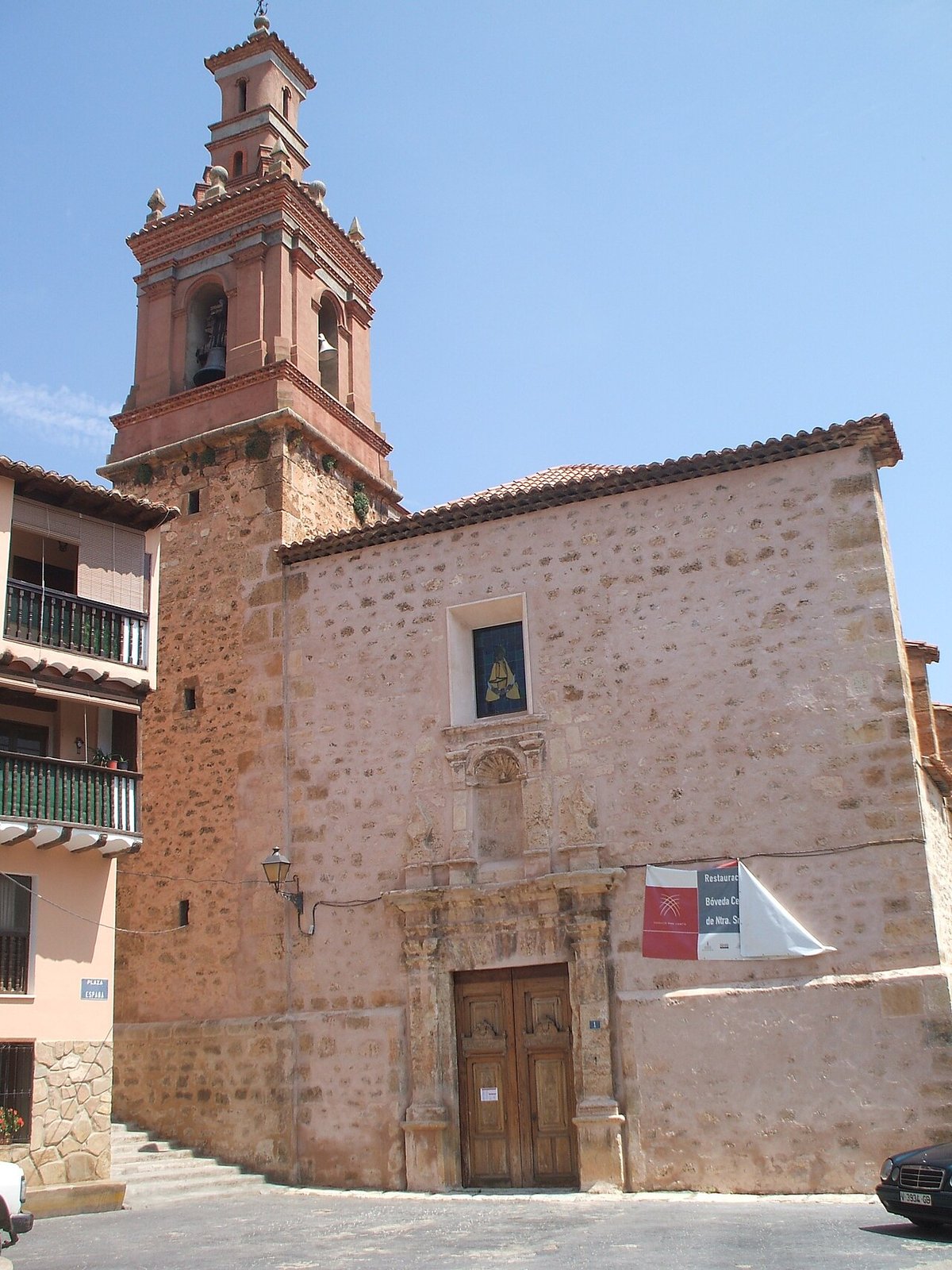
At the centre stands the parish church of San Miguel Arcángel. It is simple in both appearance and role, more a building used by the community than a monument that demands long visits. The village itself works in a similar way. It is not designed for sightseeing in the usual sense, but for moving through slowly and then heading outwards.
The landscape shifts with the seasons. In winter, snow often appears on the nearby peaks. Autumn brings darker tones across the hillsides, with ochre colours taking over. Yet the main interest lies beyond the built-up area rather than within it.
A place to walk, not to rush
Puebla de San Miguel does not offer museums or major landmarks that justify a long, structured itinerary. The plan here is straightforward. Walk through the streets for a while, pause at a natural viewpoint, then leave the village behind and step into the surrounding countryside.
The higher parts of the village are particularly useful for understanding the setting. From there, the wider landscape of the Rincón de Ademuz becomes clear: broad slopes, extensive pine forests and a noticeable quiet. There is space in every direction, and very little interruption.
That quiet is part of the appeal. Anyone expecting busy streets or a full programme of sights will not find it here. The village suits those who prefer simple surroundings and time outdoors, without the need for constant activity.
Into the pine forest
The main activity in Puebla de San Miguel is walking. Pine forests surround the village on all sides, and within a few minutes on foot you are among the trees. From there, forest tracks and footpaths lead further out towards the Sierra de Javalambre and areas of the Montes Universales.
Some routes are gentle and easy to follow. Others involve steeper sections and require more effort. The terrain varies enough to suit different levels, but the overall experience remains the same: open air, forest cover and long stretches without interruption.
Autumn brings a noticeable change in use of the land. People come in search of mushrooms, particularly níscalos when conditions are right and the year has been wet. It is important to be informed about local rules on collecting and, above all, to be certain about what is picked.
Early hours offer a different view of the area. Birds of prey can often be seen gliding over the slopes if you set out early enough. Some smaller wildlife is also active at dawn or towards dusk, although it is less common to encounter it close to the village itself.
Even in summer, temperatures drop once the sun goes down. Anyone planning to spend several hours walking should come prepared with water and some food. There are few options for improvising once you are out in the forest.
Local celebrations
The calendar in Puebla de San Miguel follows a simple rhythm, closely tied to the community. At the end of September, the village celebrates festivities dedicated to San Miguel Arcángel. These usually combine religious events with small, local gatherings.
Spring brings another tradition in the form of a romería, a pilgrimage-like walk towards hermitages in the surrounding area. These occasions are not organised as attractions for visitors. They are mainly moments for residents and for families who return to the village for a few days.
Both types of celebration reflect the scale of the place. They are modest, rooted in local life and shaped by the people who live there rather than by outside demand.
Getting there and when to go
Reaching Puebla de San Miguel from Valencia involves heading first towards Requena along the A‑3, then continuing into the Rincón de Ademuz via secondary roads. The final stretch passes through mountain terrain with plenty of bends. The journey usually takes around two hours, sometimes a little longer depending on conditions.
Season matters here. The most suitable period for walking tends to run from spring through to autumn, when the weather is milder and the paths are more accessible. Winter can be much colder, and ice or snow in the surrounding area is not unusual.
A clear idea of what to expect makes all the difference. Puebla de San Miguel is a very small and quiet village. It works well for those who enjoy walking in the mountains and do not need much else. Anyone looking for a lively atmosphere or a long list of attractions will not find it here.