Full Article
about Vallanca
Mountain village in the Rincón de Ademuz with traditional architecture and fountains.
Hide article Read full article
A village shaped by height and stillness
At four in the afternoon, sunlight slips into Calle Mayor in Vallanca, filtering between stone walls and laying a golden sheen across the façades. The quiet is almost complete. Now and then there is the crack of an old roof tile adjusting to the change in temperature, or the song of a blackbird hidden somewhere along the rooftops. In a village with little more than a hundred residents, small sounds travel far.
Vallanca stands at almost 950 metres above sea level, in the heart of the Rincón de Ademuz. Time here is written into the stone itself. There have been no sweeping renovations, no streets redesigned with tourism in mind. Houses lean into one another. Slopes climb towards the church and then fall away again to the edge of the village, where vegetable plots and fields begin.
The landscape around Vallanca belongs to the administrative curiosity that is the Rincón de Ademuz, a Valencian enclave surrounded by the provinces of Cuenca and Teruel. It feels set apart. To the north rise ranges linked to the Montes Universales. To the south, hills continue towards the Serranía de Cuenca. On clear days the colours shift with the hours: bluish grey in the morning, then drier, more ochre tones as the sun drops behind the mountains.
Stone streets and houses built for winter
The historic centre is small and easy to cover on foot, though it rewards a slow pace. Many houses are built from the pale local limestone. Thick walls and relatively small windows are a practical response to winters that tend to bite hard at this altitude. Sloping roofs with traditional curved tiles and the occasional wrought-iron balcony appear again and again as you move through the lanes.
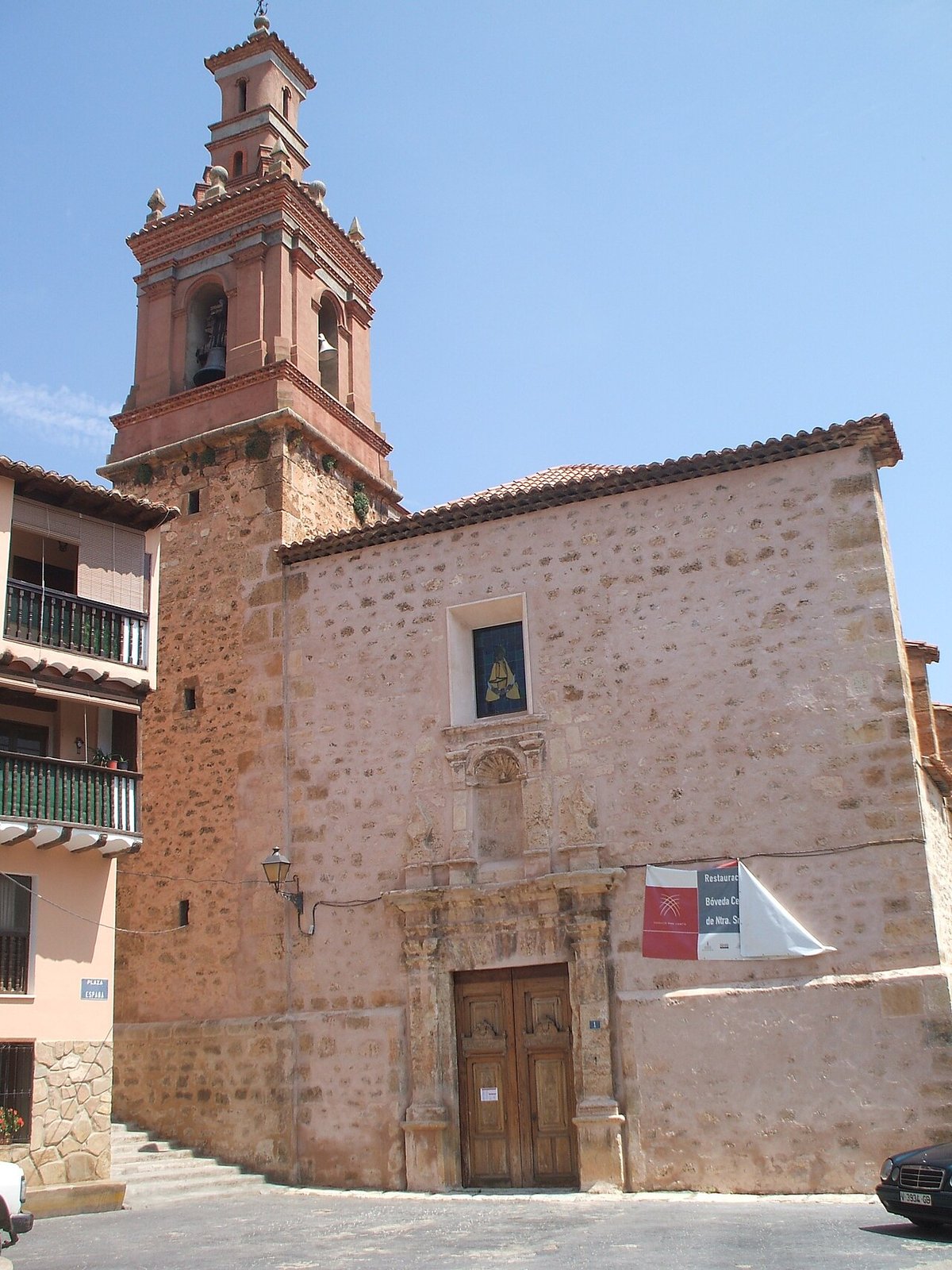
At the centre stands the parish church, dedicated to the Asunción de Nuestra Señora. Its façade is sober, left in bare stone. The bell tower, modest in proportion, still marks the hours on calm days. Around it are small squares and corners where chairs are often set outside front doors when the weather allows.
Higher streets open out to views over the surrounding countryside. Small cereal plots lie close to the village, alongside vegetable gardens and patches of pine forest that begin almost where the last houses end. The transition from street to field is quick. A few steps take you from stone paving to open land.
Paths into the hills
Several tracks lead out from Vallanca into the surrounding hills. Some are signposted and follow old forestry routes. Others are paths used for decades to reach orchards, livestock pens or grazing areas. The usual company on these walks comes in the form of Scots pine and juniper, both characteristic trees in this part of the Rincón de Ademuz.
In nearby ravines the terrain shifts. Limestone walls rise up, and small channels appear where water runs only at certain times of year. After rainfall or snowmelt, these places feel more animated, the ground darker and the air cooler.
Autumn carries a distinct scent through these pinewoods: damp earth, resin and dry leaves. Mushrooms emerge in shadier areas during this season. In some hills their collection is regulated or restricted, so it is worth checking the rules before arriving with a basket.
Anyone who walks slowly and occasionally looks up may spot large birds of prey riding the air currents that sweep along the nearby sierras. They circle above the ridgelines, making the most of the thermals that rise from the slopes.
Mountain cooking at home
Cooking in Vallanca remains closely tied to what the surrounding land provides. Roast lamb appears at celebrations or family gatherings, prepared slowly. When colder weather sets in, substantial stews take centre stage: pots of pulses, seasonal game, or migas made to share. Migas, a traditional Iberian dish based on fried breadcrumbs, are common in inland areas and suited to cooler days.
This is not a destination built around restaurants or a visitor-focused food scene. Meals are domestic, rooted in recipes handed down from one generation to the next and brought out when families come together. The rhythm of cooking follows the rhythm of the year.
Moments that bring everyone back
August usually brings the main fiesta, celebrated around the feast of the Asunción. At that time the village changes noticeably. Many families who live elsewhere return, and the streets stay lively into the evening. Religious events sit alongside communal meals, music and reunions between neighbours who may not have seen one another for months.
Semana Santa, or Holy Week, is marked by simple processions through the narrow streets. Traditional songs accompany them, and many residents still know the words. Winter festivities are quieter, closely tied to family life rather than public celebration.
Reaching Vallanca and choosing the season
From Valencia, the usual approach is to take the A‑3 towards the area of Requena or Utiel, then continue on secondary roads into the Rincón de Ademuz. The final stretch runs between hills and small villages. The roads include bends and narrower sections, so a steady pace is sensible.
Spring and early autumn are often the most comfortable times for walking in the surrounding countryside. Summer, despite Vallanca’s location in the Comunidad Valenciana, can bring cool nights thanks to the altitude. Winter is another matter altogether. The thick walls and small windows of the houses make clear that cold weather is taken seriously here.
Vallanca does not present itself as a showpiece. Its appeal lies in continuity: stone streets, cultivated plots, pine-covered slopes and a community that gathers at certain moments of the year. The light changes across the day, the bell tower keeps time, and beyond the last house the paths continue into the hills.

