Full Article
about Beniflá
Small rural settlement on the road inland through the Safor
Hide article Read full article
Early in the day, before the sun settles fully over La Safor, Beniflá is almost silent. The quiet is broken now and then by a slow-moving car or the steady sound of water running through a nearby acequia, one of the traditional irrigation channels that shape this part of eastern Spain. At the centre stands the 16th-century church of San Jaime, its stone bell tower rising above the low houses and visible from nearly every corner of the village.
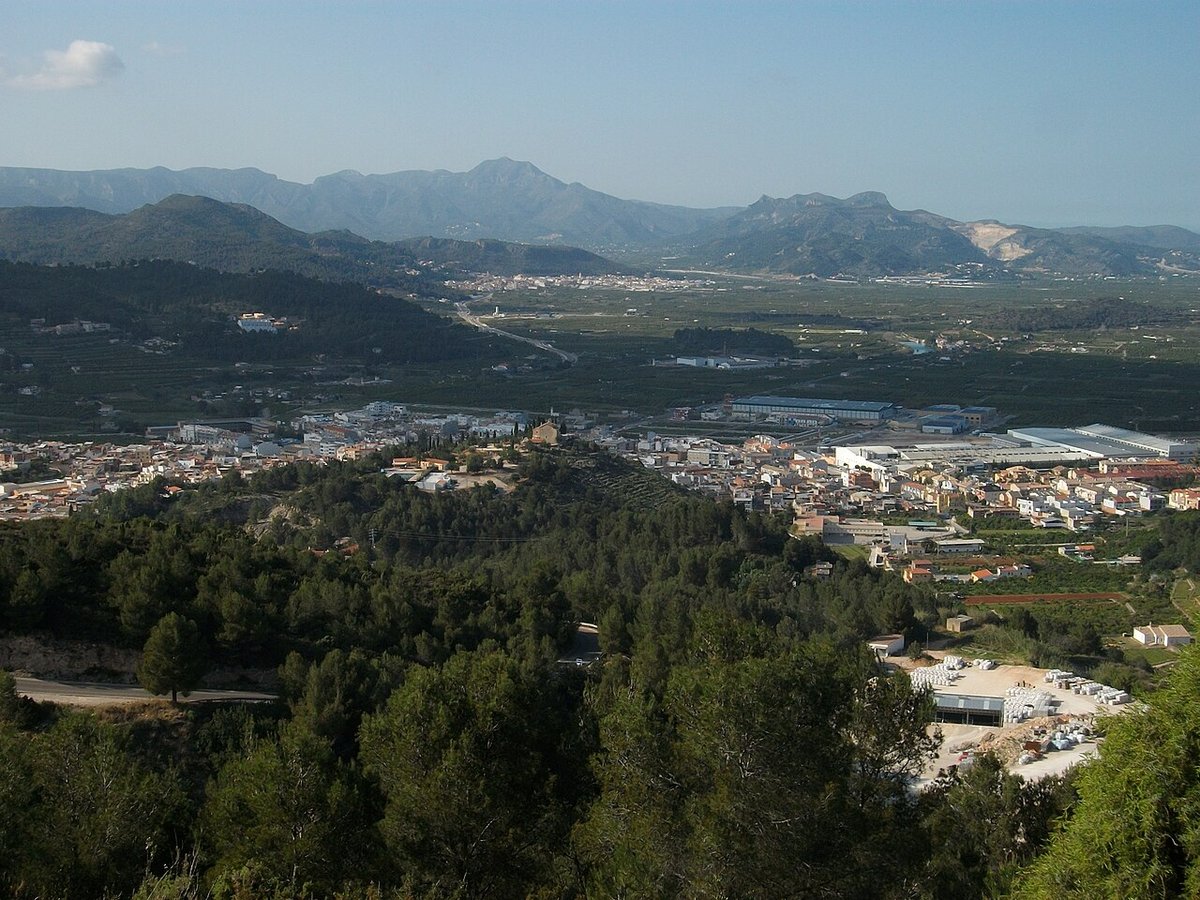
Beniflá sits in the comarca of La Safor, about 65 kilometres from Valencia and very close to Gandia. Around the built-up area stretches a flat agricultural plain threaded with acequias. In spring, when the orange trees blossom, the scent of azahar drifts along the paths and can reach the streets if the breeze comes in from the orchards.
The surrounding fields form a neat patchwork of citrus trees, mandarins, oranges and some lemon trees. Small dirt tracks and irrigation channels divide the plots, carrying water much as they have done for centuries. It is common to see residents out early, checking sluice gates or working among the trees before the heat begins to build.
A small, steady centre
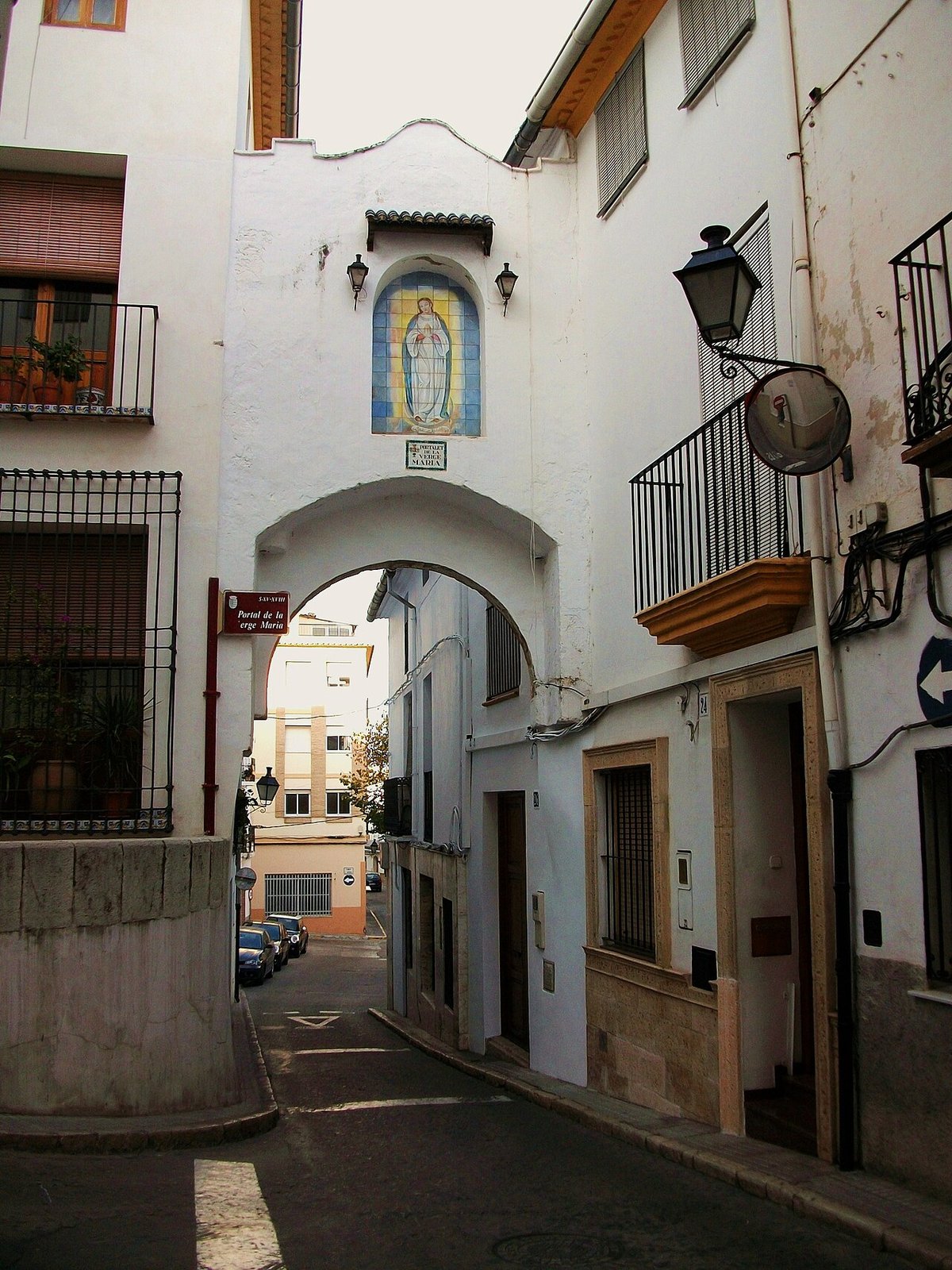
Beniflá is easy to walk through in a short time. The streets are short, sometimes slightly curved, and open onto small squares where daily life remains visible. Many houses still have wooden doorways, iron grilles and whitewashed façades that reflect the strong midday light.
In some small courtyards, pots of bougainvillea or even young orange trees add a touch of colour. These are subtle details that break up the uniform white walls. During the summer, shutters are often half closed in the middle of the day, when the heat intensifies and activity shifts indoors.
The parish church of San Jaime anchors the centre of the village. Its appearance is restrained, in keeping with the scale of the place. Around it lies a small square where, towards evening, neighbours can often be seen sitting and talking as the temperature eases.
Paths through orchards and water channels
What defines Beniflá most clearly lies just beyond its streets. A short walk out of the village leads straight into agricultural paths that cut through citrus orchards.
The acequias are still part of everyday life here. Water moves slowly along concrete or stone edges, feeding the nearby plots. This irrigation system, inherited from centuries past, continues to organise much of the work in the fields.
Walking or cycling along these paths gives a direct sense of how the huerta of La Safor functions. These are not signposted routes or long-distance trails, but local tracks linking plots and neighbouring villages. The landscape is open, with little shade between the rows of trees.
In summer, it is best to head out early. By mid-morning the sun becomes strong, and the lack of cover in the fields makes the heat feel more intense.
An agricultural rhythm and home cooking
Life in Beniflá remains closely tied to the agricultural calendar. Citrus harvesting occupies much of the winter, while spring is marked by the flowering of the orange trees and the strong scent of azahar.
At home, cooking tends to revolve around what the land provides. Rice dishes, seasonal vegetables and simple stews are part of everyday meals. Citrus fruits appear both in desserts and simply on the table, picked straight from the tree when in season.
This connection between land and kitchen shapes the pace of daily life, with the fields influencing what is eaten and when.
Local festivities and familiar faces
The patron saint celebrations in honour of San Jaime usually take place in August. During those days, the rhythm of the village changes. There are processions, music in the square and activities organised by residents themselves.
It is not an event designed to draw large crowds from outside. Instead, it feels like a gathering of the village and those who return during the summer. The atmosphere reflects that closeness: many faces are familiar, and conversations move easily from one doorway to another as night falls.
When to go
Spring and autumn are generally the most pleasant times to explore Beniflá and its surroundings. In spring, the scent of orange blossom fills the orchards and the fields take on a more vivid green. In autumn, after the heat of summer, the landscape shifts in tone and the air becomes fresher.
July and August can be hot, especially if walking along the agricultural paths at midday. During those months, it makes more sense to head out early in the morning or wait until late afternoon.
From Valencia, the journey by car takes a little over an hour, usually following the A-7 towards Gandia before turning onto regional roads. The village itself is small and can be covered quickly, but it is worth extending the walk into the surrounding paths. That is where the character of the place becomes clear, among acequias, damp soil and rows of orange trees stretching across the plain.