Full Article
about Gandia
Major tourist destination and ducal seat of the Borja, with a long beach and notable heritage.
Hide article Read full article
A place that reveals itself slowly
Gandia is not somewhere that gives itself away at a glance. Straight avenues, chain shops and steady traffic can blur the first impression. The past is there, but it requires a bit of attention to find it. The key is to see that Gandia moves at two different rhythms. One belongs to the inland town, which wakes to the bells of the Colegiata. The other belongs to the beach, which only stirs once the sun has warmed the sand.
Between the two stretches the huerta of La Safor, still dotted with orange trees, and the memory of a family that turned this city into an unexpected piece of the European Renaissance. That layered identity is what holds Gandia together.
The dukedom and the Borja family
At the end of the 14th century, the Crown of Aragon created the Duchy of Gandia and granted it to Alfons d’Aragó, a leading figure in the Valencian nobility. That fertile plain beside the Serpis would later pass into the hands of the Borja family. Under their influence, Gandia shifted from being a mainly agricultural town to part of a political network that extended as far as Rome.
The Palau Ducal is still the best place to grasp that transformation. Built over an earlier defensive structure from the Islamic period, the palace grew with each generation. Its spaces reflect changing tastes and ambitions over time. The Galería Dorada, decorated in the 18th century with paintings that imitate marble and sculpted reliefs, captures the late Baroque style favoured by Valencian nobility, where visual effect mattered more than costly materials.
Throughout the palace, the figure of Francisco de Borja appears again and again. He was the fourth Duke of Gandia before becoming a Jesuit. He lived here before giving up his titles and entering the Society of Jesus. Local tradition often recalls the moment when, after being widowed, he chose to leave courtly life behind. Beyond the story itself, his presence left a deep mark on the city’s identity.
From fideuà to quiet kitchens
Food in Gandia is shaped more by the port than by the palace. Fideuà is the dish most closely associated with the city. It began on fishing boats that set out from the Grau, where short noodles were cooked in fish stock in a wide pan similar to those used for paella. It was a practical solution when rice was scarce at sea. Over time, it became a defining local speciality, and each year a competition dedicated to fideuà takes place in the port area.
Further inland, the pace changes. In family homes, cooking follows a different rhythm. Arròs passejat, a local version of arròs al forn, is typically served after a cocido. It is baked with chickpeas, pork and cured sausage, and tends to appear when families gather around the table.
For something sweet, there is coca de llanda. This moist sponge cake, baked in a metal tray, is still easy to find in bakeries in the old quarter. These dishes sit comfortably alongside one another, reflecting the divide between coast and interior that runs through Gandia.
A city split in two
During the 19th century, the port began to expand thanks to orange exports and the arrival of the railway from inland areas. Gandia then faced a practical reality: its historic centre stood too far from the sea. Between the two lay farmland, and over time a long avenue emerged, linking town and beach.
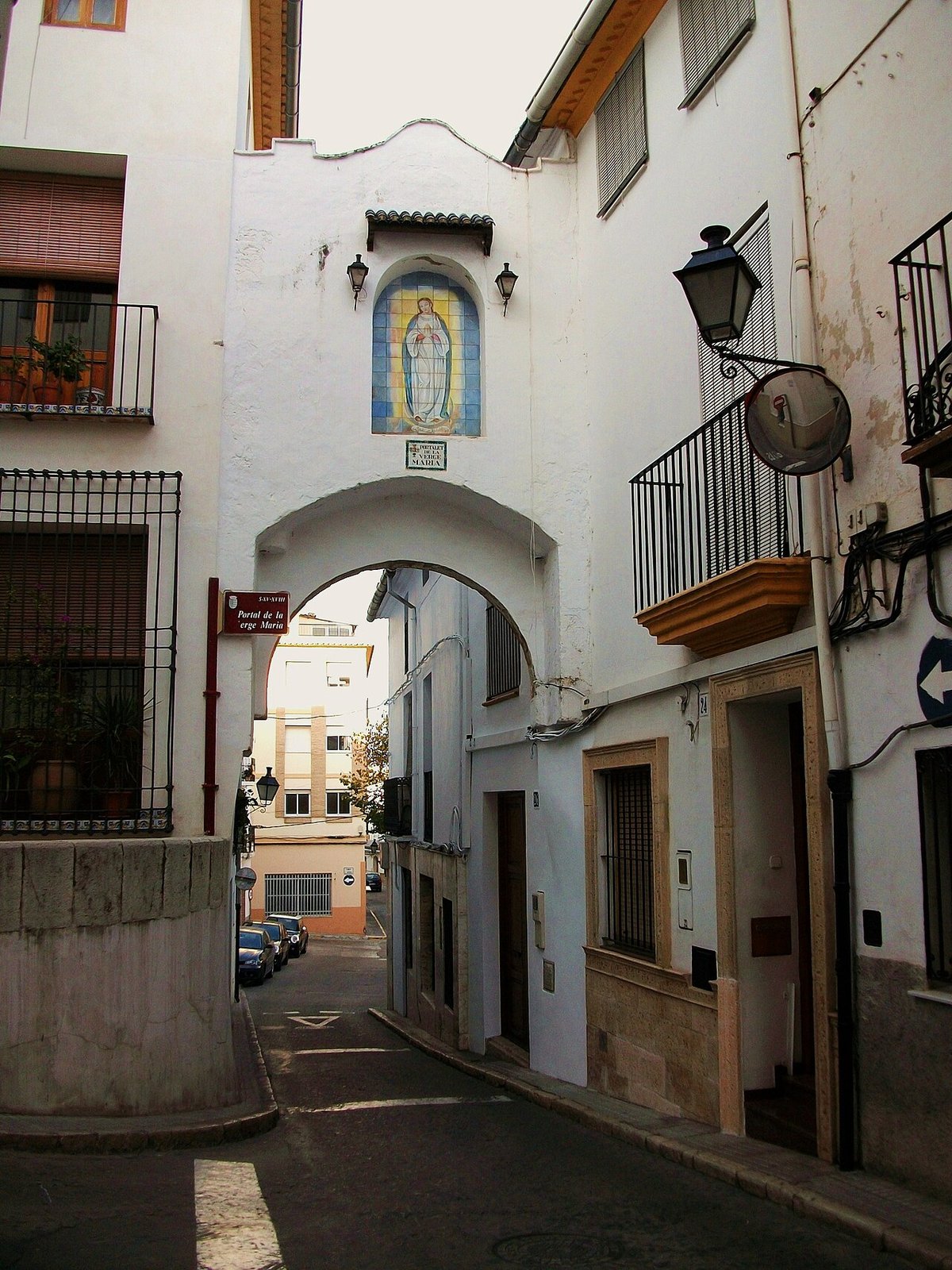
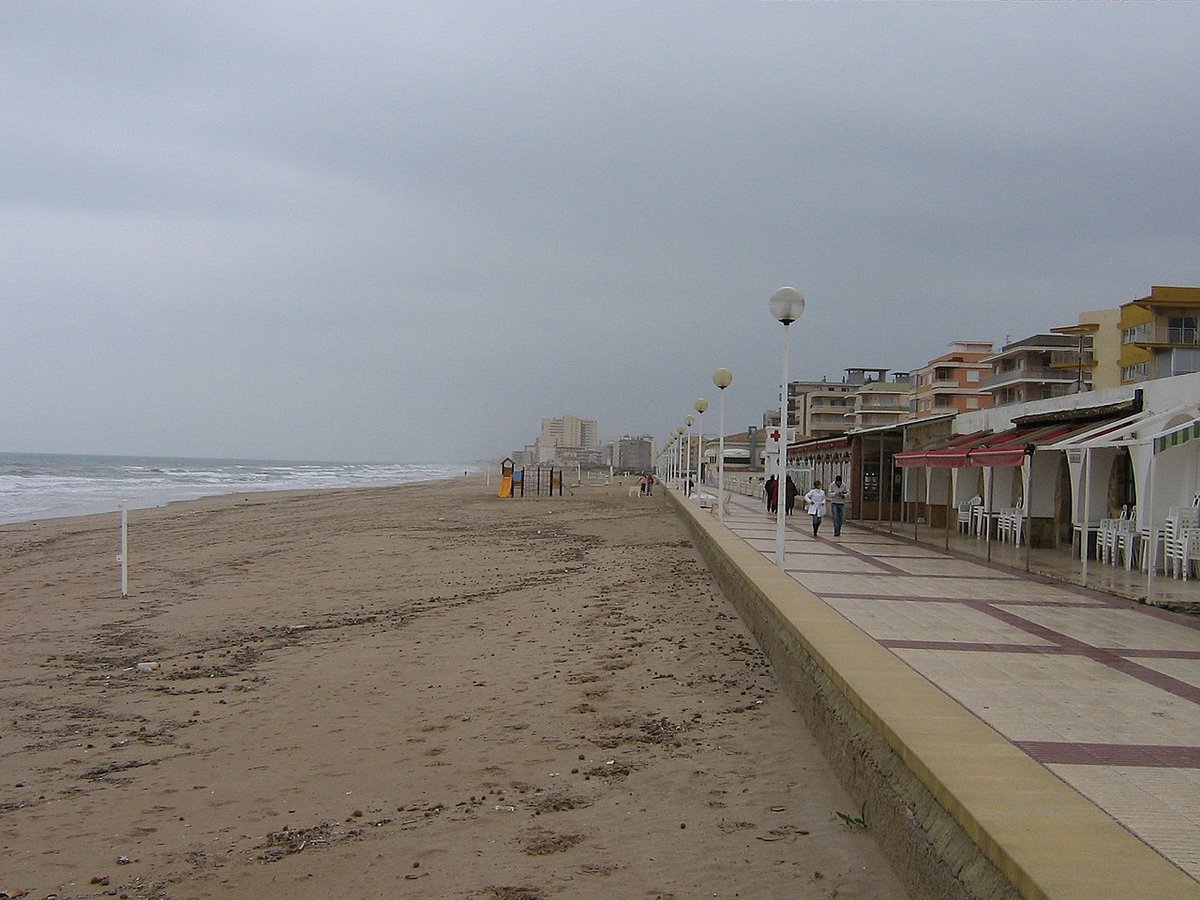
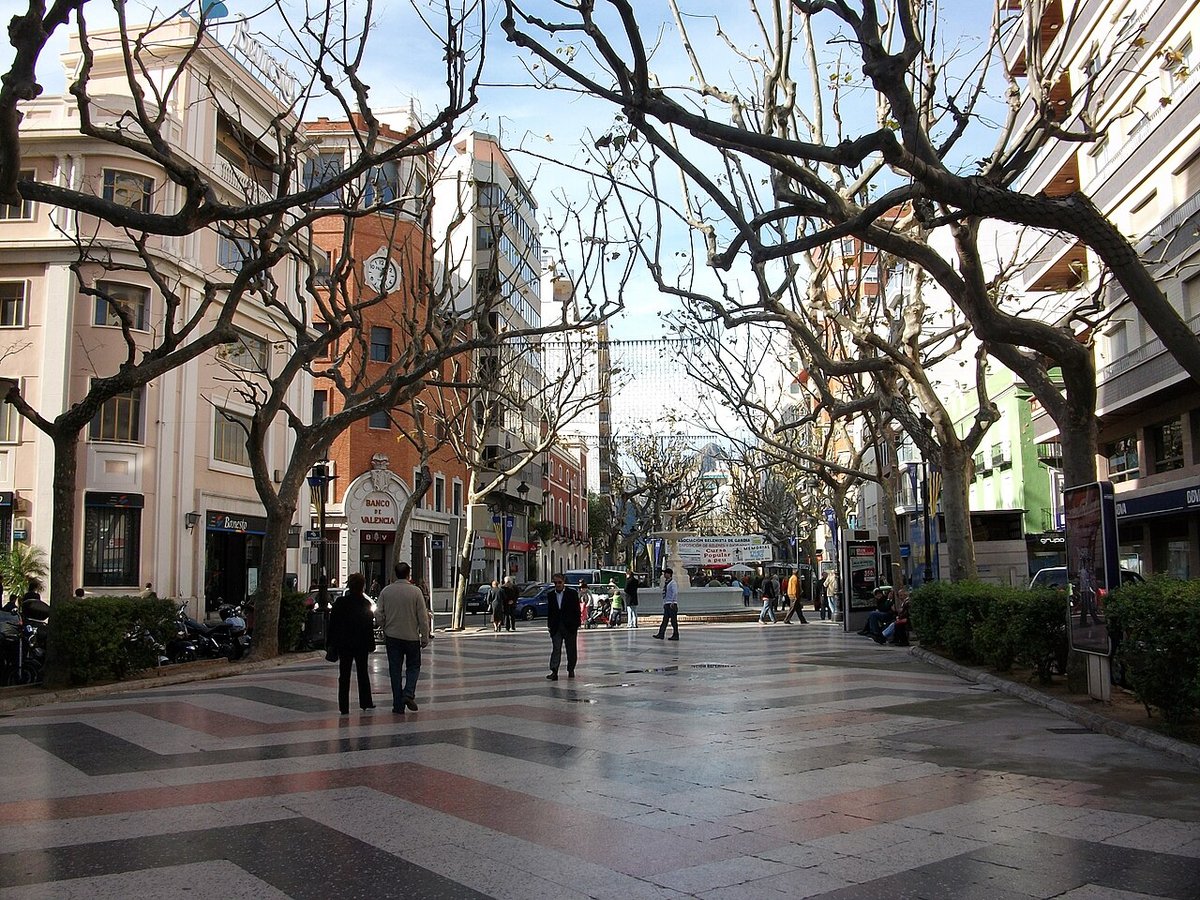
That separation remains clear today. The old town, centred around the Colegiata de Santa María and Calle Mayor, keeps a more everyday feel throughout the year. The beach, on the other hand, gathers most of the summer activity. When winter arrives, the seafront promenade quietens and the atmosphere shifts, almost as if it were a different place.
During Semana Santa, or Holy Week, something striking happens. The historic centre is transformed as processions move through the narrow streets around the Colegiata. These processions are deeply rooted in La Safor and are known for their restrained tone, at times almost silent. The contrast with the livelier summer months is hard to miss.
Reading the landscape from the Mondúver
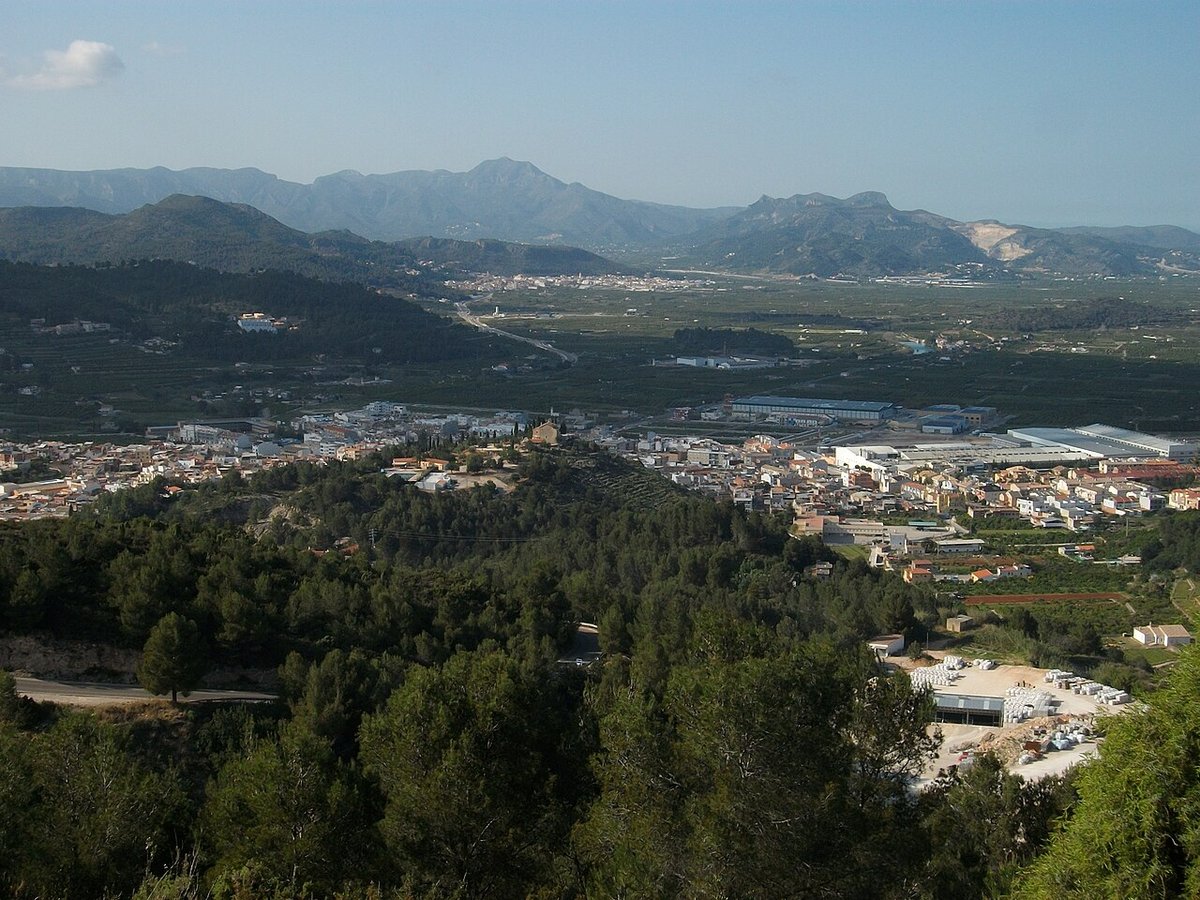
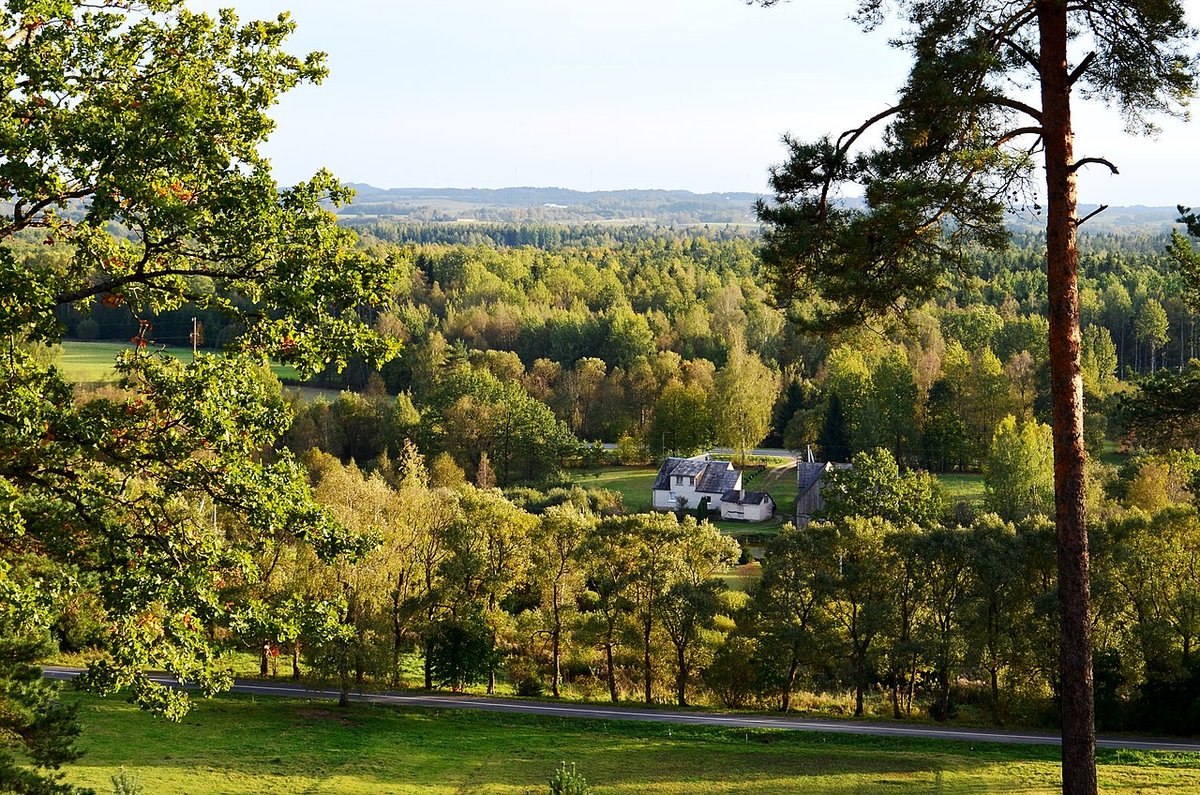
The surrounding landscape explains much about Gandia’s position. The Mondúver mountain rises above the region, and from its summit the layout of the area becomes clear. The sea, the marjal wetlands and the cultivated huerta form a connected system.
From this vantage point, the coastline stretches straight towards the north, while the Serpis valley opens a route inland. It is a simple geography, but it helps explain how Gandia developed between agriculture, trade and the coast.
In the same mountain range lies the Cova del Parpalló, one of the most important Palaeolithic sites in the western Mediterranean. Thousands of engraved plaques depicting animals were discovered there. The cave itself is not usually open to visitors for conservation reasons, but a nearby interpretation centre provides context and explains the scale of the findings.
Getting around and where to stay
The historic centre is easy to explore on foot. The Palau Ducal, the Colegiata and the market are all within a short walk of one another. To reach the beach, there is a train connecting the two areas, or the option of travelling by car, although parking near the promenade in summer can take some patience.
Staying in the centre has a clear advantage: everything is close at hand, and outside the high season the atmosphere is calmer. The beach, by contrast, concentrates most of the tourist accommodation and much of the nightlife when the warmer months arrive.
Gandia works best when both sides are taken into account. The inland streets, the orchard landscape and the coastline each move to their own rhythm, but together they form a place that only makes sense when seen as a whole.