Full Article
about La Font d'En Carròs
Municipality with a ruined castle above the town and historic walls.
Hide article Read full article
Maps are slightly misleading. They show La Font d'En Carròs just a few kilometres from the sea, yet they do not warn you that the stretch between is thick with orange groves and orange blossom that fill the air and make you forget the Mediterranean is so close. You might arrive with the beach in mind and end up in a village where the scent of the huerta, the cultivated market gardens and orchards typical of this part of Valencia, follows you for most of the year.
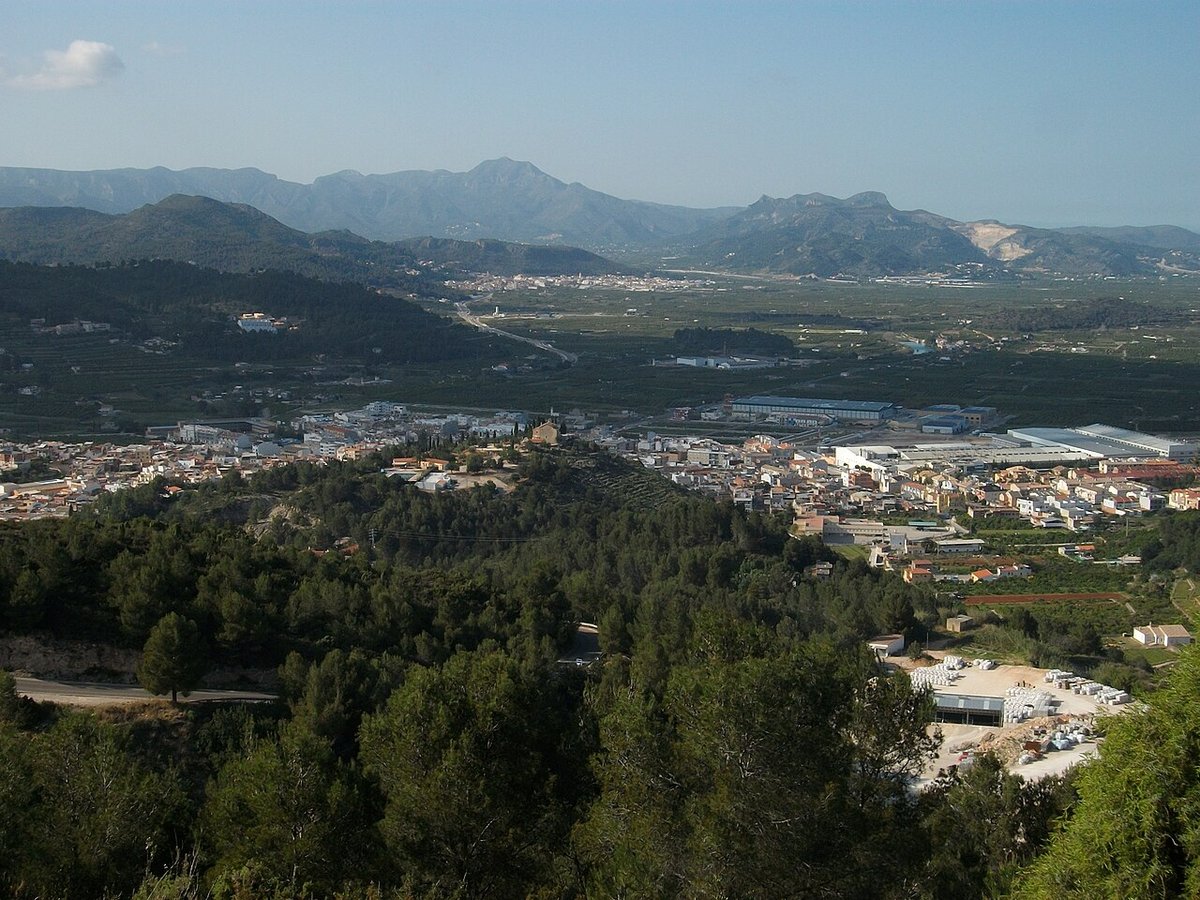
La Font d'En Carròs sits in the Safor comarca, in the Comunidad Valenciana. The sea is nearby, but the agricultural landscape sets the tone. Fields of citrus trees spread out around the town, and daily life still feels tied to the land.
The castle that survived everything except earthquakes
Castell del Rebollet stands on a hill above the village. It has the air of something that withstood almost anything thrown at it. Built in the 15th century, it saw wars, looting and centuries of neglect. What finally reduced it to ruins were several earthquakes at the end of the 16th century.
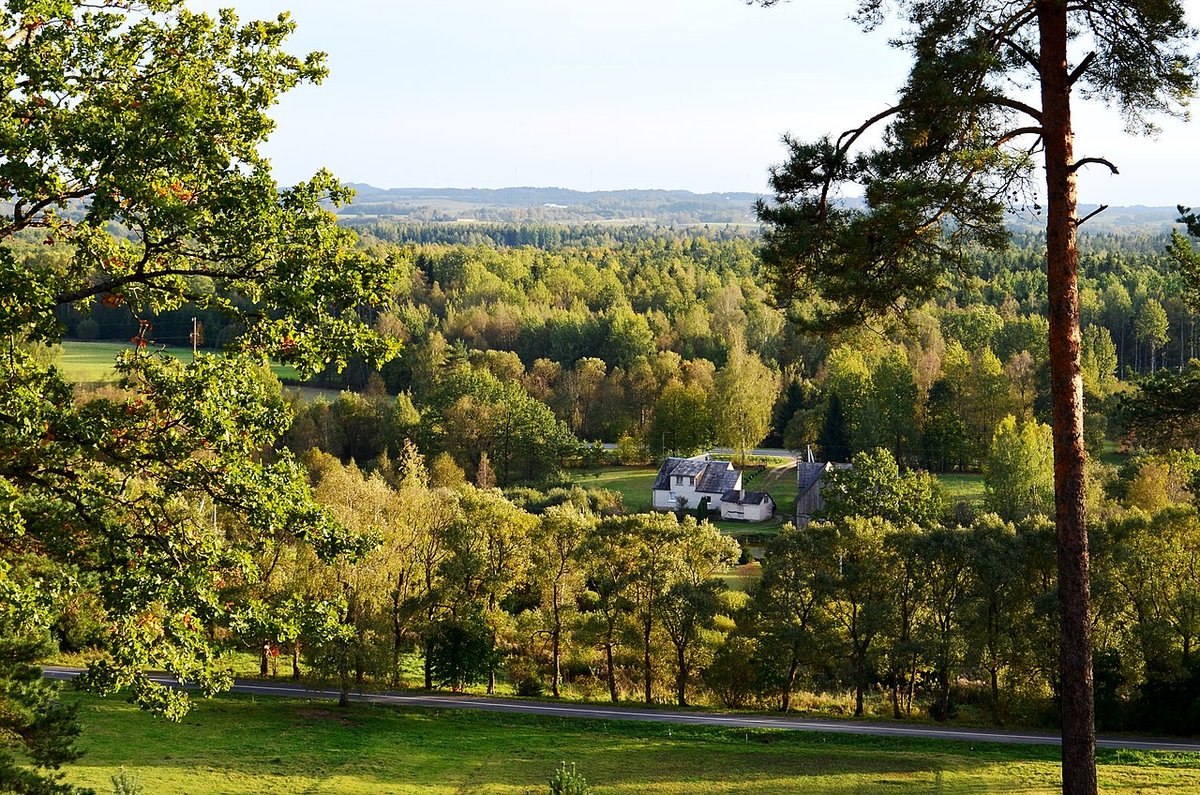
The walk up the hill is short but steep enough to make itself known. As you climb, the houses fall away and the view opens out. Turn around and you see orange groves stretching outwards, almost reaching the coast.
At the top, the remains are fragmentary. Loose walls, parts of towers, open landscape all around. This is the kind of site that relies more on imagination than on explanatory panels. You have to piece the story together yourself, filling in gaps between what is left standing and what time has taken.
From this height the layout of the Safor landscape becomes clear. Agricultural plots, the cluster of the village, the line where land begins to tilt towards the sea. The castle may be in ruins, but the vantage point still explains a great deal about how the area fits together.
A town of ceramic saints
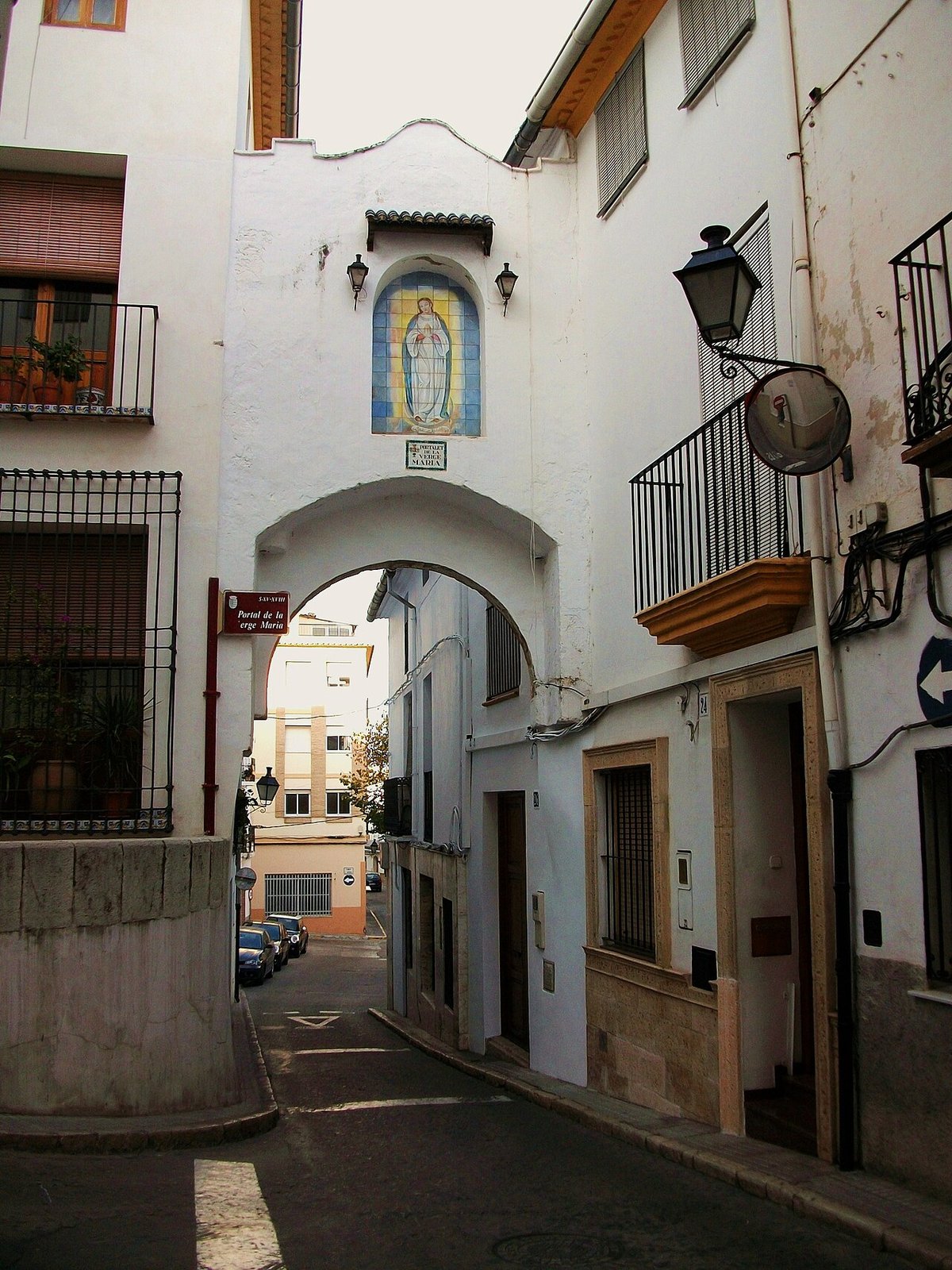
Back down in the streets, another detail catches the eye. La Font d'En Carròs is full of ceramic panels with religious images fixed to building façades. Not just a handful here and there, but hundreds. Walk along an ordinary street and above a doorway or on a corner wall you will spot another glazed tile depicting a saint or sacred scene.
In many parts of Spain these ceramic panels are part of a long tradition of popular devotion, and here they seem to be everywhere. They turn a simple stroll into a kind of informal treasure hunt. One appears above a lintel, another tucked into a side street, then another at a crossroads.
After noticing dozens, it becomes impossible not to start counting. Sooner or later, though, attention shifts from tiles to lunch.
Arroz al horno, literally oven-baked rice, is typical in this area. It is a hearty dish usually associated with Sundays or family gatherings rather than an ordinary weekday meal. Prepared in the traditional way, without modern twists, it carries the sort of flavour that evokes long meals and crowded tables. In a town like this, food is closely tied to custom and occasion.
A path through the huerta
Beyond the streets, a signposted path runs through the municipal area towards La Mola and the surrounding fields. It begins among olive trees, carob trees and irrigation channels that still carry water as they have done for generations.
The landscape here is agricultural above all else. Terraced plots step gently across the land. Irrigation ditches trace careful lines. People can be seen tending the soil. It is the kind of walk where there is no grand monument at the end, just a gradual immersion in the rhythms of cultivation.
Some of the olive trees appear ancient. Local stories suggest that a few may date back several centuries, with the possibility that certain specimens were already standing in the Arab period. Whether or not every detail is exact, the thick, twisted trunks give the impression of trees that have watched half a millennium pass without much fuss.
This path does not try to impress. It simply threads through working land, showing how closely the village remains connected to its orchards and fields.
When the Porrat arrives
Visit at the end of January and there is a good chance of encountering the Porrat de Sant Antoni. A porrat is a traditional fair held in honour of a saint, common in the Safor region, and La Font d'En Carròs keeps a particularly lively version.
Stalls fill the streets. Bonfires are lit. Traditional music drifts through the town, with dulzainas, a type of double-reed instrument, providing a distinctive soundtrack. People gather outside at all hours, and the atmosphere feels rooted in community rather than spectacle.
Neighbours set up tables. Groups cluster around the fire. The sense is less of an organised event and more of a shared celebration that everyone understands instinctively.
During the festivities it is common to taste a rotllo d’aguardent, a ring-shaped cake flavoured with aguardiente, a strong spirit. Freshly made, it is offered as something to remember the town by. The flavours are simple and direct, like the festival itself.
What stays with you
La Font d'En Carròs does not lend itself to a rapid checklist approach. This is not a place for monument, photo, and on to the next stop. The weight of the experience lies elsewhere, in the agricultural surroundings, the spontaneous conversations, the blend of working village and nearby coast.
The castle may be ruined, yet from its hilltop the structure of the Safor landscape becomes easy to grasp. Descend again and you return to narrow streets, ceramic saints fixed to walls, and the scent of orange trees in the air.
It suits a pause of a few hours: time to eat well, wander beyond the houses, and let the slower rhythm of the village settle in. It may not be the most famous spot in the comarca, but there is something about La Font d'En Carròs that lingers after you leave, a quiet sense that it would be worth coming back.