Full Article
about Llocnou de Sant Jeroni
Quiet village near the Vernissa river and the Cotalba monastery
Hide article Read full article
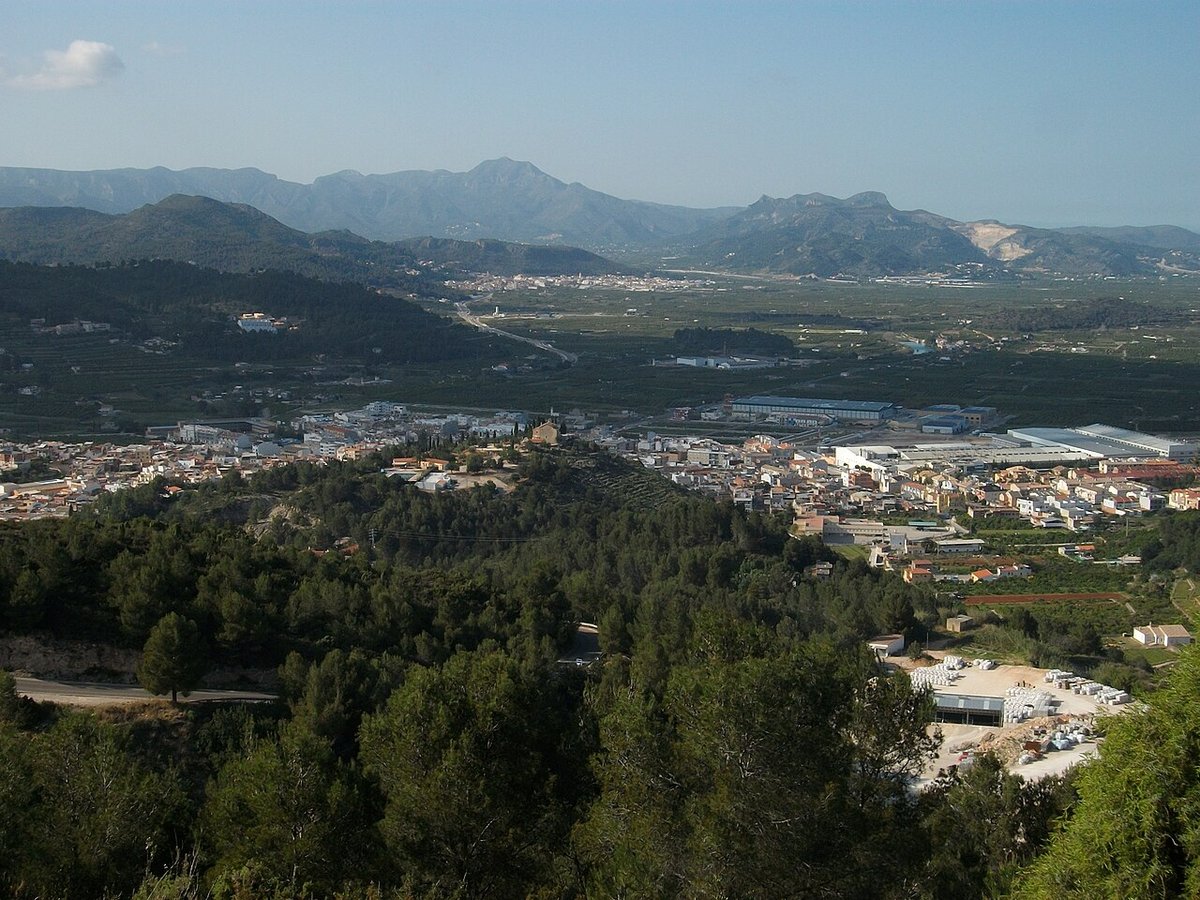
At the start of April, when orange trees begin to release their blossom, the air around the village shifts. The scent arrives before the houses come into view. Tourism in Llocnou de Sant Jeroni often begins like this, driving through flat citrus fields until, suddenly, a bell tower appears along with a cluster of short streets gathered around the church. The municipality has fewer than six hundred residents, and daily life still follows the rhythm of the orchards surrounding the town centre.
From the road, the layout is immediately clear: a handful of streets, a simple plan, and low houses with metal shutters that are still only half open by mid-morning. It is not a place that makes a strong impression from afar; it reveals itself more gradually, when explored on foot and at a slower pace.
The quiet centre
By mid-morning, the main square is usually close to silent. The parish church, built in exposed brick with an understated tower, sits at the centre without dominating the space. The sounds are small and scattered: a brief exchange between neighbours on a bench, the wheels of a shopping trolley crossing the square, the sharp clatter of a shutter being pulled open.
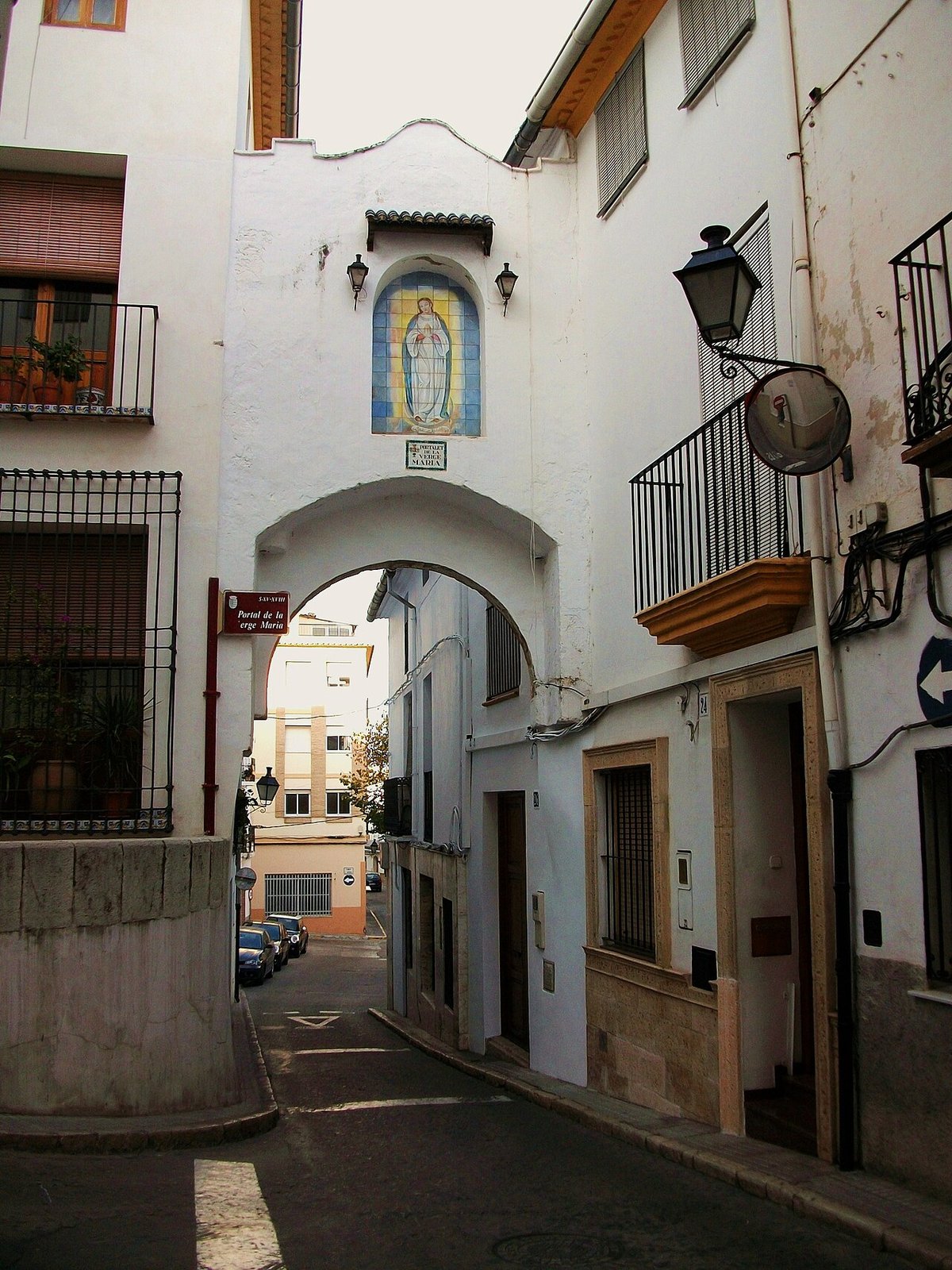
The houses retain features typical of agricultural towns in the Valencian region. Wide doorways, slightly worn black iron grilles, and balconies decorated with old ceramic tiles that can easily go unnoticed unless you look up. At some corners, a narrow acequia, a traditional irrigation channel, still runs along the street. The water moves slowly, often heard before it is seen, especially when everything else is still.
Paths through irrigation channels and orange groves
The agricultural paths begin as soon as the town centre ends. They run straight, either dirt tracks or narrow strips of asphalt, cutting through plots of orange trees that in winter show their fruit and in spring fill the air with fragrance.
Walking here is a simple experience. There is the steady hum of insects, the soft sound of water moving through the acequias, and now and then the passing of a tractor. The irrigation network in this part of La Safor dates back centuries and continues to shape the landscape. The channels divide the fields and define the routes of many of these paths.
Near irrigation ponds, herons can sometimes be seen standing still for long stretches. On electricity poles, it is not unusual to spot a kestrel. There is no need to venture far from the village to come across them.
One practical detail matters here. In summer, the heat settles heavily over these open paths. Walking is best done early in the morning or later in the afternoon, when the light softens over the orange trees and the air begins to move a little more.
Eating from the surrounding land
Food in Llocnou de Sant Jeroni revolves around what is grown nearby. In local bars, dishes tend to be straightforward: rice cooked in wide paella pans, seasonal vegetables, and preparations where the ingredients take priority over elaborate techniques.
Oranges often reappear at the end of a meal. They may be served as fresh fruit, turned into homemade desserts, or prepared as marmalade by families when the harvest is at its peak. The presence of citrus is constant, but never overstated, woven naturally into everyday cooking.
A small village in La Safor
Llocnou de Sant Jeroni lies inland within La Safor, a comarca where towns sit close to one another. This makes it a common short stop within a wider route through the area. Visitors might spend time walking through the town centre, then follow the orchard paths before continuing elsewhere.
The atmosphere changes noticeably during the festivities dedicated to Sant Jeroni, usually held in summer. Many families return to the village during these days, and the streets become busier than usual. There is music, religious events, and shared meals that spill into squares and along the streets.
For the rest of the year, the pace returns to something quieter. Streets remain calm, the sound of water continues through the acequias, and the scent of citrus drifts in when the orange blossom begins to open. It is an everyday agricultural landscape in the Valencian region, still functioning much as it has for generations.