Full Article
about Piles
Coastal town with a historic watchtower and fine-sand beach
Hide article Read full article
A village that smells of oranges
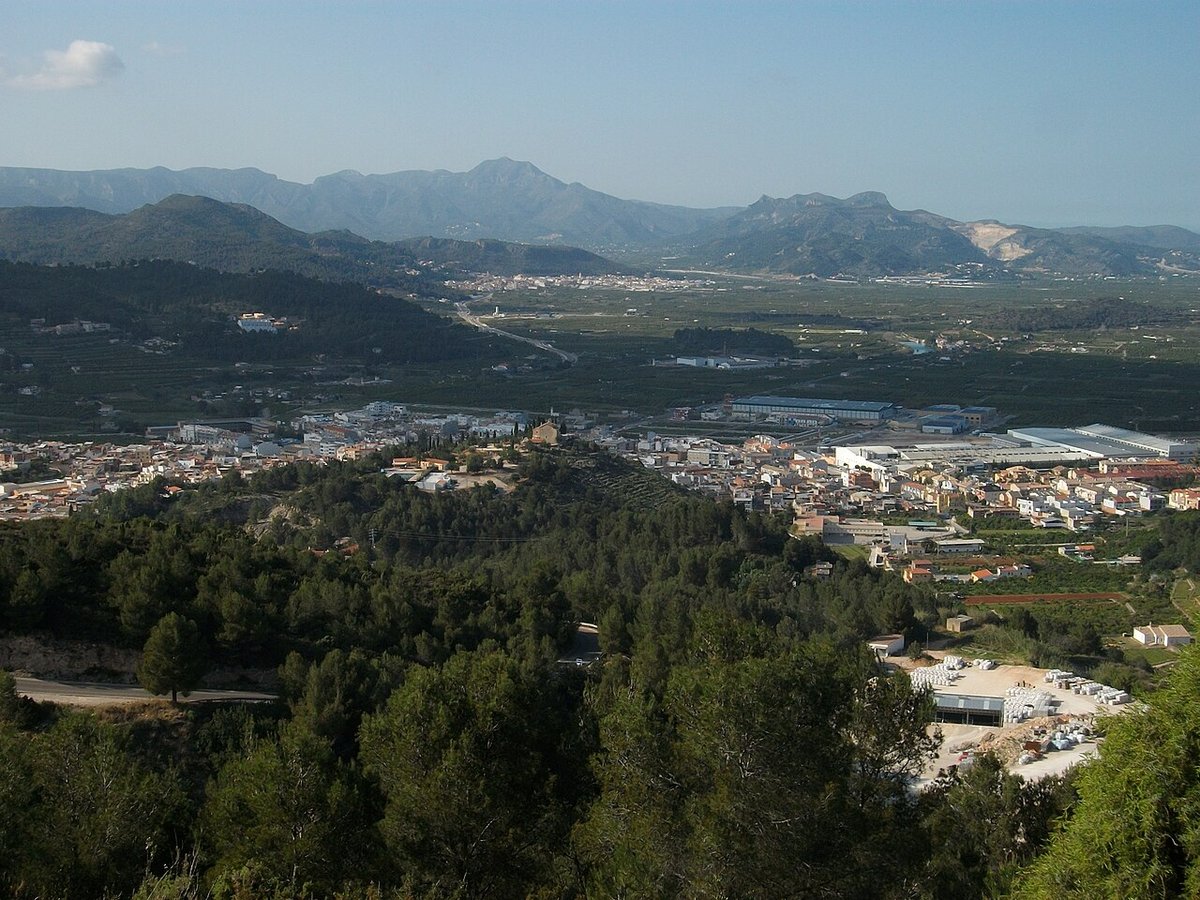
You notice Piles before you actually see it. The scent reaches you first. As the road drops down along the CV‑600 from Tavernes, the air turns noticeably sweeter, as if sugar had been left to caramelise somewhere nearby. That smell comes from the orange groves, thousands of trees surrounding the village like a dense green ring heavy with fruit.
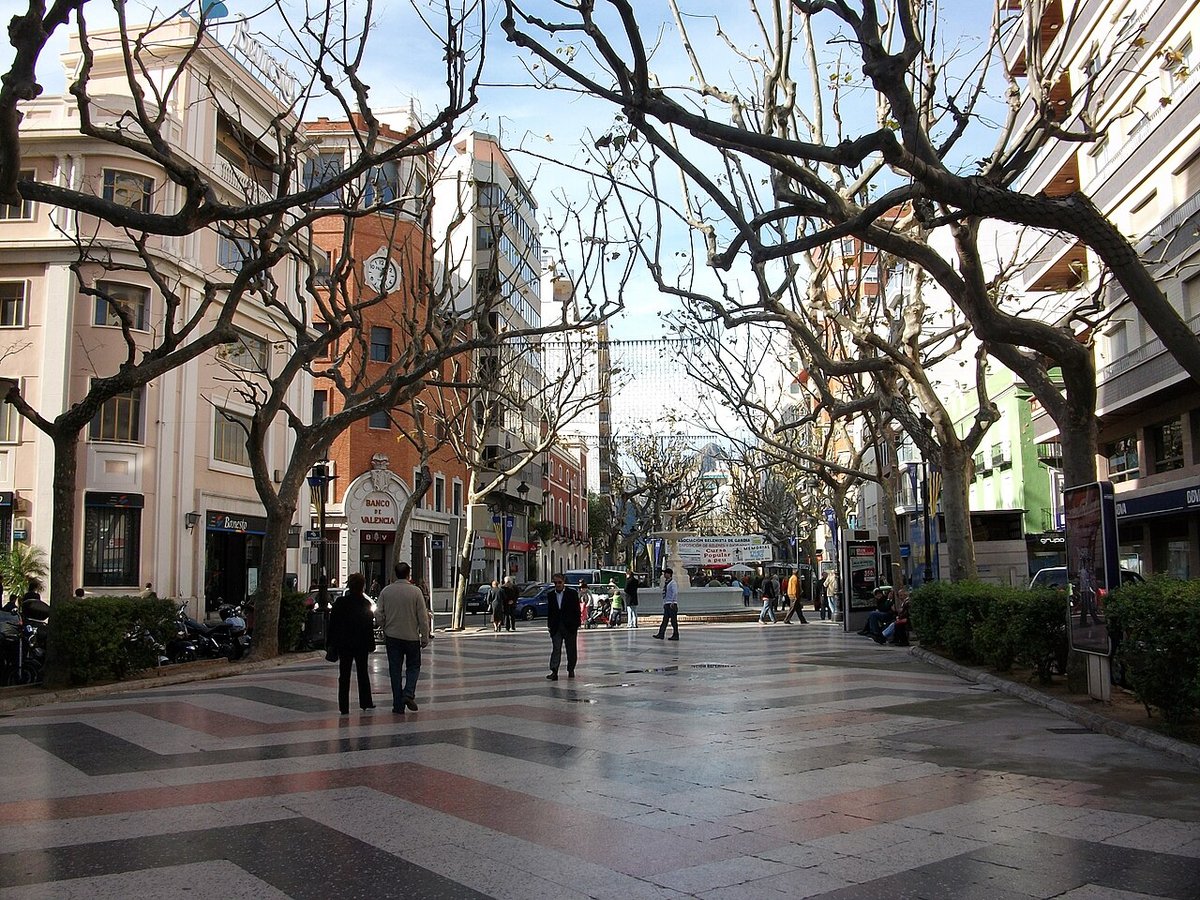
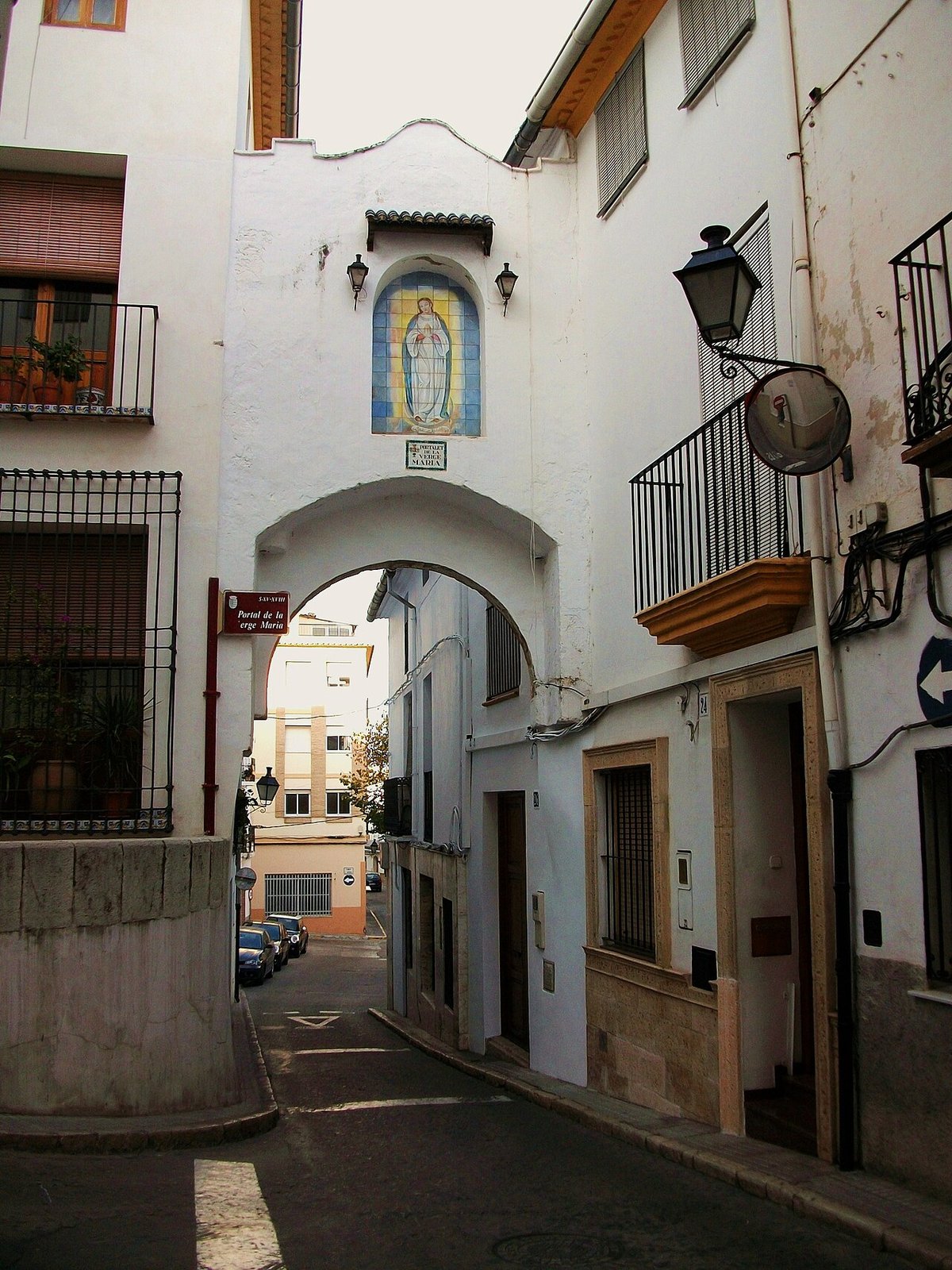
Then the town appears. It is small and compact, with streets that seem to have held their shape for centuries. Nothing feels rushed or newly arranged. Piles still behaves like a place tied closely to the land around it, rather than one reshaped entirely for visitors.
The quiet distance from the sea
Piles does something unusual for a coastal town. It keeps the sea at arm’s length. You arrive in the centre, park near the main streets, and might wonder where the beach is. It is not immediately visible because the urban area and the shoreline sit apart.
There is roughly a kilometre and a half between the town and the coast. That gap is just enough to preserve its character as an agricultural village instead of turning it into a continuous strip of seaside development.
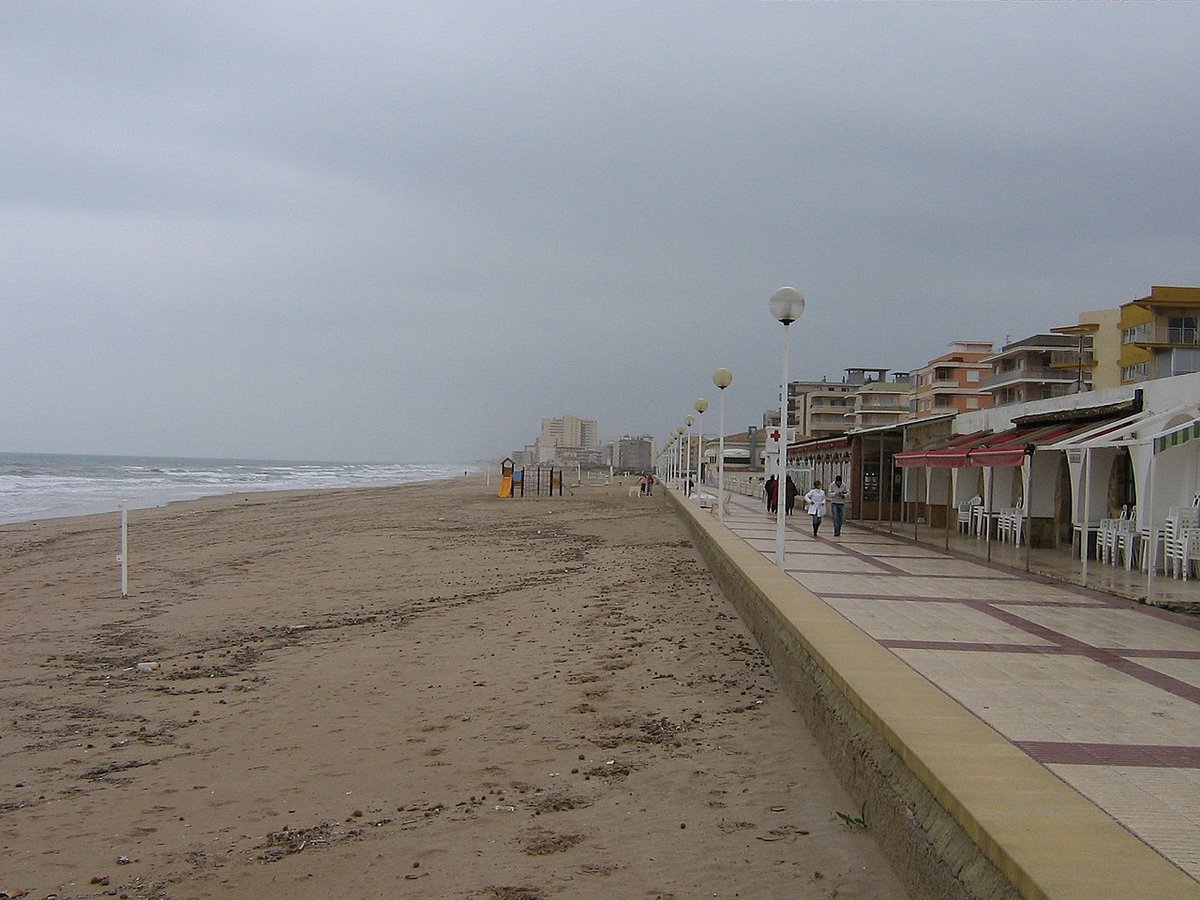
The road towards the coast eventually leads to Platja de Piles. The beach is long and open. It may not be the most striking stretch of sand in La Safor, especially if you compare it with other beaches between Oliva and Gandía, where the coastline changes in subtle ways. Still, the water here is usually clear, and there is often space to spread out once the busiest days of summer pass.
That matters more than appearances when the plan is simple: a quiet morning by the sea without crowds pressing in from all sides.
A watchtower with several roles
Close to the town centre stands the Torre Guaita, a structure that helps explain how this coastline was once protected. It dates back to the 16th century, when attacks by corsairs were a real concern along this part of the Mediterranean.
At first, its purpose was surveillance. Over time, that role shifted. Local accounts say the tower later served as a prison and also as a storage space. This kind of transformation is common with older buildings. As circumstances change, so do their uses.
Today the tower remains solid and isolated on the plain, surrounded by fields. The walk up is short and straightforward. From the top, the layout of La Safor becomes clear. On one side lies the sea. On the other, an uninterrupted spread of orange groves stretches across the flat land.
Rice as it is meant to be
Rice is taken seriously in La Safor, and Piles follows that approach. The paella you are likely to find here stays close to the traditional Valencian version. It typically includes chicken, rabbit and green beans, without unnecessary additions. The focus is on doing the basics properly.
Fideuà also appears regularly, often served with allioli. This dish uses short noodles instead of rice but follows a similar idea, rooted in coastal cooking.
During festive periods, bunyols de calabaza become part of daily life. These pumpkin fritters are still made in a fairly traditional way in many towns across the comarca. They tend to appear outdoors, sold or shared during evenings with music or local celebrations, and they leave hands dusted with sugar as people walk through the streets.
When the streets fill with sound
Moros y Cristianos is one of the key events in Piles’ festive calendar. These celebrations, common across many parts of the Valencian Community, recreate historical conflicts between Muslim and Christian sides through parades and performances.
In Piles, they usually take place towards the end of summer. During those days, the rhythm of the town shifts. Groups known as filaes parade in elaborate costumes, bands play continuously, and the streets fill with both residents and visitors from nearby areas.
The atmosphere resembles open-air theatre. History blends with music, gunpowder and a lively presence in the streets. It is less about strict historical detail and more about collective participation and spectacle.
Walking through orchards and irrigation paths
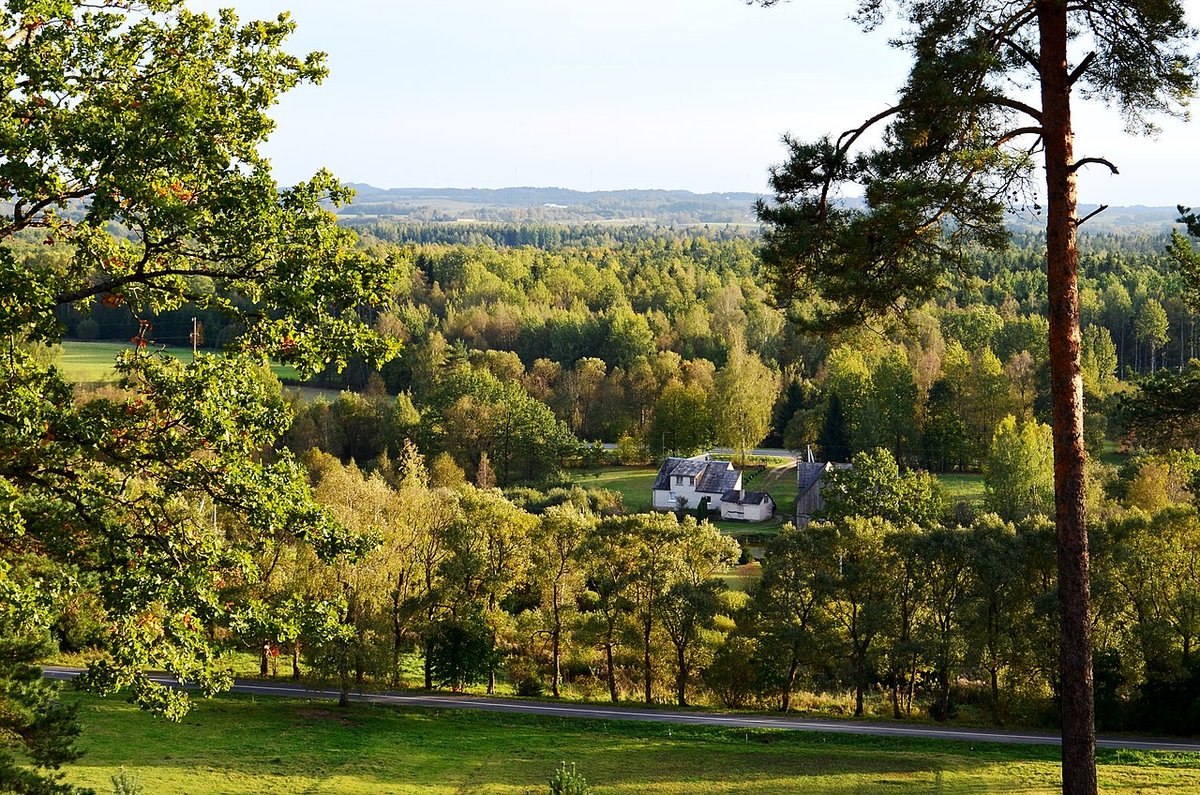
A short distance from the centre, the landscape opens into farmland. There is no need for a marked trail or a detailed plan. Agricultural tracks lead out towards the marjal, the wetland area, and the surrounding fields.
Along these routes, traces of older irrigation systems still appear. Some paths pass by norias, traditional waterwheels, or acequias, irrigation channels that have carried water across the land for decades, sometimes longer.
These features are easy to miss if the visit focuses only on the beach. Yet they explain how life here has long been organised. Piles has always existed between cultivated land and the nearby sea, with both shaping its daily routines.
A simple way to experience Piles
Spring adds another layer to the place. When the orange trees are in blossom, the scent of azahar spreads across the entire area. It is noticeable as soon as you step out of the car and lingers in the air throughout the municipality.
The best approach here stays uncomplicated. Walk through the town centre, head down to the beach for a while, and return without rushing. Piles does not try to present itself as anything grander than it is. It remains a small town in La Safor, surrounded by orchards and set close to the sea. For many visitors, that balance is enough.