Full Article
about Potries
Town with a strong pottery tradition and the Safor water route.
Hide article Read full article
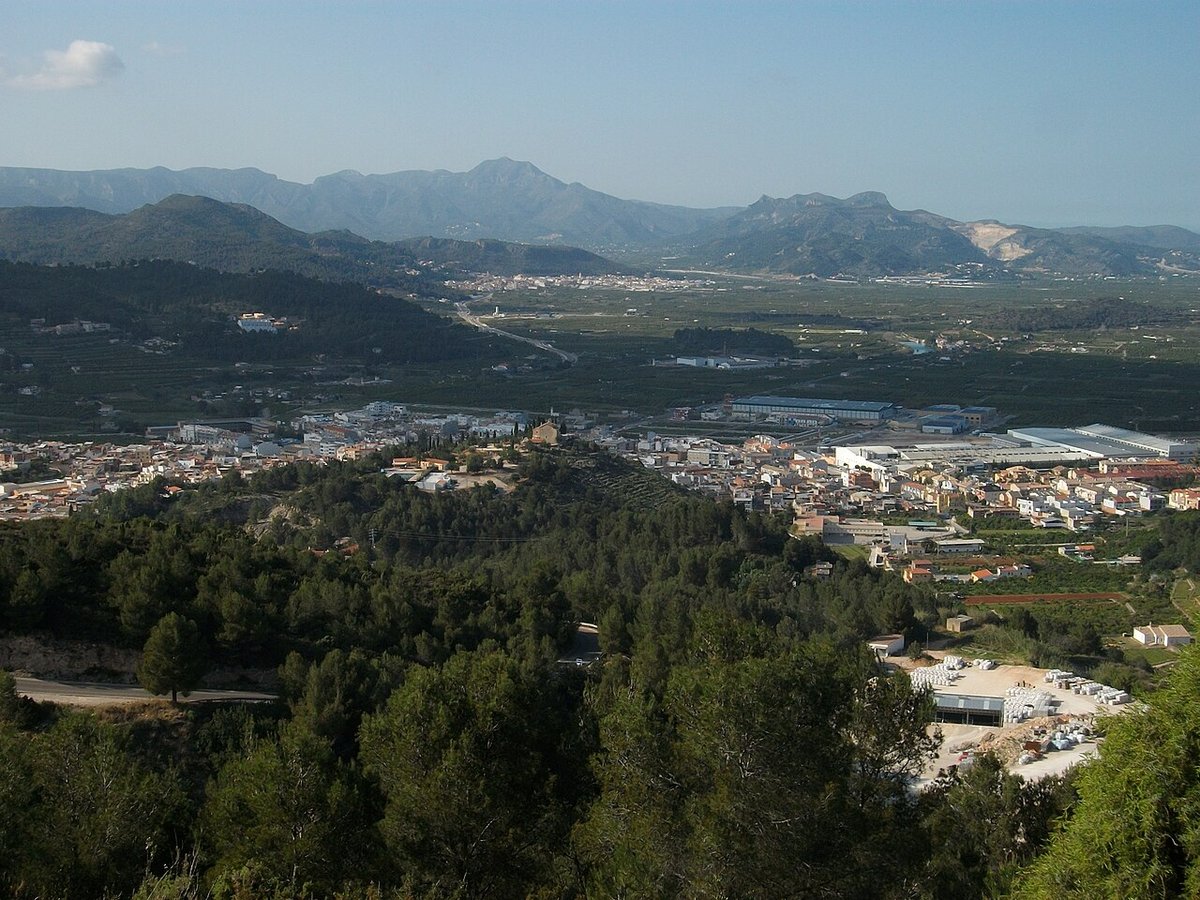
You know those places you drive past on the way to somewhere else? The ones where you glance over and think, "Looks quiet," and keep going? Potries is that place. It’s about an hour south of Valencia, tucked inland from Gandia. There’s no skyline, no tour buses. Just a church tower and a grid of streets that quickly give way to orange groves. That’s the point.
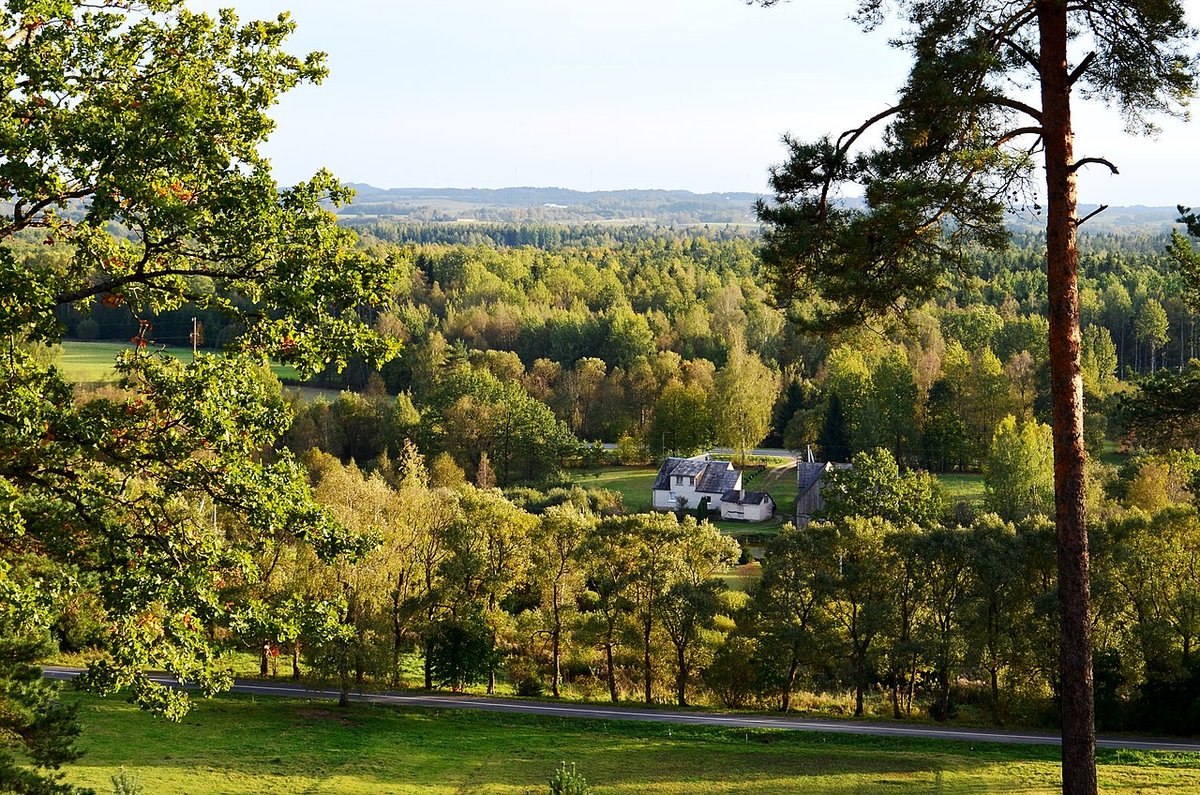
This isn't a village preserved in amber; it's a working part of the huerta. With around 1,100 people, life here still moves to the rhythm of the land. Walk five minutes from the main square and you're on a dirt track between citrus plots, listening to water gurgle through the acequias. It feels less like visiting a destination and more like stepping into the background hum of rural Valencia.
Finding your feet around Santa Ana
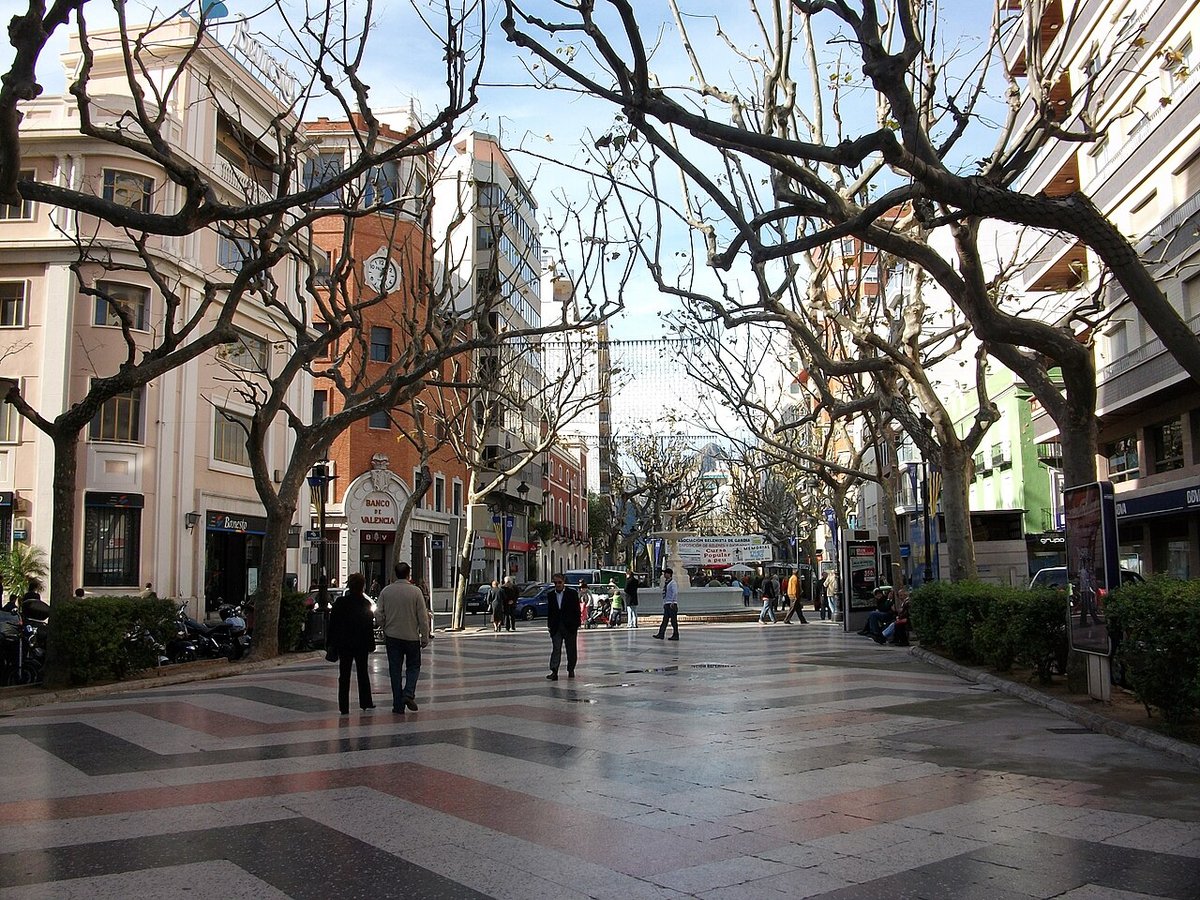
The bell tower of the parish church of Santa Ana is your landmark. It’s not ornate, but it’s solid and visible from most approaches, which is all you really need. The plaza in front of it, with the town hall, is where things converge. You’ll see people chatting on benches and old men watching the world go by—the kind of low-key scene that tells you this square is actually used.
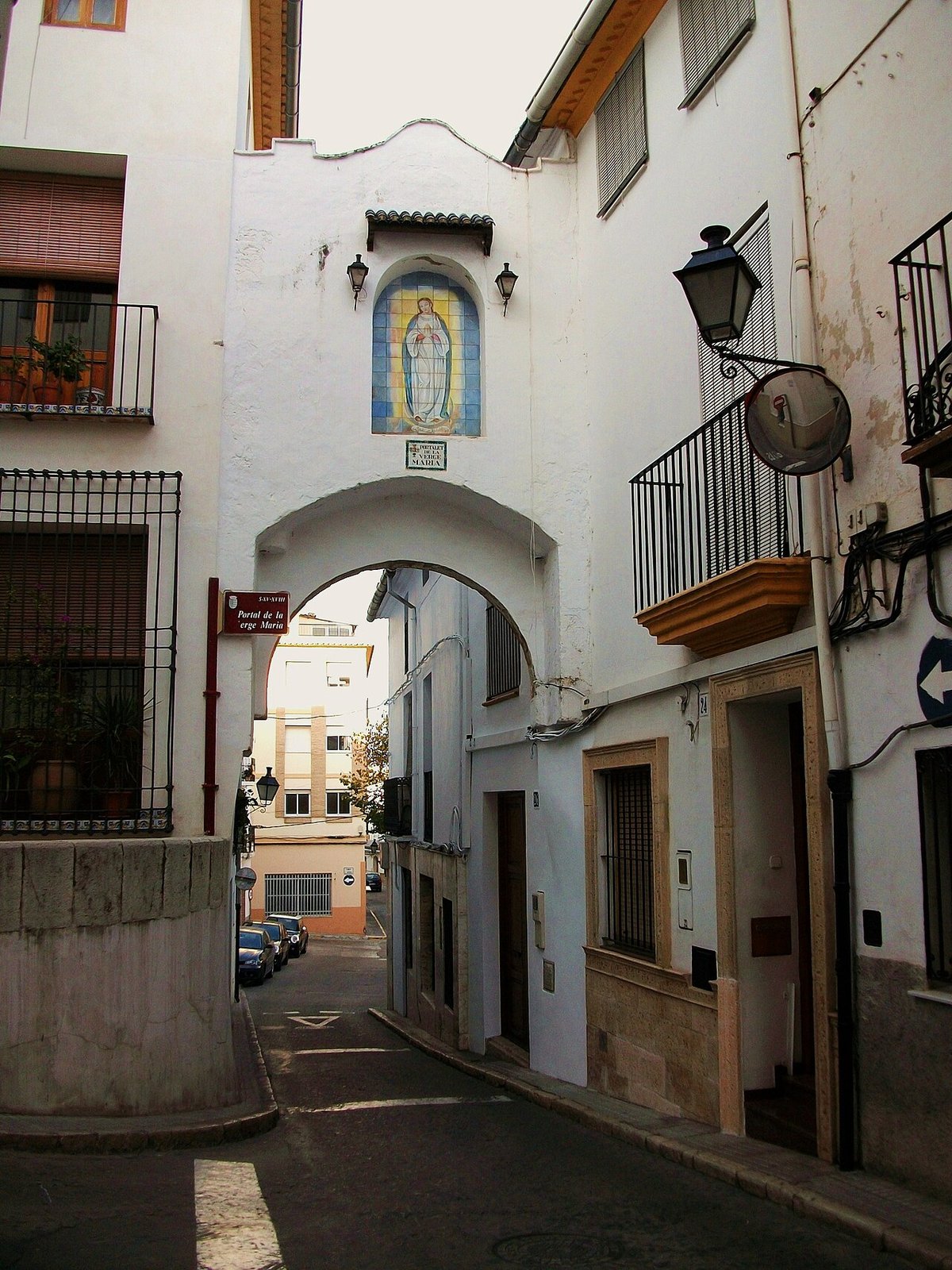
From there, the centre unravels in a few minutes of wandering. Narrow streets, whitewashed walls, the occasional burst of geraniums on a balcony. It’s peaceful in that specific way villages are when most people are either at home or out working. You might hear a TV through an open window or the distant putter of a tractor. It’s not pretty for the sake of being pretty; it’s just… there.
The real walk is outside town
Forget marked hiking trails. The best thing to do here is head out into the huerta. Pick any lane leading away from Santa Ana and within a couple of minutes, the pavement turns to packed earth and you're surrounded by orange trees.
These agricultural paths are dead flat and run for kilometres alongside irrigation channels. They’re made for tractors, not tourists, which means you have them mostly to yourself. It’s walking for walking's sake—no summit to reach, just green lines receding toward the mountains. In spring, when the trees blossom, the smell of azahar gets so thick it feels like you could taste it. It’s a different vibe entirely from summer or harvest time.
You see how it all works: the water dividers, the little masonry bridges over the acequias, guys on ladders pruning trees. It’s an open-air lesson in how this landscape functions, and nobody’s charging you admission or explaining it with a placard.
Between the grove and the sea
The food around here makes sense when you look at a map. Potries is inland, but Gandia and its port are maybe ten minutes away by car. So what ends up on your plate is usually a direct result of that geography: vegetables from these fields, fish from that coast.
Rice dishes are obviously common—this is Valencia—but they tend to be straightforward affairs. Think more Sunday lunch at someone's house than gastronomic theatre. The good spots (and there are a few in nearby towns) don't fuss much with presentation; they just combine what's nearby in ways people have been doing forever.
Timing your visit
If you want to see Potries animated, aim for late July during the fiestas for Santa Ana. The quiet plaza fills with music stalls and crowds—it's like someone turned up the volume on village life for a weekend.
But honestly? I prefer it during the workweek or in spring. That's when its normal rhythm is easiest to catch: mornings with activity in the fields, afternoons so quiet you can hear bees in the jasmine. Come here to stretch your legs between orange groves without an itinerary. Come here to see what daily life looks like in this corner of La Safor when it isn't trying to sell you anything. It won't dazzle you. It might just slow you down for a couple of hours, and sometimes that's exactly what you need